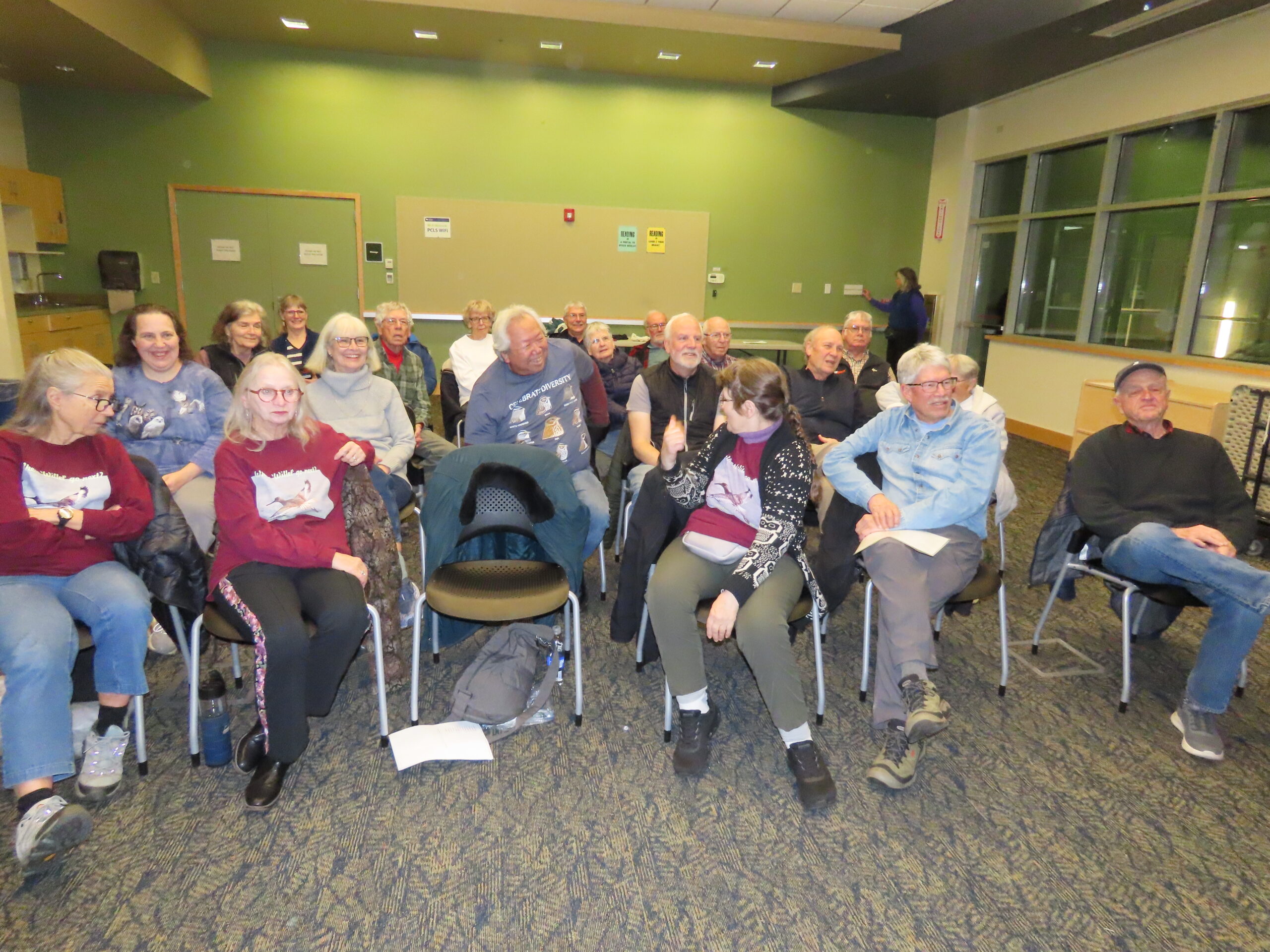
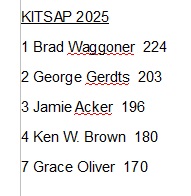
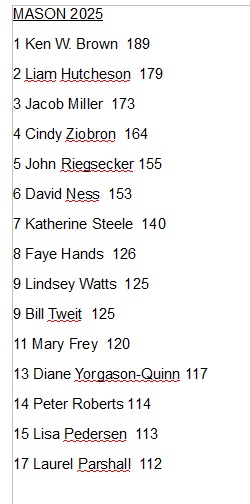
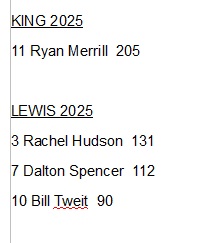
On January 21, 2026, ABC met to celebrate our year!
Awaiting the big lists!
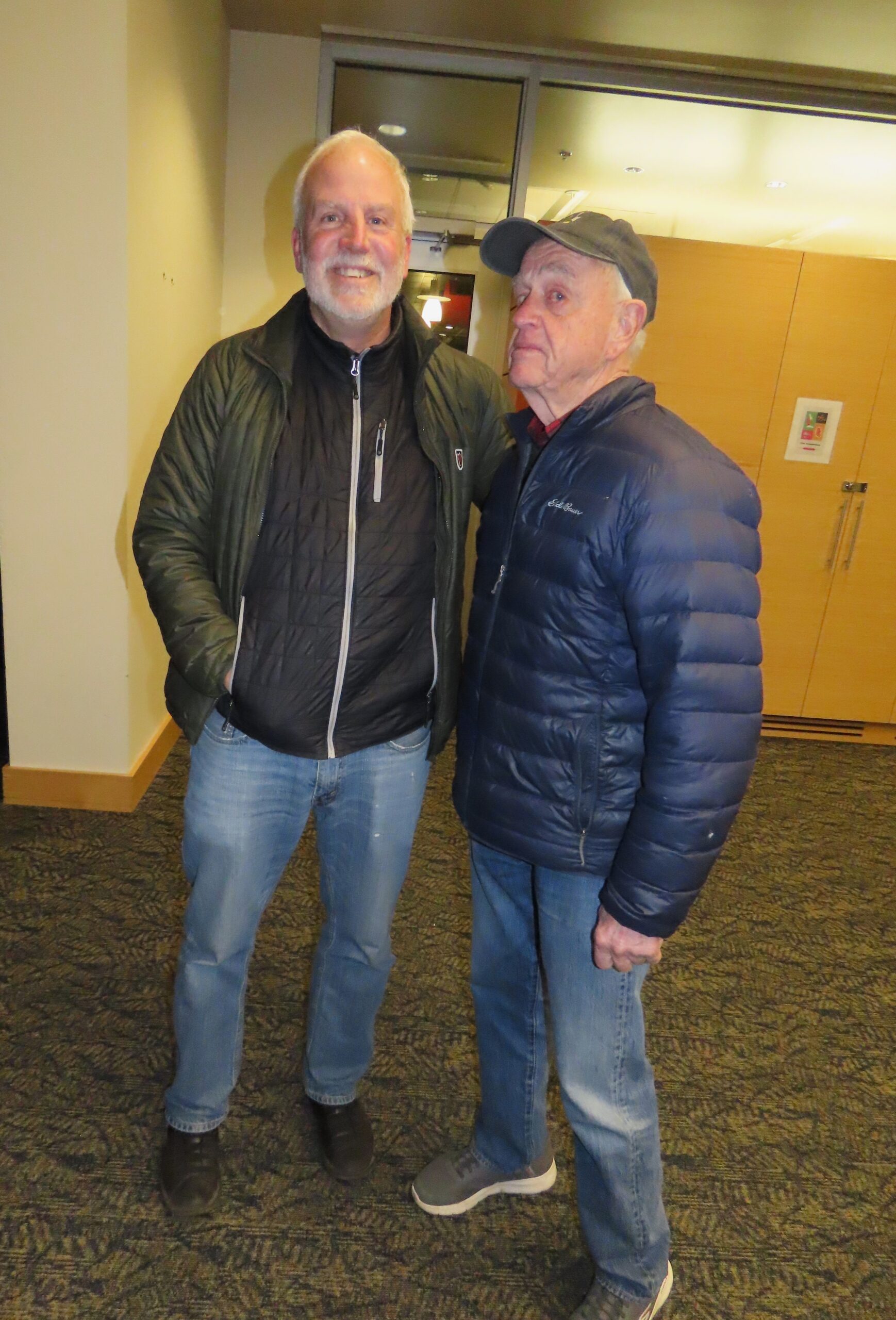
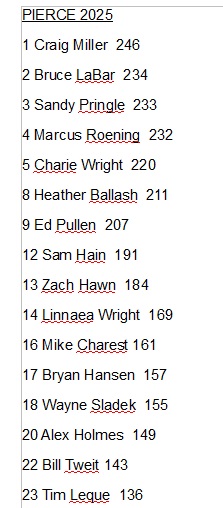
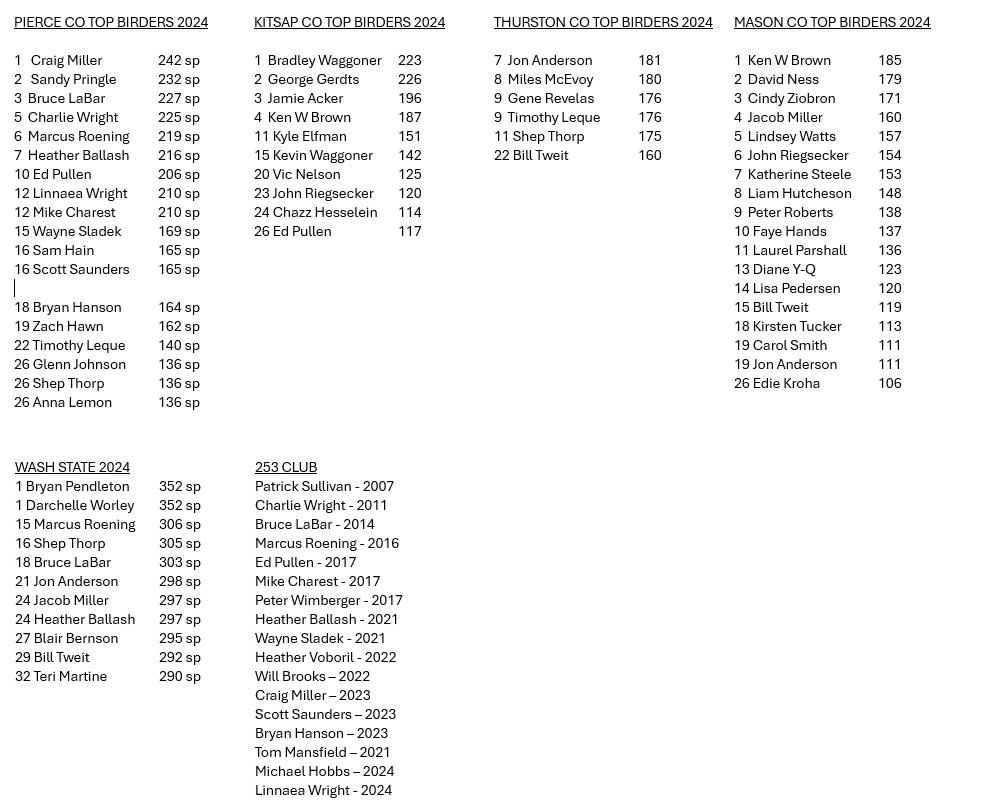
We now have a new champion, Craig Miller! He not only set the record for 2025, but he broke the 253 record set by Will several years ago! Here’s Craig being congratulated by Bruce LaBar:
We enjoyed seeing bird photos from our members, including Craig’s “Don’t Blink!” collection, showing a couple thousand photos in the same period of time that the rest of us used 5 photos!
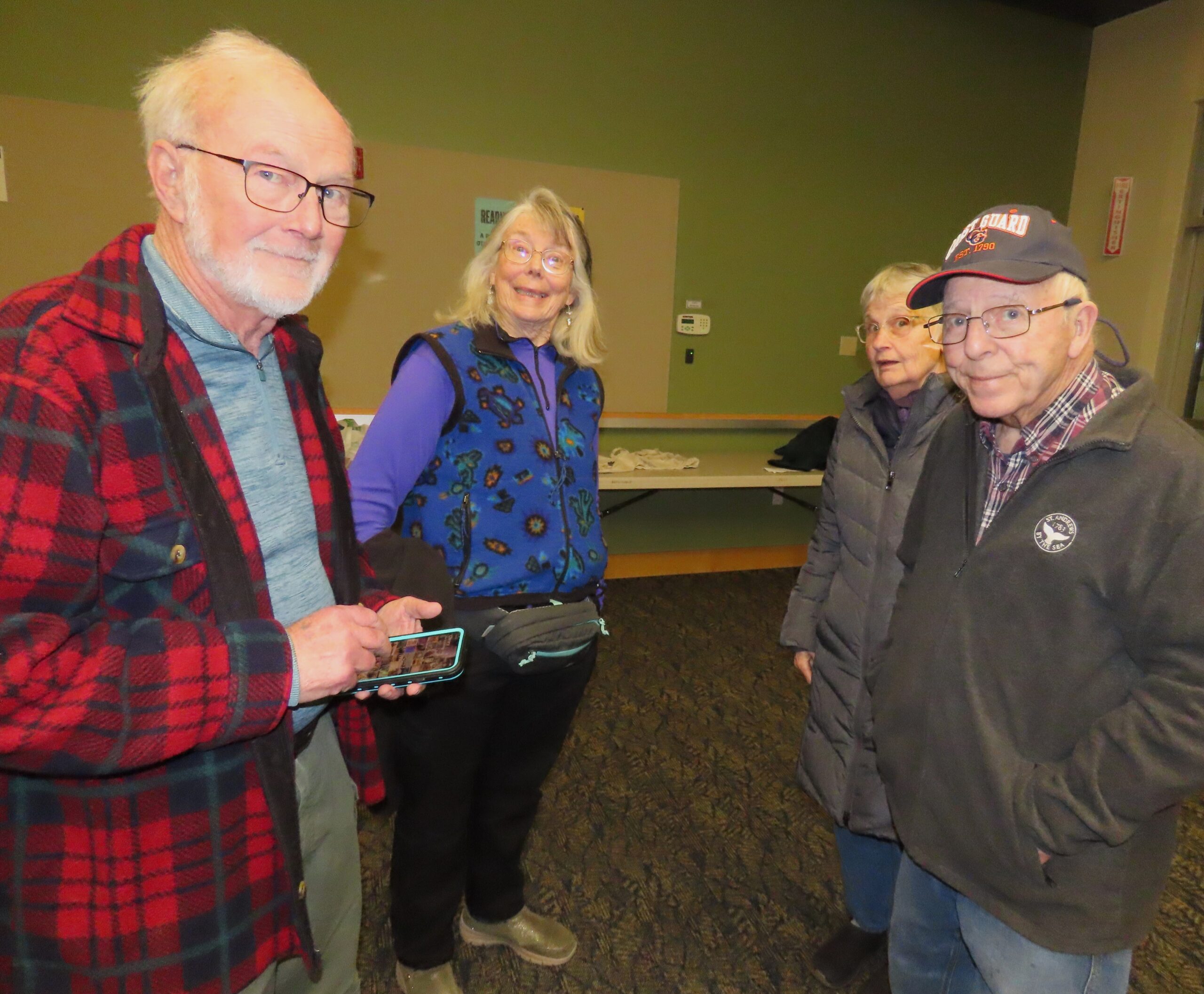
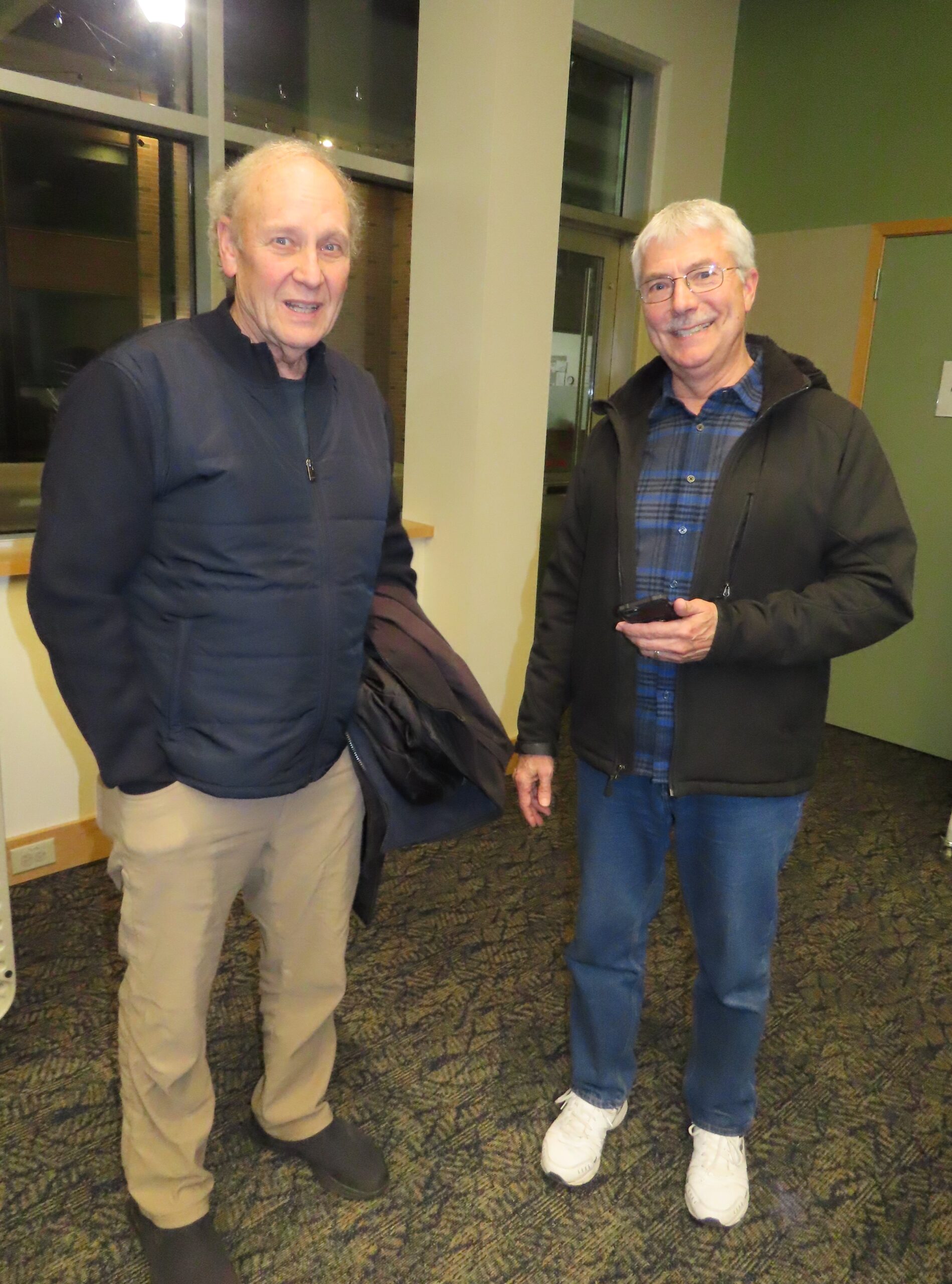
Jerry, Clarice, Maggie, & Joe chat.Faye & Katherine compare notes.
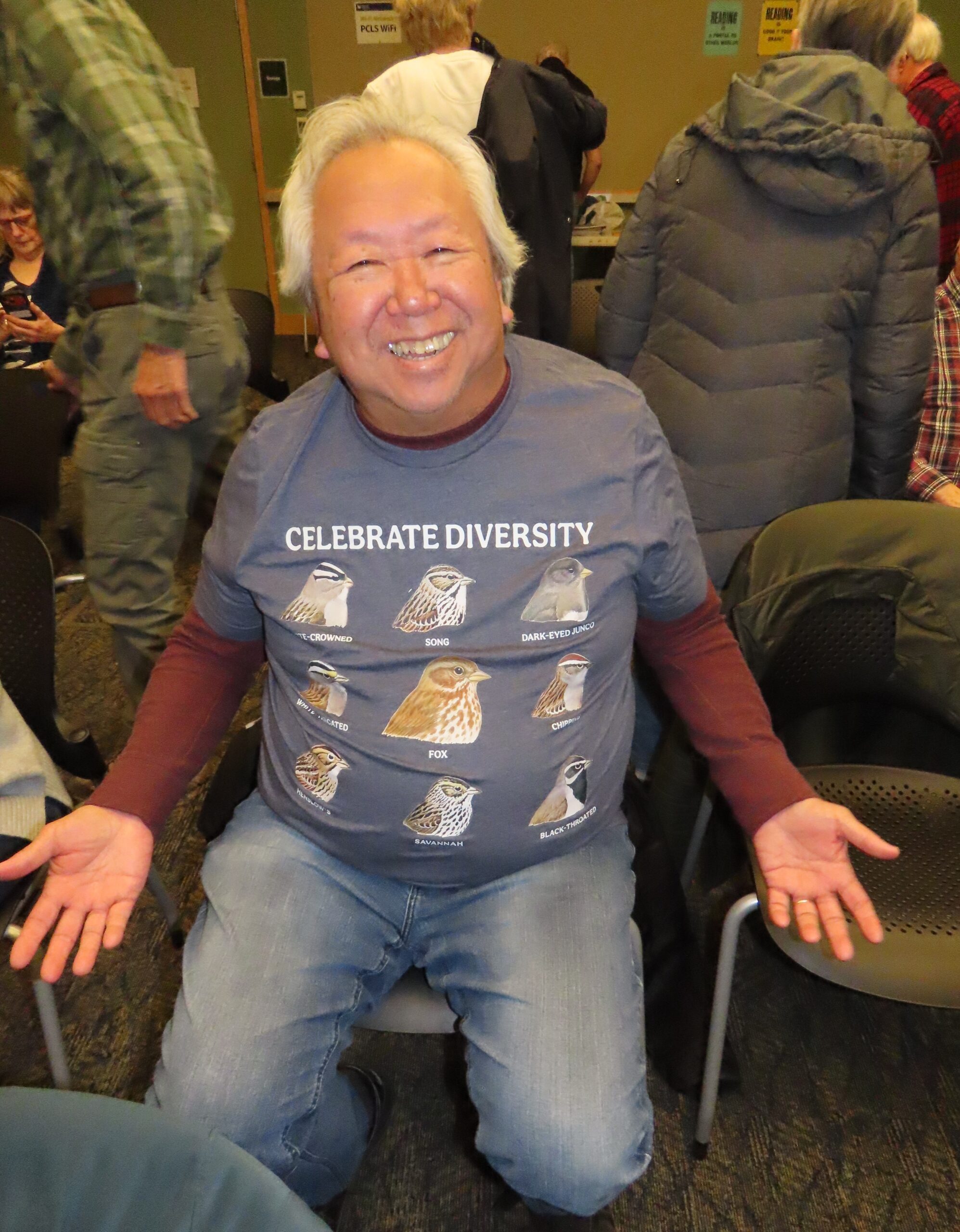
Art shows his philosophy of life through birds!
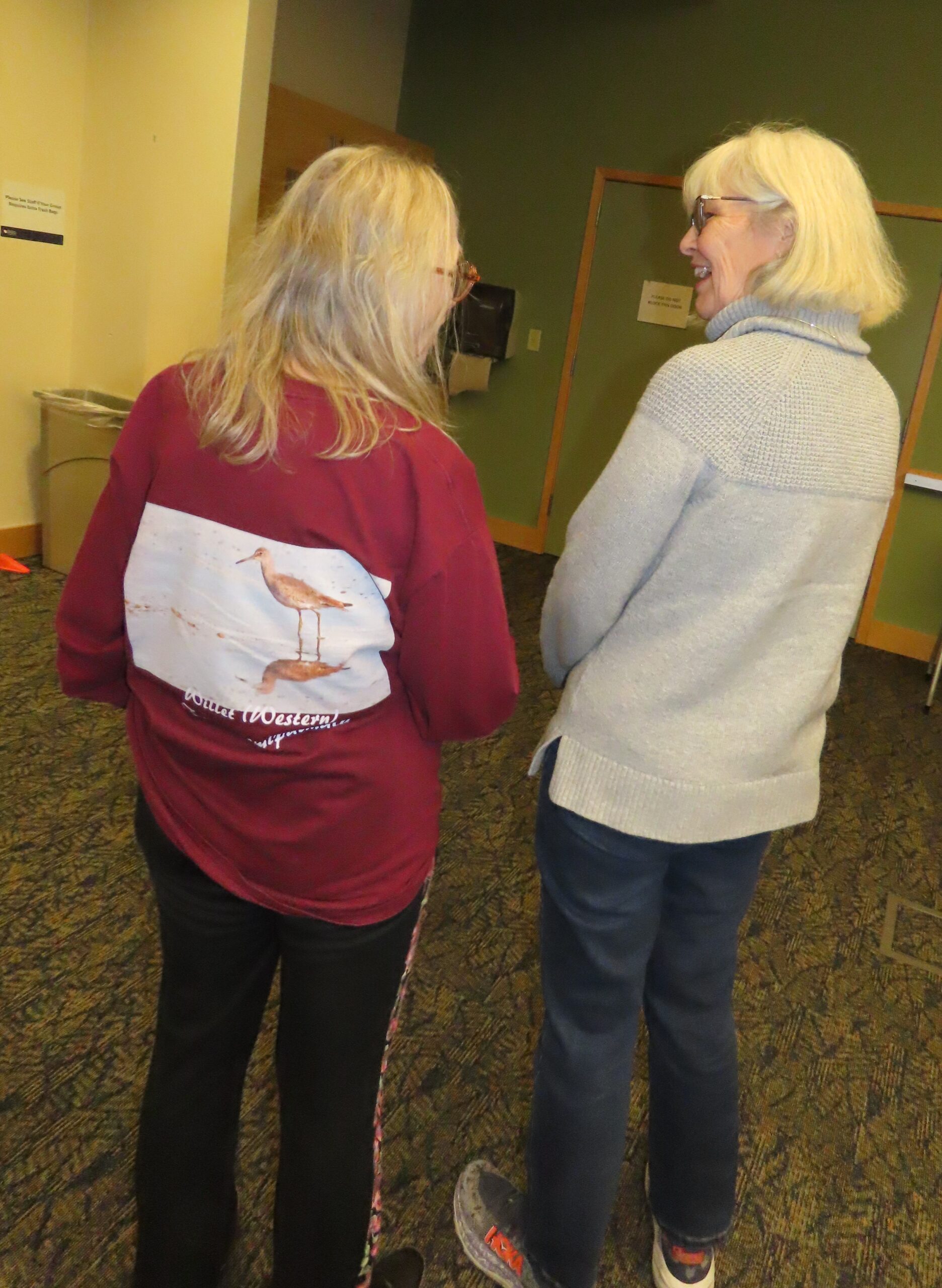
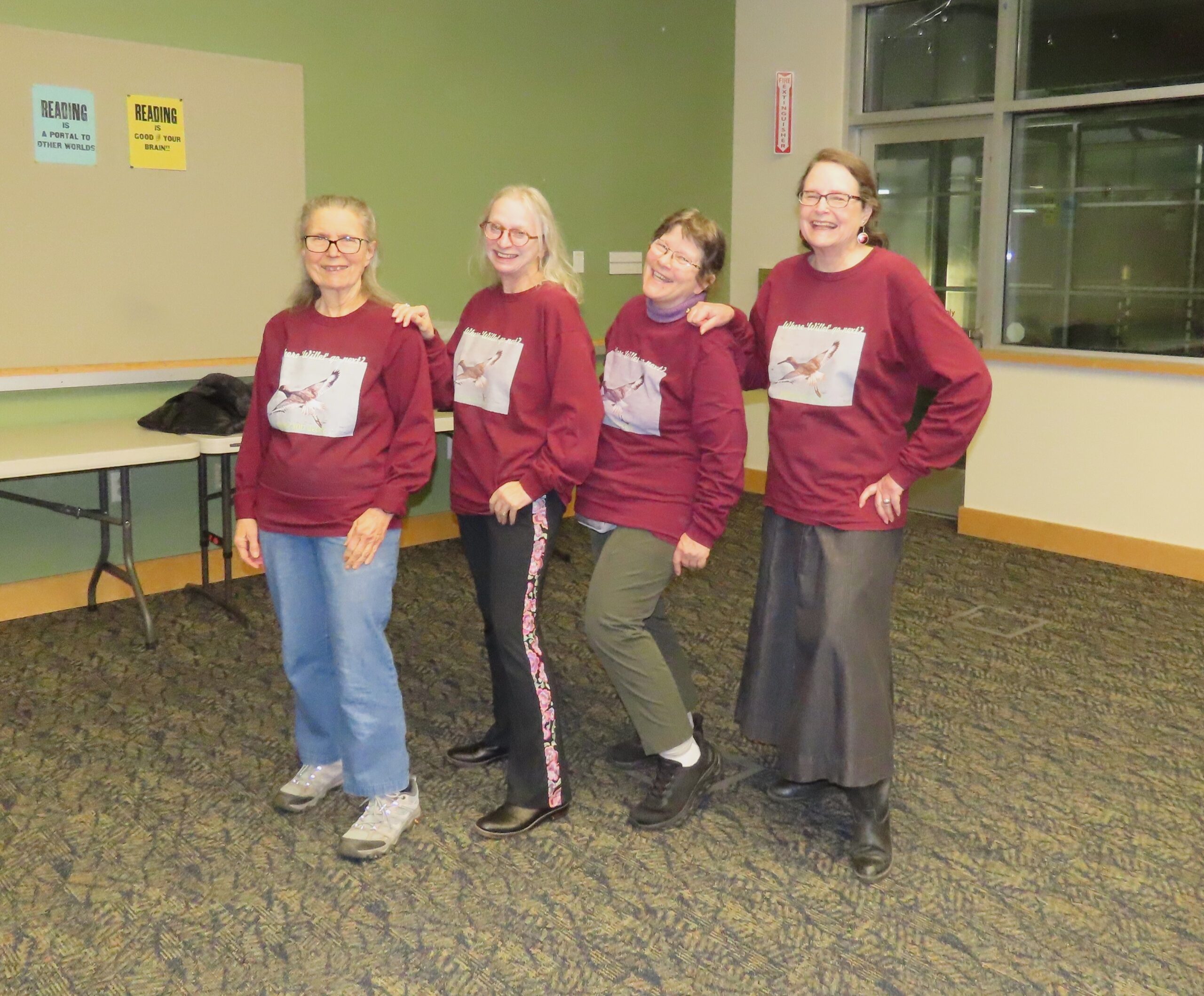
Our founder, Ken Brown, chats with 253-er Bryan Hanson.The Willettes celebrate!
We have a new record in the 253 this year! Craig Miller has toppled Will Brooks, amazingly! Congrats, Craig!
Congratulations to our newest 2025 members of the 253 Club, here in Pierce County – Area Code 253. By achieving this lofty mile stone, new members are entitled to a beverage of their choice from yours truly!
Ryan Shaw #253 – finding a Short-tailed Shearwater off of Dune during the massive influx of these wonderful tubenoses into Puget Sound waters. Massive extra credit for achieving this goal while living in Texas!
Dune Peninsula at Point Defiance Park, continues to be the spot to see pelagic birds from land. With a sweeping view to Des Moines to the Northeast, Commencement Bay to the East and Dalco Passage to the Northwest, it is the #1 eBird Hotspot in Pierce County with 229 species seen. Accessed near Point Ruston, this park was created in 2019. Amazingly, this year tallied all 3 Shearwaters: Short-tailed, Sooty and Manx and a shocking trifecta of Storm-Petrels: Fork-tailed, Leach’s & Wilson’s (the latter under WBRC review).
Unfortunately, the 5 Mile Drive that went around the tip of Point Defiance has been closed to cars due to severe erosion of the bluffs, but it is still a wonderful place to bike and walk, now without cars.
New Pierce County Big Year Record – 246 species by Craig Miller
Special Kudos to Craig, for surpassing Will Brook’s Pierce County record of 243 species, with a final Tundra Swan on Lake Tapps in the last week of the year. I can attest to his many hours out in the field and up in the mountains. The most amazing sighting that I personally witnessed with him was of a White-tailed Ptarmigan off of Panorama Point on Mount Rainier. While it is possible to see ptarmigan right off the trail, it is a rare occurrence, often requiring as many as 6 dedicated trips. Craig had carried his scope all the way up the snow field in June with us and found the bird a 1000 feet below us off of Pebble Creek! Certainly not identifiable with binoculars.
And for completeness, here are the prior 253 members as divined by a combination of eBird and WA Birder records. Let me know what your 253rd bird was and if you have a story to go with it, better yet.
Patrick Sullivan <2007 Charlie Wright 2011 Bruce LaBar 2014 Marcus Roening 2016 Cassin’s Auklet Ed Pullen 2017 Mike Charest 2017 Heather Ballash 2019 Barred Owl
Tom Mansfield 2021 Emperor Goose Wayne Sladek 2021 Peter Wimberger 2021 Heather Voboril 2022 Will Brooks 2022
I’ve just finished looking through a new book, How Birds Fly, by Peter Cavanagh. Peter is one of us, a resident of Lopez Island. This 336-page large format book is without question the best book on birds I have seen in a long time, surely one of the best books ever. I wanted to share my enthusiasm, so I have written this as a sort of review of the book.
It seems to me that the author has explored all the angles you could possibly think of for understanding this wonderful adaptation. Humans have long been fascinated with flight, and he spends a lot of time comparing birds and airplanes, which is great for all of us who thrill to see any flying object. Let’s face it; our great interest in birds surely stems in part from our envy of their ability to fly!
I can’t get over how thorough this book is. We all know about drag and lift, right? Read this book to learn so much more about what make flight possible. It even treats flightless birds in detail, explaining why and how some winged wonders evolved to stay out of the air. Learn about feather structure, flocking, migration, and so much more involved in the aerial world of birds.
Each of the 13 chapters ends with a page “FROM THE LAB.” Each one deals with an aspect of research on bird flight, each a superb example of the scientific method. “Can aerodynamic forces be measured?” “How do pigeons turn in slow flight?” “Are swifts designed for gliding or flapping?” “What is the altitude profile of a migration flight?”
He even has a section on researchers who have studied bird flight, something rarely included in general books. Also, he includes the latest word about the many ways we have tried to copy bird flight. And the photos with which the book is so lavishly illustrated are by the author, from hummingbirds to albatrosses and all over the world. I especially like learning where each photo was taken. Peter Cavanagh is a superb photographer and writer.
The profusion of photos, their educational captions, and the many, many diagrams will allow you to delve into bird flight widely, with an even deeper knowledge from reading the text. Of course, this should be combined with doing a lot of birding. Learn about flight, and then go out and understand better what you are seeing!
Dennis Paulson, Seattle
dennispaulson at comcast dot net
******
From Ed Pullen’s Bird Banter podcast:
I read Dennis’s excellent review of the book How Birds Fly by Peter Cavanagh, and remembered how much fun I had talking with him on the podcast. I think most birders and really most people think that the fact that birds can fly is both wonderful and mystical. How do birds fly? This subject has been studied by the Wright brothers, by aeroscience engineers, but also by birders like Peter Cavanagh, my guest on this episode and the author of the new book, How Birds Fly: The Science and Art of Avian Flight. I learned a lot reading the book and talking with Peter. Enjoy.
Listen to my podcast at The Bird Banter Podcast available on iTunes podcast store and other feeds.
***********
From Seth Leopold, MD, via Tweeters Jan 13, 2026:
One more voice on Peter Cavanagh’s wonderful book, and an interview from an unusual vantage point you might enjoy. Once a quarter, the surgical journal that I edit interviews someone who is not a surgeon who has skills that we think doctors (and surgeons in particular) should learn more about. I thought that Peter’s skill at patient observation would really help doctors to think differently about how they sit and talk with their patients. You might like it: https://journals.lww.com/clinorthop/fulltext/2025/08000/a_conversation_with___peter_cavanagh_phd,_former.1.aspx.
Seth S. Leopold, MD, Editor-in-Chief, Clinical Orthopaedics and Related Research
Professor, Department of Orthopaedic Surgery and Sports Medicine, UW School of Medicine
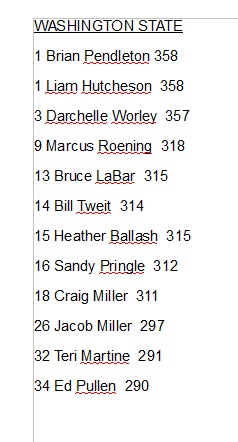
A few surprises, as usual. Plus the first addition to the 253 club of a non-253 resident attaining that status (Michael Hobbs). Unfortunately, non-eBirders are not included, but can be after the fact if you submit below under Comments.
Our Big Year people include our key counties and state and now include the 253 CLUB, thanks to Marcus, who monitors that! Yes, you must reach 253 species inside the 253 area code!
Birders: Scott Saunders, Julia Dolan, Tina Suda, Laurel Parshall, Ellen Cohen, Ken Zirinsky, and Sydney Rometsch.
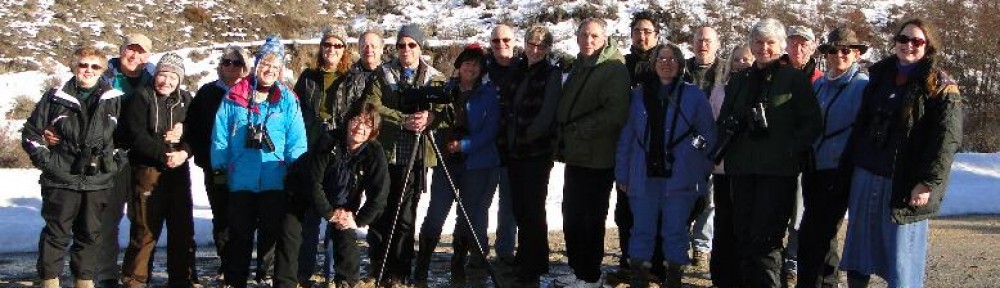
We all met at the Roy Y Park-N-Ride at 5:30, figured out our car pooling arrangements and off we went, ‘The Mountain’ in sight.
Our first stop on the way to Paradise was Ohop Creek where we hoped to see a few Lazuli Bunting. There were plenty of Cedar Waxwing and swallows, but no Lazulis.
Our next stop was at the Elbe bridge where there are occasionally American Dippers, but again no luck. We got to see a Great Blue Heron take flight and a family of Common Mergansers.
On our way up the mountain a pair of Barred Owls flew over the lead car and landed on a big snag. Not realizing the owls had flown over us we kept going and Julia walkie-talkied us that we might want to turn around and come back. At least one of the owls was kind enough to stay put while we took pictures.
Upon reaching Longmire we ran across the road to view the meadow and within a minute Julia jumped on a MacGillivray’s Warbler flitting around. It took a bit of searching but we all got eyes on it. A couple of trees on the other side of the meadow were loaded with Band-tailed Pigeons with one sitting out on the end of a fallen snag. Life birds for some: Red-breasted Sapsucker.
Finally our main destination, Paradise, 9:00am. No rain, a little cool, hardly any wind. Crossed our fingers that the weather would hold.
One of our first treats was a flock of 14 Red Crossbills, they may have split up as we repeatedly had 2 flocks of 7 all day long.
We got on 6-7 purple finches, all appeared to be first year males with their streaky breasts.
Here and there a couple American Pipits showed themselves, a life bird for some which is always exciting. Laurel used her pipit whispering skills and got one to come right over to us as she took several hundred pictures 😉 right after this a Gray-crowned Rosy Finch flew over us, calling as it went, the only one of the day.
“But in the mountains did he feel his faith.
All things, responsive to the writing, there
Breathed immortality, revolving life,”
Wordsworth
By now it was starting to lightly sprinkle and the wind was picking up just a little. Panorama Point beckoned. We continued to see Pippits and Marmots everywhere as we got onto the steeper trail. The wind started to pick up pretty strong, blowing in clouds, which drenched us even though at the most it still was only sprinkling. By the time we reached Panorama Point the wind was blowing us sideways, it was a little cold, and we had planned to eat lunch. We scarfed down a little of our food and then headed onwards to get to the rock face that blocked the wind almost entirely. Then we all sat and actually ate lunch. Without the wind we warmed up a bit, attempted to dry off and changed clothing. We learned later that shortly after continuing on it started to sleet – we were lucky to have missed it.
Continuing around the loop and starting down it took awhile to reach the tree line again.
A Hermit Thrush was spotted hopping around in the brush and actually came out and poised for us. A lifer for Sydney!
It was still sprinkling, the wind had slowed down a little, and it was still a little chilly. Coming around a corner we came upon a small meadow where Ellen pointed out a large dark bird. With all of our binoculars clouded over it was difficult to see. But then a laser pierced the fog to land on a male Sooty Grouse! Where’d that laser come from? Another lifer for several. A Varied Thrush took off from right next to the male grouse and landed right next to a female grouse about 30 feet away. As we watched three chicks, that appeared only a few weeks old, crept out of the scrub and ran over to her. We spent a good 10 minutes watching the family.
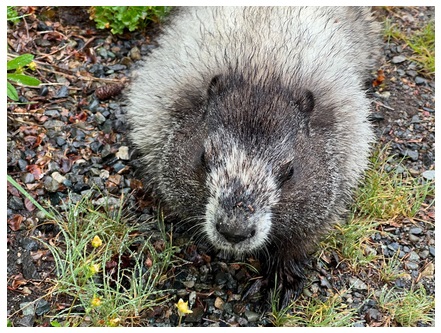
After passing Myrtle Falls we paused under some trees providing a nice dry spot. Ken put down his backpack and poles while he took pictures of some wildflowers nearby. A Hoary Marmot wandered through the group, completely ignoring us, and went straight for Ken’s poles. After sniffing them several times and determining them to not be edible he continued to wander in and out of the group.
After escaping the Hoary Marmot we came to a grove of evergreens that were a short way up slope and discovered a handful of Pine Grosbeaks making their way back and forth through the trees. Lifers for some!
The parking lot finally provided us with a couple of Canada Jays, they had been absent all day.
Before heading back home we sat down in the visitor’s center for something warm to eat and drink and reflect on our day. Though cold and wet we all agreed that we had a great time, saw some birds (several lifers) and altogether enjoyed each other’s company. Looking forward to doing this at Sunrise in a few weeks.
One last stop at Longmire and we were ready to go home!
Adam and I did our yearly Halloween trek to the famous crow roost at Bothell. From our vantage point atop the North Parking garage, we could look down into the protected wetland where so many birds of all kinds spend the night. Arriving 45 minutes before sunset, we saw only one crow at first and wondered if this phenomenon had moved on. But soon, here they came! Dozens, then hundreds, then thousands! The noise increased and drowned out the I-405 traffic noise!
Bothell crows
A special treat was that the U had left the game lights on the playing field just south of where we stood, and the crows showed up to play! It was amazing how many crows were playing there, but when the lights went off, the crows slowly dissipated into the swamp to the east.
UW-Bothell playing field with mosquito mascotGame on for the Crow team
As was their habit, about 15 to 20 minutes after sunset, the crows suddenly hushed all at once. We could still see a few, but they were no longer moving around, and they certainly did not vocalize. We had tried to count them, but when you’re in the eye of the hurricane, you are not in a position to measure it. Nevertheless, we entered 15,000 into eBird, and eBird didn’t even flinch!
Diane creeps up on crowsAdam surrounded by crows
Show over. We thought. As we turned to the car getting ready to leave, Adam said what’s that? It was quite dark by then, but there was no mistaking a large flock of birds circling the wetland. They were not crows, neither by their voices or their formation. We watched as they were joined by several other large groups, making the entire group probably around 5000. Photos were hardly possible, though I did try! And a little movie to hear their voices. Later we decided they had to have been Cackling Geese! What a great encore to the Crow Show!
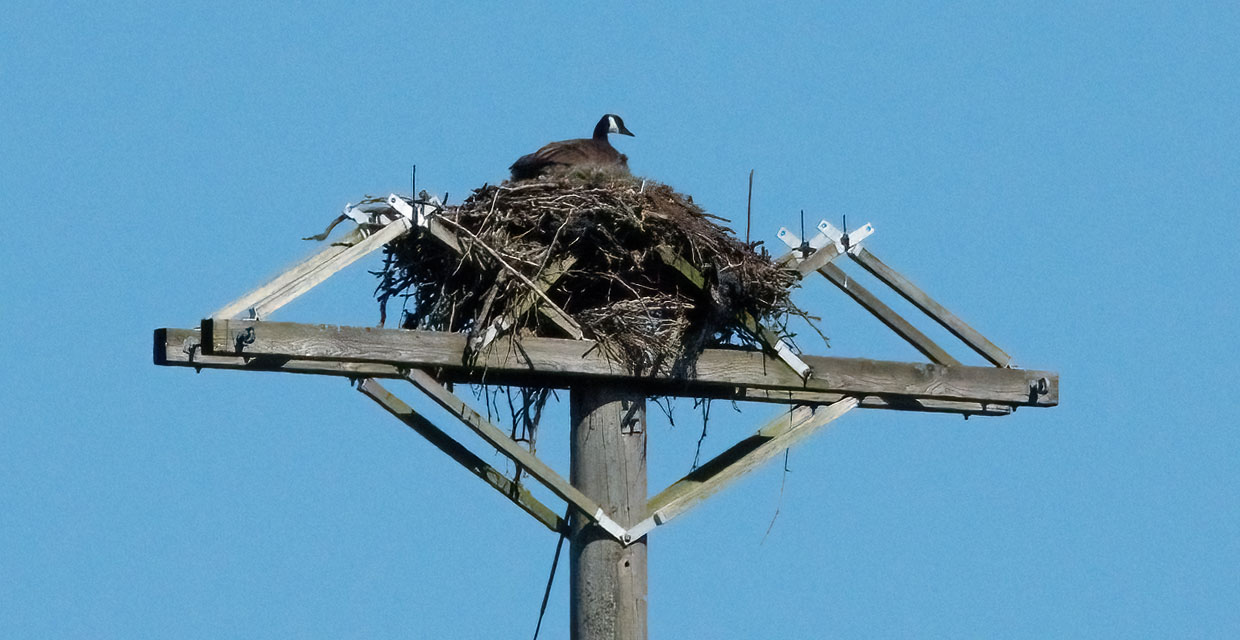
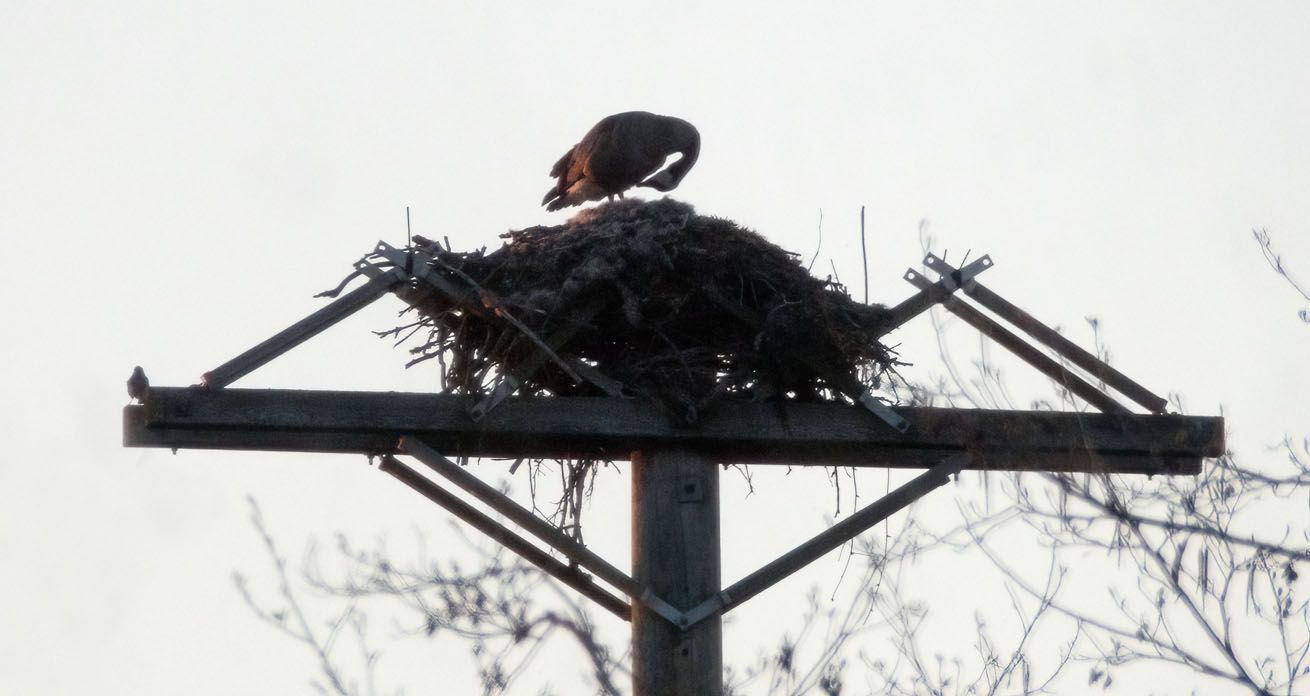
Chambers Bay area Ospreys have arrived from migration on April first every year for quite some time and have usually reclaimed existing territories and nests. But this year, a non-migratory female Canada Goose had earlier taken possession of a well-established pole nest near the Chambers Bay Dam and refused to give it up to a returning Osprey Pair. This behavior by geese had been noted in the area sporadically before.
Goose takes over Osprey nest
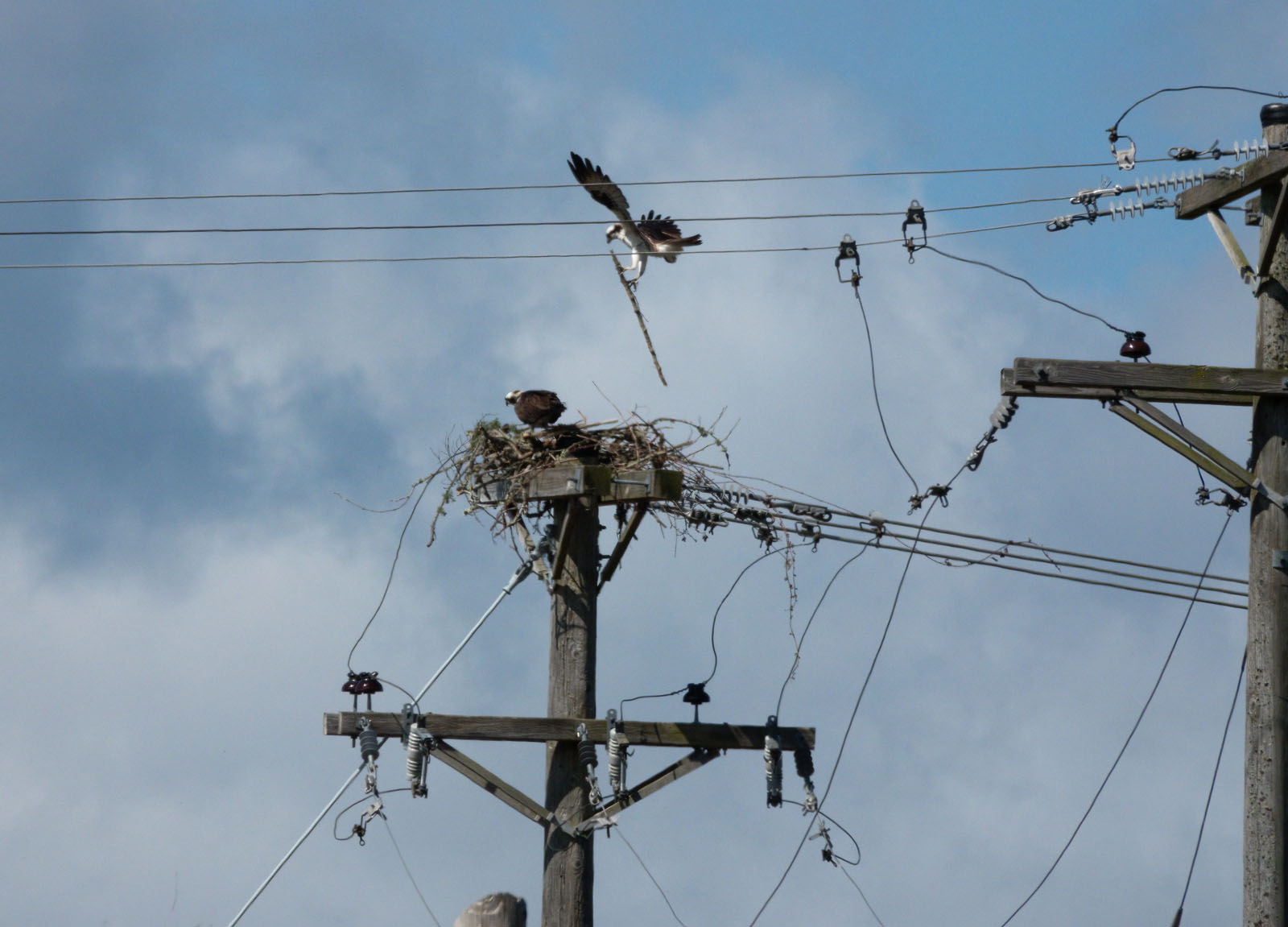
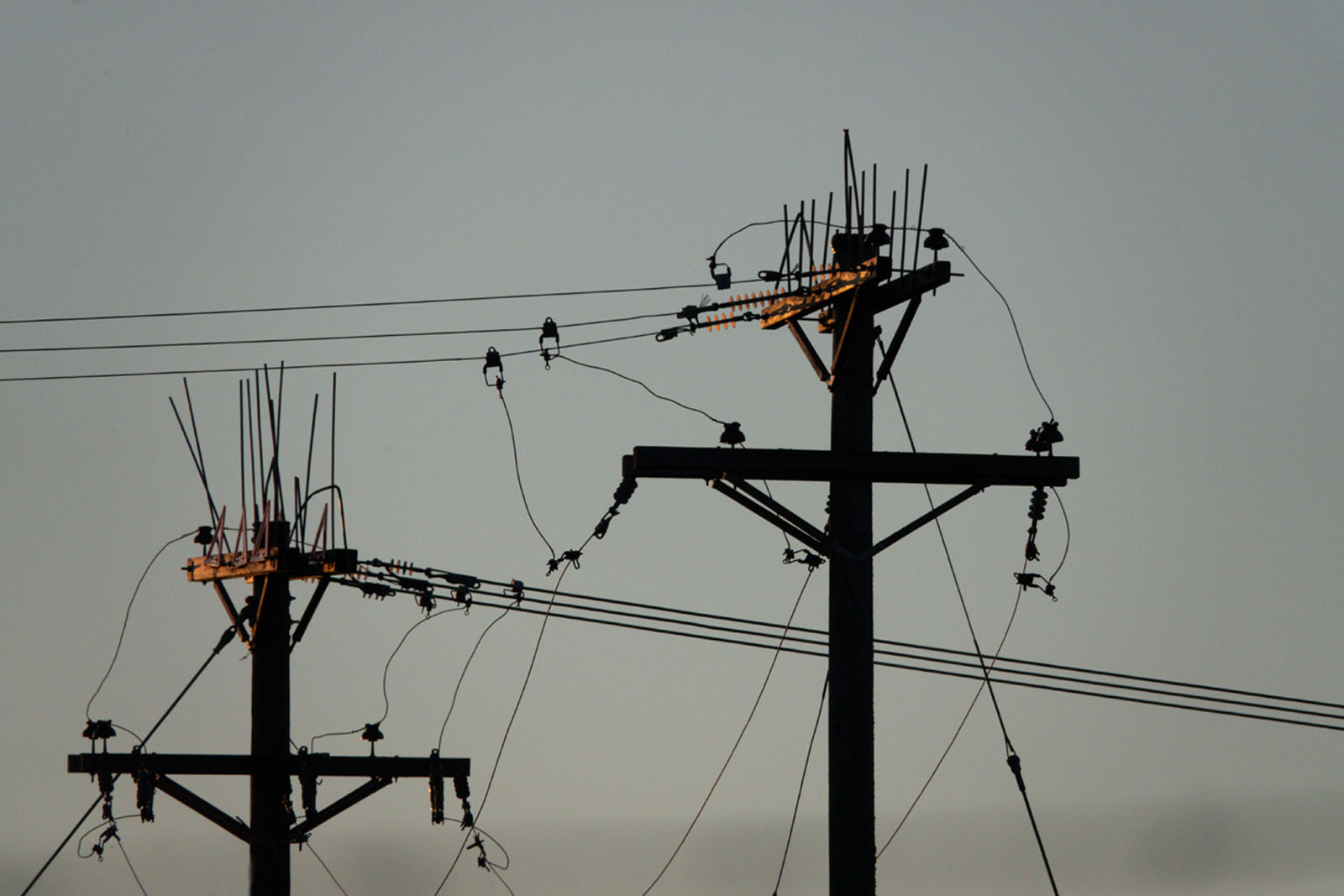
After a day or two, the Ospreys decided to build a new nest nearby, right on top of a utility pole with many energized wires attached, and went at it vigorously. This being a hazard both to birds and potentially to power transmission, Tacoma Power and the Department of Fish and Wildlife were notified. A day or two later the new Osprey nest was removed, apparently with a permit allowing this because of safety concerns. Anti-nesting devices were placed on the pole and a nearby one.
New Osprey Nest The Anti-Osprey Apparatus erected to save Osprey from electrocution
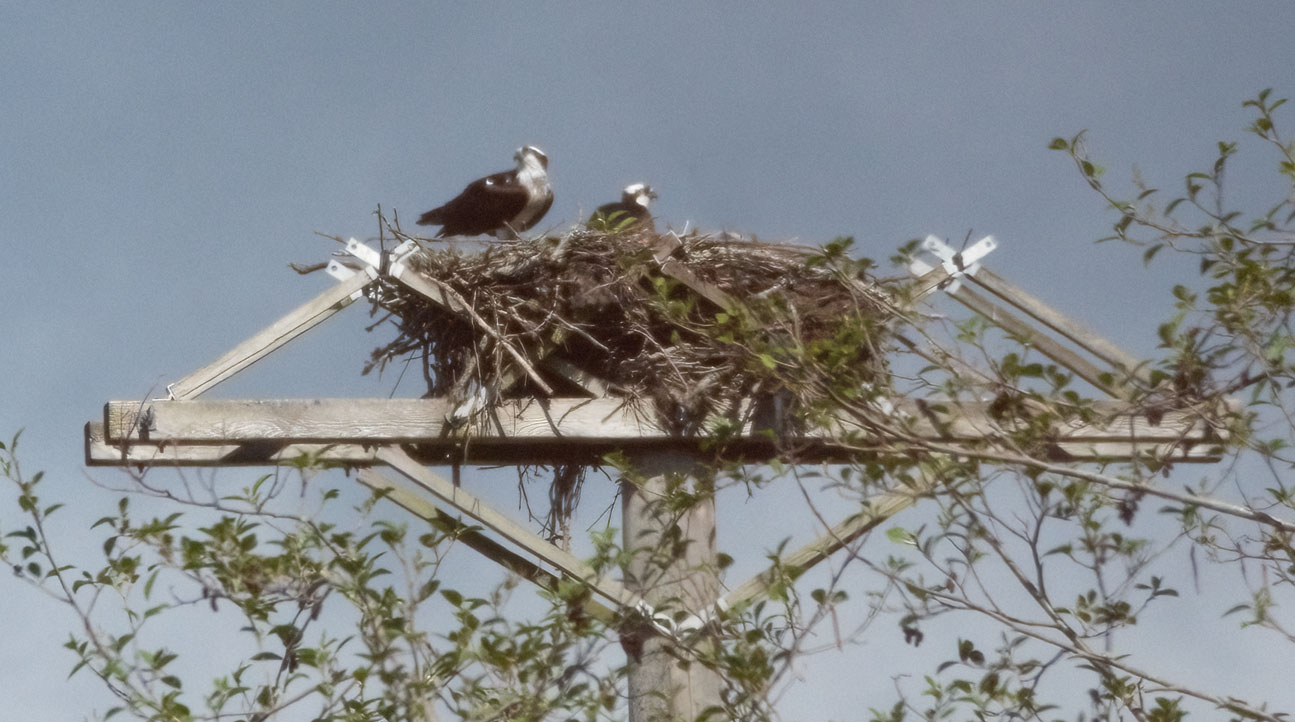
But the Goose remained on the original nest and indeed was plucking breast down and lining the nest with it. However, in the next two or three days she and her pile of down were removed and the Ospreys, who had been hanging around stubbornly, reclaimed their home and have proudly remained on it ever since.