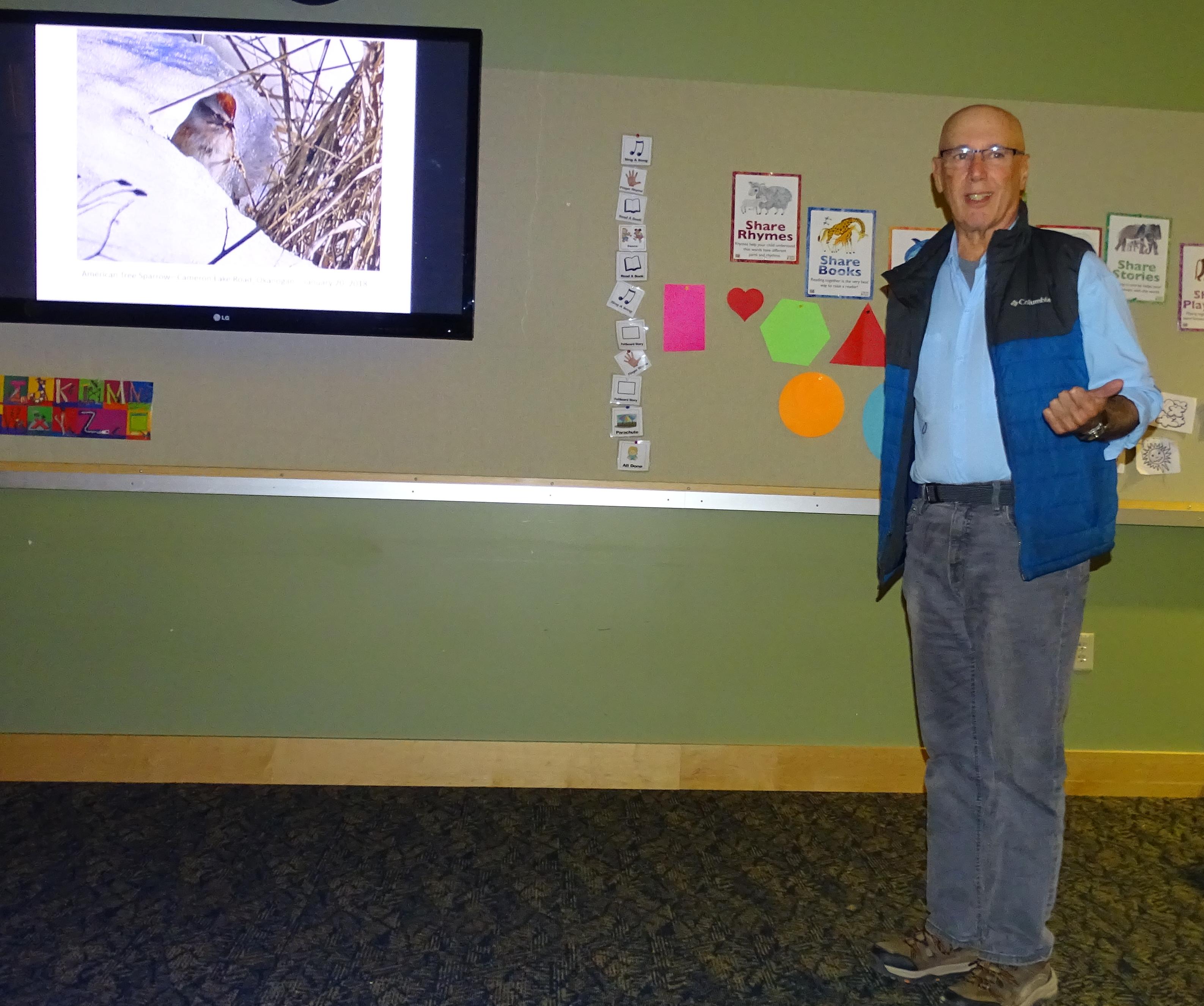
MADAGASCAR! Joe & Maggie wow ABC’ers again with their trip report on April 17, 2019


On April 17th, Joe and Maggie Tieger took us along with them on their recent trip to Madagascar, the fourth largest islands in the world and isolated enough (250 miles off Africa’s east coast) to be stuffed with endemics, both fauna and flora.
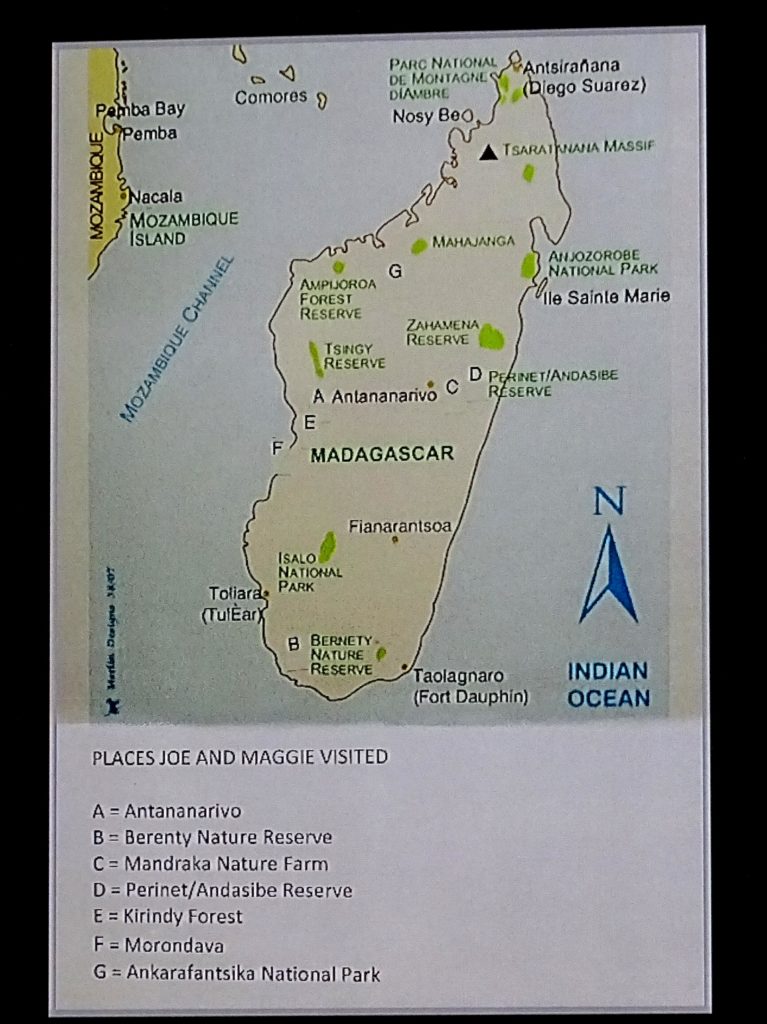
Madagascar places Joe & Maggie visited

Tropical Birding Tours was very good to them, not cancelling the tour when more people didn’t sign up, so they had two excellent guides to themselves. They were able to see an extraordinary number of endemics of all types including most of the birds, lemurs, lizards, and plants, but the wrong season for the famous frogs, alas!
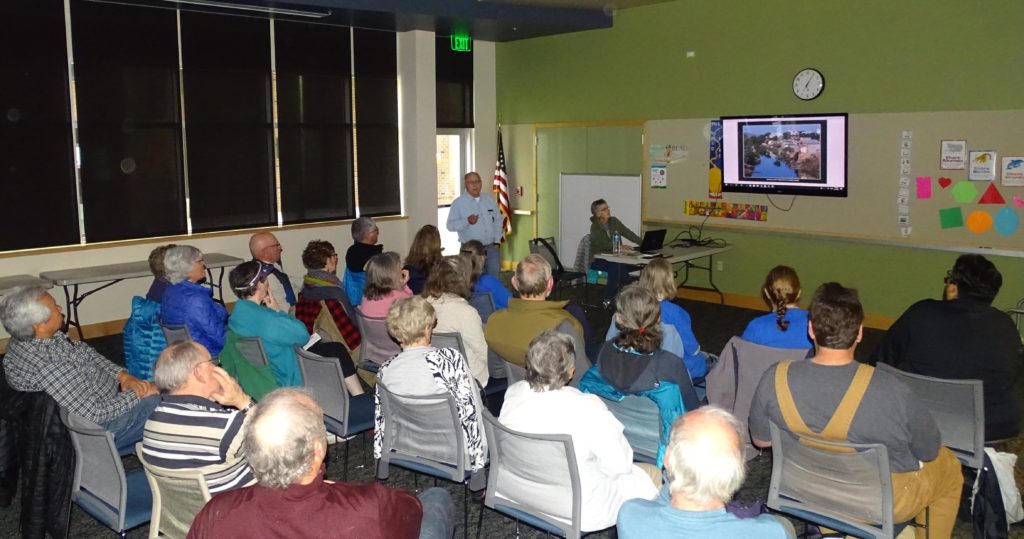
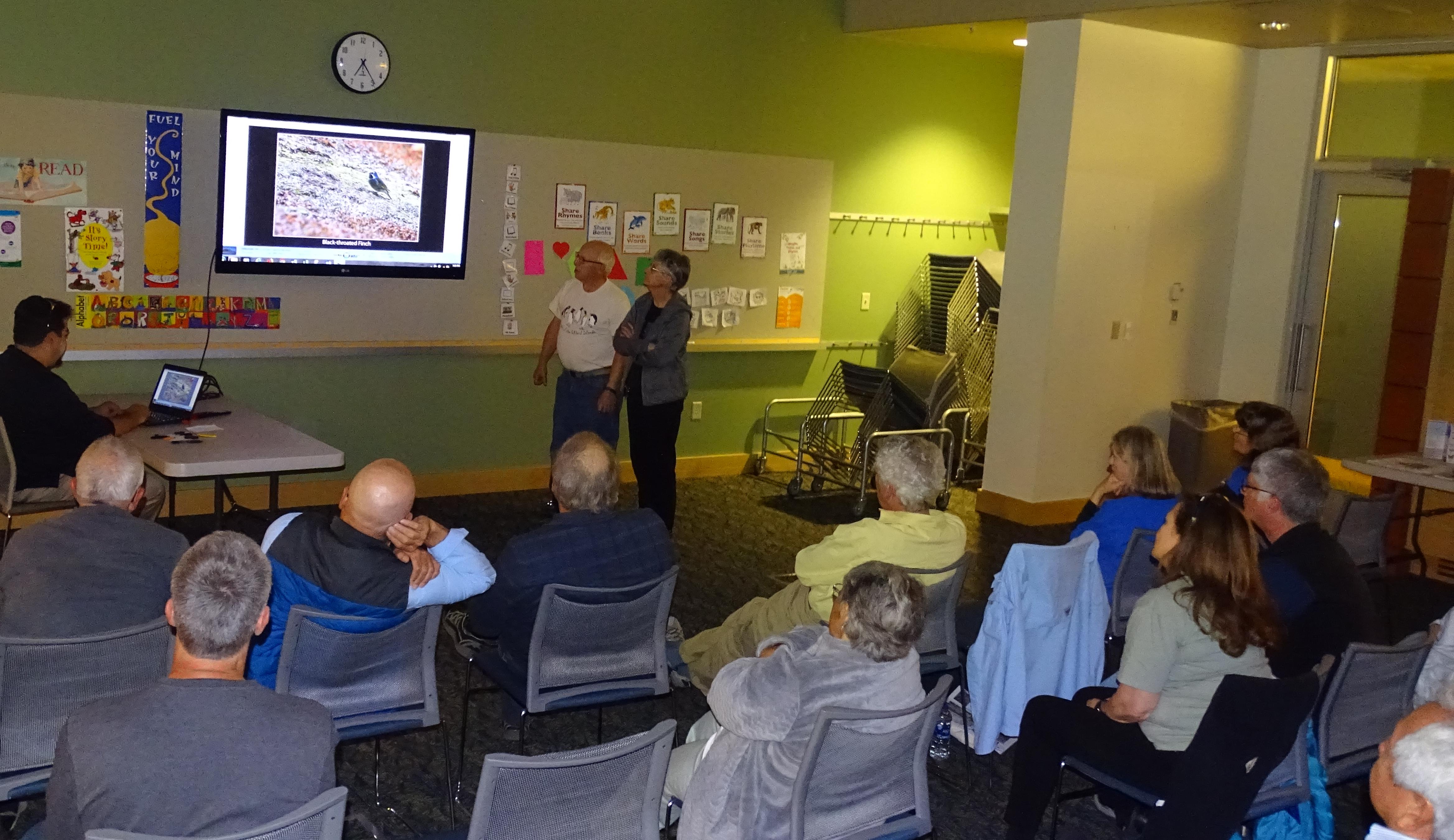
Joe and Maggie Tieger present to ABC, 4-17-19


They started out their slide show with an overview of Madagascar, history, climate, culture, etc. It’s one of the poorest places on earth, human-wise, and the infrastructure shows it, including traffic, sanitation, and lack of upkeep on wildlife refuges. They did have some good accommodations in the first half of their circuit of the country, but in the second half there was a lot lacking and some resultant illness.
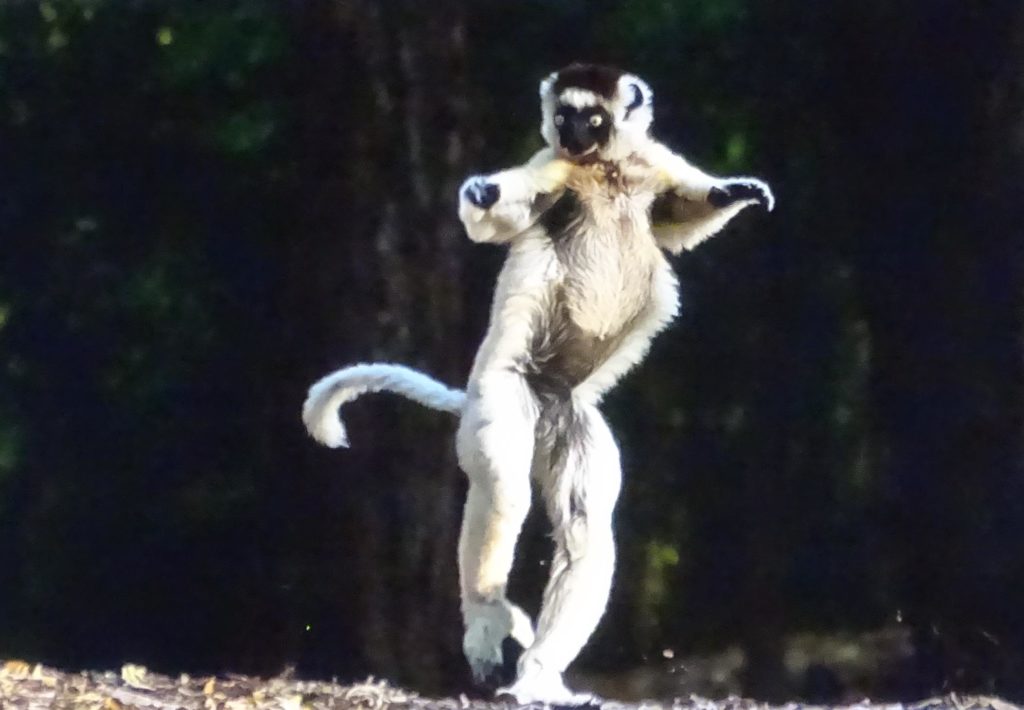
Dancing Lemur (Photo J&M Tieger)


About the time some of us were thinking we’d never go there, they started in on lemurs, and suddenly we were enthralled again! The lemurs were truly magical and many of them quite approachable, as humans were not on their predator radar. Sizes ranged from mouse-size to almost human scale, with those long talented tails on most, but surprisingly not all. The lizards were also amazing and varied.
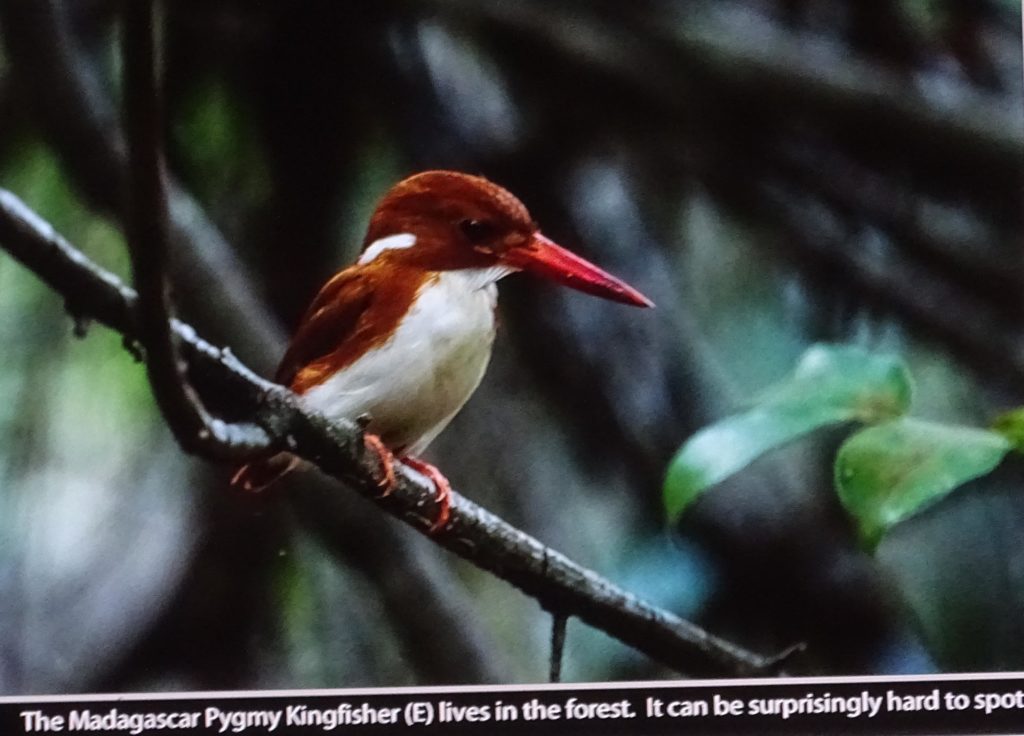
Madagascar Pygmy Kingfisher, endemic. Photo J&M Tieger.


Birds were fabulous. Many of them appeared to be African species, but recent DNA has shown their isolation has made new species or subspecies, so many endemics. In fact, 90% of the birds are endemic species or subspecies! These include several Kingfishers, and Carole Breedlove was on hand to appreciate seeing them again after including Madagascar on her world travel for Kingfishers.
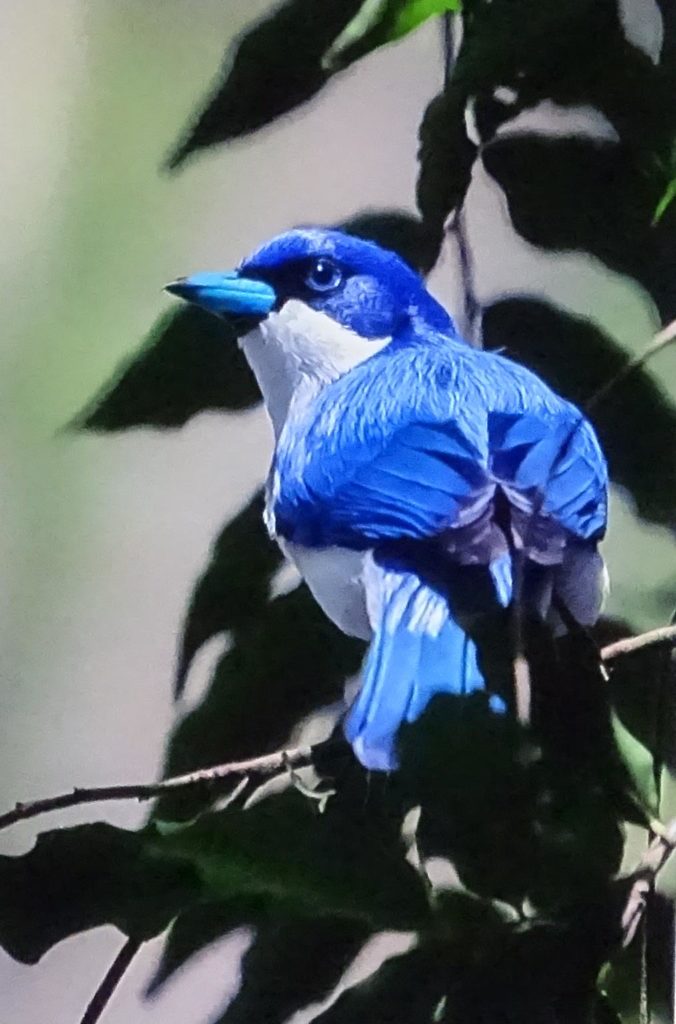
Madagascar Blue Vanga (Photo J&M Tieger)


The Vangas were the equivalent of Darwin’s finches for Madagascar. All descending from the original Vanga, the many current species imitate finches, flycatchers, woodpeckers, and many other types of birds. And many are beautiful, too.
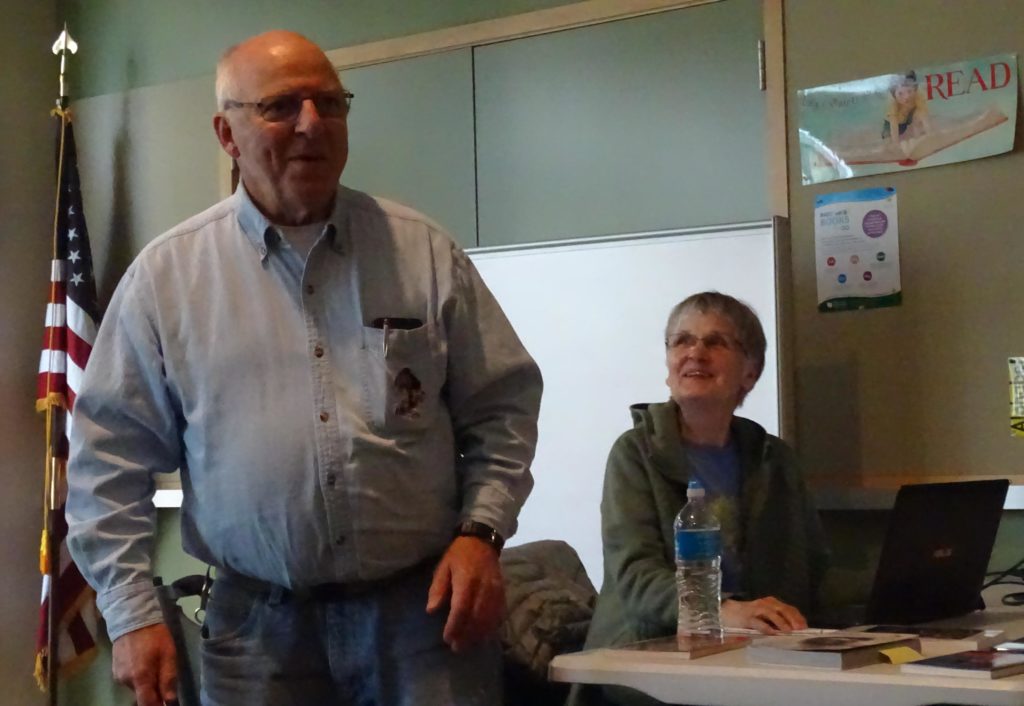
Joe and Maggie Tieger tell us about Madagascar


One interesting aside about photographing birds is that the guides on this trip had very bright flashlights and used those instead of flash photography. Joe explained that most of their shots were lit this way and how much easier it was to focus and click on an item already lit up for the camera.
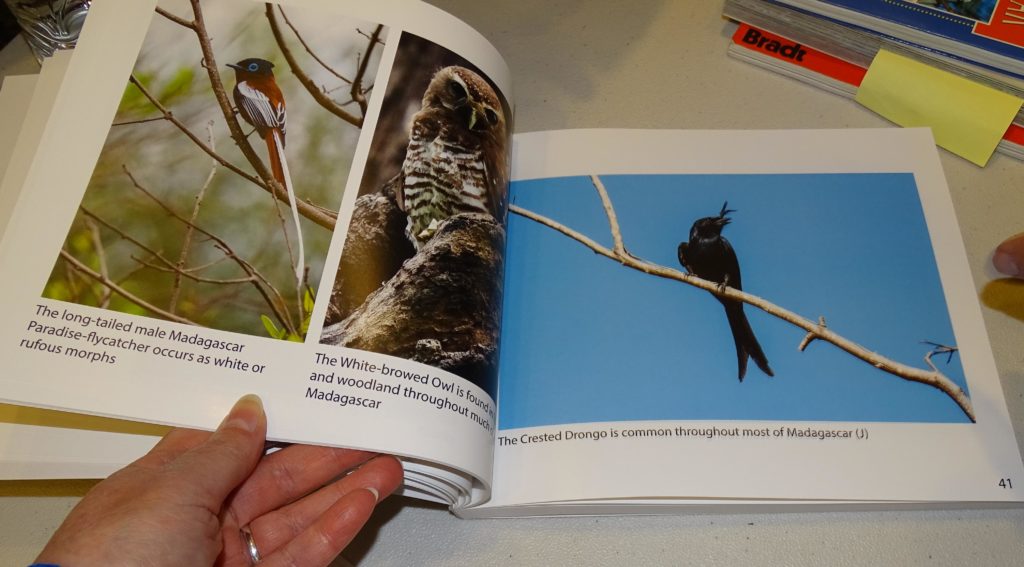
The Tiegers’ photo book


When they got home, they put together a photo book in lieu of printing their best shots. It was one of the best photo books I’ve ever seen and the ultimate souvenir for a birder.
Thanks, Joe and Maggie!
Will Brooks tells us the secrets of White-crowned Sparrows, March 26, 2019

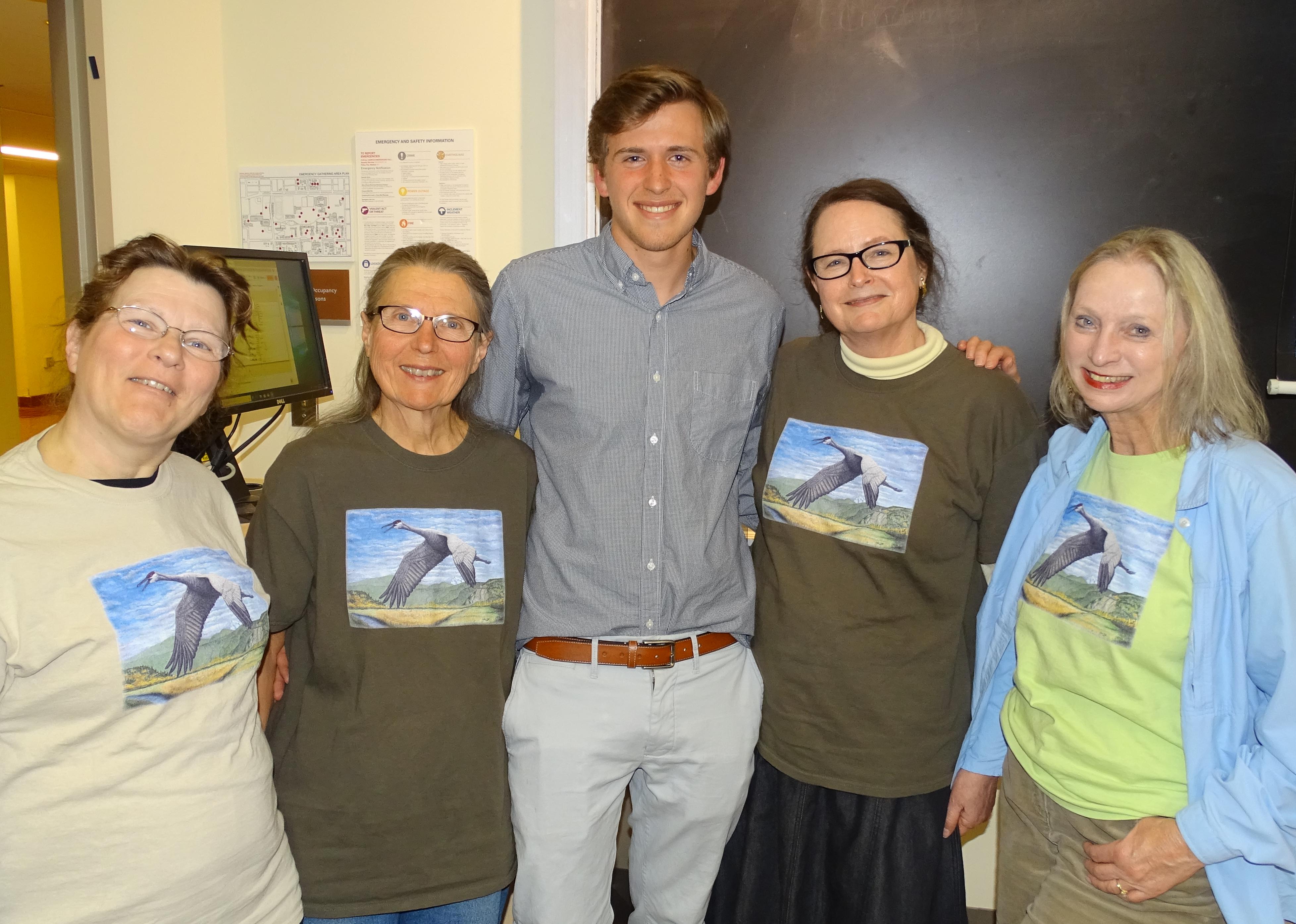
Willettes representing WOS and Young Birders Fund

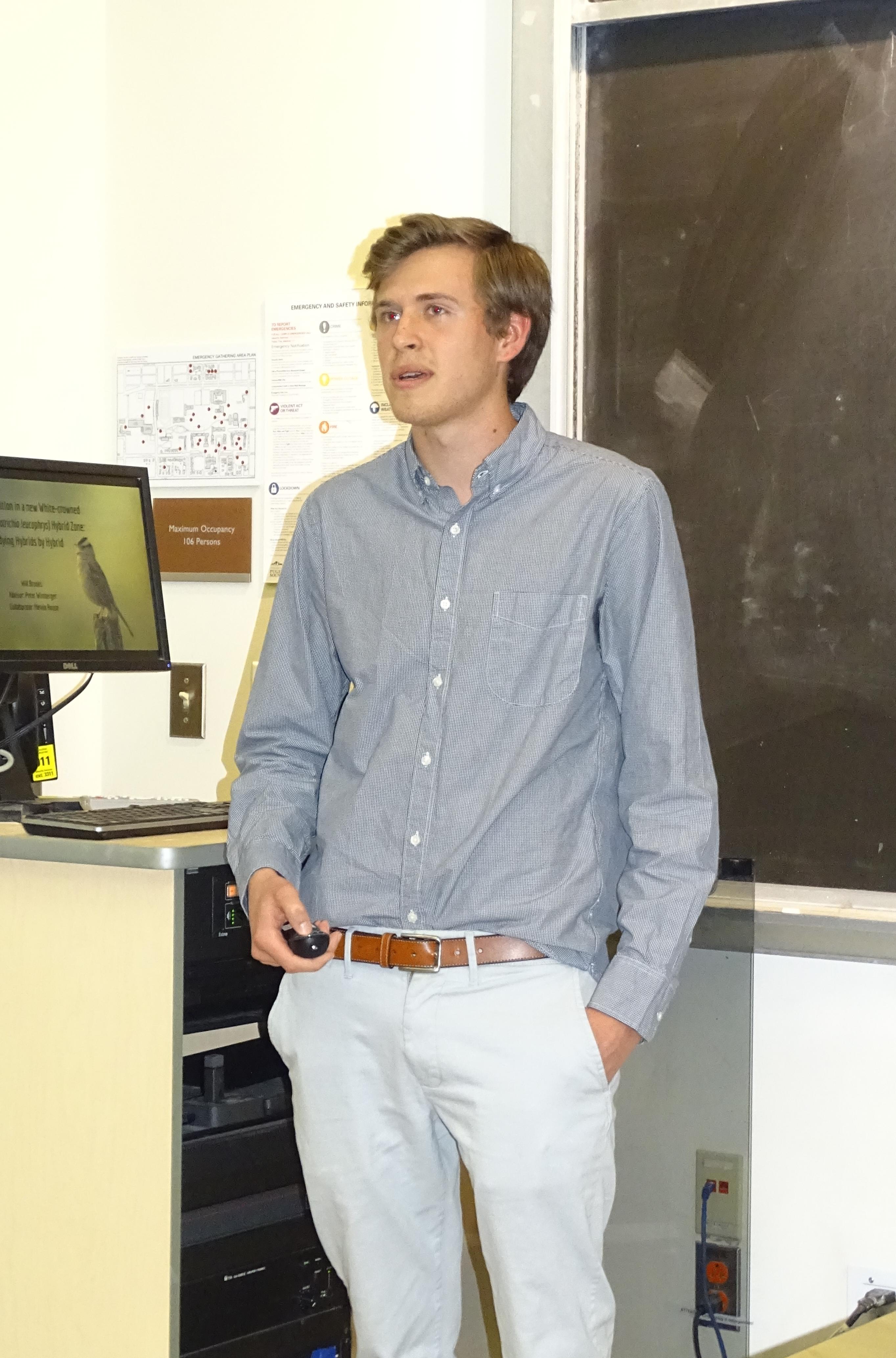
Will Brooks presents to ABC

Will Brooks, ace birder and student at UPS, presented to ABC on March 26, 2019, his research findings, “Song Recognition in a new White-crowned Sparrow Hybrid Zone: Studying Hybrid by Hybrid.”

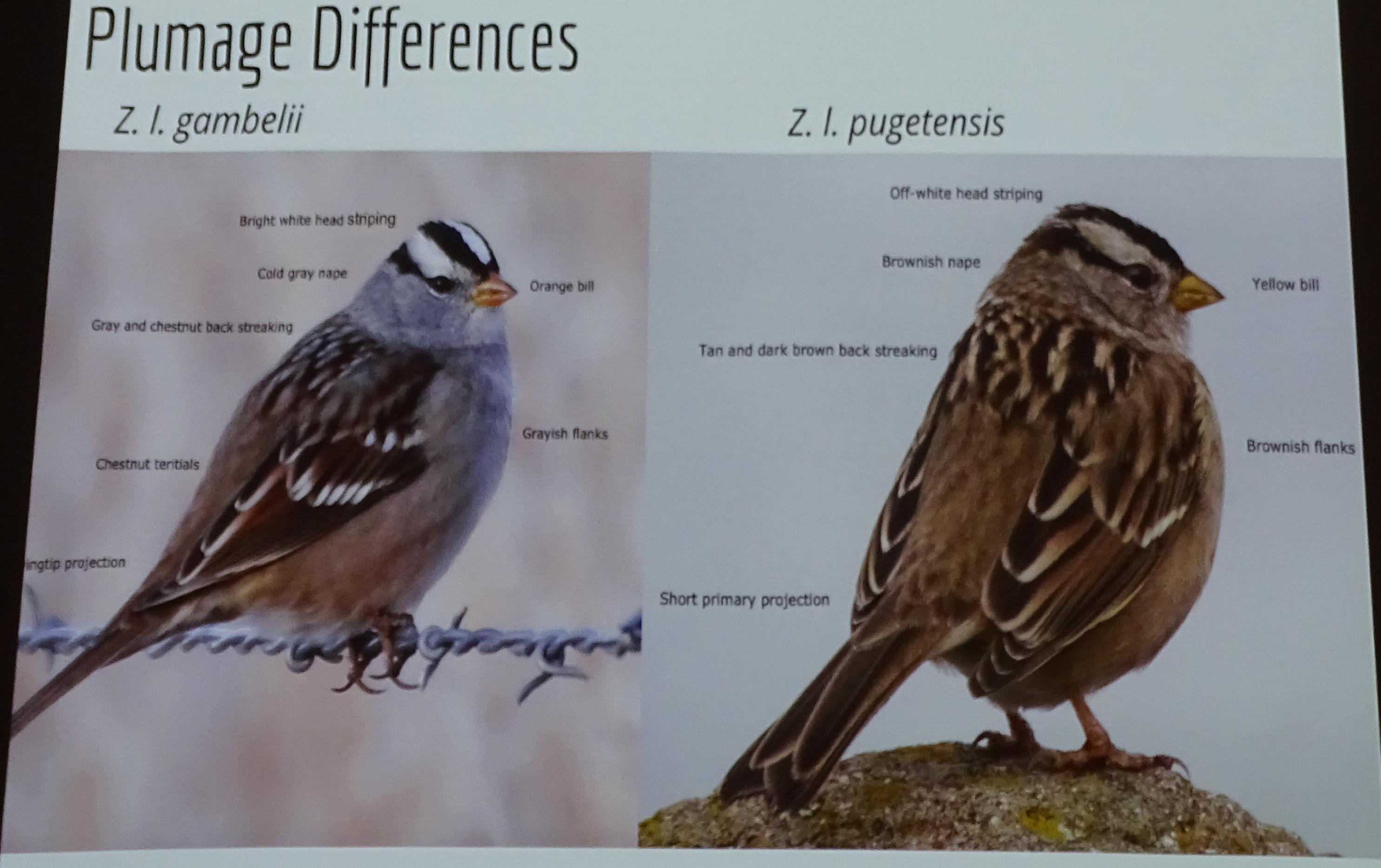
Plumage differences

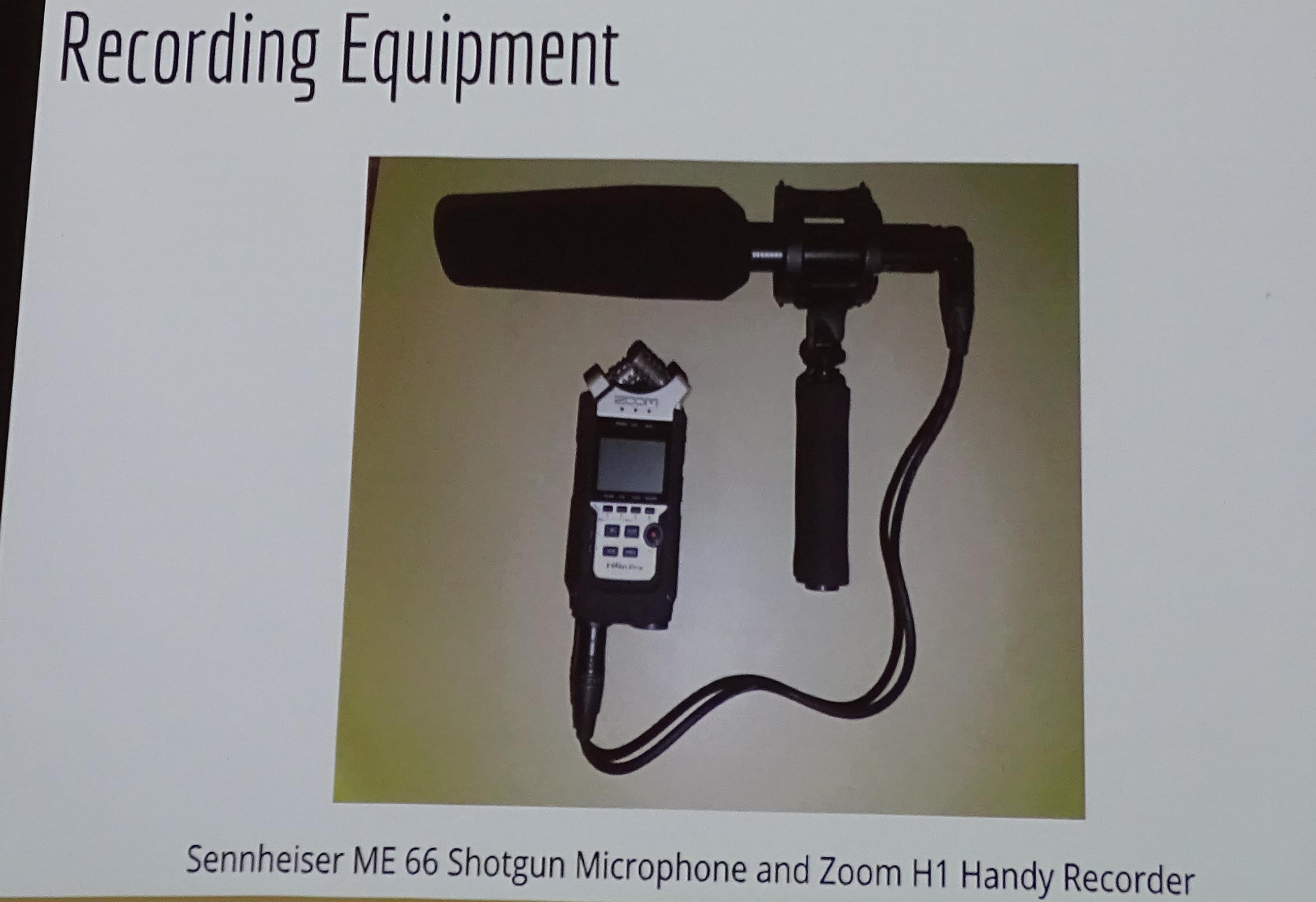
This project was helped along when Will received last year’s Washington Ornithological Society (WOS) Patrick Sullivan Young Birder’s Fund award. Tom Mansfield, speaking for Andy and Ellen Stepnewski and the PSYBF, said, “Will is a super person in addition to being an extremely talented birder. You can all be so proud of Will, as we are. Will epitomizes our profile of a PSYBF honoree. I know your ABC will learn much and enjoy the opportunity to meet and see Will.” In fact, Will showed a slide of his recording equipment, which he said was purchased with the WOS fund and made his astute analyses possible.

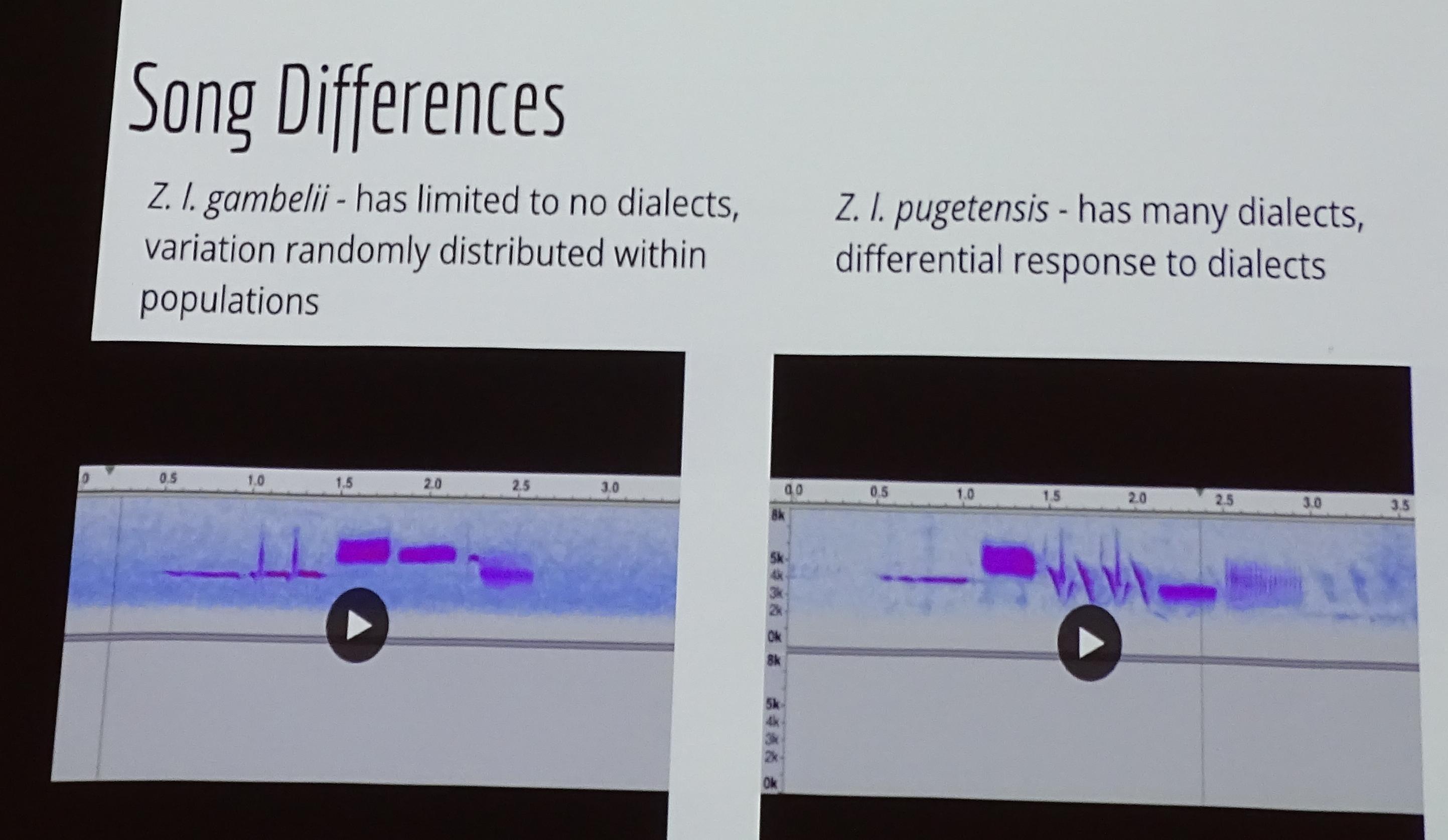
Subspecies dialects

Those of us who attended can now tell you all kinds of info about the songs of pugetensis and gambelii subspecies and whether they hybridize and where. These two subspecies are the two found in Washington and other parts of the western U.S., sometimes in overlapping areas. The sonograms showed that pugetensis has many dialects, but gambelii mainly just one. Song recognition varied as well, a factor in hybridization.

Will m

Recording equipment made possible by grant from WOS Young Birders Fund

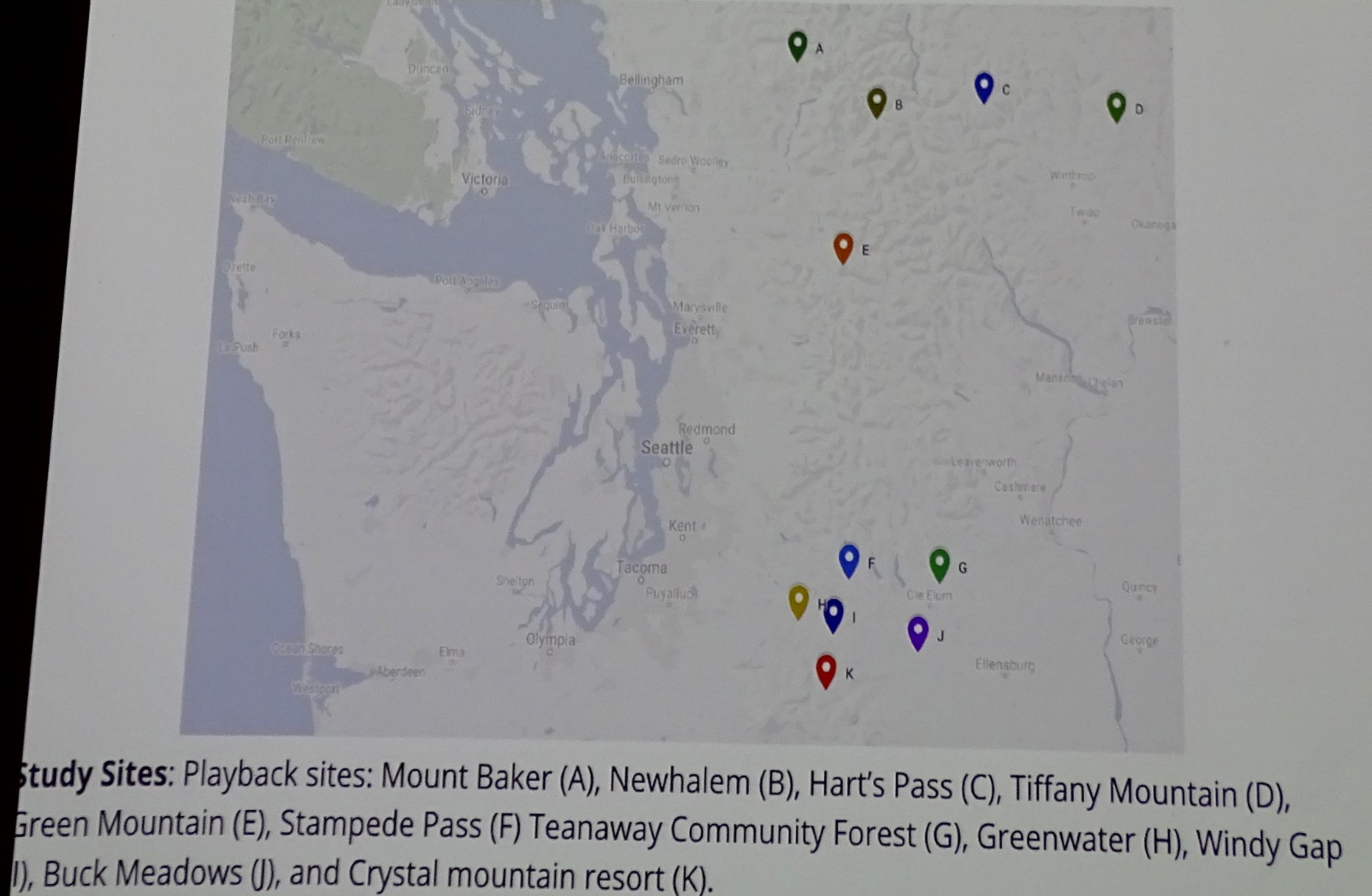
entioned that he studied Hybrid by Hybrid by driving his Prius all over the Cascades, using playback of both subspecies and testing and recording reactions. Of course he had the fabled birder story of a flat tire in a no-cell region and finding his car did not have a spare! Luckily someone came by and rescued him!
He showed a map showing where the 10 of 13 pugetensis dialects principally occur. We have type #5 here.

Study sites

After hearing both subspecies, including several dialects of pugetensis, we’ve been educated! We now know what to watch for in appearance and songs of these beautiful sparrows.

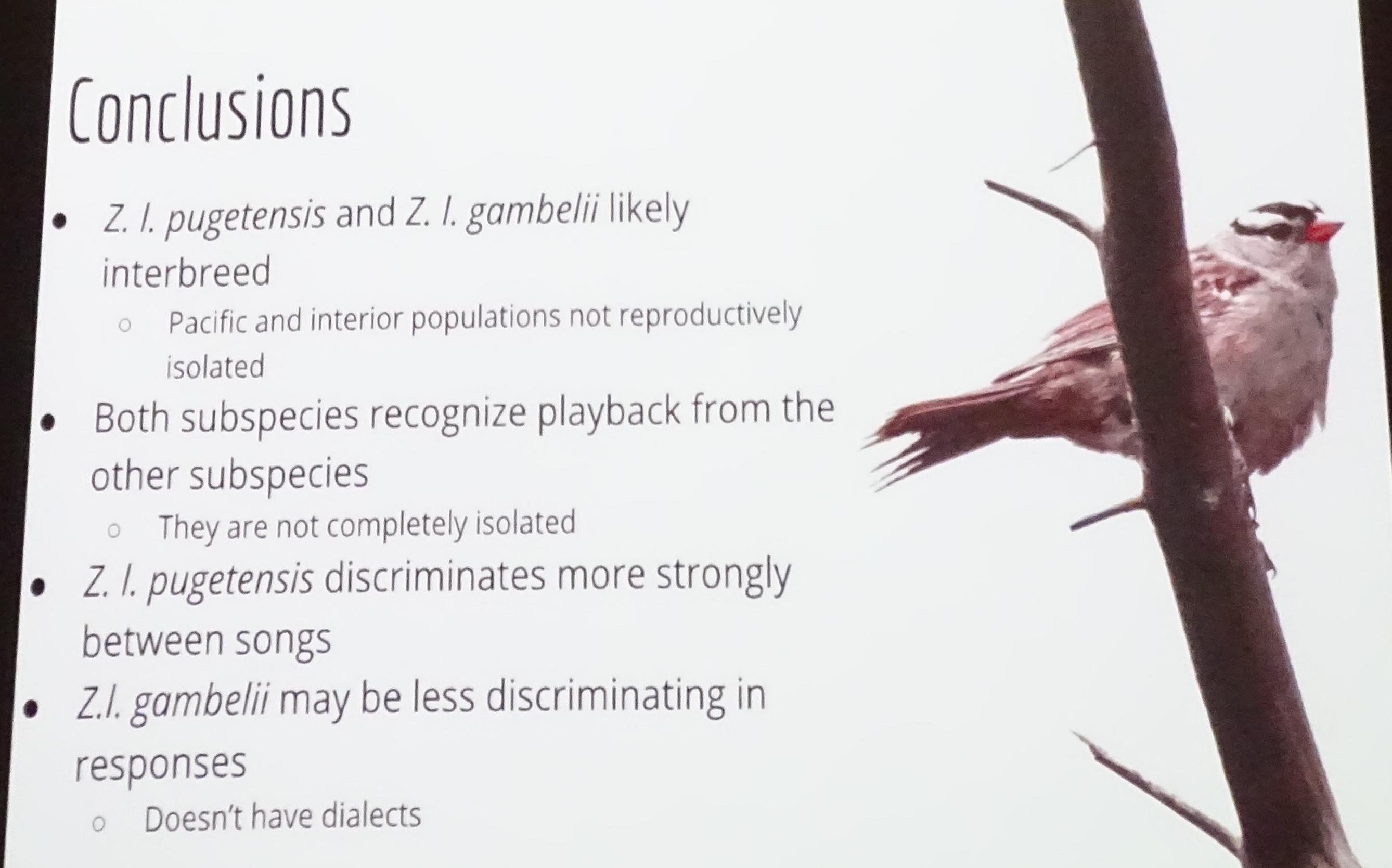
Conclusions

Will ended his talk with some conclusions and a list of what’s next for him, including finishing up a few details, tying it in with genetics, and getting the research published in a journal.

SERGIO BRINGS HIS RAPTORS TO ABC, February 5, 2019

SERGIO BRINGS HIS RAPTORS TO ABC, February 5, 2019

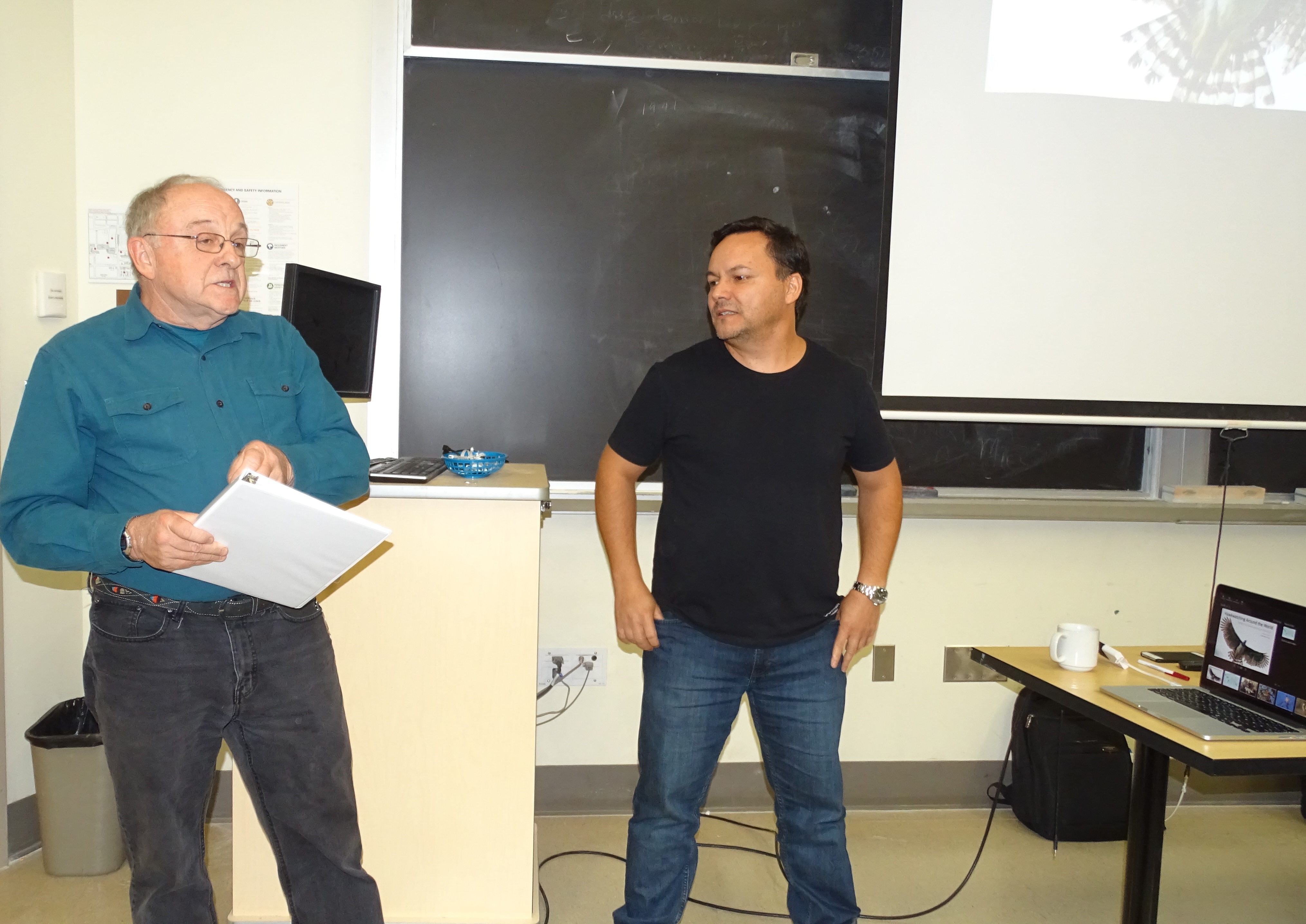
Mike Walker introduces Sergio Seipke of Raptours to the ABC group on Feb 5, 2019

Sergio Seipke brought his stories of raptor-watching all over the world to ABC on February 5. His enthusiasm for these species led him, with famous raptor guy Bill Clark, to start Raptours. Our own Mike Walker had been on two of his trips and knew Sergio would be in the northwest about now doing the Skagit winter raptors with Bud Anderson, so he grabbed him to do a presentation for us!

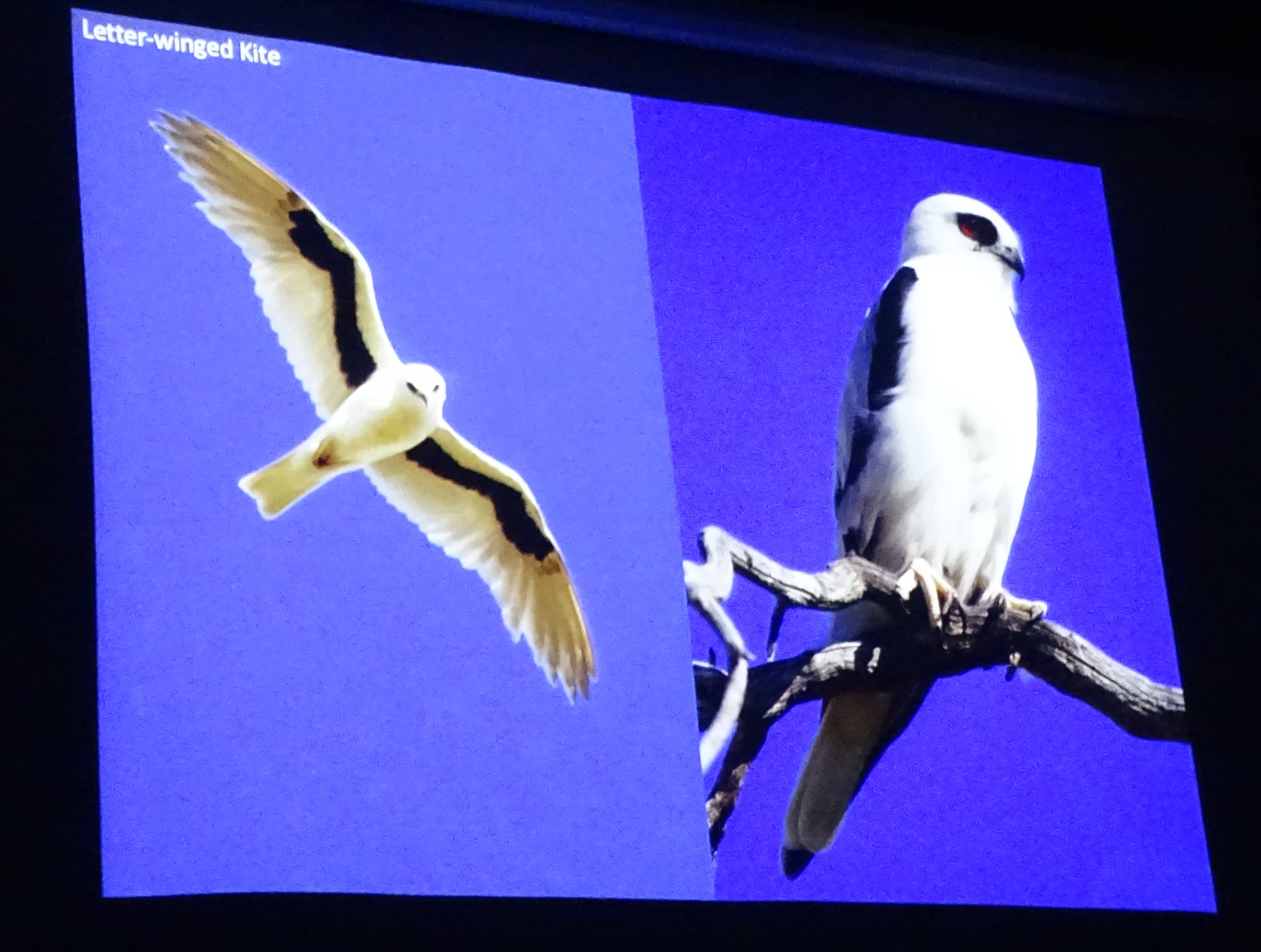
Letter-winged Kite, one of many slides of various kites of the world

We were all astounded at Sergio’s experience and deep knowledge of these birds, not to mention his super photos and videos!

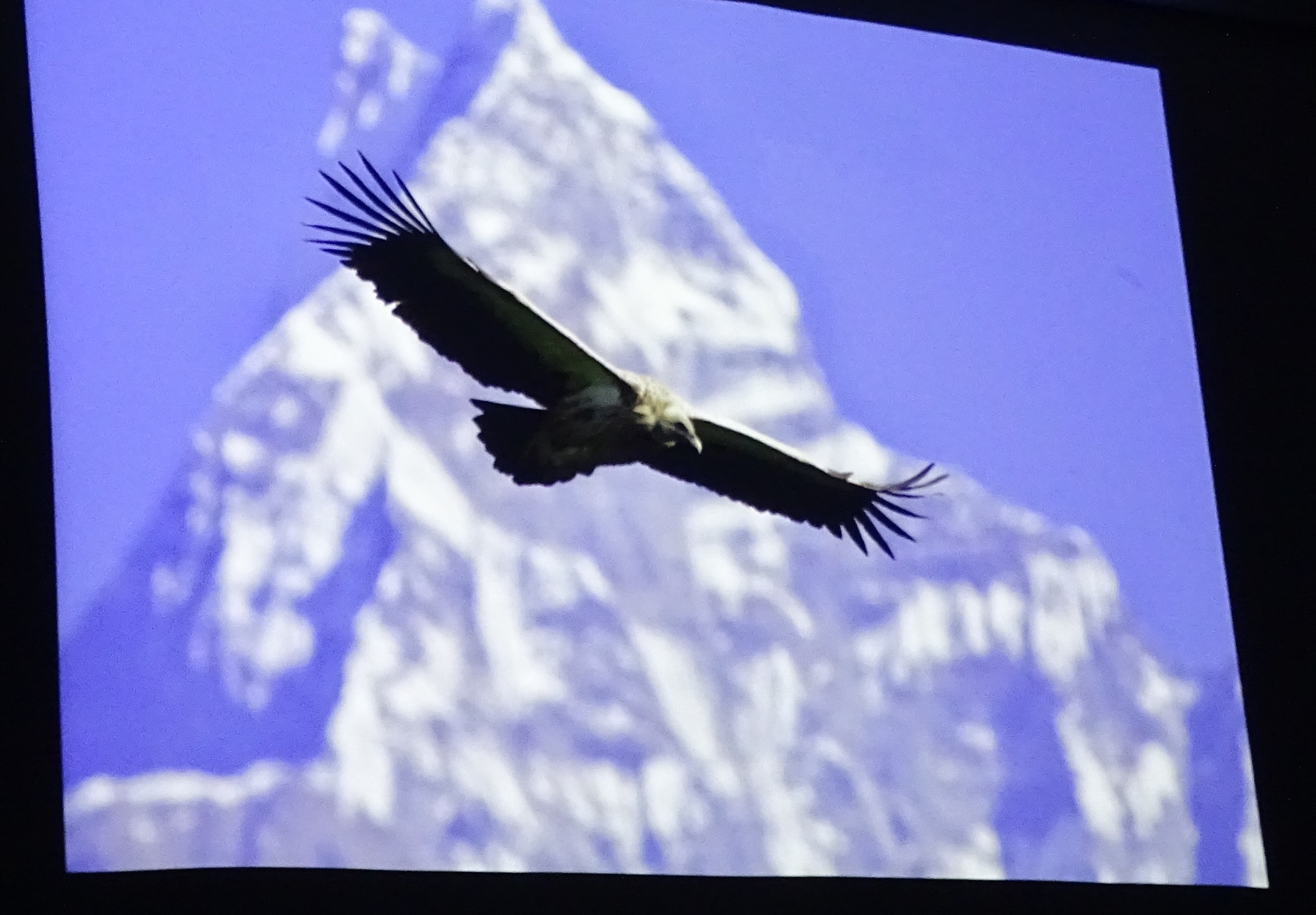
Vultures inviting us to the Himalayas!

His opening slide was of the most iconic raptor in the world, the elusive Harpy Eagle, along with Harpy stories, of curse. His slides also included one of his Argentinian riverside home which he described as Eden, with Raptors flying along the river right in front of the house. When he showed a slide of the gorgeous Black and White Eagle (or Hawk-Eagle to some), he admitted this was his favorite bird.


His many slides of Kites included Swallow-tailed Kites (featured on Raptours’ logo), which many of us have seen in Florida. Upon questioning, Sergio revealed his deep knowledge of the species, saying there are 5 separate populations which completely different ranges and migration patterns.
Sergio’s love of vultures led him to the Himalayas! His joy in this area planted a few seeds among ABC’ers. Then to Madagascar with its famed endemics!
Interestingly, Sergio wasn’t as keen on Veracruz, the Mexican migration bottleneck that many of us were hoping to visit. Apparently the birds fly very high there, making it difficult to see them well, let alone photograph.
It was also fun to see Mike and Bud in photos of some of the Raptours groups that Sergio spearheaded, and then to see a bunch of northwesterners in the Skagit census groups that Sergio joined. At the time of this posting, that event may have been canceled this year due to Snowmageddon, but we hope they were able to get some good figures anyway.

Sergio with some of his biggest fans, the Willettes!

In the question-and-answer time at the end, Sergio was asked about and showed his current equipment, although he apparently uses others as well. He is currently using Zeiss binoculars and Canon cameras. Upon Faye’s question about photographing with a smartphone, he let us know that most of the little videos were digiscoped with a smartphone!
Check out Sergio’s website: http://www.raptoursllc.com/
Thanks, Sergio!

Sergio Seipke coming on February 5, 2019!

February 5, 2019, 6:45 PM, University of Puget Sound, Thompson Hall, room 175, suggested $10 contribution for expenses and for room use.

Join us to welcome Sergio Seipke of Raptours, who is in the state with Bill Clark to enjoy the raptors of western Washington, hosted by Bud Anderson of Falcon Research Group, whom we all know.

Bill Clark and Sergio Seipke at the Platte River (courtesy RapTours)

Sergio will talk discuss “Five Years Hawkwatching Around the World.”  He says, “I will share raptorial highlights in our tours from 2014 to 2018. This talk features a number of raptor photographs, landscape pics, anecdotes and some funny facts of the destinations Raptours has been to as a company. In other words, a collage of raptor images taken in Argentina, Australia, Brazil, Mexico, Nepal, Panama, South Africa, Thailand, and the USA.”  Sergio will also discuss the 19 diurnal birds of prey of Madagascar briefly, where he will lead a tour next November/December.

World raptor expert and wildlife photographer Bill Clark founded Raptours in the 1990s to cater to birders who have a particular interest in birds of prey. In 2006 Bill co-led a tour with Sergio Seipke in northern Argentina. Bill then suggested to Sergio that he should offer raptor tours as a means to help fund his Raptors of South America field guide project. The idea was an appealing one: small tours would be perfect to be in the field and collect data for the book. So, Sergio started offering raptor tours himself to destinations in South America following Raptours’ guiding style and philosophy.

In February 2013 Sergio formally organized Raptours, L.L.C., in Lincoln, Nebraska, and now owns the company. Sergio says, “This resulted in a new and very exciting phase of my raptor career. Since 2005 to date I have designed, organized, and led or co-led raptor tours in eight countries in four continents.

“Raptors have inspired me to travel. I’ve watched, studied, photographed and enjoyed raptors in 13 countries including Argentina, Brazil, Bolivia, Chile, Ecuador, Germany, Panama, South Africa, Thailand, the U.K., and the U.S.A. While mother taught me to speak Spanish, raptors made me fluent in English and Portuguese. I have met many inspiring individuals in my travels ranging from superstar international raptor experts to impressively knowledgeable local naturalists. Not that I am counting, but as of March 2015 I have seen 192 species of raptors. OK, maybe I am counting them, after all.”

REPORT: SPRING BIRDS OF ISRAEL – November 13, 2018

SPRING BIRDS OF ISRAEL

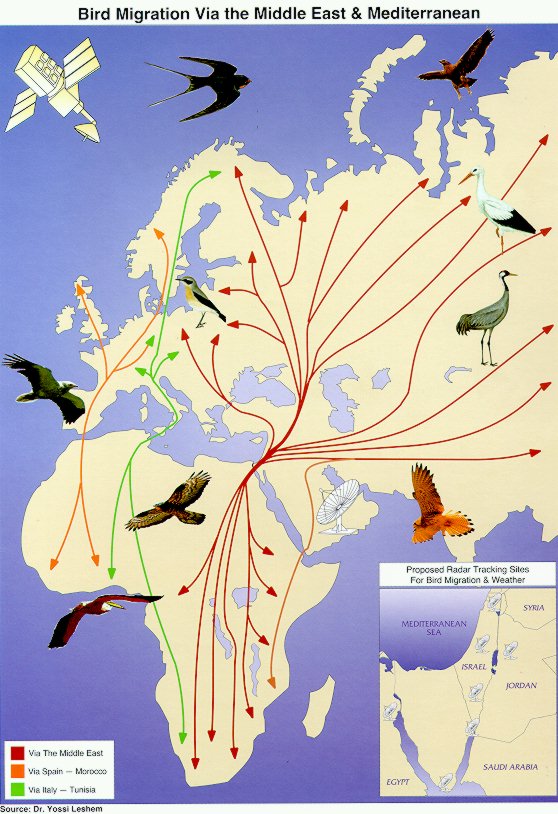
Bird Migration map by Yossi Leshem of the Society for the Protection of Nature in Israel

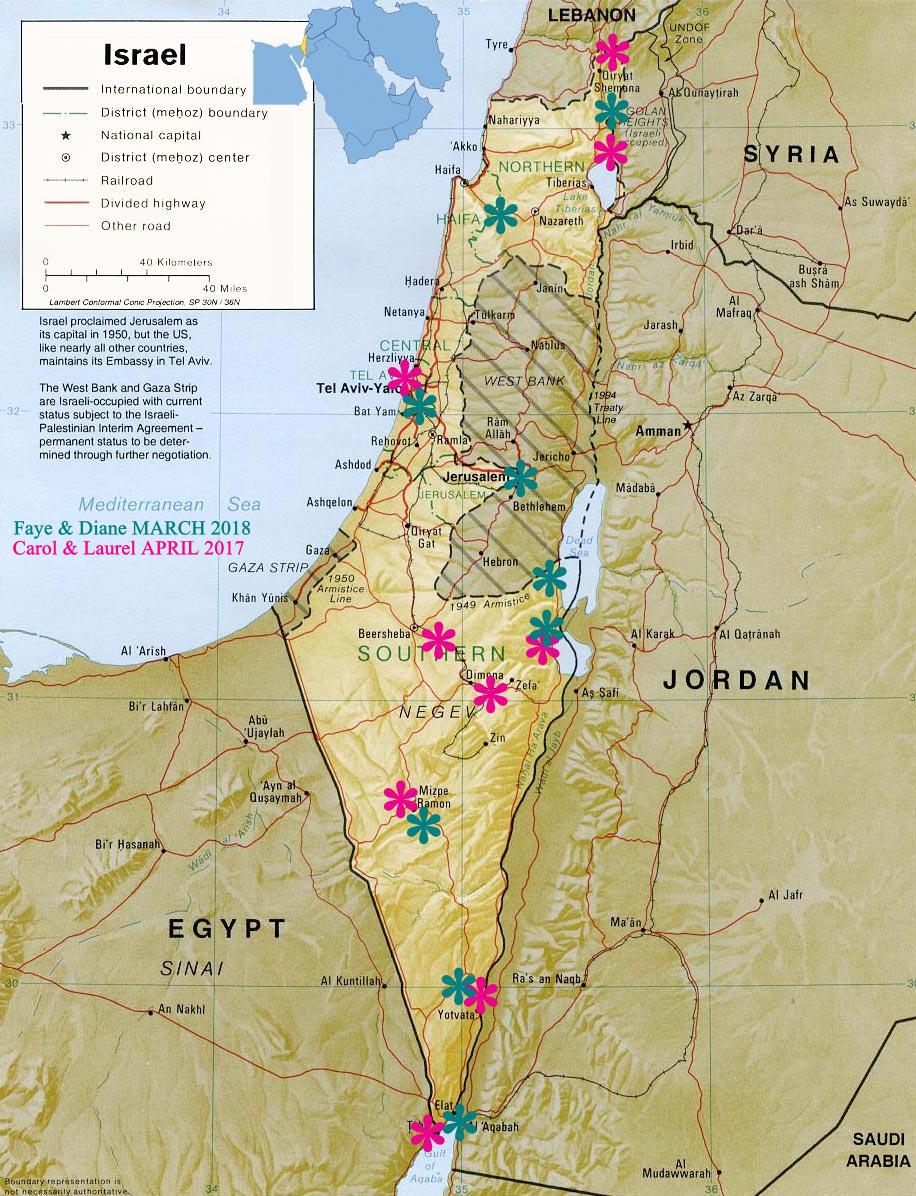
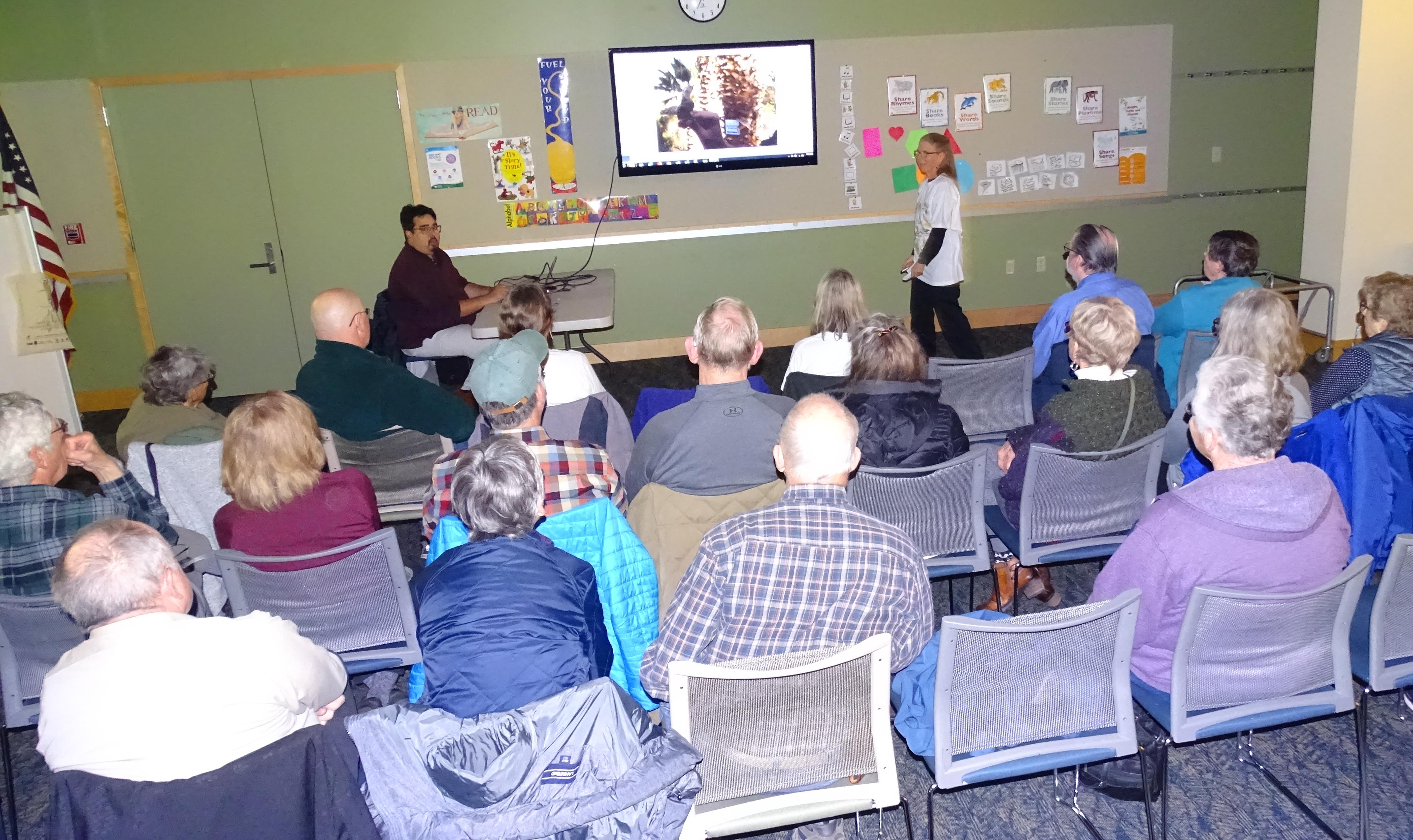
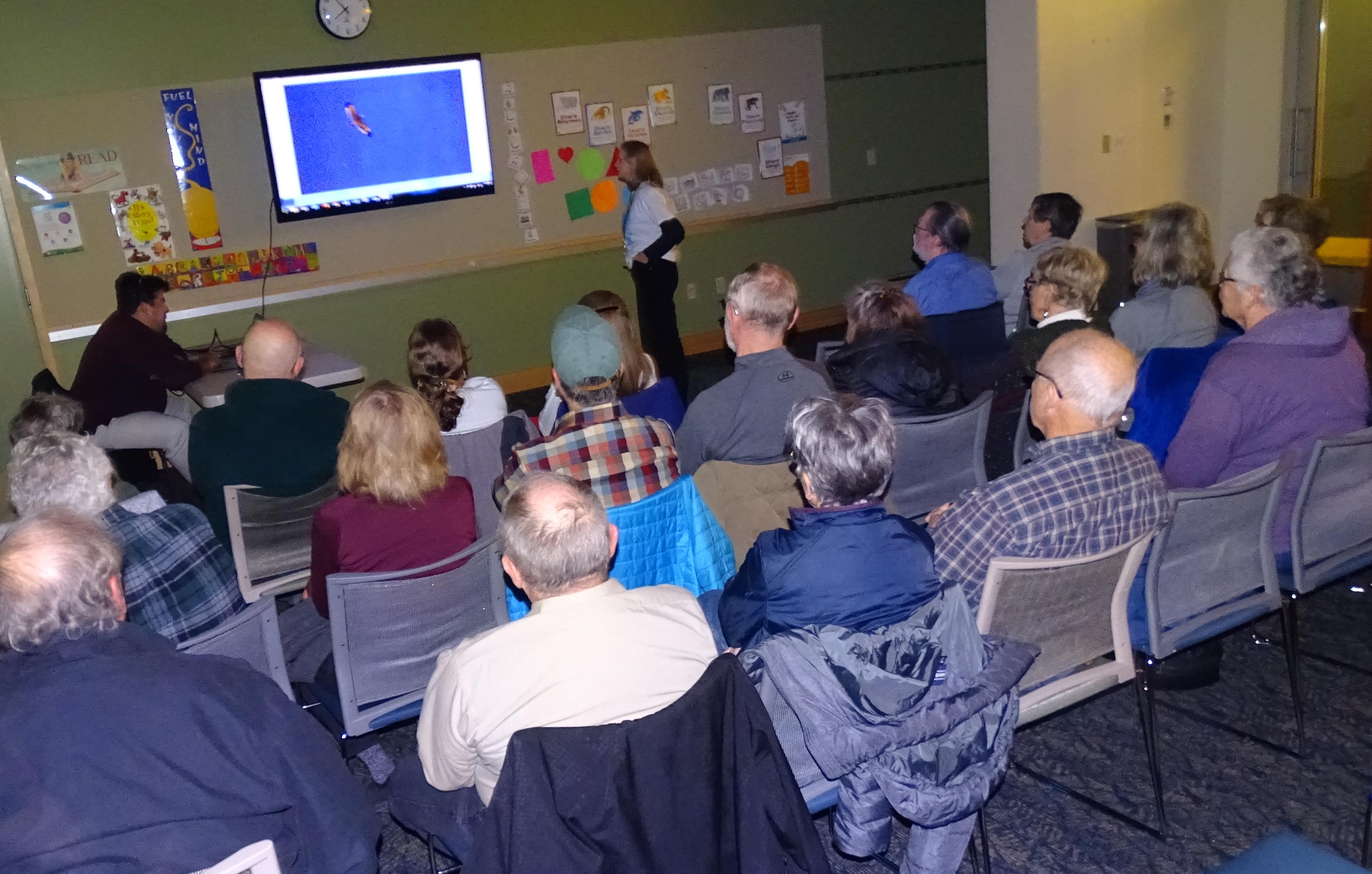
The ABC meeting on November 13, 2018, featured birding travels in Israel by two sets of the WIllettes. Carol Smith and Laurel Parshall traveled there in April 2017 in a small tour group. Faye McAdams Hands and Diane Yorgason-Quinn went in March 2018 in connection with the International Swift Conference and the Eilat Birding Festival.

Click to enlarge maps and photos.

Willettes’ travels in Israel

First shown was the migration map showing that the migration route through Israel is huge due to its being a bottleneck. Then a map was shown of points of interest covered by each twosome. We actually covered different areas in the north half, then many of the same points getting down to Eilat on the Gulf of Aqaba (Red Sea). Interestingly, Israel is only about the area as one-third the state of Washington.

Carol Smith starts out the Israel bird show (photo/Diane Y-Q)

The difference of a month made a big difference in species seen. Spring migration continues pretty strong for March and April as different streams flow through. The Med, the Dead, and the Red sea were covered well between the two groups, as well as the huge Negev Desert in the center. Jerusalem was a high point for March this year as the Common Swifts returned right on time to places holy to all three of the monotheistic religions.

Faye IDs a Steppe Buzzard (photo/Diane Y-Q)

Carol and Laurel saw and photographed all 5 species of Sandgrouse in April, while the March twosome had only three species which were very hard to find that early. Carol and Laurel also saw the rails and crakes, while the March trip only had Coots and Moorhens.

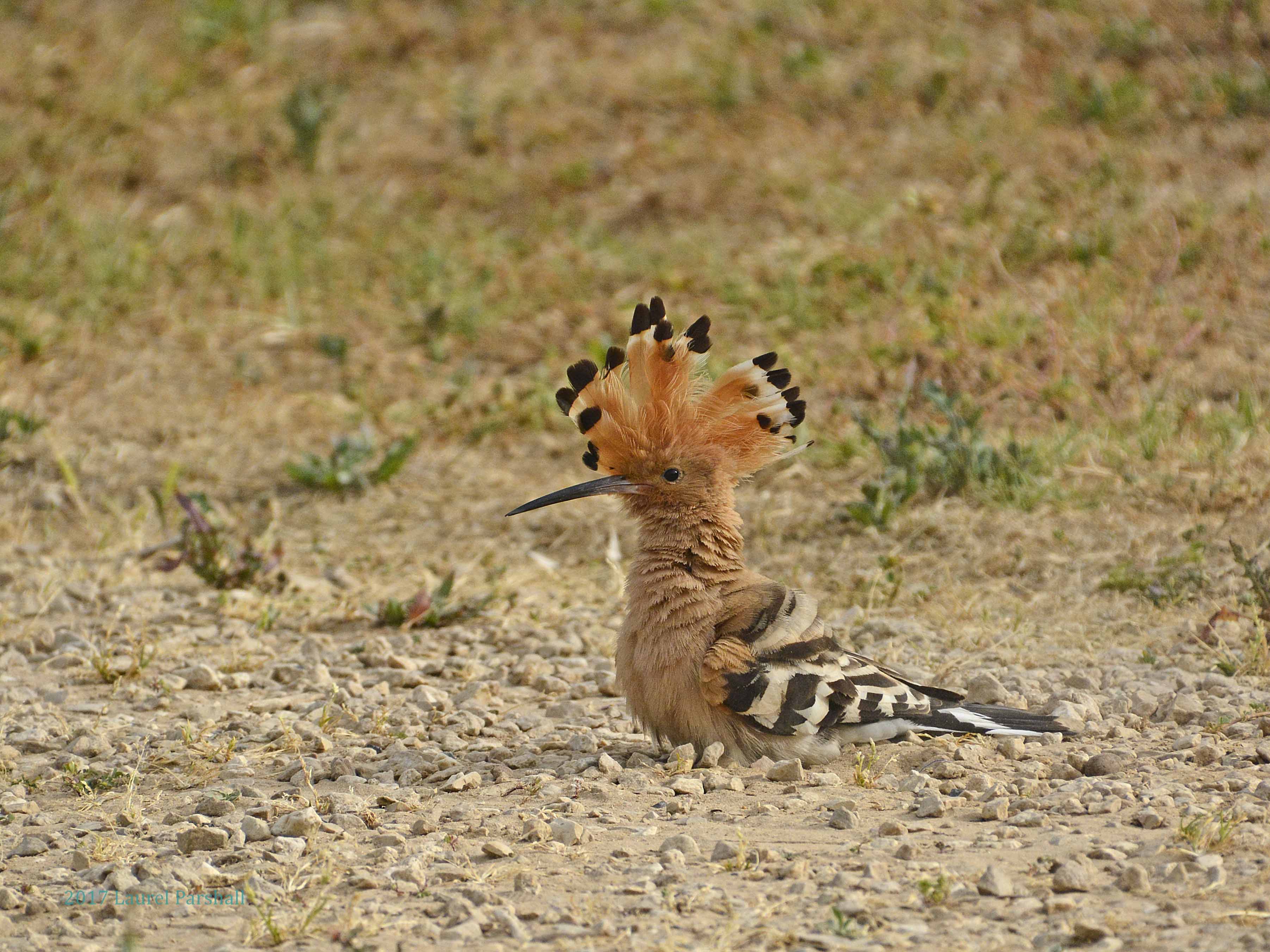
Hoopoe, national bird of Israel (Photo/Laurel Parshall)

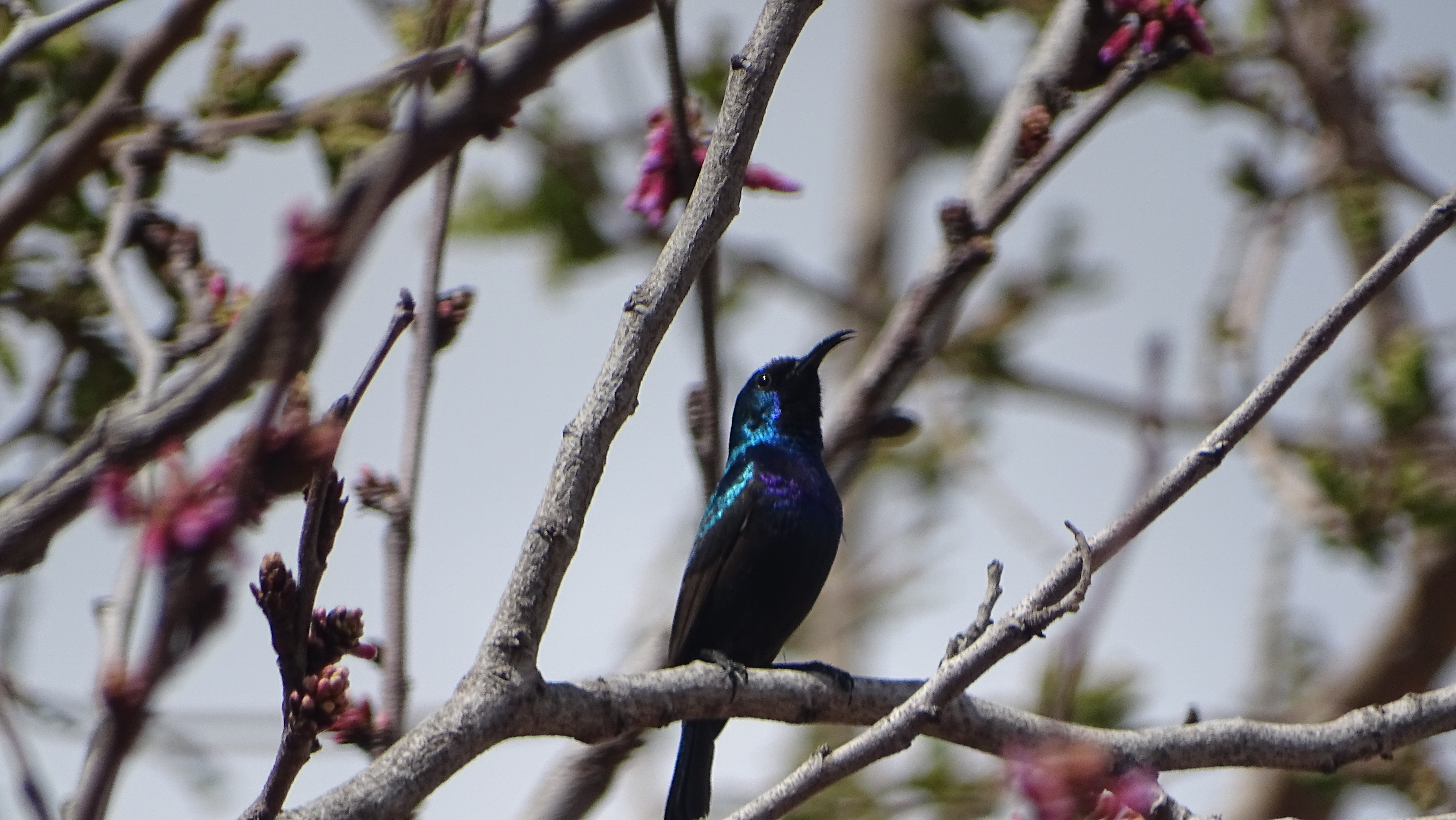
Palestine Sunbird (Photo/Diane Y-Q)

Raptor migration was going on over the cliffs above the Dead Sea and of course at the world-famous Eilat Mountains. The March group rubbed shoulders with teams prepping for the Champions of the Flyway, a huge international bird contest that took place soon after our trip, which raised funds for tackling illegal killing of birds in Croatia and Serbia for 2018. They choose different projects for the funds each year.  Faye and Diane had the good fortune to have Jonathan Meyrav as a leader at the Eilat Birding Festival, who founded the Champions of the Flyway project, keeps the Israel Bird List, and is birding tourism director of the Israel Ornithological Center.

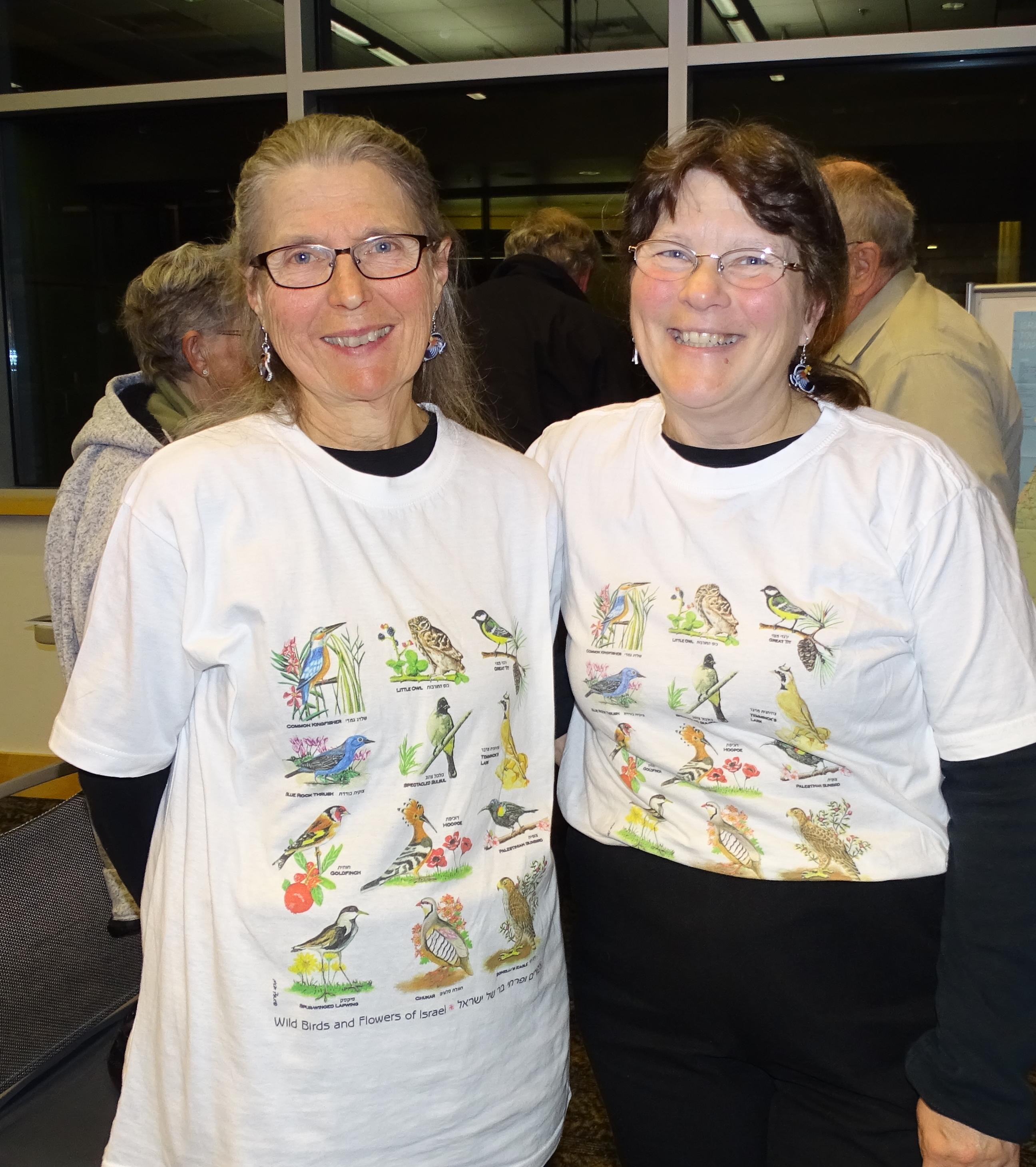
Carol Smith & Laurel Parshall model the Birds of Israel shirts from their April 2017 trip to Israel (photo/Diane Y-Q)

The iconic birds for all were the Hoopoe (national bird of Israel), four species of Swifts, Wryneck, Tristram’s Starling, White-spectacled Bulbul, Griffon Vulture, Egyptian Vulture, Black and White Storks, and lots of different Buzzards and Eagles!

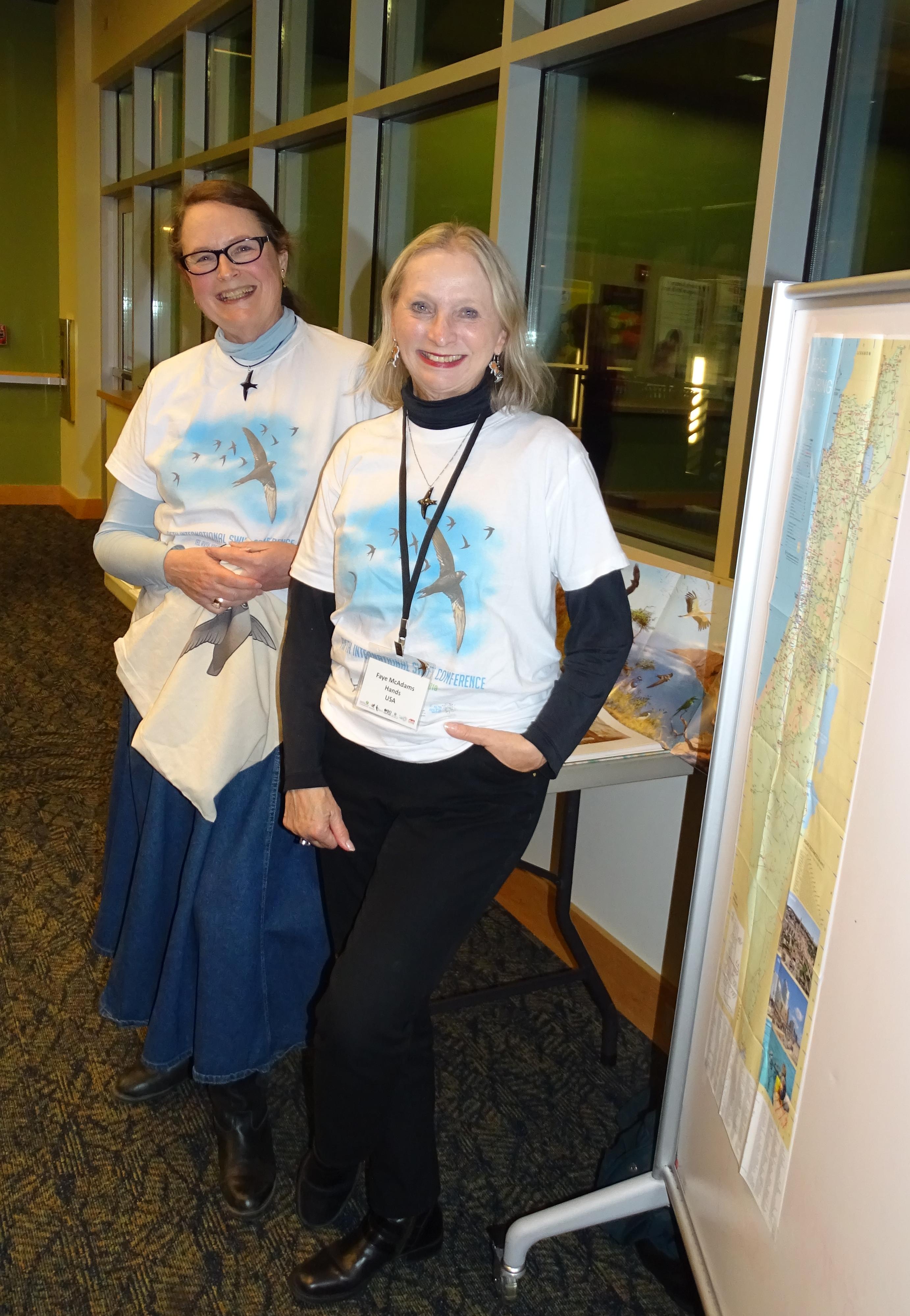
Diane Yorgason-Quinn and Faye McAdams Hands model their Swift Conference shirts & regalia from March 2018 (photo/Adam Trent)

A web article that describes the incredible migration: https://www.haaretz.com/israel-news/.premium.MAGAZINE-israels-500-million-birds-the-worlds-eighth-wonder-1.5485176

October 2018 Virtual Pelagic trip

A Virtual Pelagic Trip!

10-23-18 – Opening slide. Thank goodness it wasn’t a quiz!

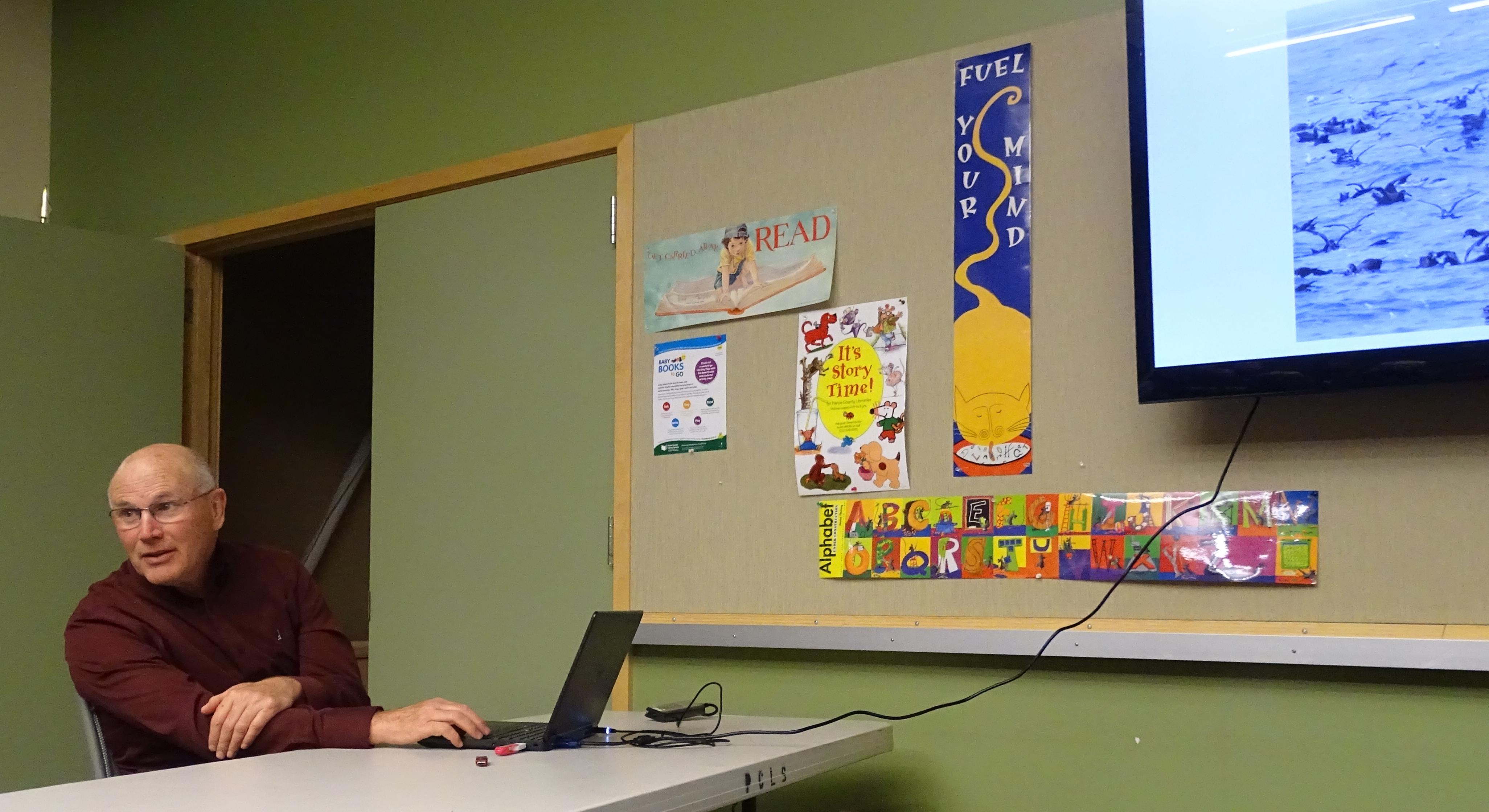
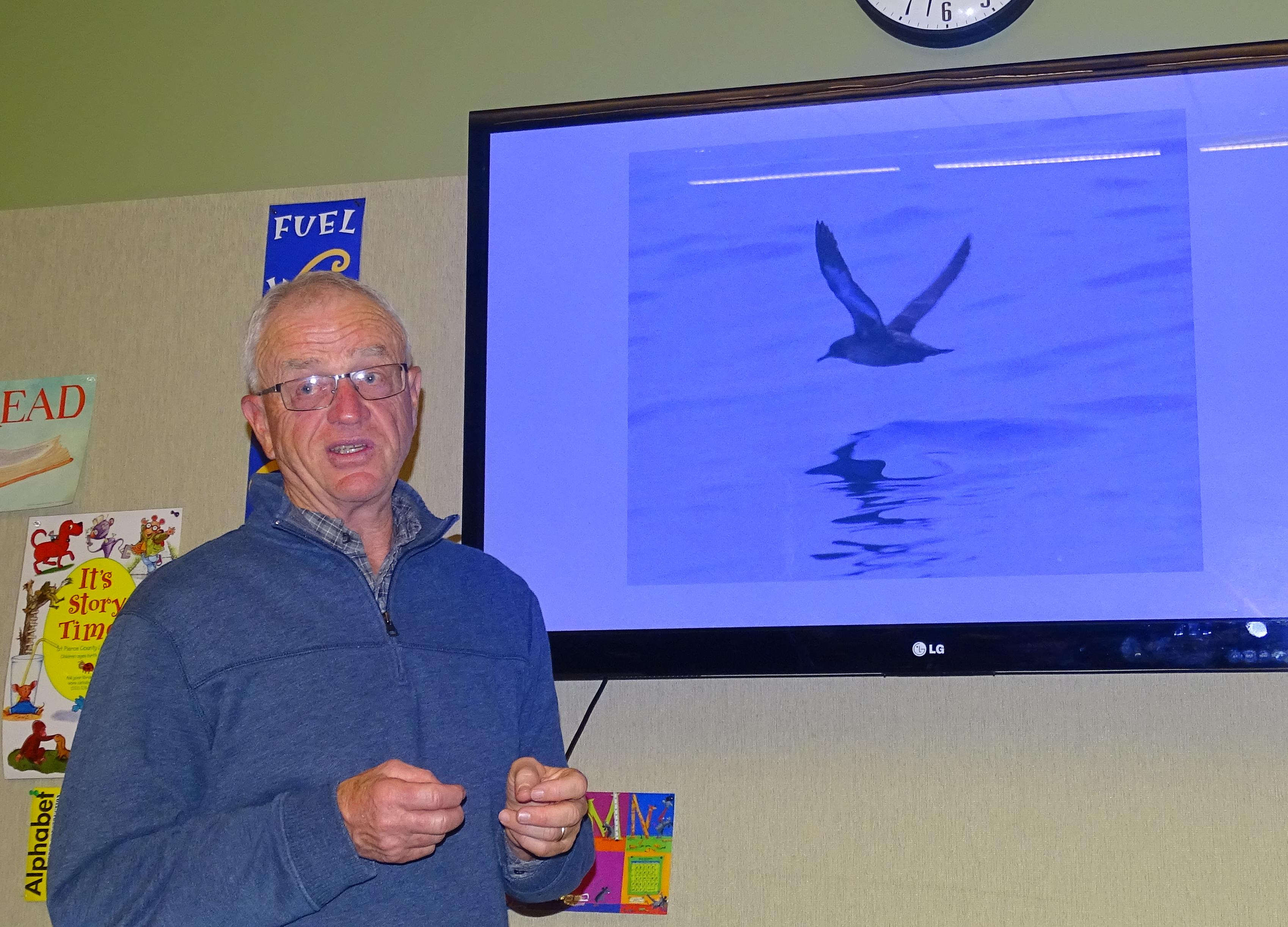
On October 23, 2018, ABC’ers delved deep into Pelagic birding with presentations by Ed Pullen and Ryan Wiese, as well as additional information by Bruce LaBar and Art Wang.

Ed Pullen starts his slides

Ken Brown opened the meeting by recapping upcoming ABC events, and then Clarice Clark presented information on an upcoming guided tour of SE Arizona for Tahoma Audubon this coming spring featuring guide Chris Chappell, formerly of Pierce County. There were only one or two spots left open by the end of the evening! For more info on those spots, contact Clarice or Jerry Broadus at jbroadus@seanet.com.

Ryan Wiese gets into his slide presentation

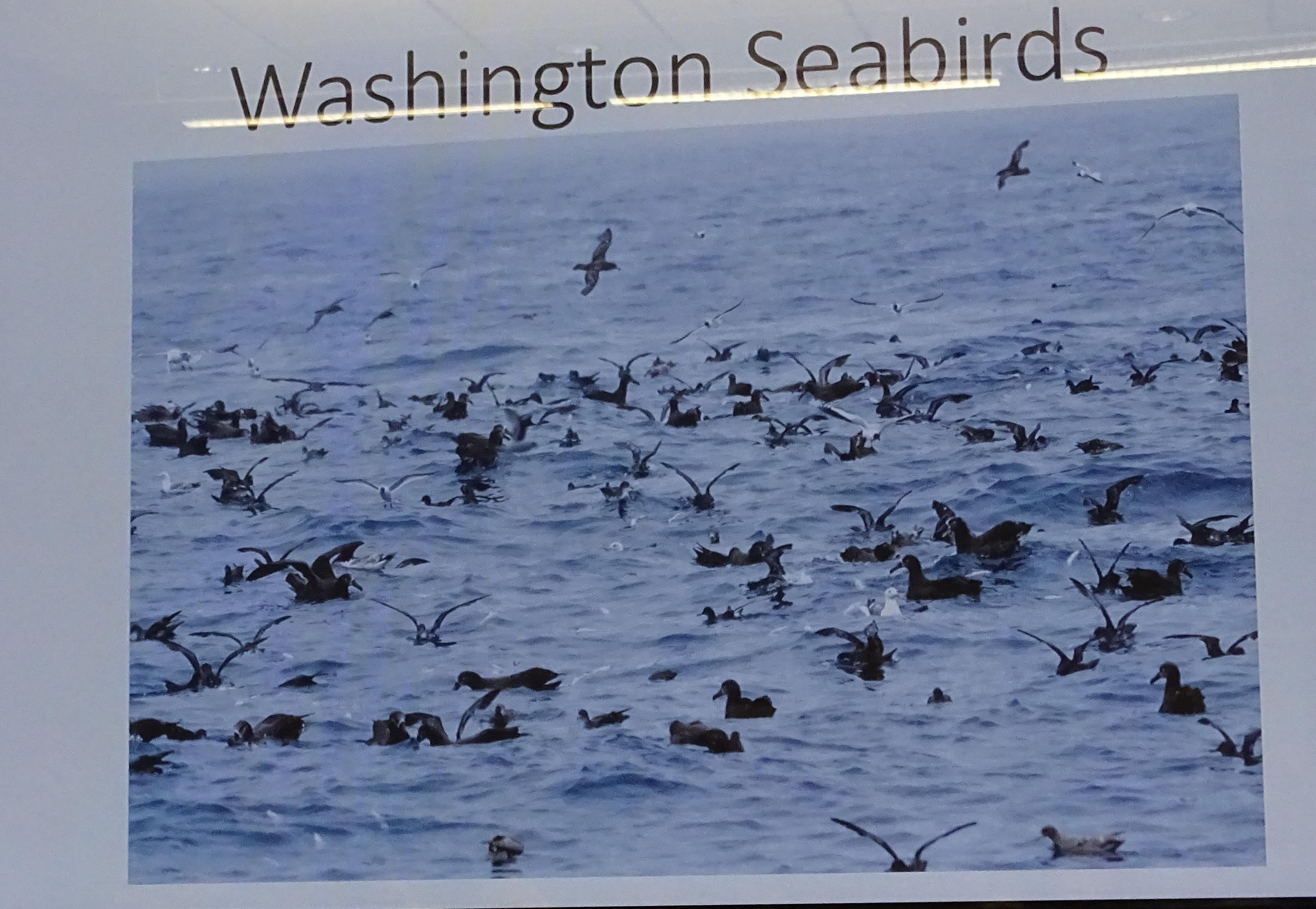
All pelagic bird species occurring off the coast of Washington were discussed in depth including likelihood of seeing, world populations and scarcity, life histories, etc. The slides were extremely informative and are now available to ABC’ers here: https://drive.google.com/file/d/1CkekblylR_ufUXRB-FS-DCNJgRiXBOs2/view

Bruce LaBar discusses the underwing patterns of Sooty and Short-tailed Shearwaters

Pelagic trips discussed included Westport, Monterey Bay, Maine, Cape Hatteras, and Hawaii. The concepts of going onboard in shorts and flip-flops (Cape Hatteras) or in swimsuits and then jumping in the water to swim ashore (Hawaii) were happily contemplated!

Art Wang, wearing his Stormy Petrel Hatteras shirt. discusses various pelagic trips

Chumming was discussed. Bruce, a longtime spotter for Westport Seabirds, explained that one reason chumming didn’t happen on their trips until the furthest point was reached was to get accurate counts of the birds. Westport Seabirds has the best data available for this reason. Other trips chum all the way out and have a parade of the same birds following the boat the entire ride. It was revealed that Monterey Bay has banned chumming altogether with the exception of Debi Shearwater’s trips, which should end soon with her retirement. The alternative to chumming is to get chummy with fishing boats.

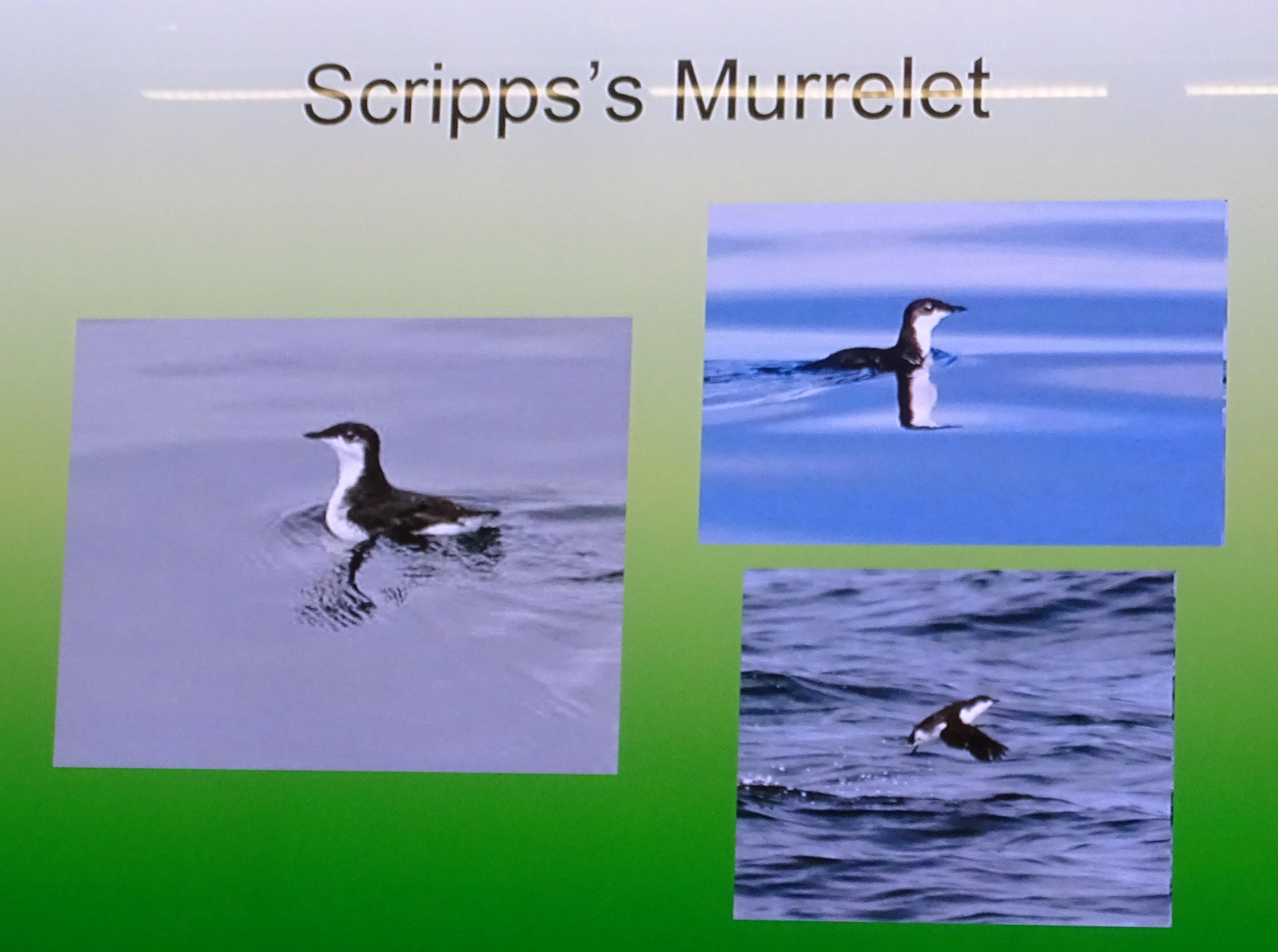
Fine points were discussed, such as the recent split of Xantus Murrelet into Scripps and Guadelupe.

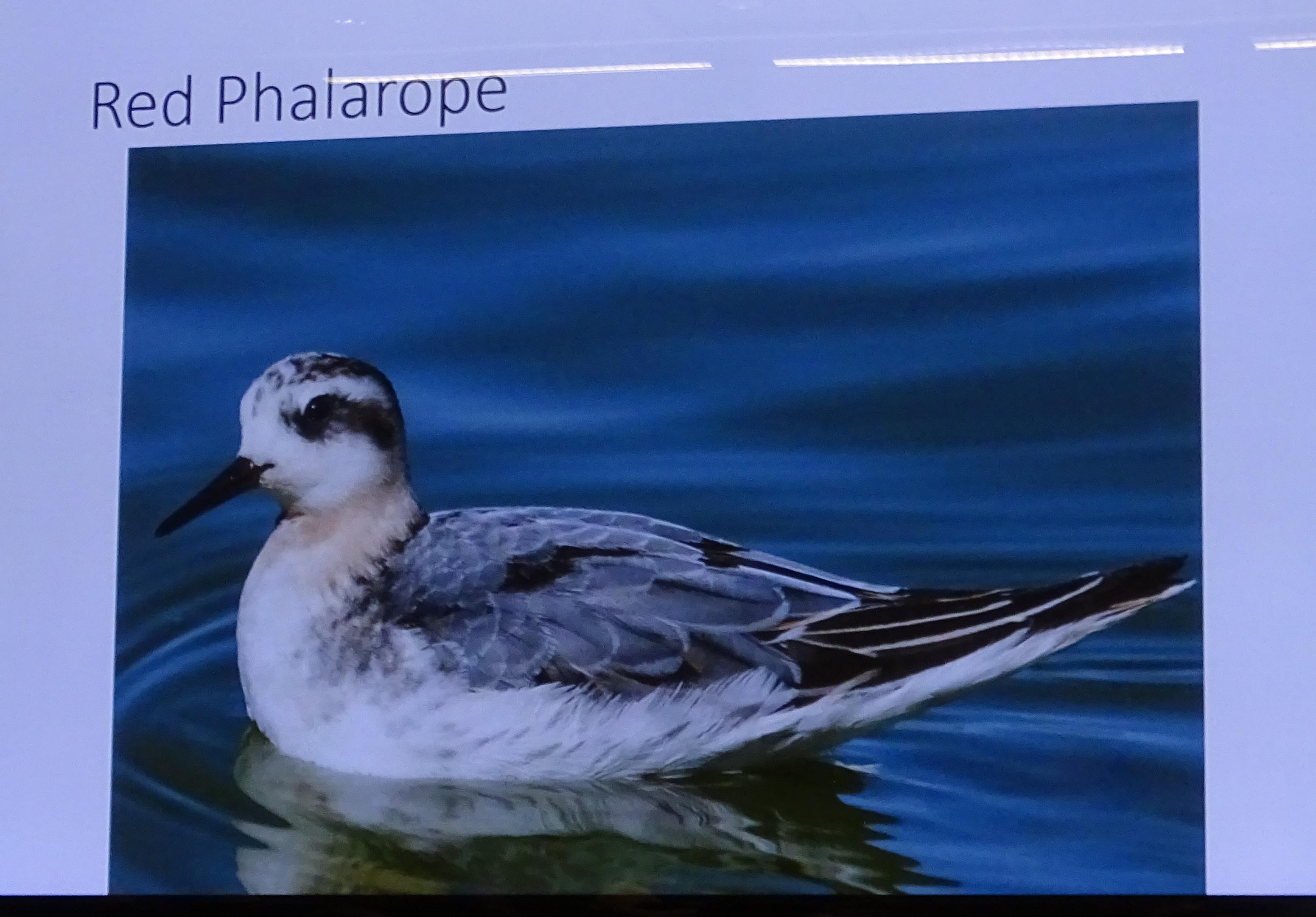
Some highlights included the fact that Rhino Auklets are OUR birds with approximately 90% of the lower 48 population breeding in Washington waters. Also, Short-tailed Shearwaters, rare as they might seem here, are actually the most populous shearwater species on the planet! Red Phalaropes like to feed in the spume of whales! And yes, those South Polar Skuas really are the thugs you thought, guilty of all possible crimes and some even unimaginable.

Red Phalarope

The very interested group asked excellent questions and kept the meeting going until we got kicked out and all the cookies were gone (thanks, Faye)!

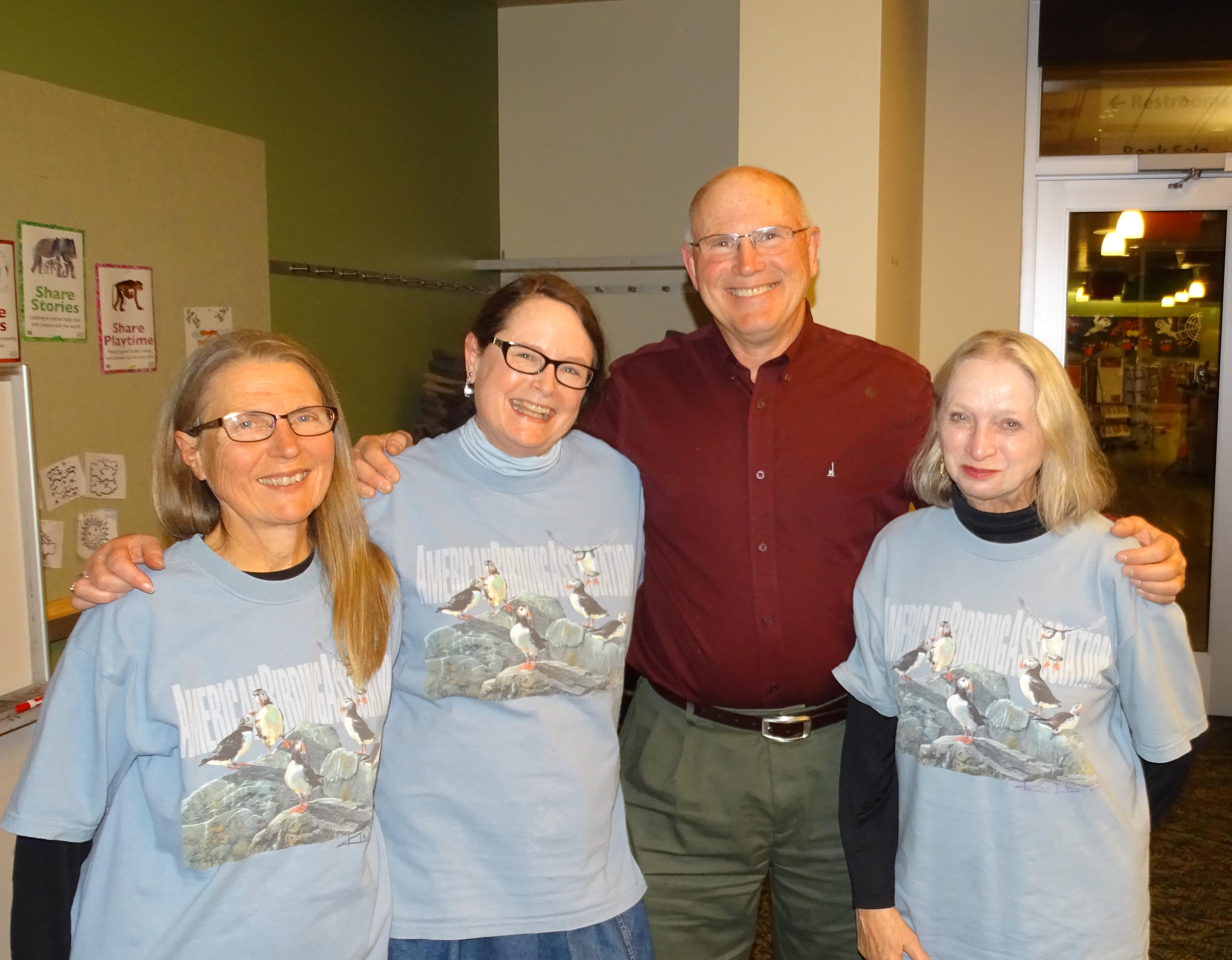
Maine pelagic birders reunited! Presenter Ed Pullen flanked by Carol, Diane, and Faye, wearing Atlantic Puffin shirts

Harrowing Halloween Happening

The sentinel calls the troops

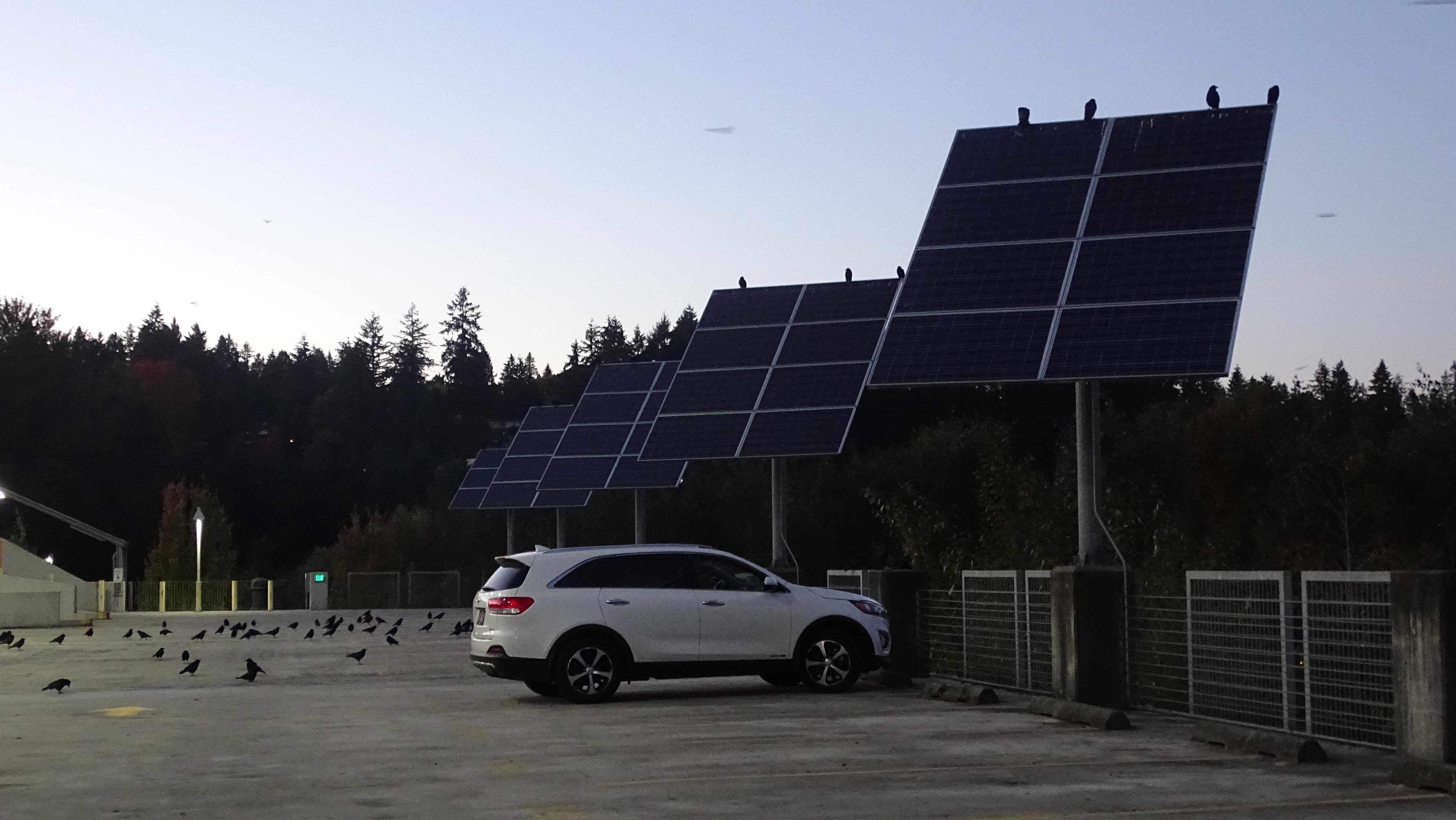
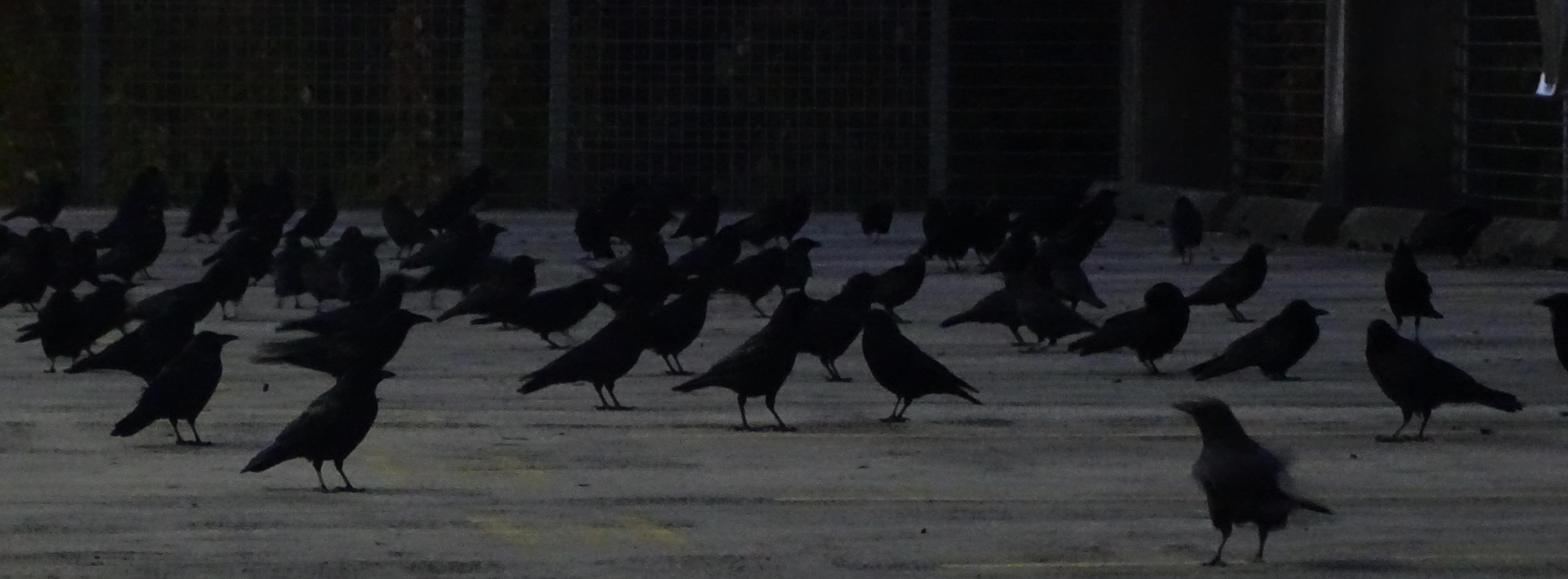
On October 14, 2018, Adam and I proceeded to the UW-Bothell campus, north parking garage roof at 6 PM, which Tweeter Scott Ramos had described as a major crow roosting route. Two other carloads of people showed up to see the big show, but had left disappointed when nothing much had happened before sunset (6:23 PM), just a few small streams of birds in the distance. The roof looked out over the North Creek Wetlands. We stuck it out and were rewarded, or possibly punished, by crows!

Adam told me to turn around slowly

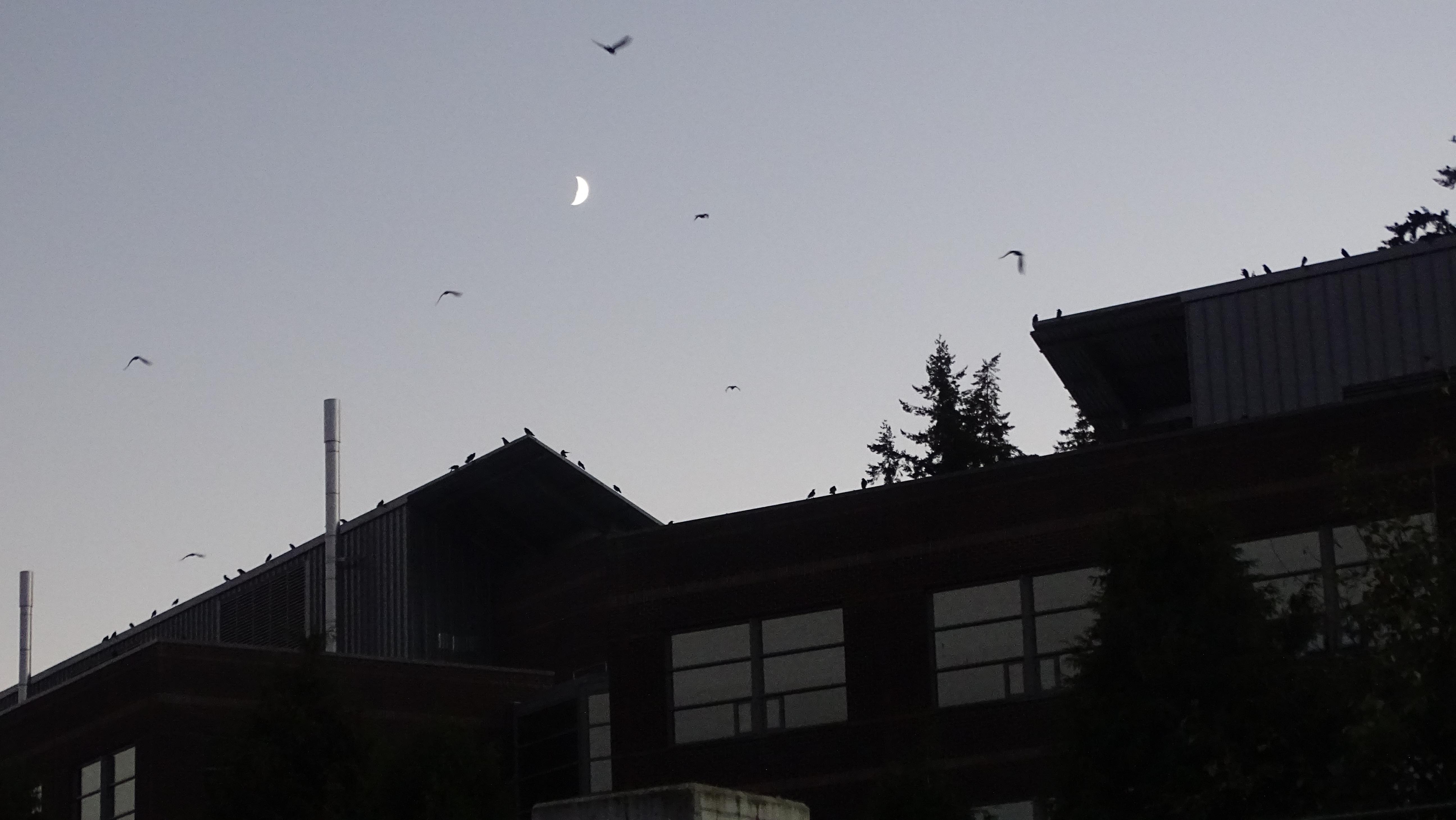
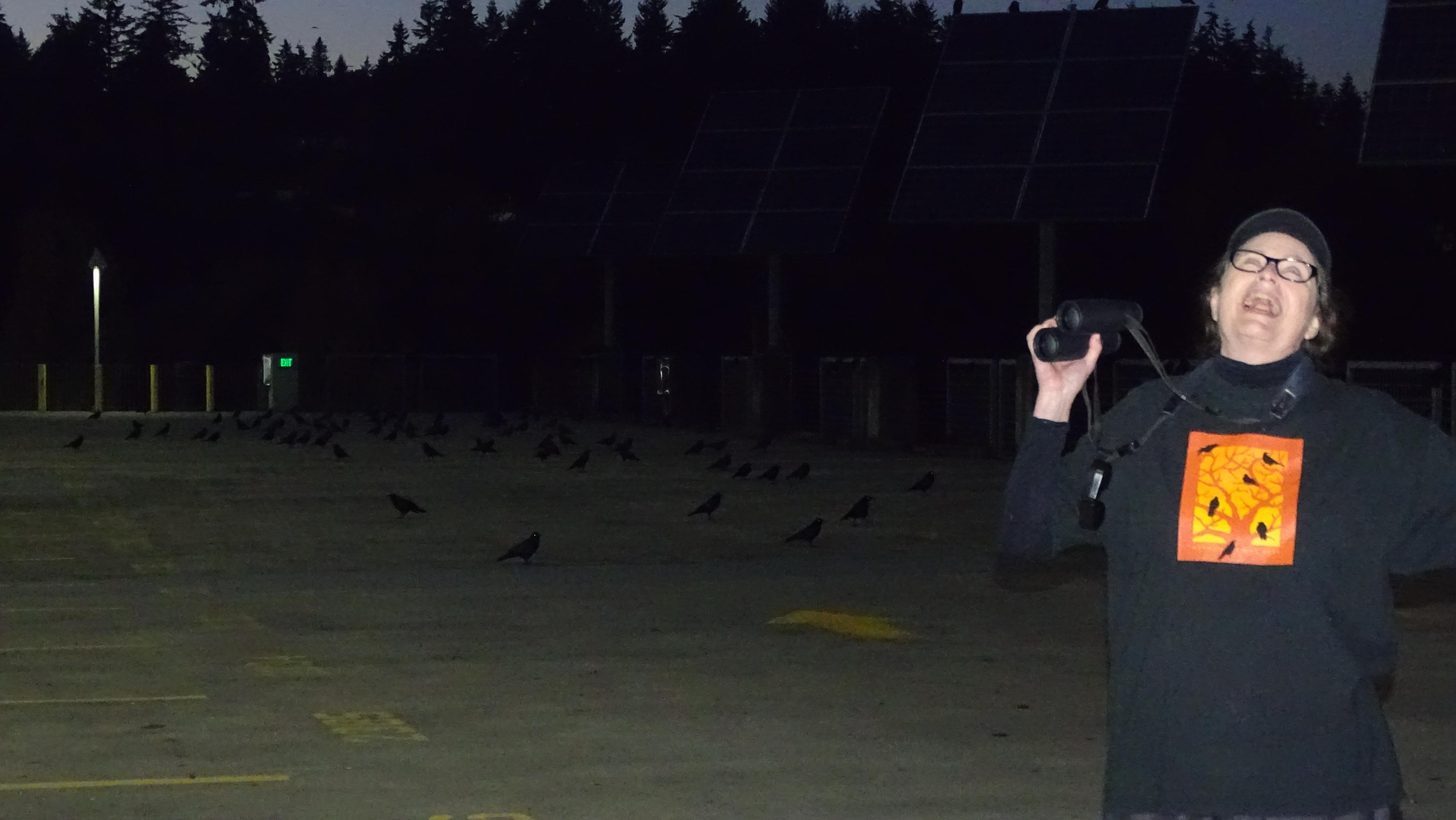
Five minutes after sunset the nice evening got horrendously noisy, and suddenly we were surrounded by crows. We did in fact feel like we were in the eye of a crow cyclone, as they closed in on us from every side! We took lots of pictures, but truly a much wider-angle lens and possibly a drone would have been needed to give the true feel of the onslaught!

Sunset at UW-Bothell

I just wouldn’t have been a bit surprised had Alfred Hitchcock made one of his famous walk-ons at the height of the cawcaphony! As it got darker, they started landing on the floor next to us, blocking our exit from the roof. In fact, they were pushing ever so relentlessly closer to us and covering every tree and building top. Just when my fight-or-flight instinct started to turn on, very suddenly it all stopped almost as if a clock had chimed at 7 PM! The silence was deafening, too, as every bird suddenly dropped into the nearby trees and faded away.

Air traffic controller

They noticed our car and moved to block our exit!

We put down 5000 on eBird, but there could very well have been 10,000, as Scott had estimated. Just couldn’t tell which birds we’d already counted, as they were on all sides of us, seeming to circle us. We drove away feeling a little relieved that we weren’t the center of their universe after all.

Diane’s crow shirt attracts attention

Adam has to wave away the crows

No Halloween Haunted House could compare to this real experience. There was definitely a ghostly vortex on this rooftop with no one but the two of us and thousands of crows on a lonely Sunday night in October.

Just before they suddenly departed a full dark

See more of our photos and short videos here: https://www.flickr.com/photos/76552838@N03/albums/72157702433592684

Field Trip Report E WA Sept 7-10

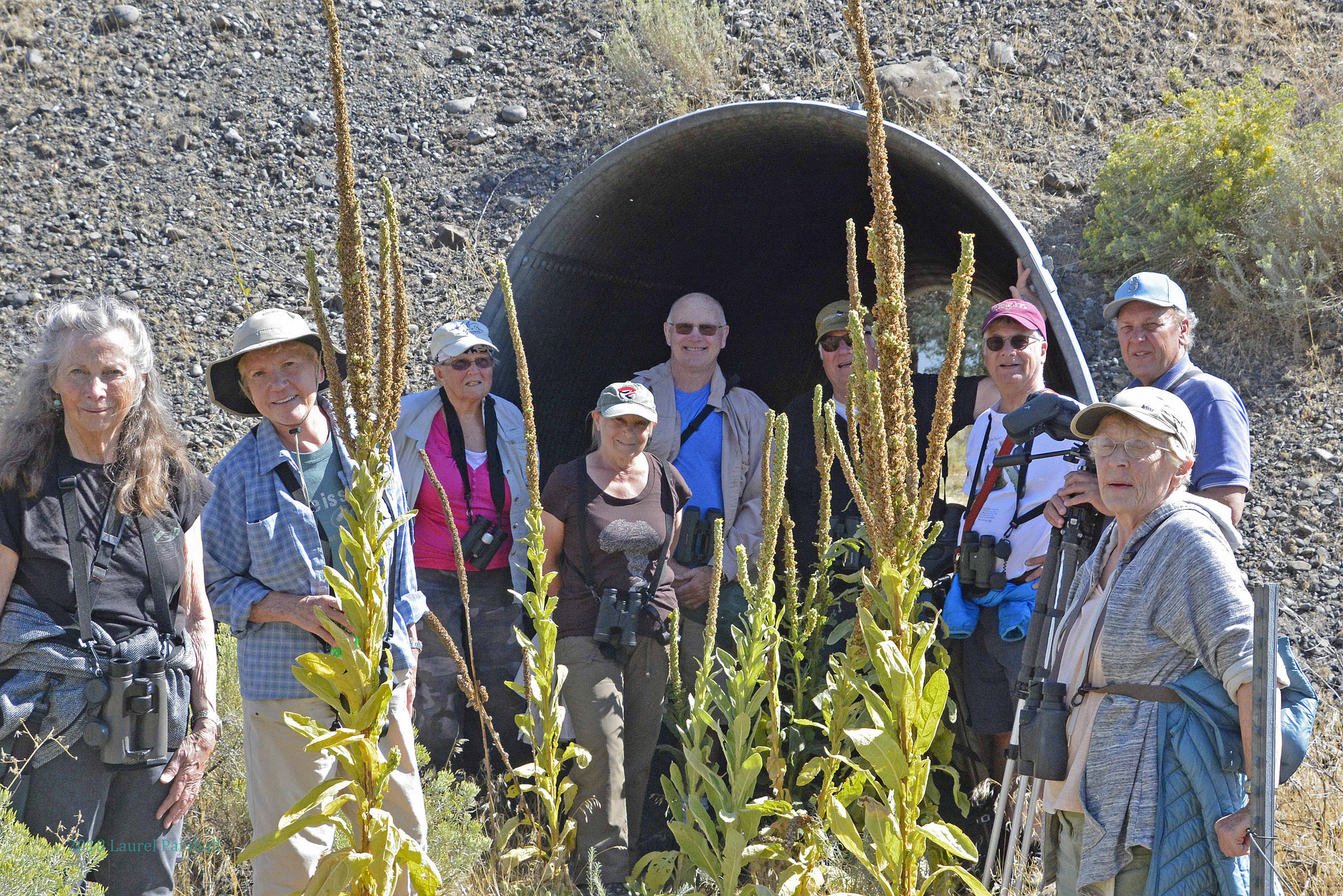
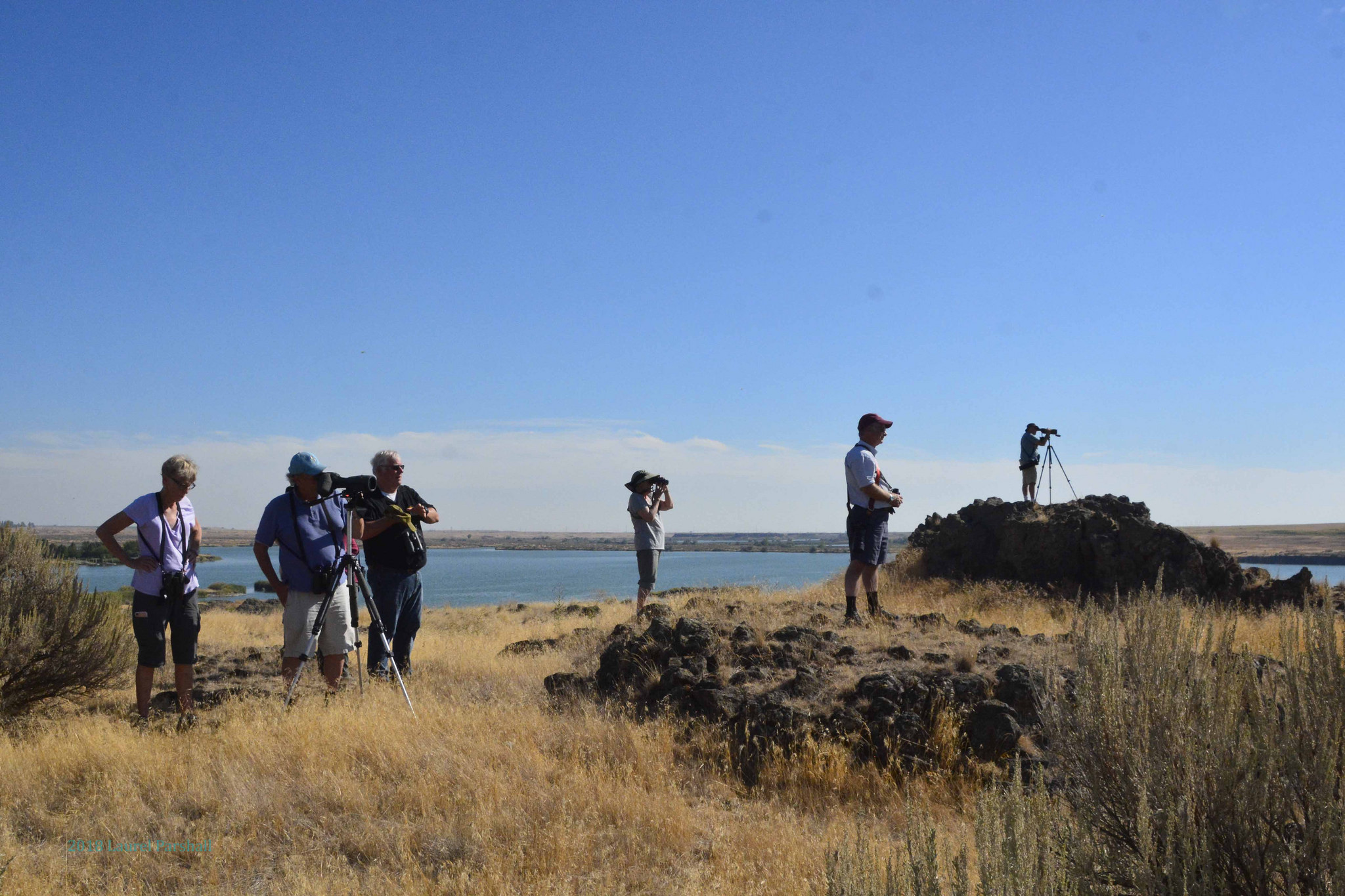
Ken Brown took our group to Eastern Washington for a check on migration for 4 days from Sept 7 to 10, 2018.  Some really great sightings as well as the inevitable disappointments.

Looks like a pothole!
(Photo/Laurel Parshall)

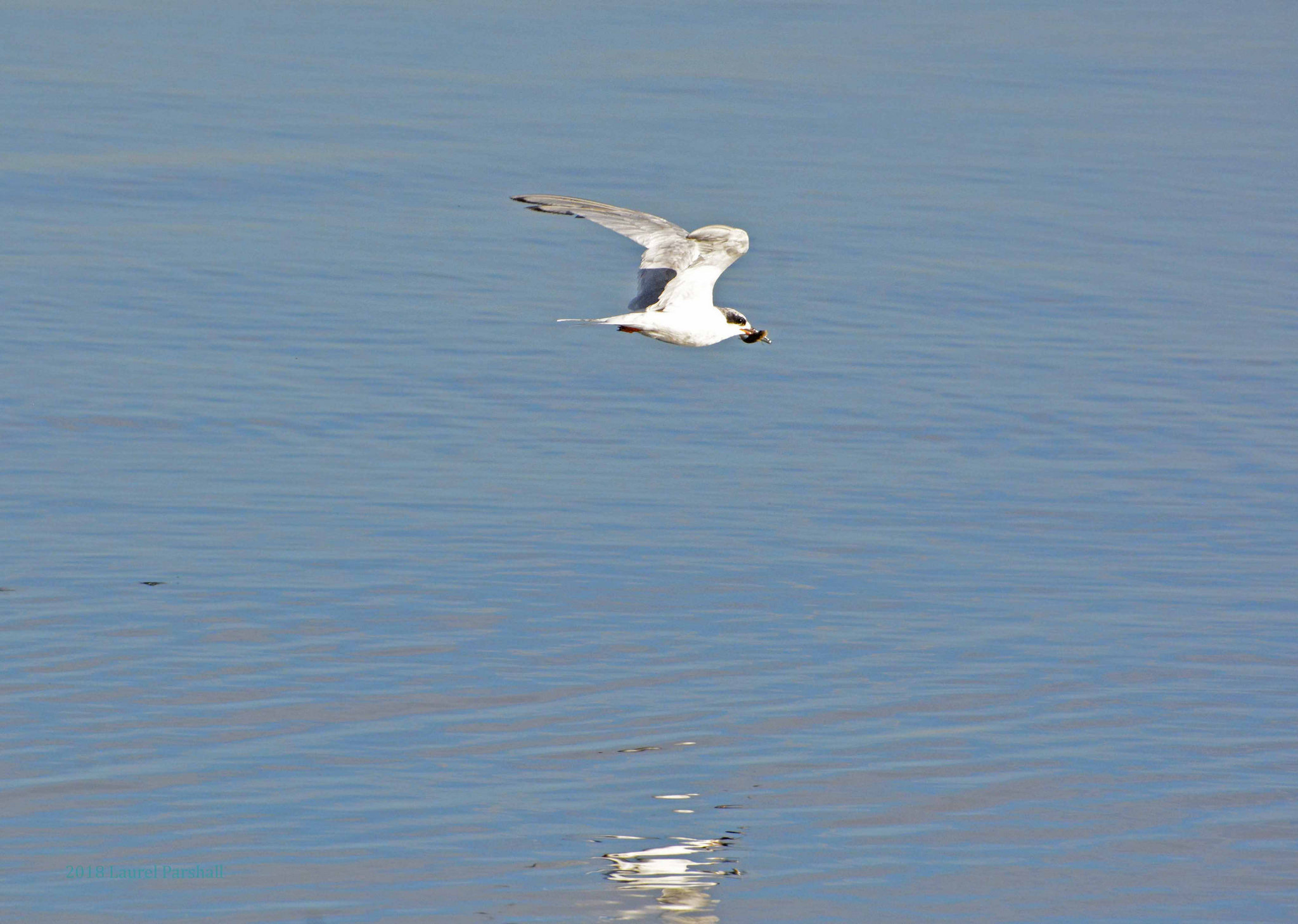
Forster’s Tern with fish
(Photo/Laurel Parshall)

I missed the trip, but lucky participants were Ken, Ed Pullen, Laurel Parshall, Kay Schimke, Mary Pearse, Richard Smethurst, Carole Breedlove, Kathryn Cooper, Eric Dudley, Fred Matthaei, Jody Hess, and Petrea Stoddard.

The rest of the group makes it through the critter tunnel, leader Ken in back on right
(Photo/Laurel Parshall)

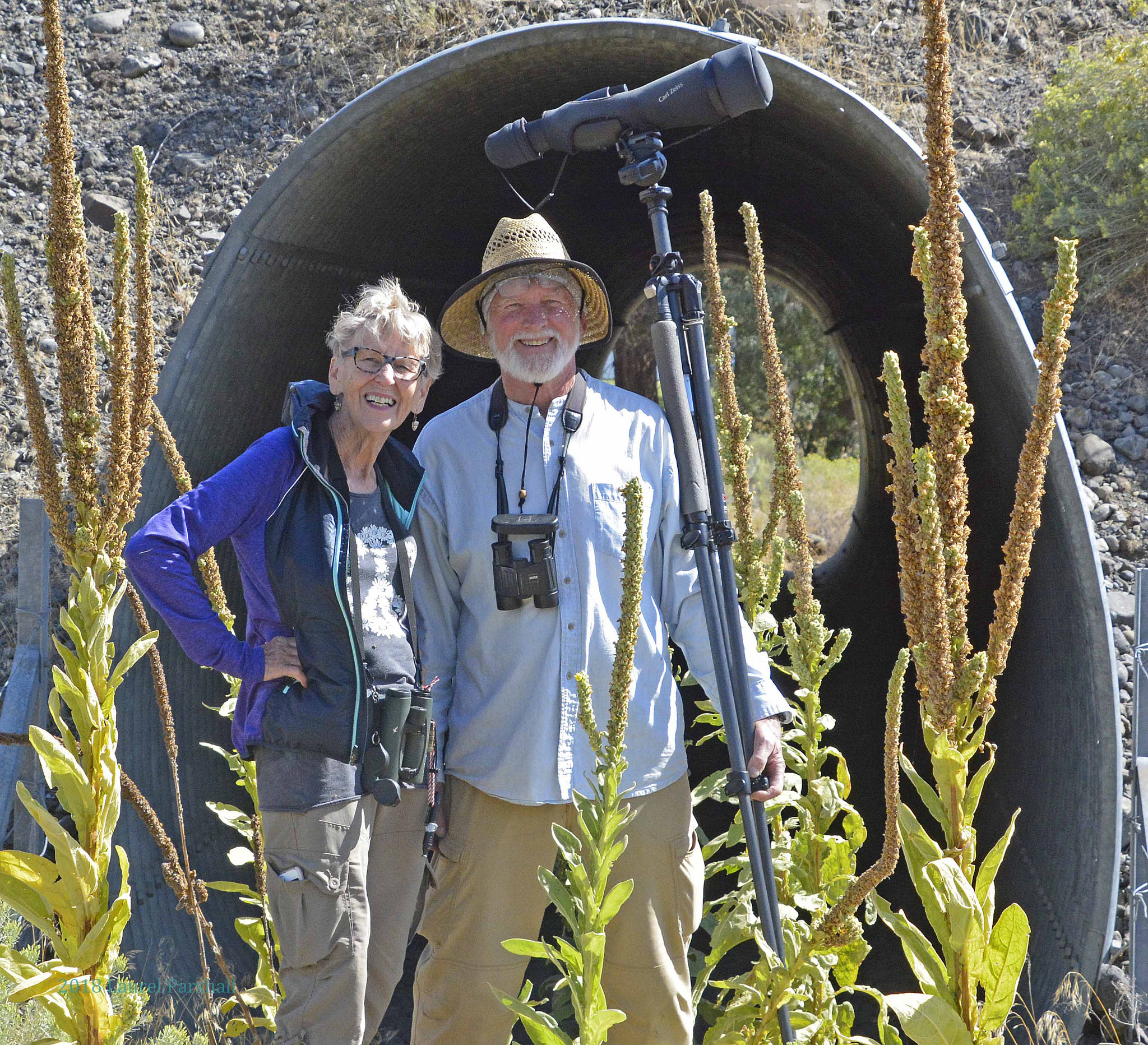
Critter tunnel works for Kay and Richard
(Photo/Laurel Parshall)

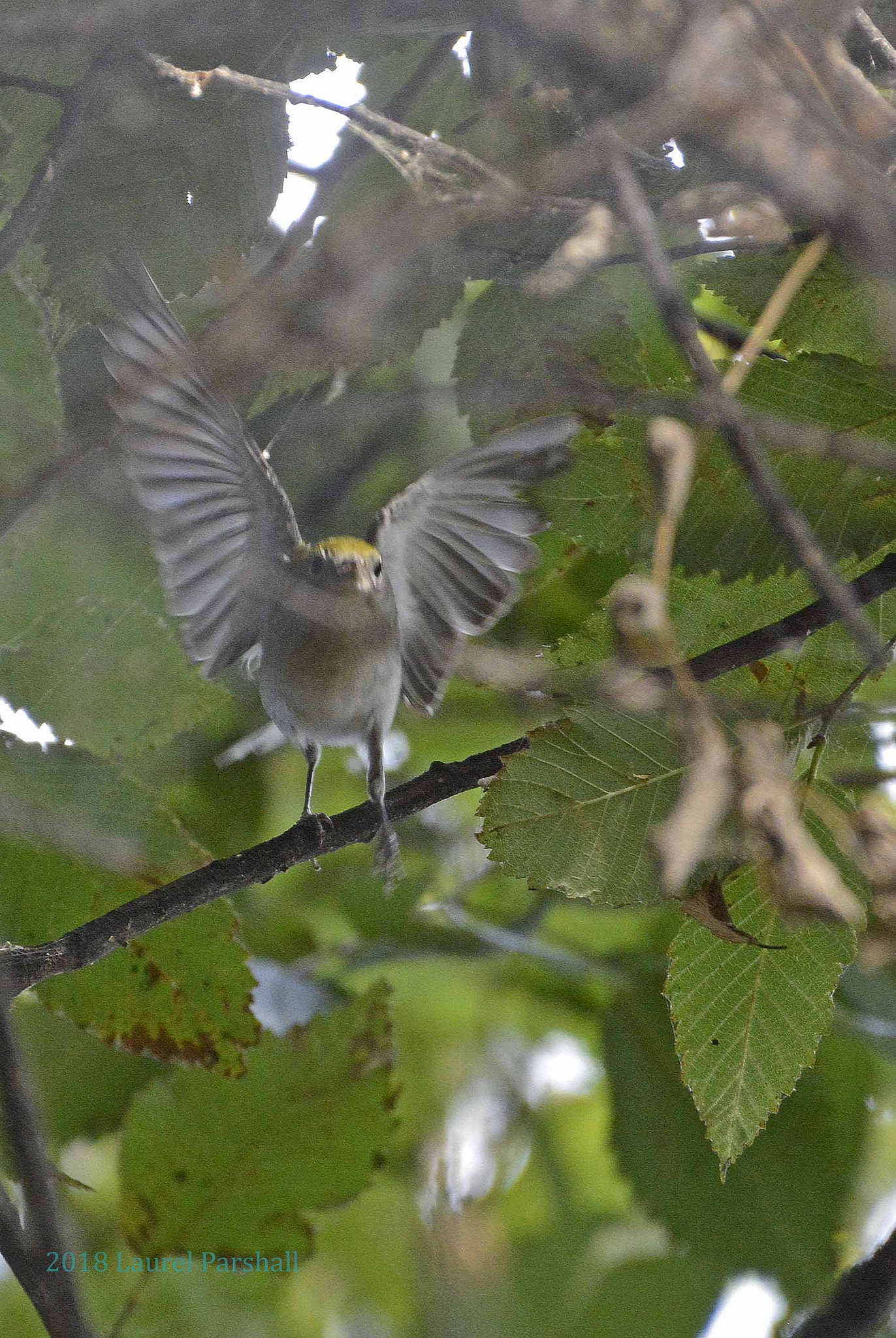
Some of their eBird reports are here, including the remarkable report from Lyons Ferry where they had EIGHT warblers, including Chestnut-sided!

Lyons Ferry: https://ebird.org/pnw/view/checklist/S48429808

Columbia NWR: https://ebird.org/pnw/view/checklist/S48395221

Potholes State Park: https://ebird.org/pnw/view/checklist/S48404447

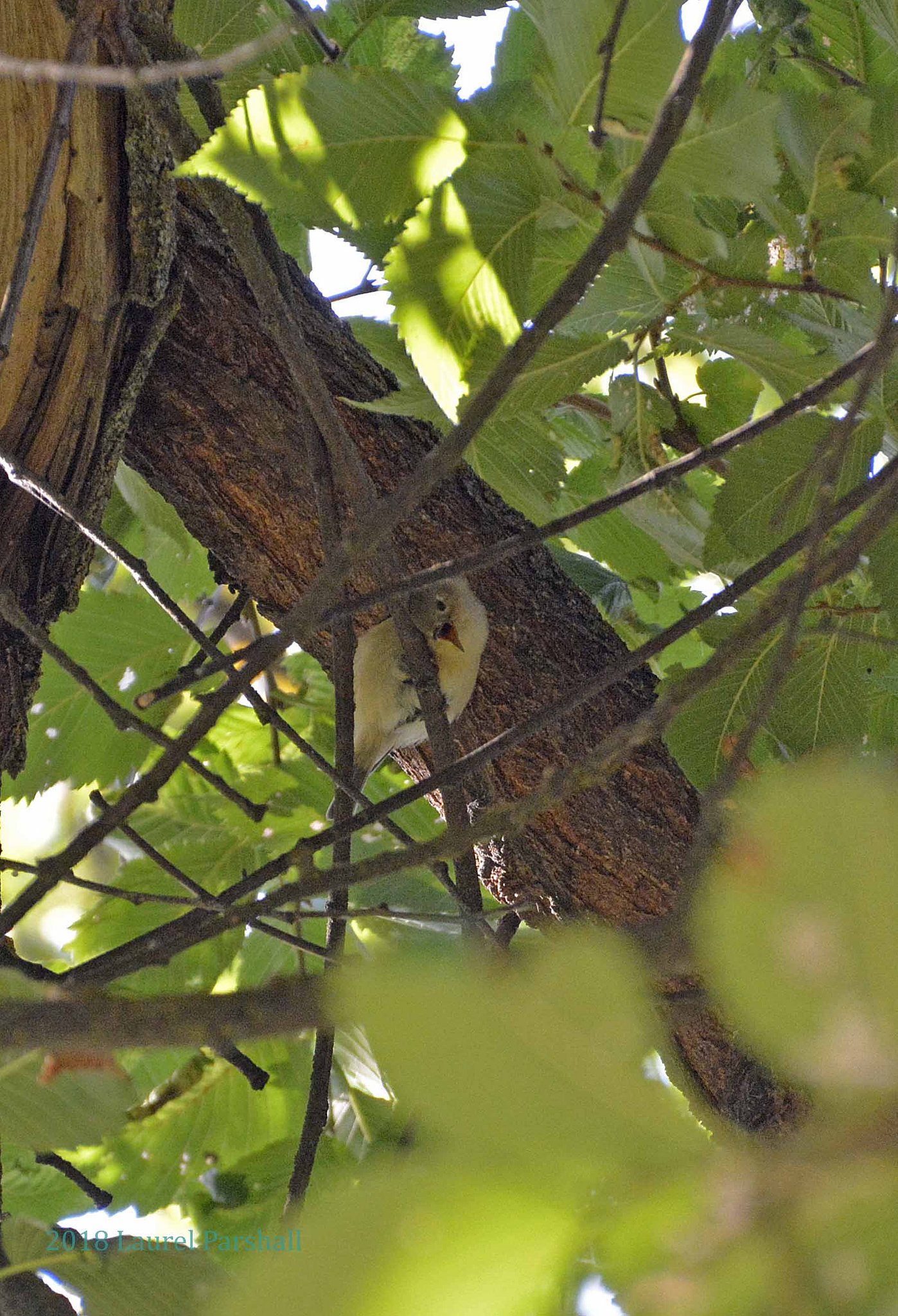
Chestnut-sided Warbler!
(Photo/Laurel Parshall)

Cassin’s Vireo
(Photo/Laurel Parshall)

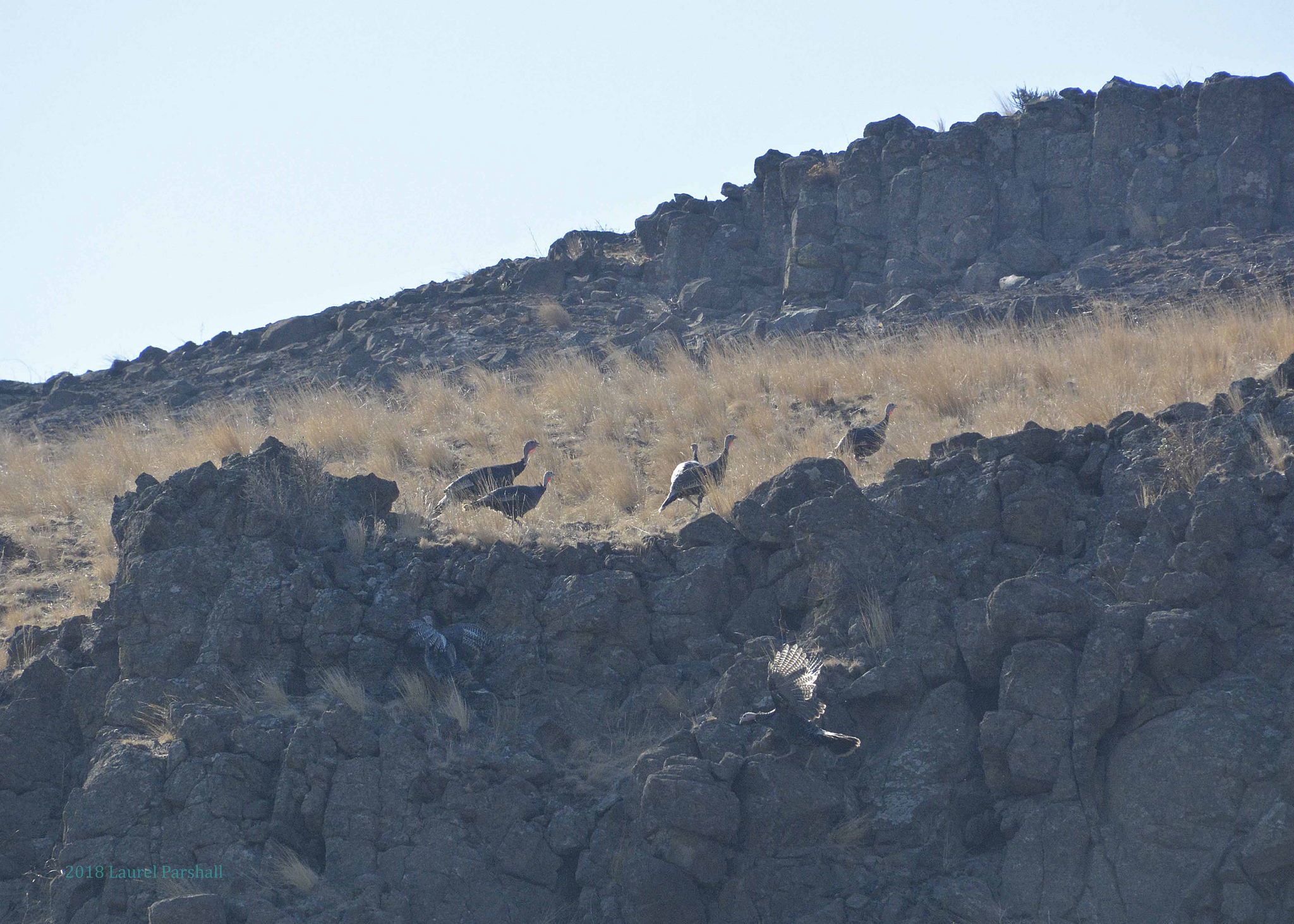
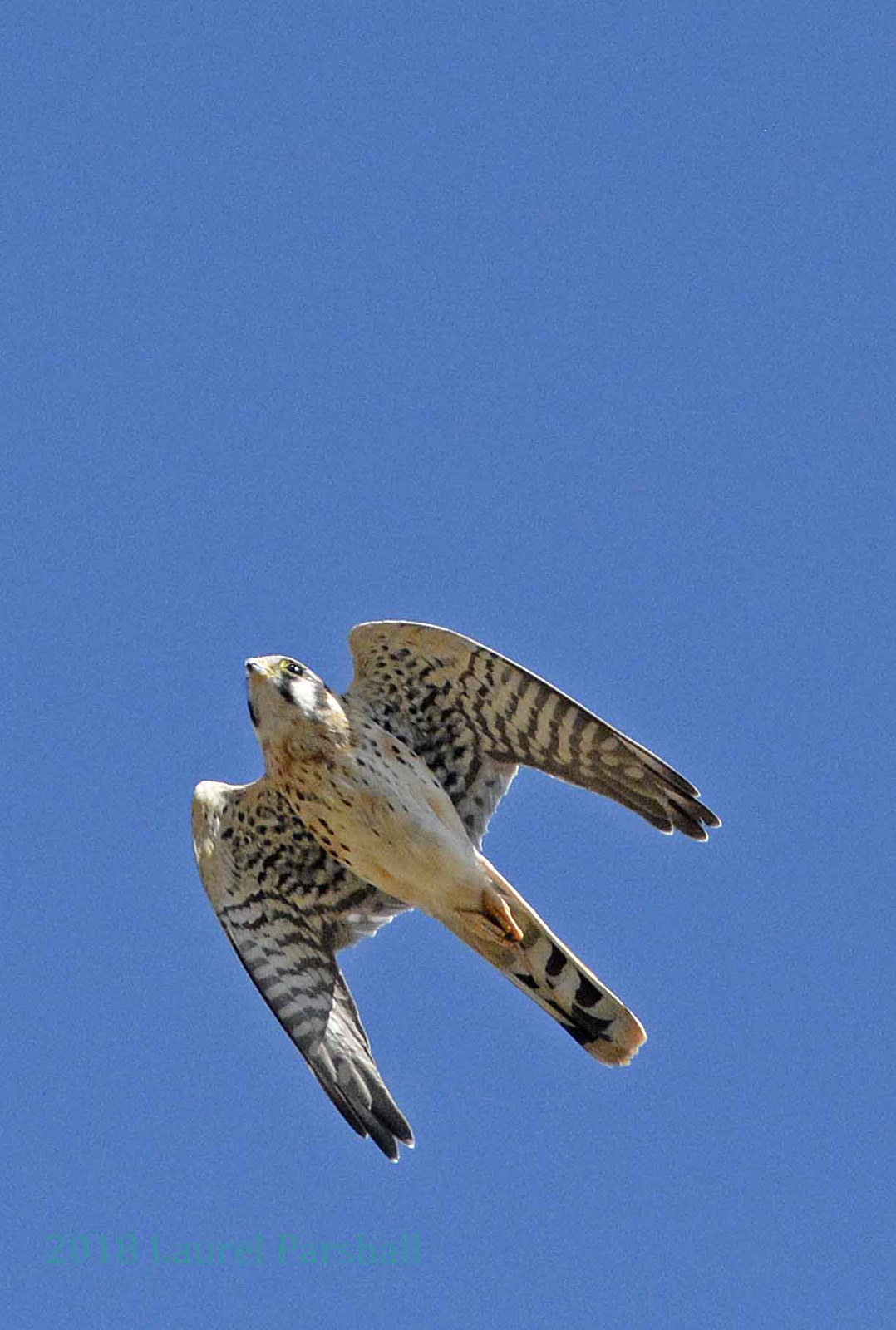
Roadside specialties included Kestrels and Wild Turkey!

Turkeys!
(Photo/Laurel Parshall)

Kestrels galore
(Photo/Laurel Parshall)

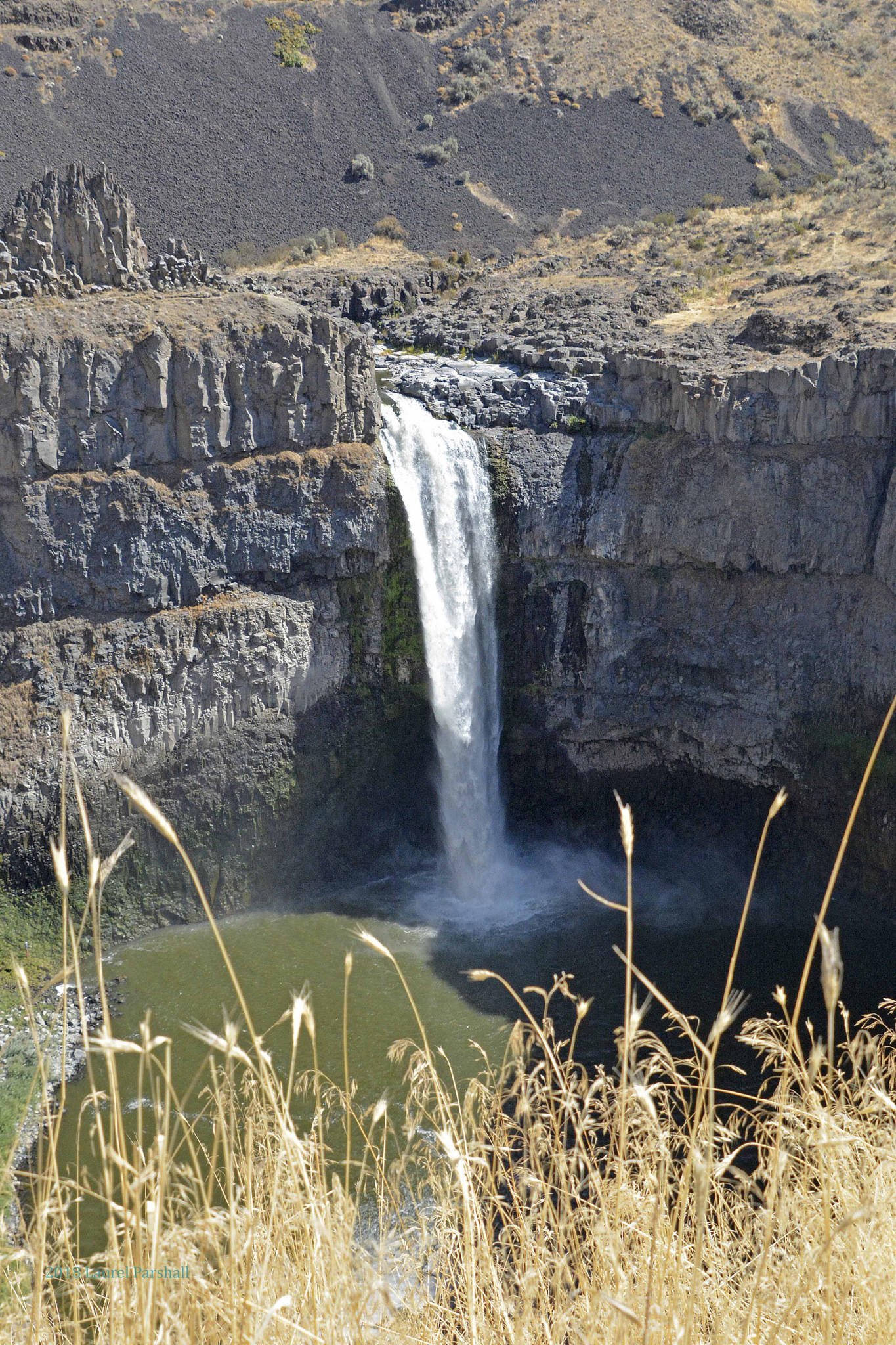
The scenic highlight was Palouse Falls.

Palouse Falls
(Photo/Laurel Parshall)

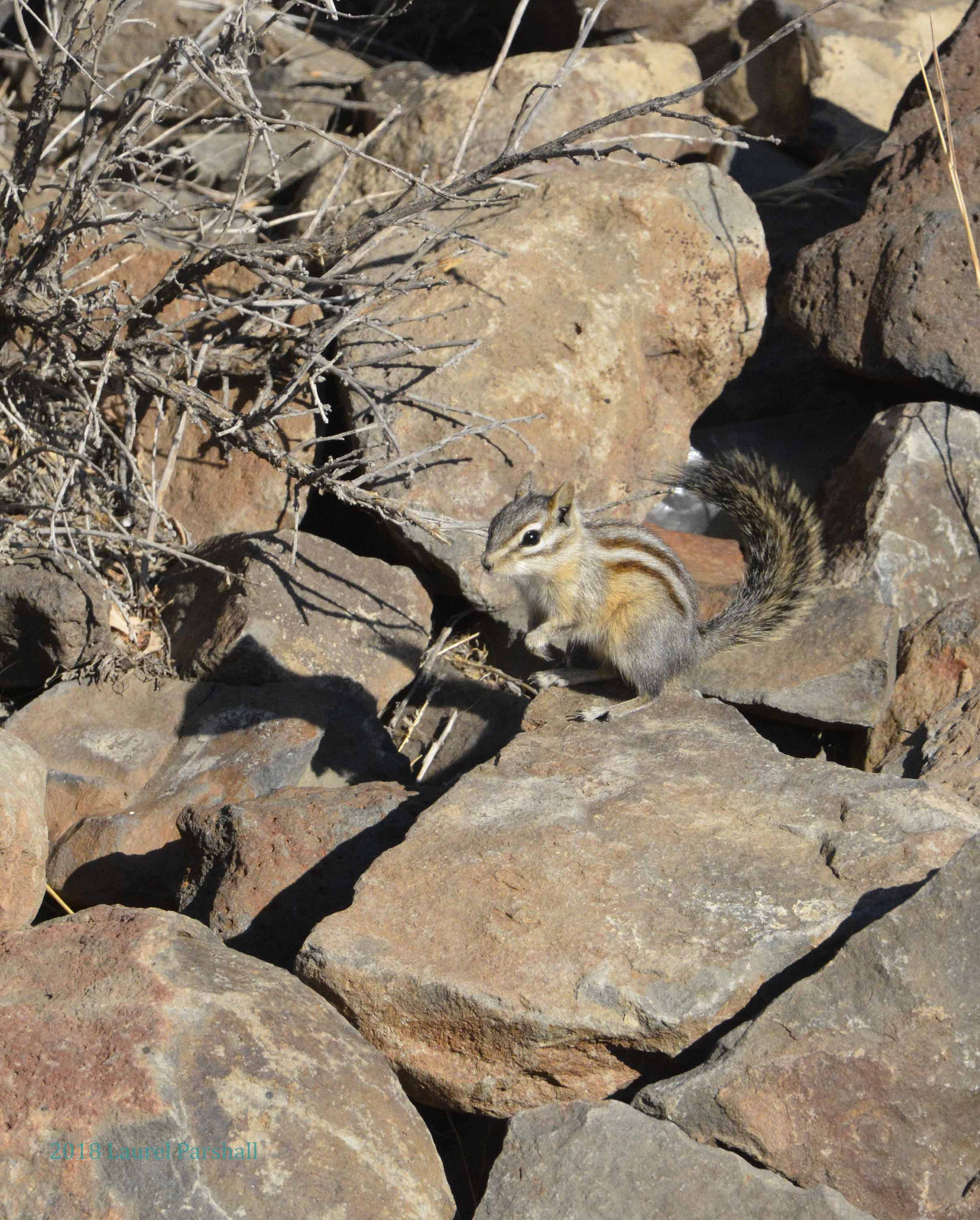
Lesser Chipmunk at Ryegrass Rest Area
(Photo/Laurel Parshall)

More of Laurel Parshall’s photos can be found on her FLICKR site, and she’d appreciate seeing others’ photos.  https://www.flickr.com/photos/llp_unesolitaire/albums/72157700280625731/with/30045465397/


September Member Slide Night a hit!

On September 18, 2018, we got a chance to share some of our birding experiences and photos with each other and really enjoyed it.

Joe & Maggie Tieger on Australia

First up was Faye McAdams Hands, who had a really great trip to Papua-New Guinea with stops in Australia.  With just a cell phone, she managed to capture the magic of that alternate universe including Yellow Robin, Whipbird, Bowerbird, Topknot Pigeons, and Birds of Paradise, as well as being in the right place for a total lunar eclipse seen only on that side of the planet!

Lisa Pedersen showed slides of her trip to the Galapagos with her daughter and brought in her talented artist daughter’s comics from that trip, as well as other souvenirs.  Multi-media!

Joe & Maggie Tieger went way south again and brought back Rockhopper Penguins and Albatross, as well as a video of the dance of the Blue-footed Boobies.

Newlyweds Eric Dudley and Mary Kay Elfman showed slides from their pre-honeymoon cruise of the Galapagos, a totally different type of experience from Lisa’s trip which was land-based.  They showed educational photos of various Darwin’s finches, among many others.

Kathleen Miller showed some terrific slides from Bolsa Chica in southern California, including a stunning shot of a winter-plumaged American Avocet.

Kathleen Miller stands as Ryan Wiese shows her slides

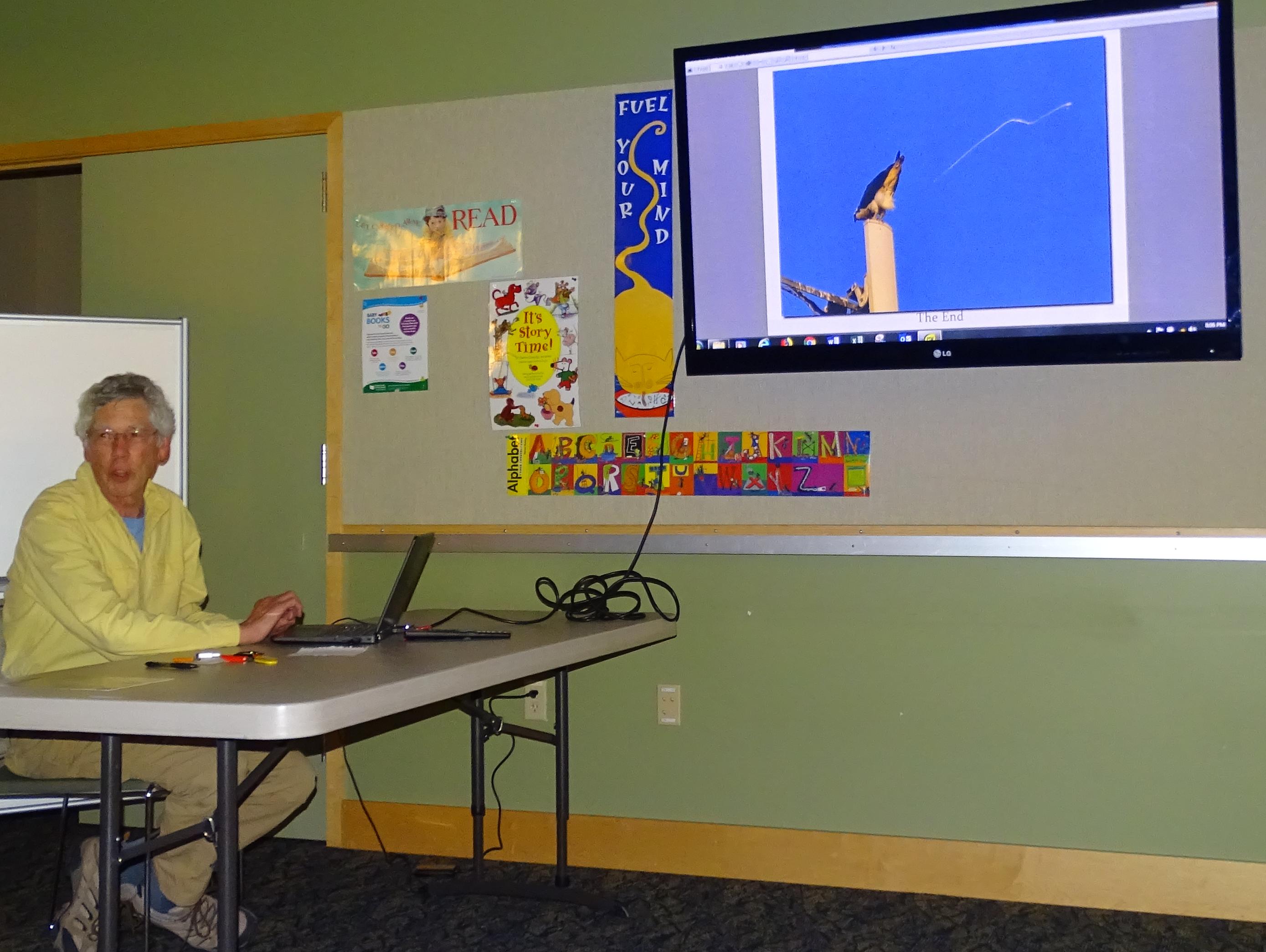
John Riegsecker showed a few shots from his massive collection of birds with prey, not for the faint-hearted.  He actually knew what the prey species were in most cases, too.  He ended this display with an Osprey projectile-muting.

A real ending to John Riegsecker’s collection!

Blair Bernson was our final presenter, giving a hint of the Big Year he’s in the middle of, starting with his Big Month.  He has big plans for bird travel, and ABCers were able to give him some tips.  We look forward to more about this when we do our Big Year reports in January.

Blair Bernson gives us some provocative hints of the Big Year he’s doing

We had such a good time with this program that we may do it again next year.  We even finished on time!


Summer 2018 Peninsula Osprey Survey

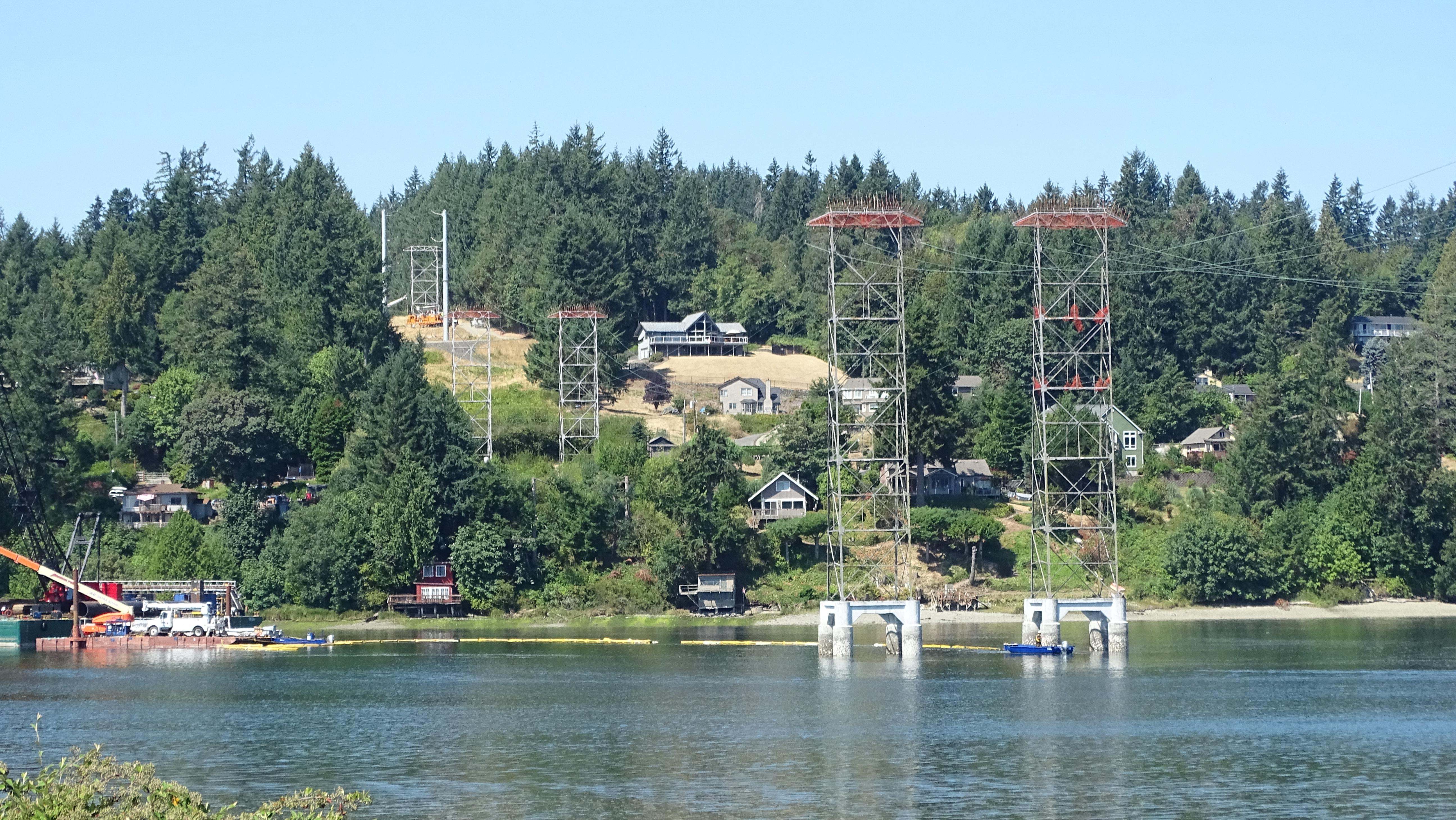
PURDY SPIT: Long-time use of power towers by Osprey has come to an end as the towers are now being dismantled after 2 years of Osprey discouragement (see red spikes). A new pole/platform has been erected at the corner of Purdy Drive and Goodrich, but the Osprey have ignored it completely. Maybe the discouragement protocol will make the entire area unfriendly to them. Very sad for me, as this was my “home” nest for 30 years.

8-7-18 – Purdy Spit towers about to be taken down

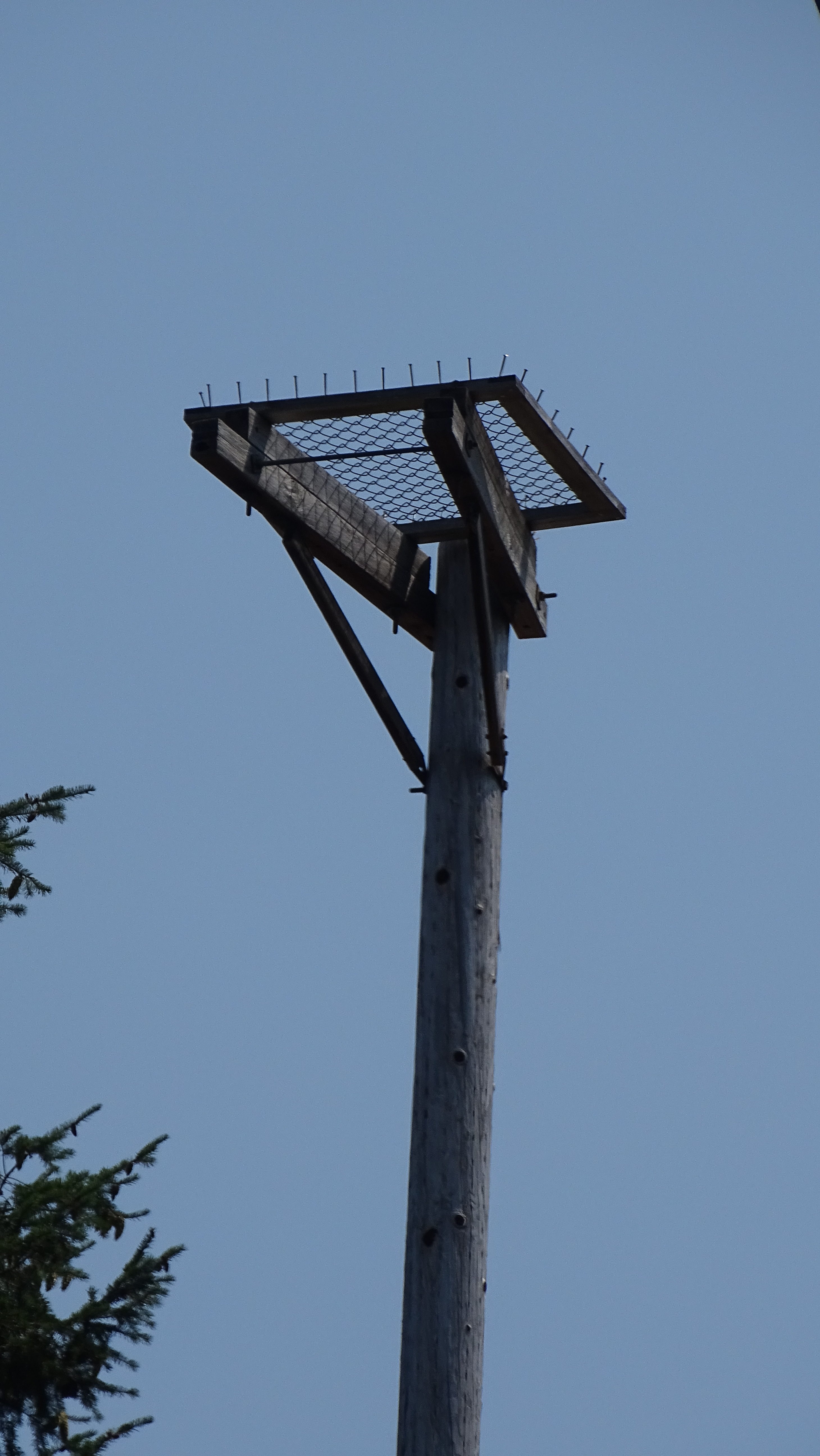
PURDY DRIVE: The pole erected around 25 years ago to offer the Osprey an alternative to power towers, and which had been roundly ignored by them in favor of the towers, has been retrofitted to new guidelines, which the birds apparently did not write themselves. It now resembles the new pole put up on the spit (which the birds have ignored for the one season it has been in place) as well as the new pole put up 3 or 4 years ago in Victor, which came into use in its second year.

8-8-18 – Old unused post on Purdy Drive, now “enhanced.”

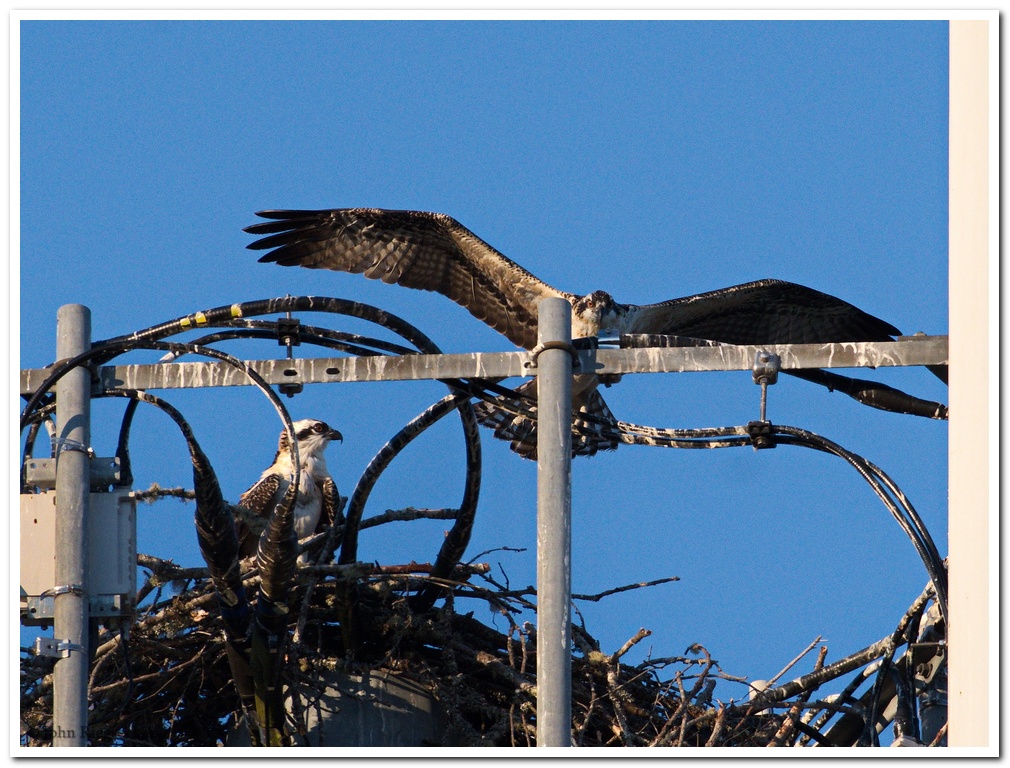
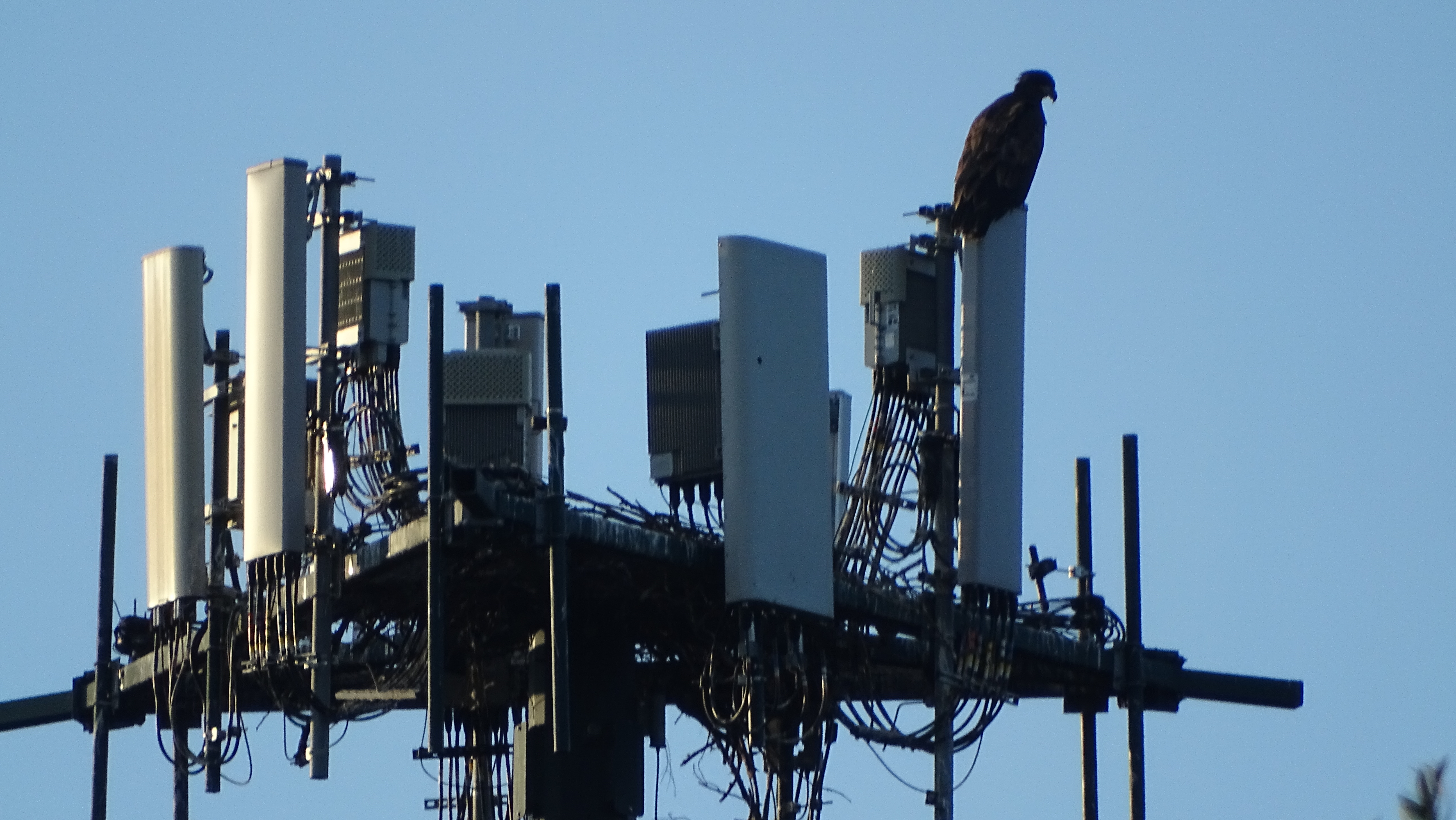
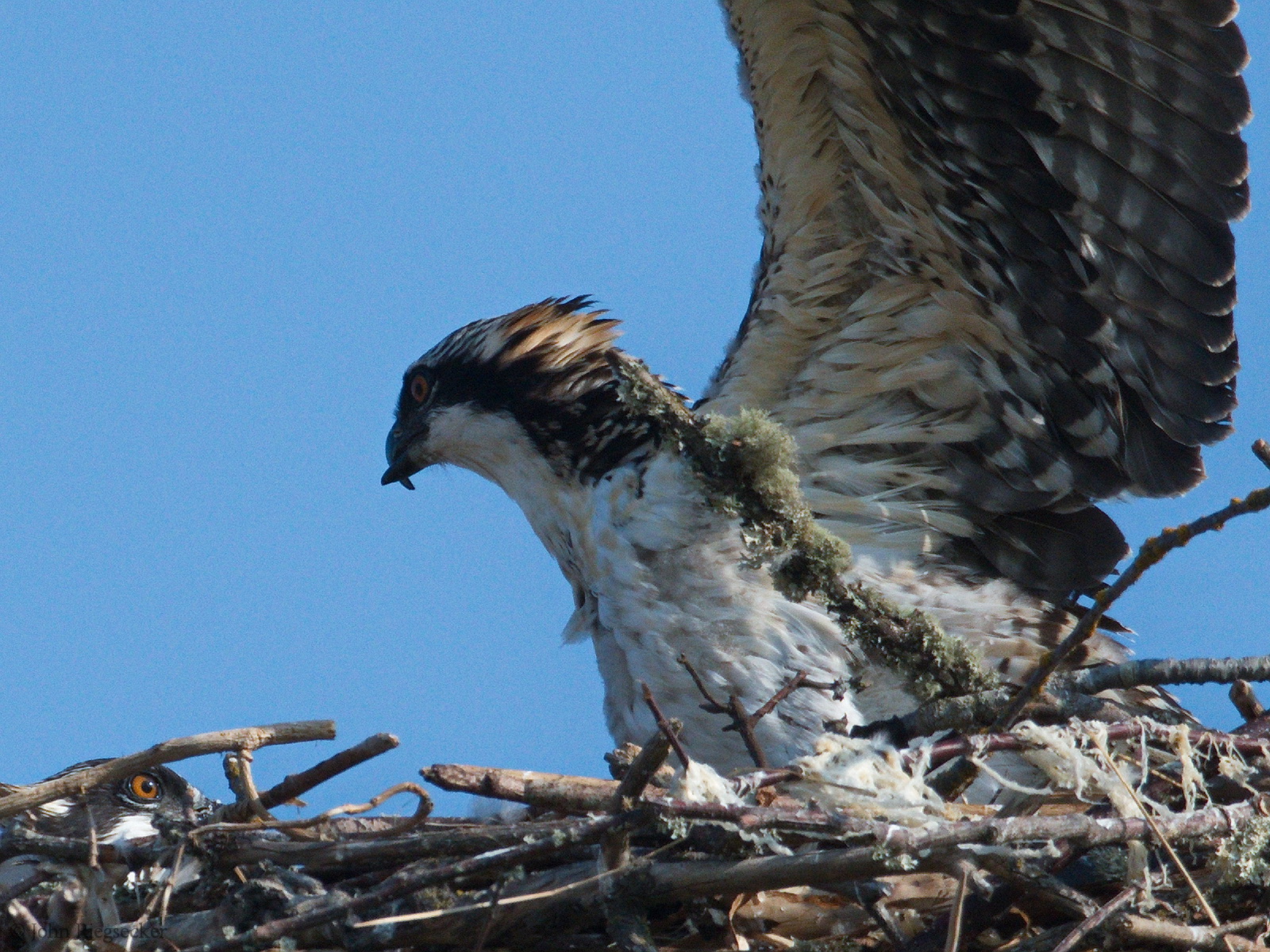
PEACOCK HILL NORTH: The cell tower was occupied again this year and has two young ready to fledge. Apparently no undue interference with eagles this year, which had been a problem at this tower. Don’t know where they fish. John Riegsecker has been monitoring this one.

Peacock Hill nest on 8-10-18 by John Riegsecker

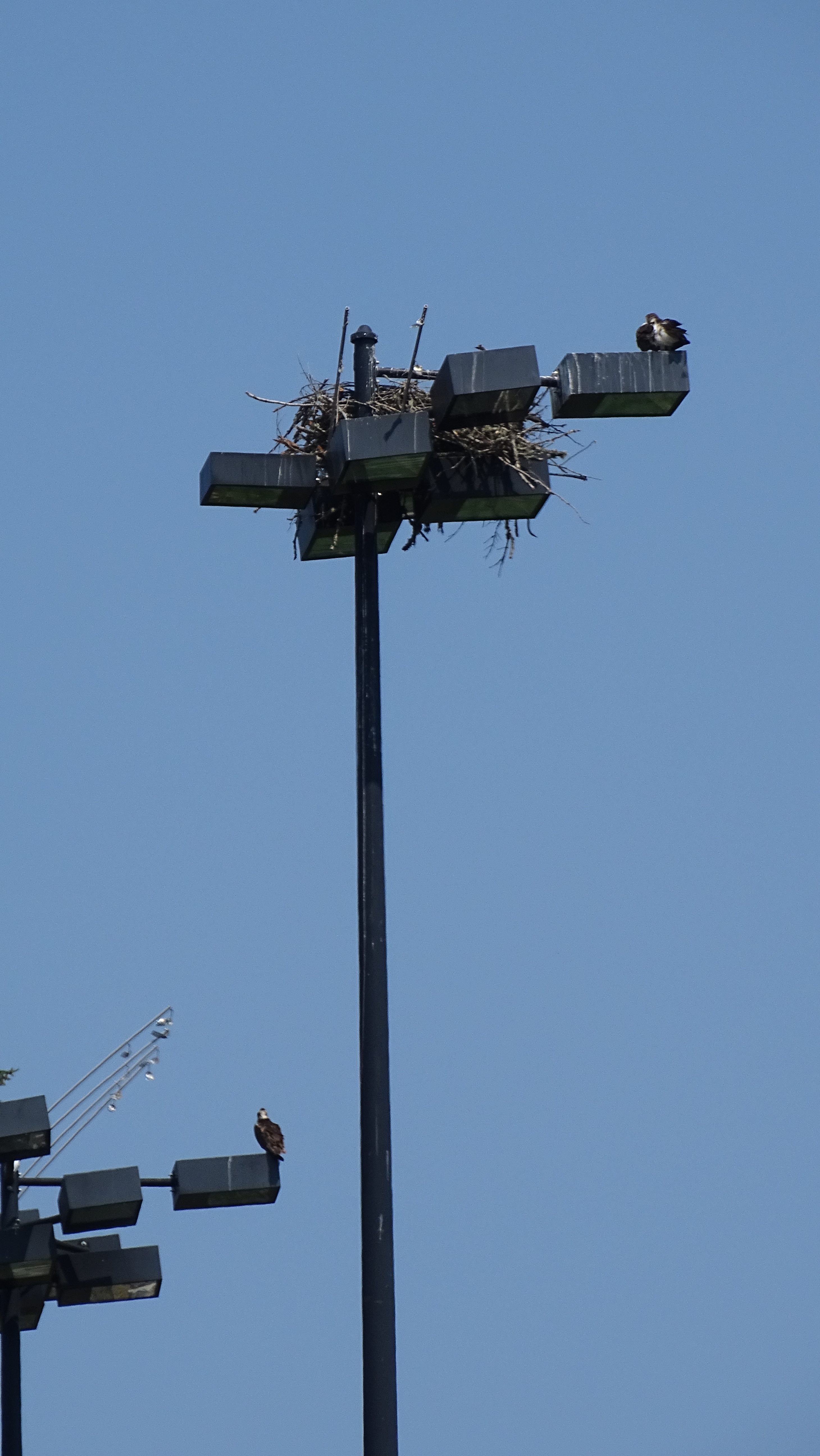
GIG HARBOR HIGH SCHOOL PLAYING FIELDS: Success again on the light standards!  The Osprey seem to enjoy the fluttering tinsel designed to scare off birds.

8-8-18 – Gig Harbor High School with Ospreys on light standards

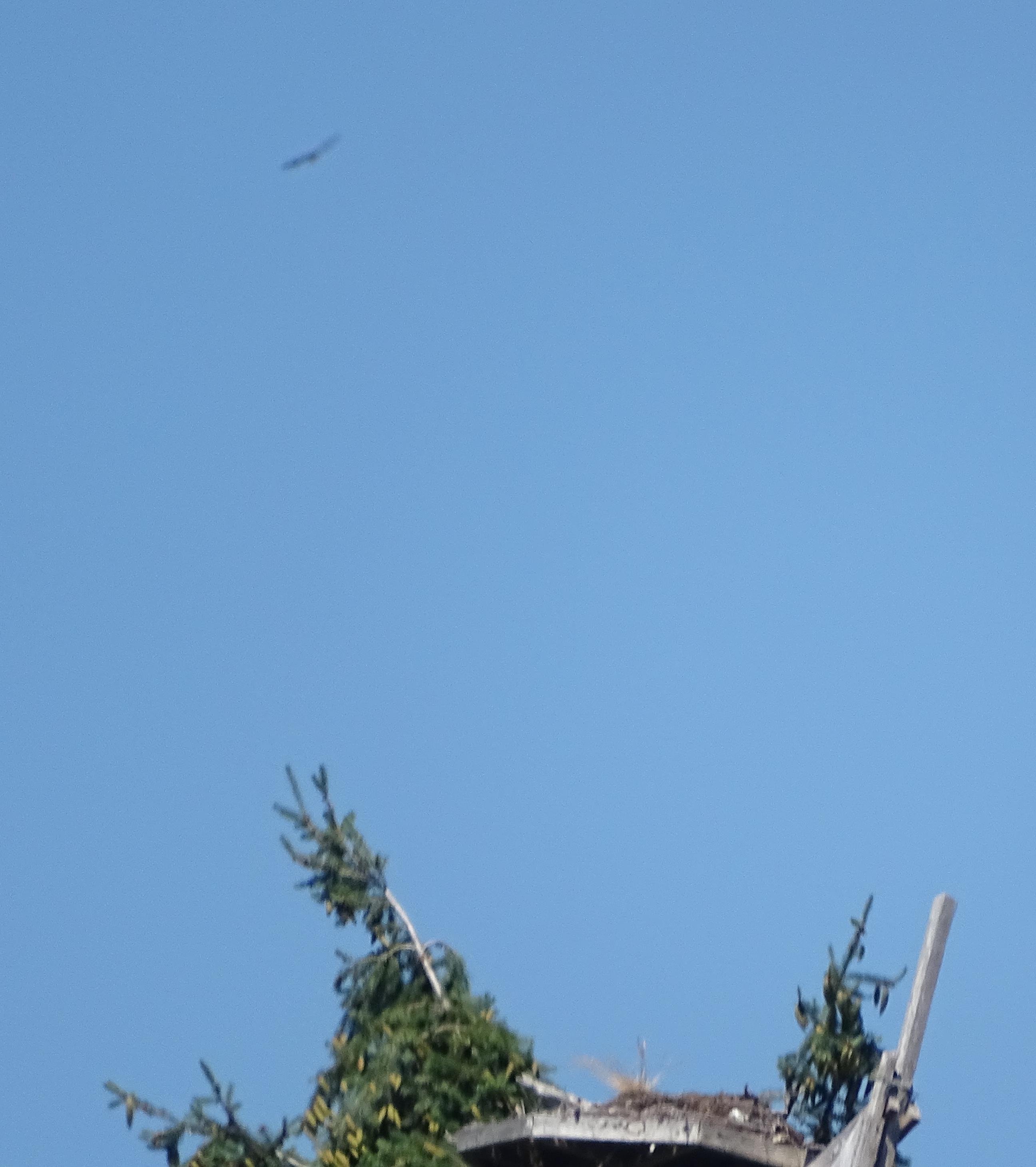
WOLLOCHET BAY: The long-used platform appears to have not been used this year, a first in the 20 years I’ve been watching it. Again, the state has not funded the cam set-up, and the hardware appears to have been stripped off it.

8-7-18 – Wollochet Bay abandoned nest. That’s a Redtail overhead, not an Osprey.

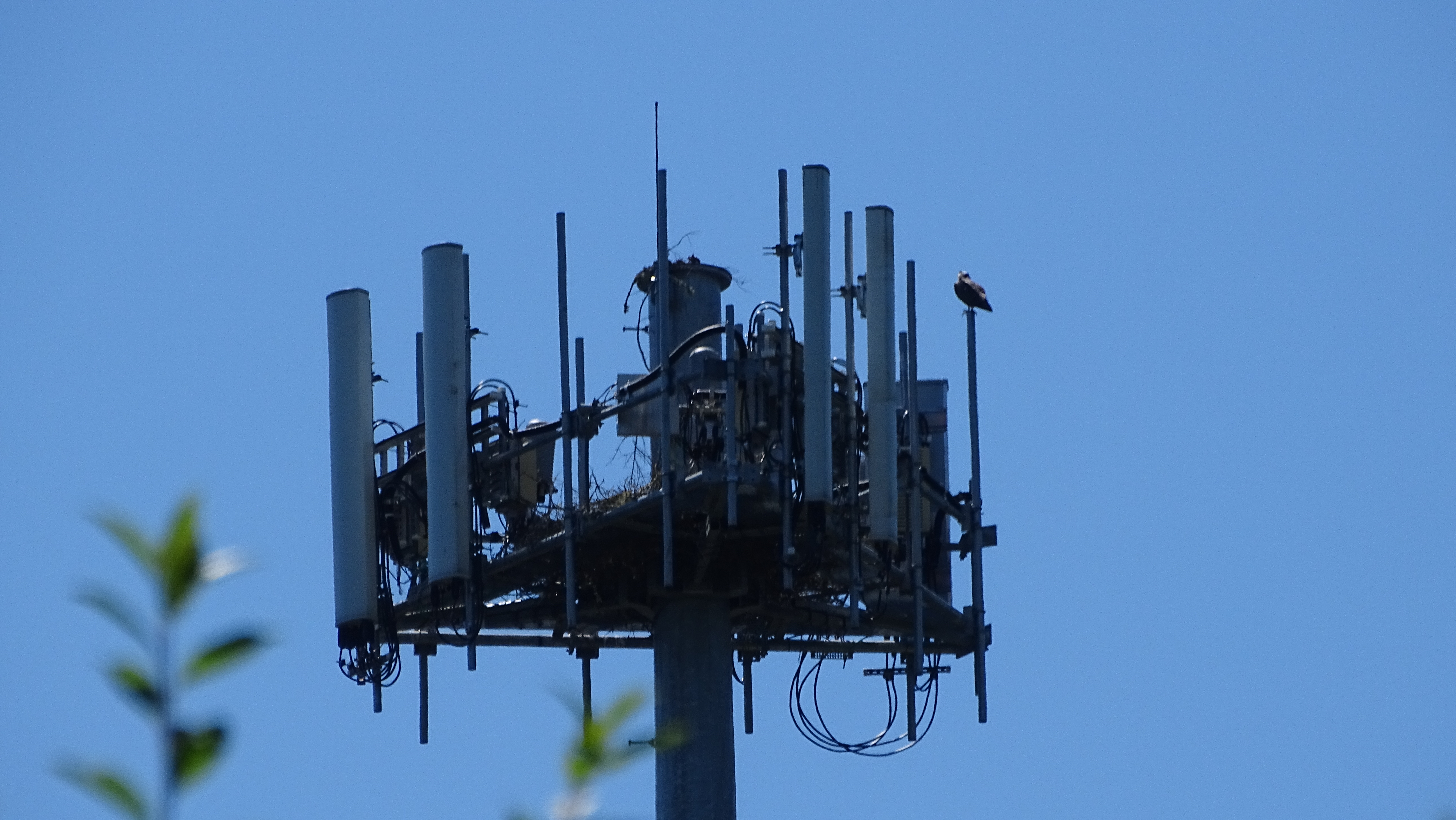
THE INN AT GIG HARBOR: Another joyfully successful season at the cell tower complex, worrisome with all the new construction going on around there for the new Fred Meyer complex. Recommend watching from the Tanglewood restaurant parking lot, then going into the restaurant and having dinner or a drink to celebrate in late July to early August.

7-28-18 – The Inn at Gig Harbor with nest and 2 young on left tower & adult watching from right tower

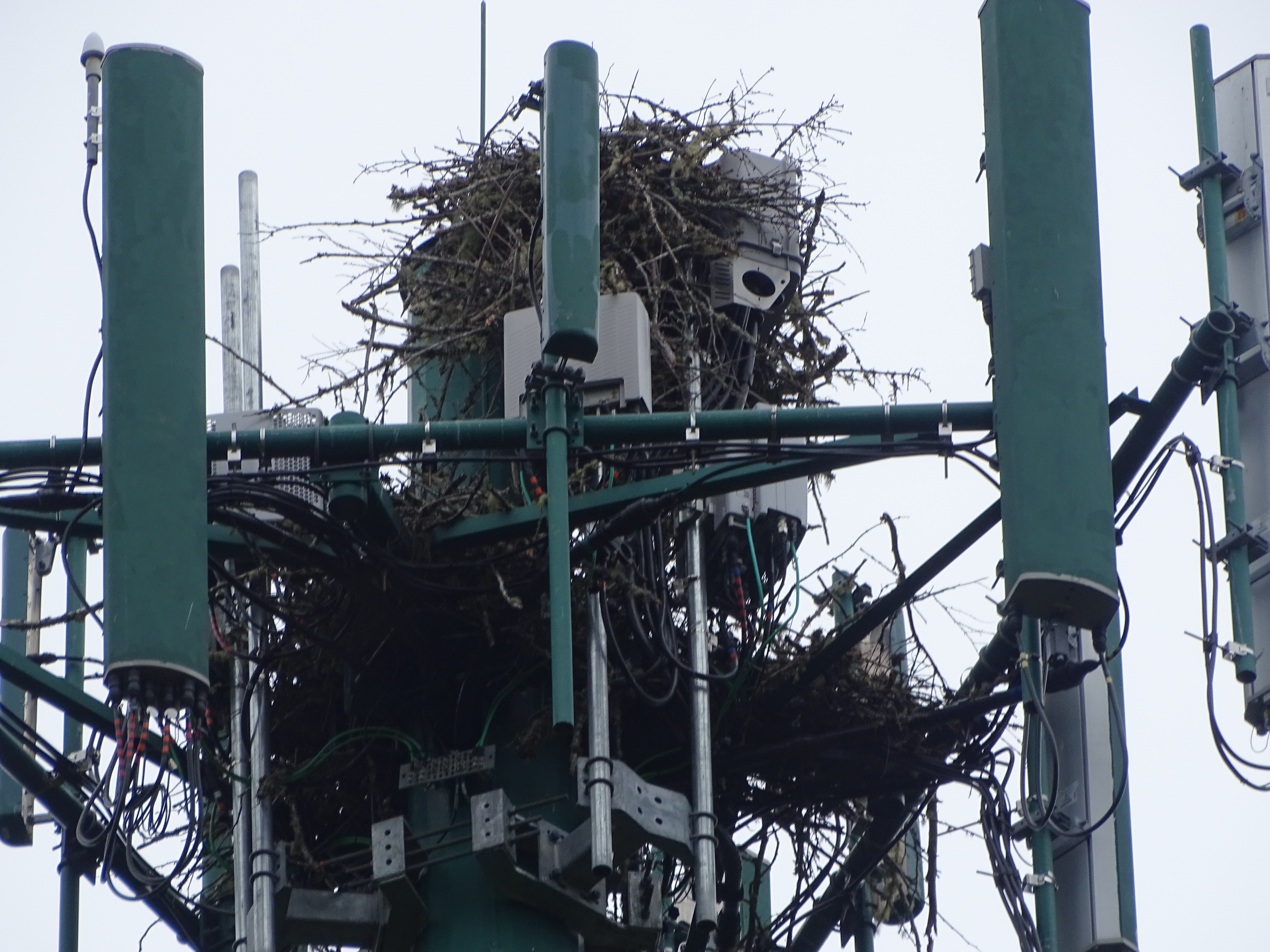
KEY PENINSULA HIGHWAY at W302 INTERSECTION: Cell tower with sticks in every possible cranny, but seemingly successful again, with at least one Osprey observed in attendence every time I’ve gone by for 4 months.

Key Peninsula Hwy nest on 7-26-18

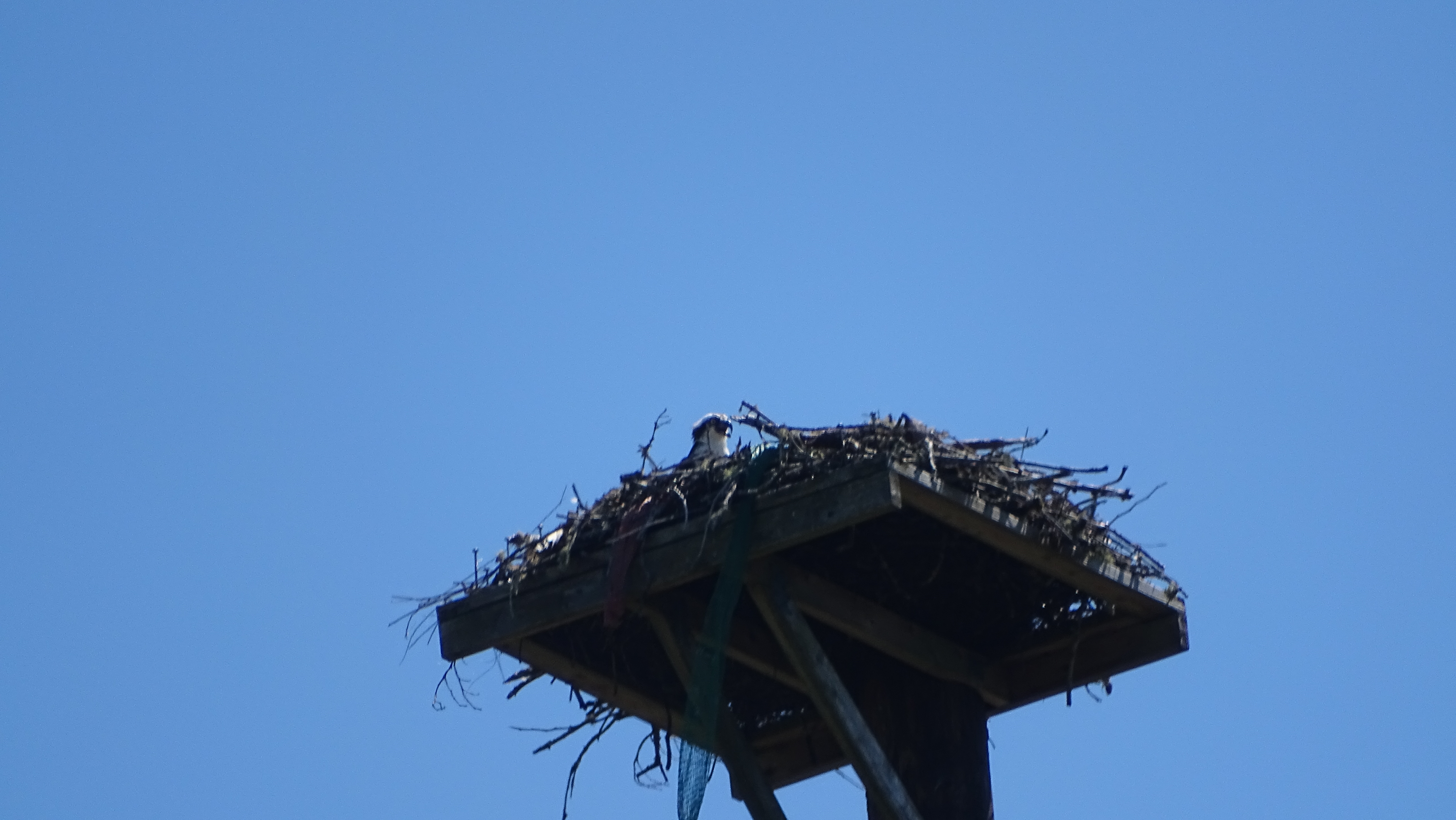
VICTOR: This platform was erected as mitigation for taking out TWO NESTS when the power towers in North Bay were removed several years ago, such as is going on now in the Burley Lagoon at the Purdy Spit. Tall pole on hill is hard to see into, but a bird was seen there on half the visits in 4 months, so good likelihood of success, but not as obvious as last year when young were obviously seen on the nest. Not sure the bird seen was a juvenile, but there’s been ongoing work on decorating the nest with green ribbon lately.

Victor nest on 7-26-18

UZZELL & NELSON RD, S. KITSAP: John Riegsecker told me he’d seen a nest here on the cell tower, but no birds. I visited it on August 1 and saw a beautiful full nest, but no birds. Perhaps they had already fledged, or perhaps they were harassed enough to abandon it. A very nice looking nest. Will check it earlier next season.

8-1-18 – Uzzell Rd in S. Kitsap. No sign of birds.

PORT ORCHARD: The nest just northeast of the intersection of Sedgwick and Bethel is on the edge of stormwater retention ponds on the dead-end road of a fancy subdivision. This nest had been observed several years ago to be successful, then seemed to have been removed. This year it’s back! An Osprey was on hand to greet us. Nest can be observed well from the Les Schwab Tire Center on Sedgwick.

8-4-18 – New nest on formerly occupied cell tower just off Sedgwick

ACROSS THE BRIDGE: Lots of good reports from Chambers Bay, being monitored by Max Warner and John Riegsecker, among others. John got pictures of the two young still in the nest recently, where one youngster had a crossed bill, but seemed to be growing well. He reported it to Bud Anderson of Falcon Research Group, who is monitoring raptors with crossed or overgrown bills.

7-30-18 – Chambers Bay nestling with crossed bill. Photo/John Riegsecker

SUMMARY: Some big disappointments, but some gains, too. One interesting observation is that the nests so far from water that I don’t know where they go to fish are doing better than the ones on the water. Happy birds at the Inn at Gig Harbor, for example; whereas Wollochet Bay failed this year.

Compare with last summer’s survey: http://abcbirding.com/summer-2017-peninsula-osprey-survey/