ABC, July 17, 2018 – BOOK DISCUSSION: “Birding Without Borders,” by Noah Strycker

ABC, JULY 17, 2018:  We held our annual book discussion on July 17th.

The meeting started off with a recap of the recent wildly successful field trip to Cassia County, Idaho, for those Cassia Crossbills, with subsequent stops for other good stuff. We met Marcus Roening for dinner in Twin Falls upon arrival, when he and Heather had gotten the bird and were headed elsewhere. He gave us some good and timely tips, mainly to go to Porcupine Springs, which we did with great success! After getting the bird, the two carloads (Car #1: Faye, Diane, Carol, and Art; Car #2: Ken, Ed, Teri, Laurel) split up. Car #1 headed home with stops at the Chat spot Marcus had told us about; at Shoshone Falls (wow!); a new wildlife refuge in Idaho; in Ontario, Oregon, for 2 Long-tailed Grackles; and Vernita Bridge with 11 Nighthawks! Car #2 headed into Nevada where they all got another lifer, Himalayan Snowcock in the Ruby Mountains; then into Oregon with lots and lots of Pinyon Jays! See Ed’s report: http://abcbirding.com/4-day-cassia-crossbill-trip-report/
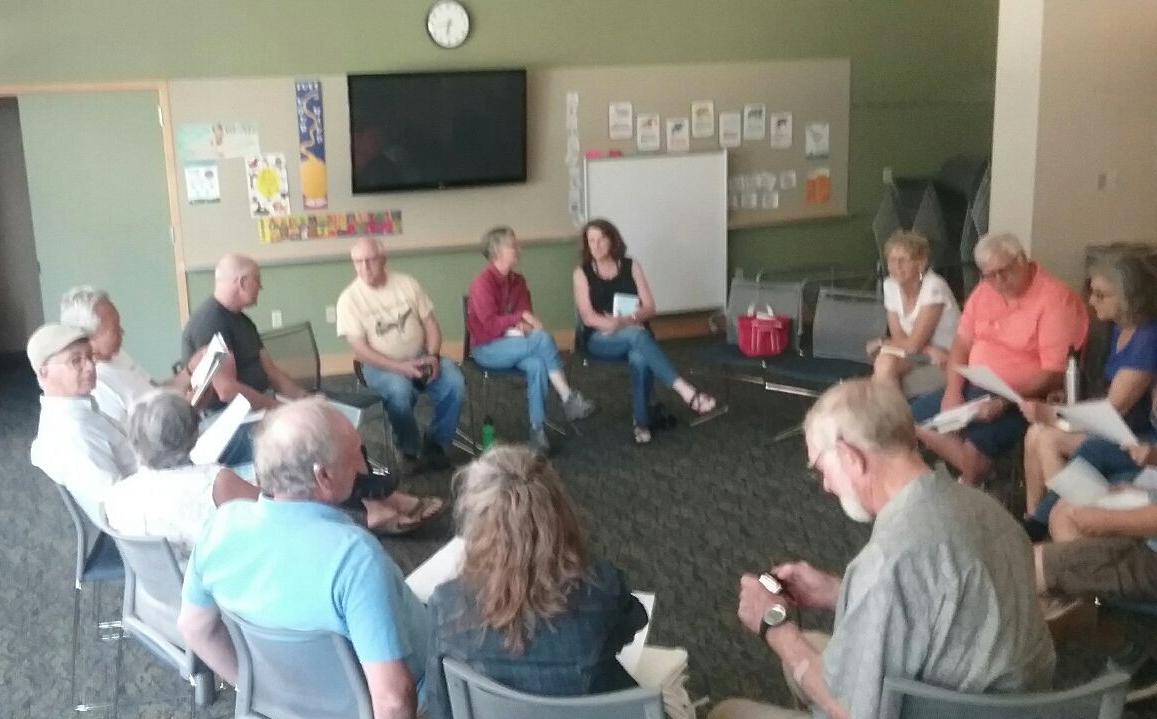
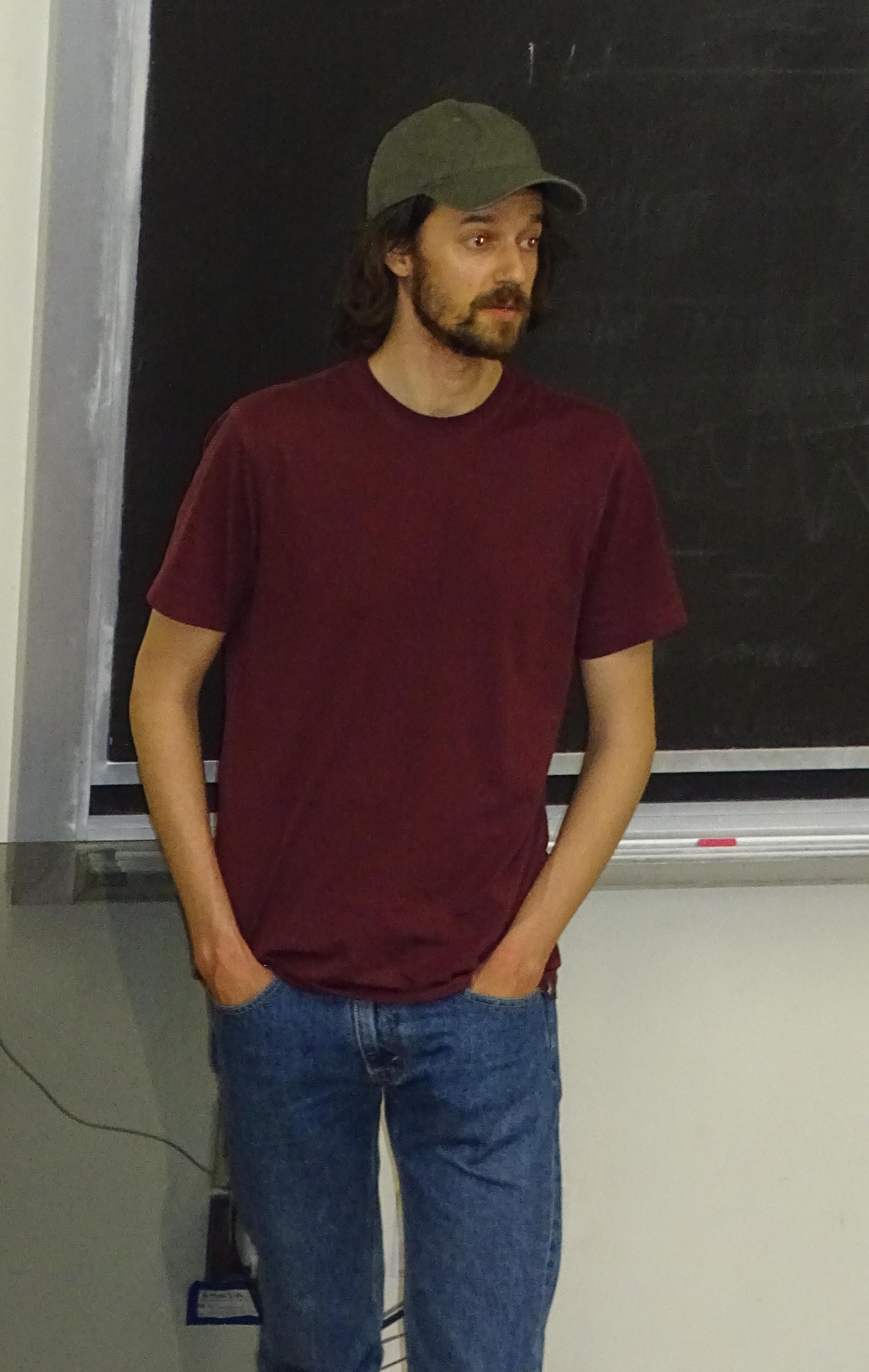
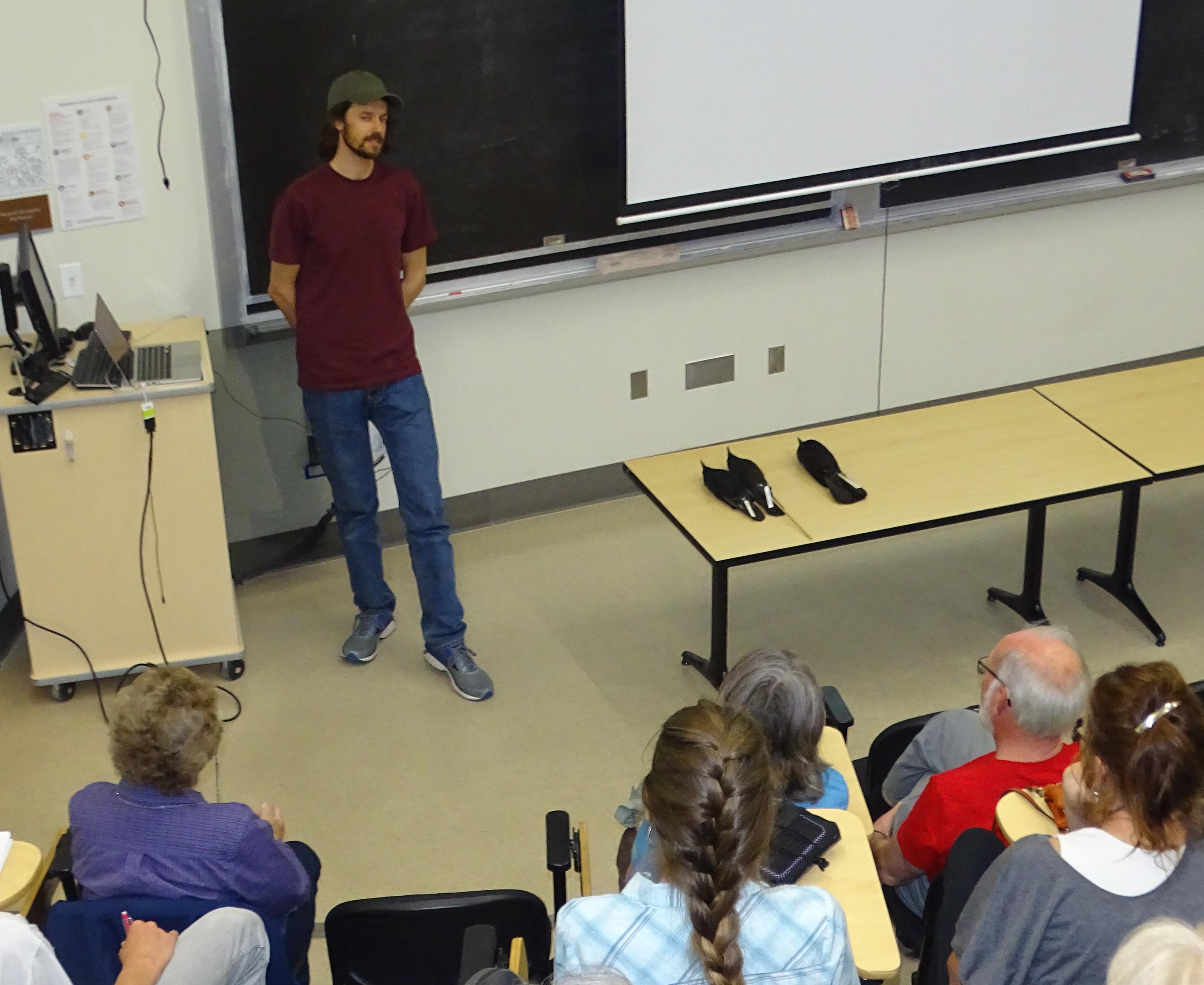
7-17-18 – Joe Tieger in yellow shirt led book discussion

On to the main event! Joe Tieger led a lively discussion on Noah’s book, Birding Without Borders. Of course most of us had met Noah when ABC had him report right after his big year before the book was published, an event concocted by Kay Pullen, which turned out to be the biggest event ever for ABC, where we had to involve Tahoma Audubon and the Slater Museum at UPS, where it was held in the UPS rotunda. (See: http://abcbirding.com/april-12-2017-abcs-new-best-friend-noah-strycker/).

So we all felt a personal connection to Noah. Joe had a list of discussion points which really brought lots of talk, such as what we might have added to his sparse equipment list? In this particular case, Joe had a compelling sales pitch, telling us we should never go off into the wilds, especially if alone, without a Personal Locator Beacon, which he showed us. He explained how it worked, and we’re all ready to go buy one! If you want to know more about Joe’s particular choice, you can ask him at: jmhornbeam@comcast.net.

There was a lively discussion about listing, Big Years, and personal styles of birding. Most of us wouldn’t have wanted to expend the single-minded energy that Noah did, even if we had the money, although Noah’s expenses were amazingly low, considering what he was willing to put up with and his sponsorships.

The discussion turned weird when it came out that Noah said one thing he could have left home was his pair of leech socks.  No one agreed with this, and horrific stories were told!
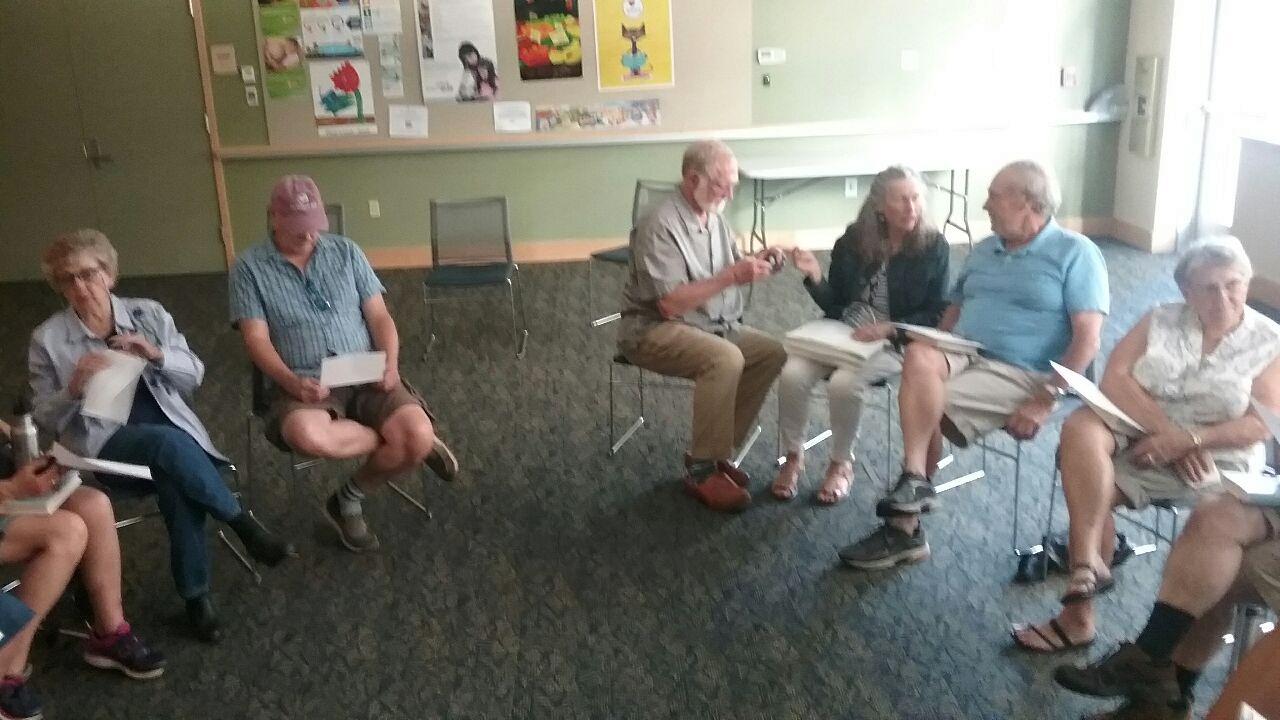
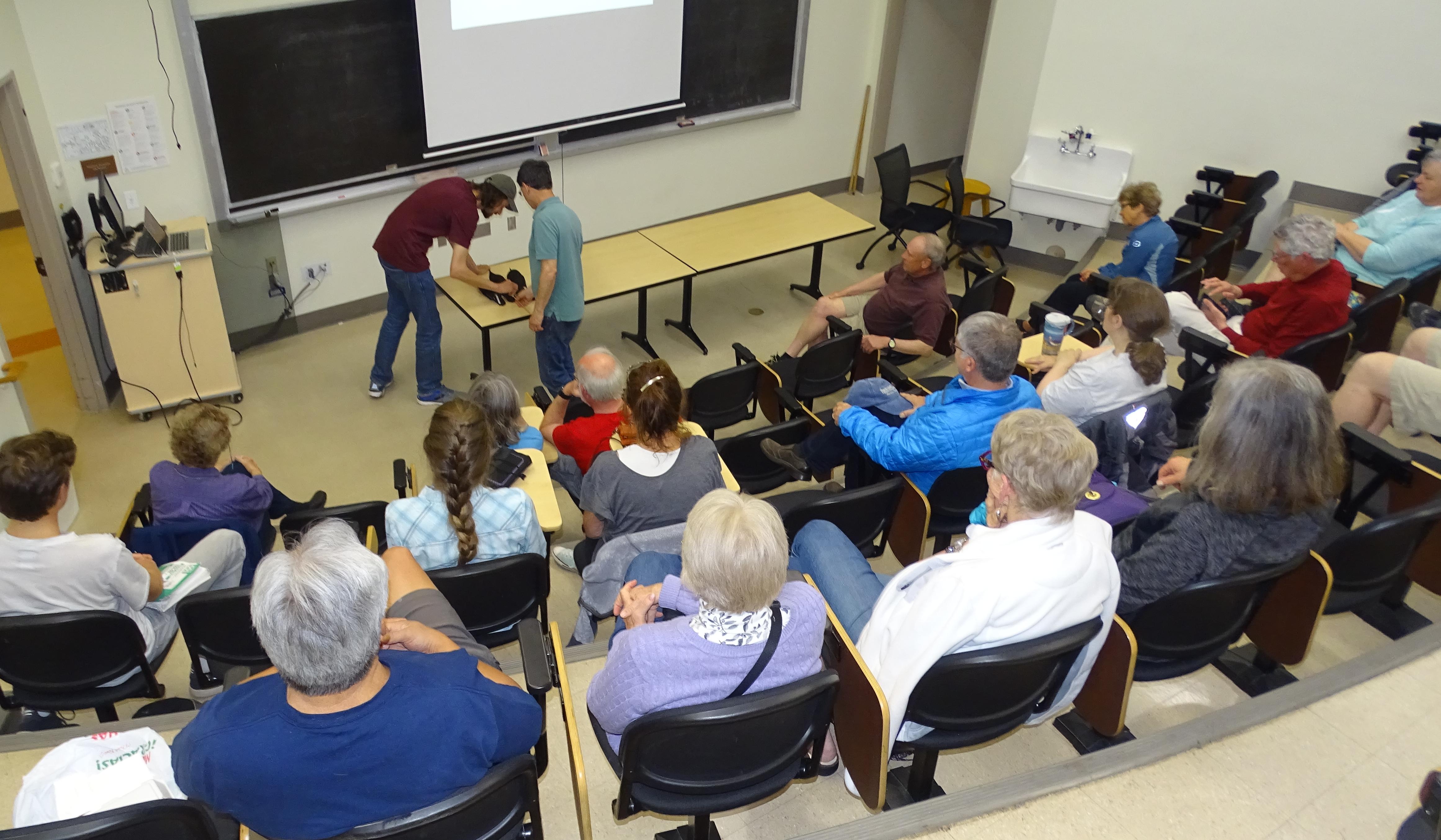
Much conversation about Noah’s book

One educational topic that Joe touched upon was Birding Pals. Several had experience with Birding Pals, with satisfaction up and down the scale from high to low, kinda like computer dating.

Thanks, Joe, for a lively discussion!
June 28, 2018 – REPORT: Vaux’s Swifts at JBLM

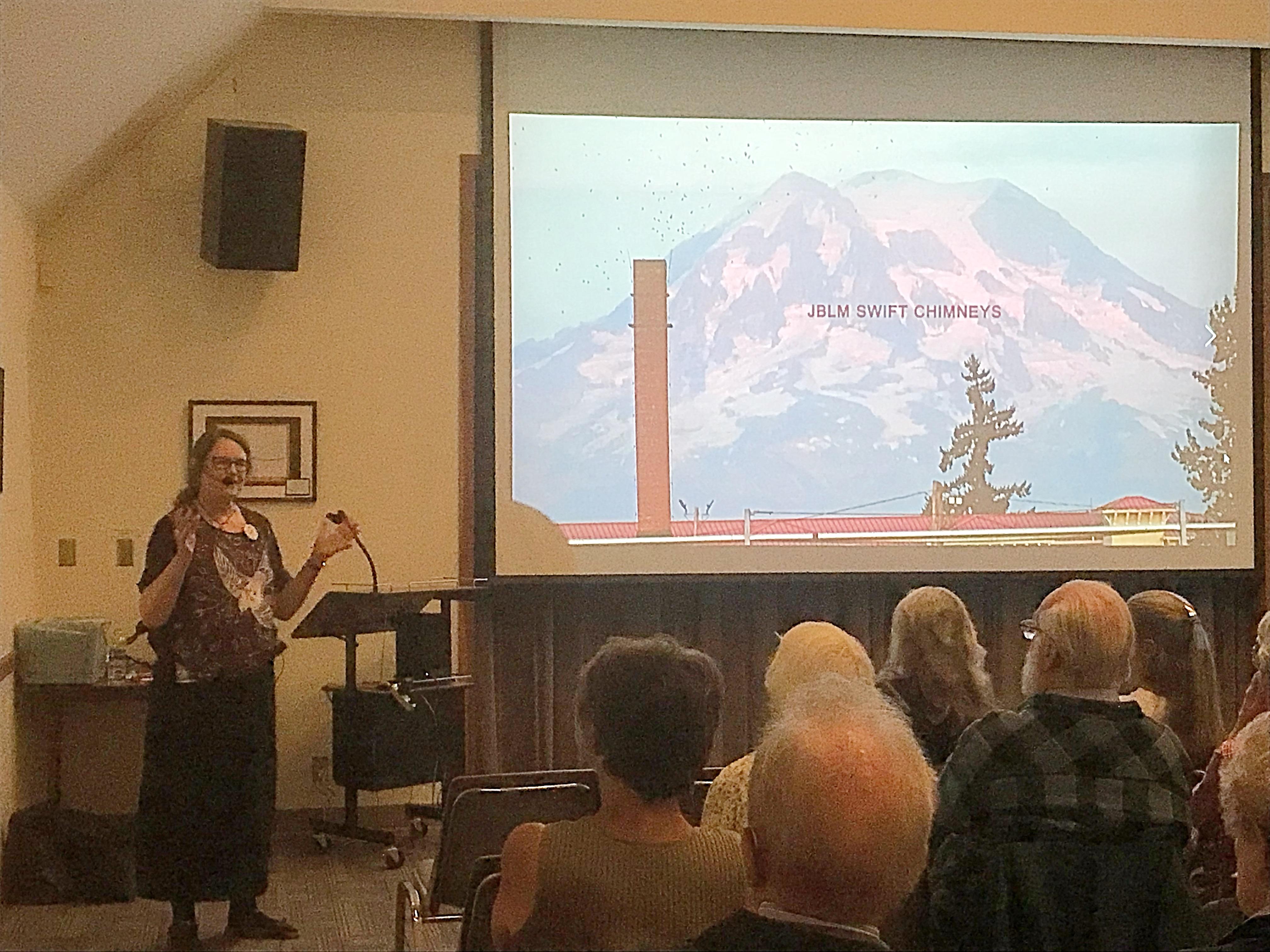
6-28-18 – ABC joined forces with Tahoma Audubon for a report on the Vaux’s Swifts at JBLM.  Diane Yorgason-Quinn, coordinator for volunteer swift counters, presented, along with help from Burney Huff, who started the count; Heather Voboril, who has liaised with JBLM brass to do chimney fixes, etc.; and Faye McAdams Hands, who accompanied Diane to Israel to present Larry Schwitter’s paper on Vaux Swifts to the 5th World Swift Conference in March.

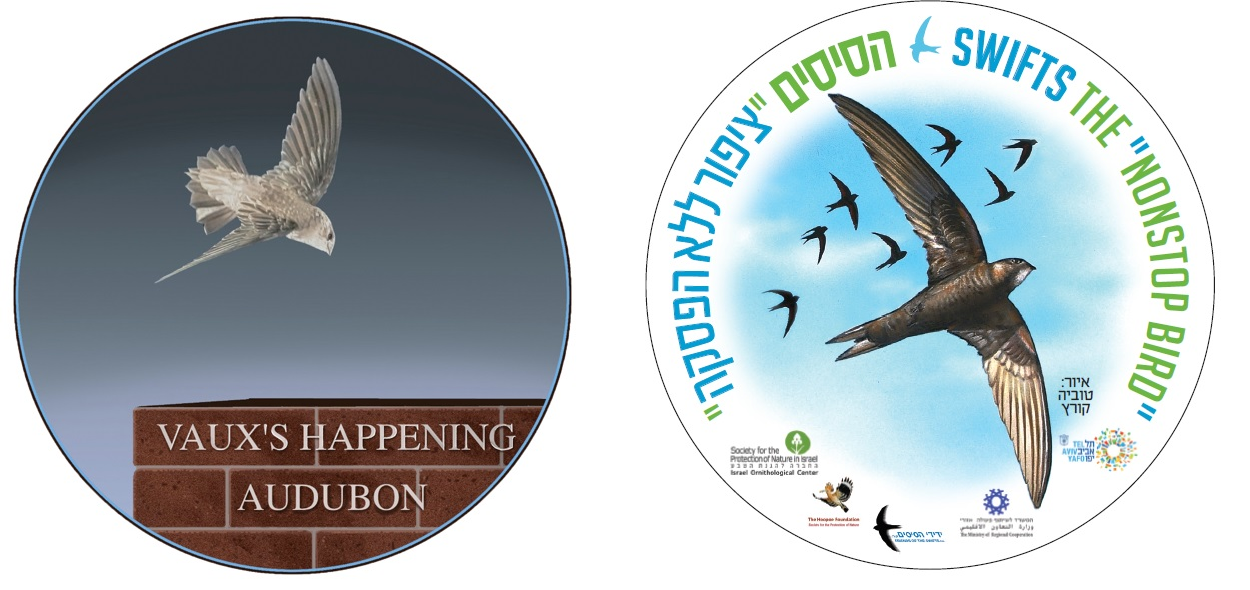
Vaux’s Happening logo and World Swift Conference logo, showing Vaux vs Common Swift

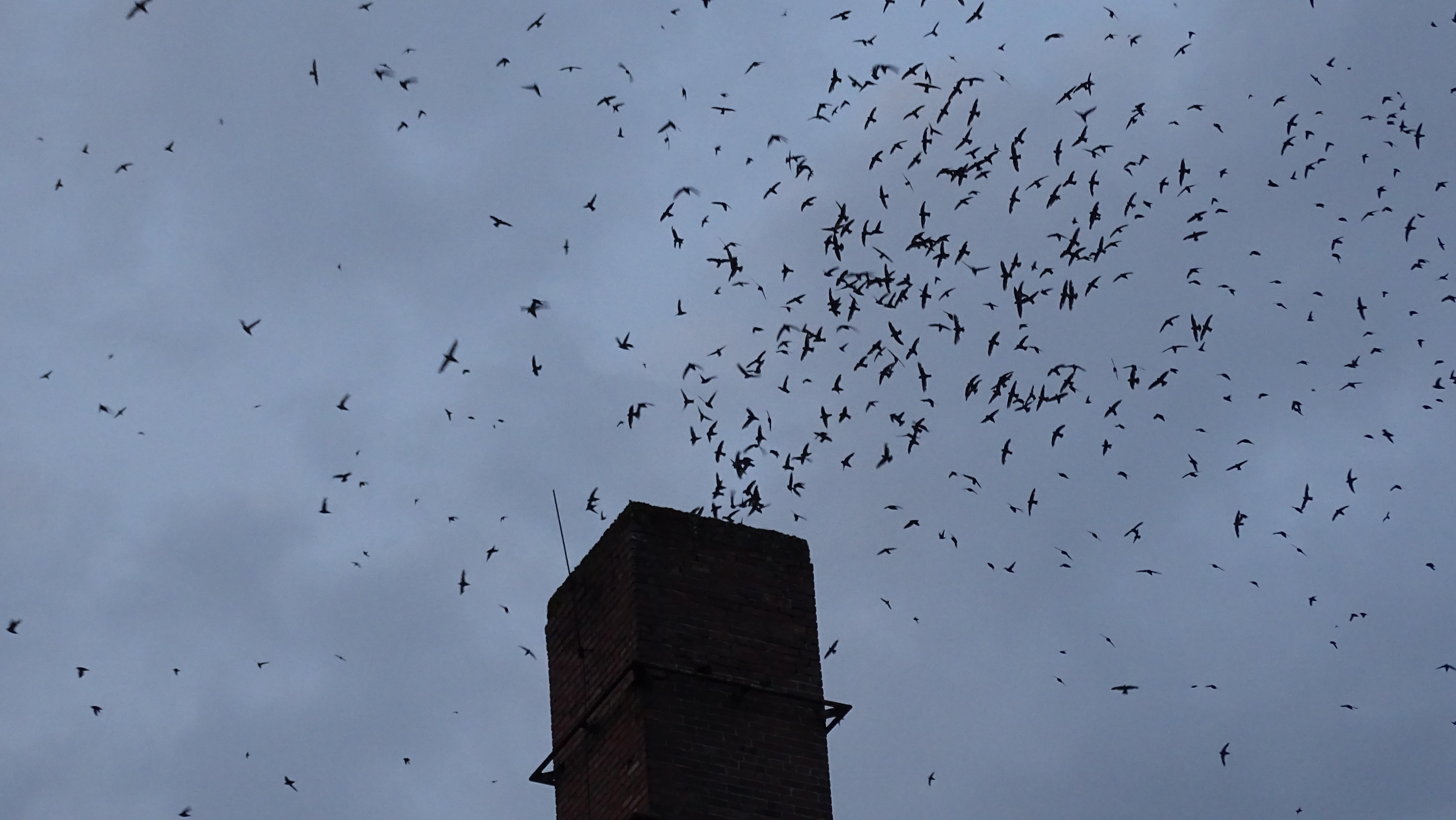
The importance of these chimneys at JBLM was stressed, in a world where chimneys are being torn down or capped at a rapid rate.  Larry Schwitters was able to gain IBA (International Important Bird Area) status for 4 chimneys in Washington including stack 2068 at JBLM.  Since then the base has put signs up on known chimney buildings to not tear them down.  Heather gave some history of that chimney.  The other 3 chimneys we watch were shown, as well.

Diane Y-Q shows the big swift stack at JBLM against a backdrop of Mt. Rainier (Photo/Lalenia Maria)

Special thanks was extended to Chuck Bergman, longtime member of Tahoma Audubon and former Towhee editor, who wrote a major article on JBLM Swifts and Vaux’s Swifts in the October issue of the national magazine, BirdWatching, which was available to browse through.  And of course thanks to Larry Schwitters, a hero for swifts, who has now been coordinating counts and other data at all known Vaux’s Swift chimneys, amassing data that no one could even guess at in the past, which should help save the diminishing population.

All Swift counters in attendance were asked to stand, and since so many of you are counters, it was half the people there!  Hurray!  Several had comments about it.  And we’re still recruiting!  There are a lot of chimneys out there to count, not to mention the ones we haven’t found yet.
Vaux’s Swifts enter JBLM chimney 2068 at dusk

The evening ended with a short recap of the trip to Israel, how our swifts are so different than old-world swifts, and going birding in Israel as told by Faye.

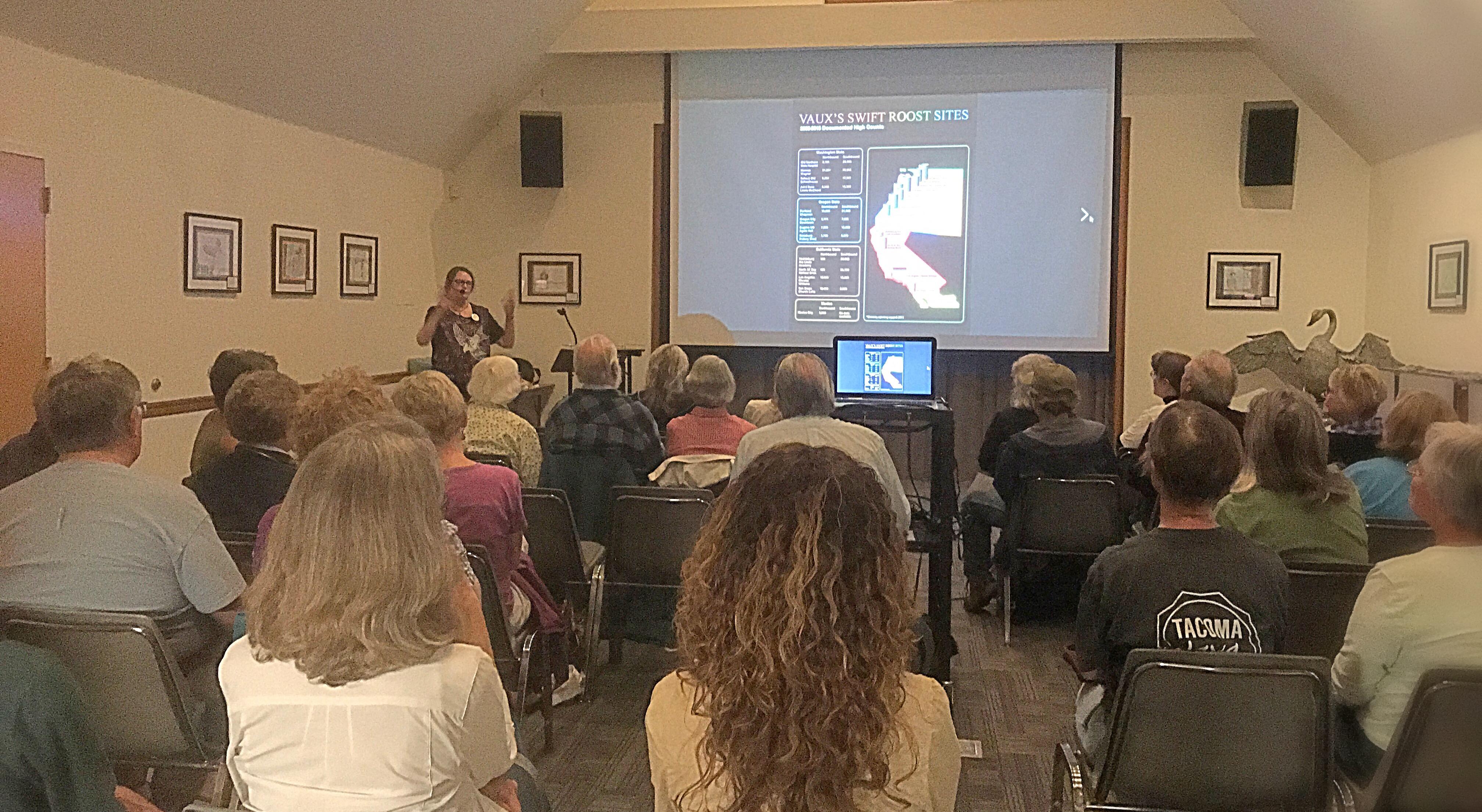
6-28-18 – The map of major stacks clearly outlines swift migration routes (Photo/Lalenia Maria)


MORE INFO:      VauxHappening.org

Diane Yorgason-Quinn at Avosetta@hotmail.com

AUG 25, 2018 — SELLECK SWIFT FIELD TRIP 5:45 PM to 9:30 PM

Watch these crazy little birds go to bed around sunset inside the chimney at the old schoolhouse in Selleck (now a private home where we have permission). Meet at 5:45 PM at the Auburn Supermall (AKA The Outlet Collection) theater parking lot, south side near Panda Express. We’ll carpool from there. Please RSVP here AND sign up with Diane Yorgason-Quinn, Avosetta@hotmail.com. No children. No limit. No exertion, good for people with can’t walk far. No bathrooms (go to the supermall early to find one). Bring lawn chair or blanket.


SEPT 8, 2018 — SWIFT NIGHT OUT at Monroe, Wagner School on Main Street.  A true festival with food, vendors, fun stuff, docents, AND SWIFTS!  Just show up anytime after 4 PM.  No need to sign up.


SEPT 16, 2018 — JBLM SWIFT NIGHT.  Find a friend with base privileges to bring you.  6 PM until the swifts are all in.  Meet at Building 2068.  Contact Diane for directions at Avosetta@hotmail.com.


SWIFT COUNTER TRAINING:  Any Sunday night at JBLM starting Aug 26.  Contact Diane Y-Q at Avosetta@hotmail.com.

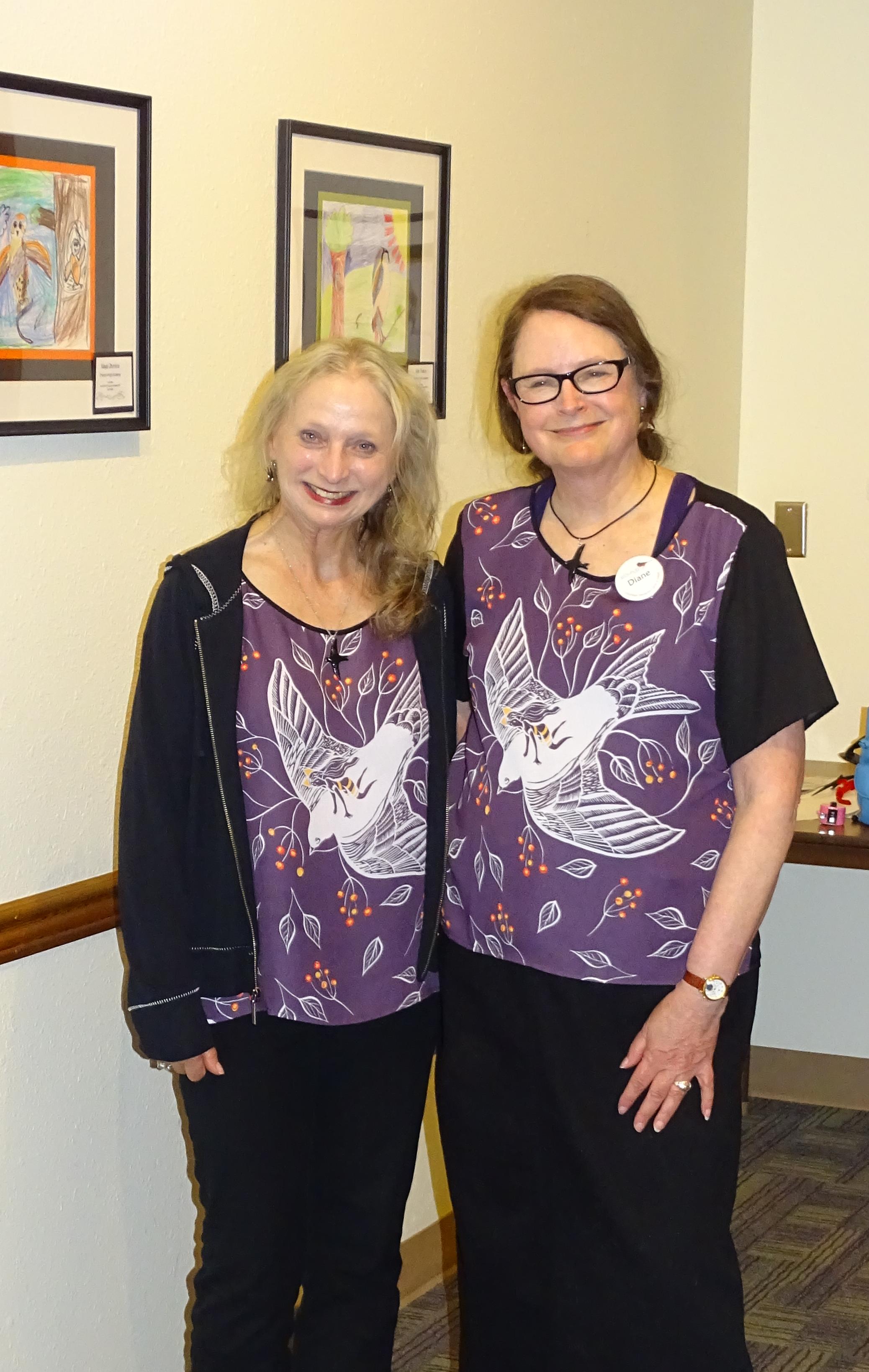
Faye McAdams Hands and Diane Y-Q in the swift finery they wore to the International Swift Conference in Israel (Photo/Adam Trent)

2018 TACOMA PEREGRINE REPORT

PEREGRINES NESTING AGAIN IN DOWNTOWN TACOMA!

UPDATE, June 25, 2018, from Fergus Hyke:

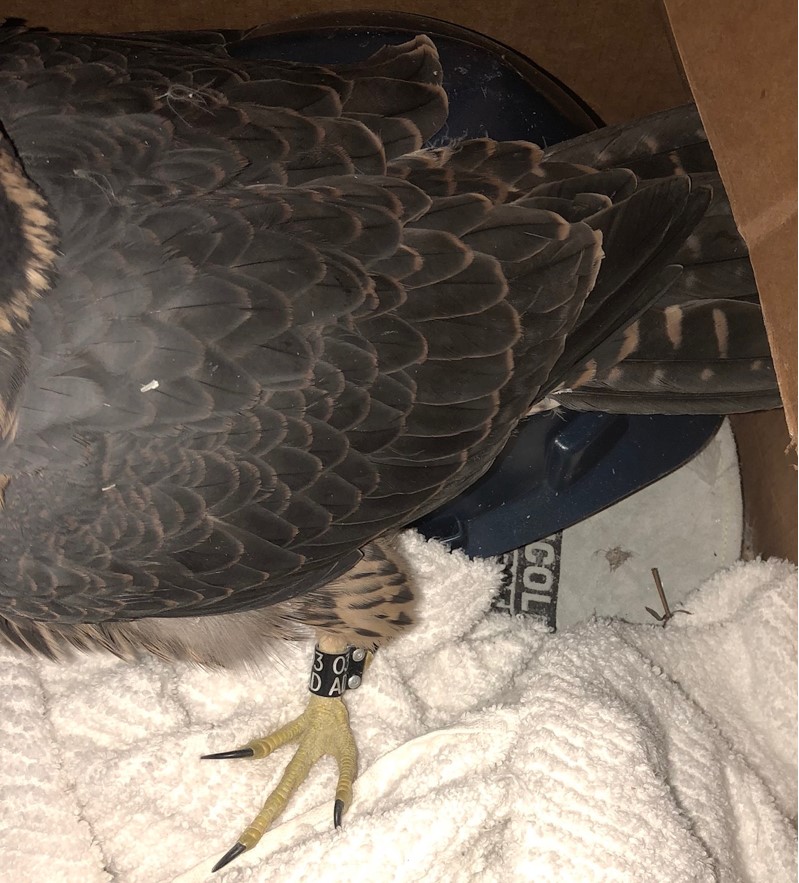
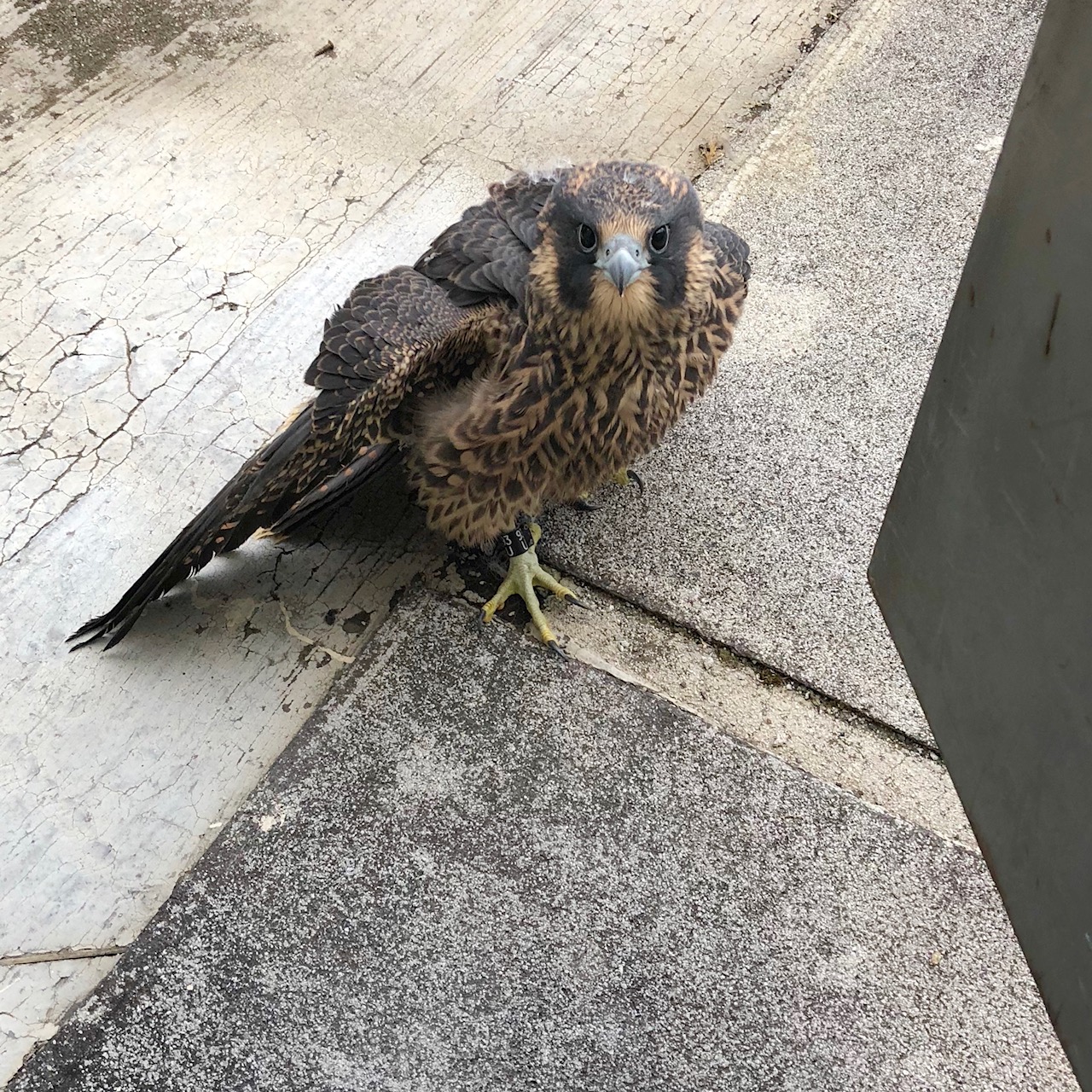
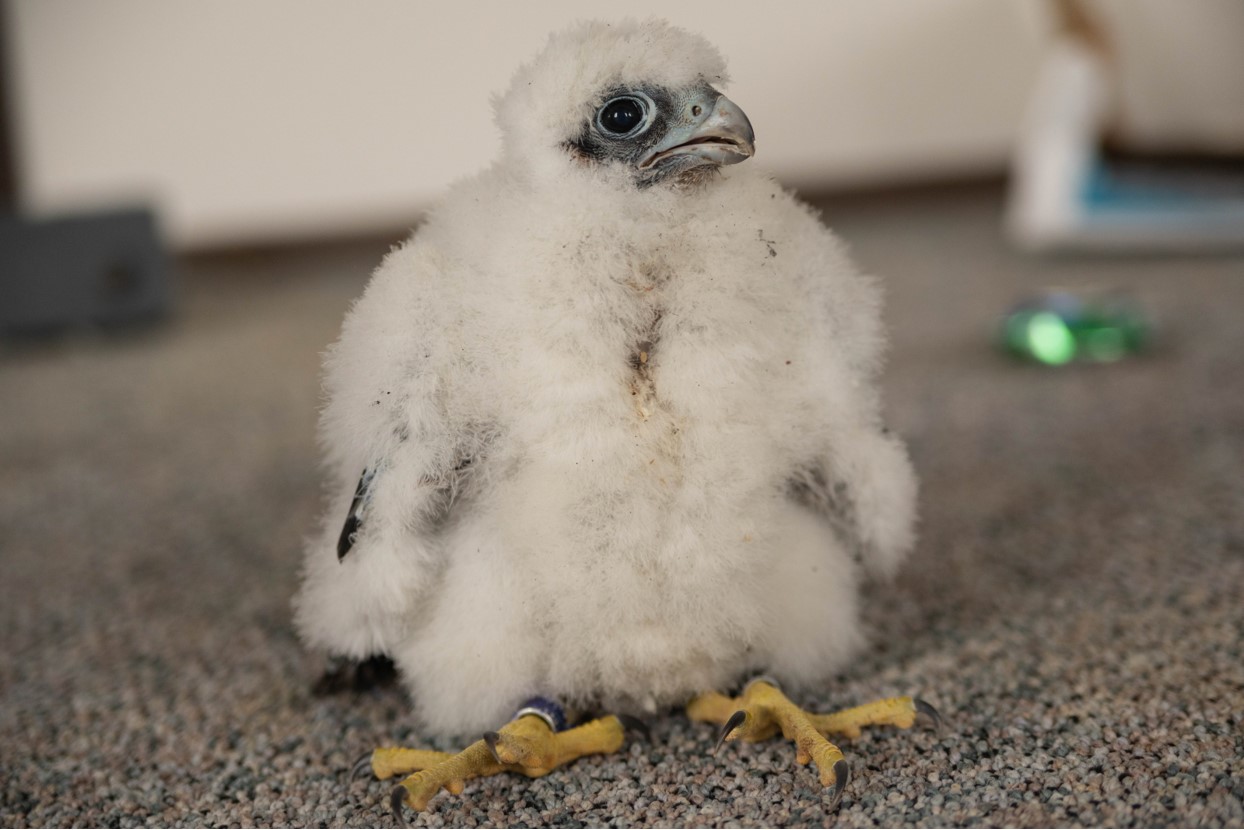
6/11 Monday, Rescued Pacific from Pacific Avenue. Looked ok. Taken and released to the roof. (Sorry for the cut-off picture, I needed to know which one this was and focused on the band.

Pacific ID’d by band after rescue

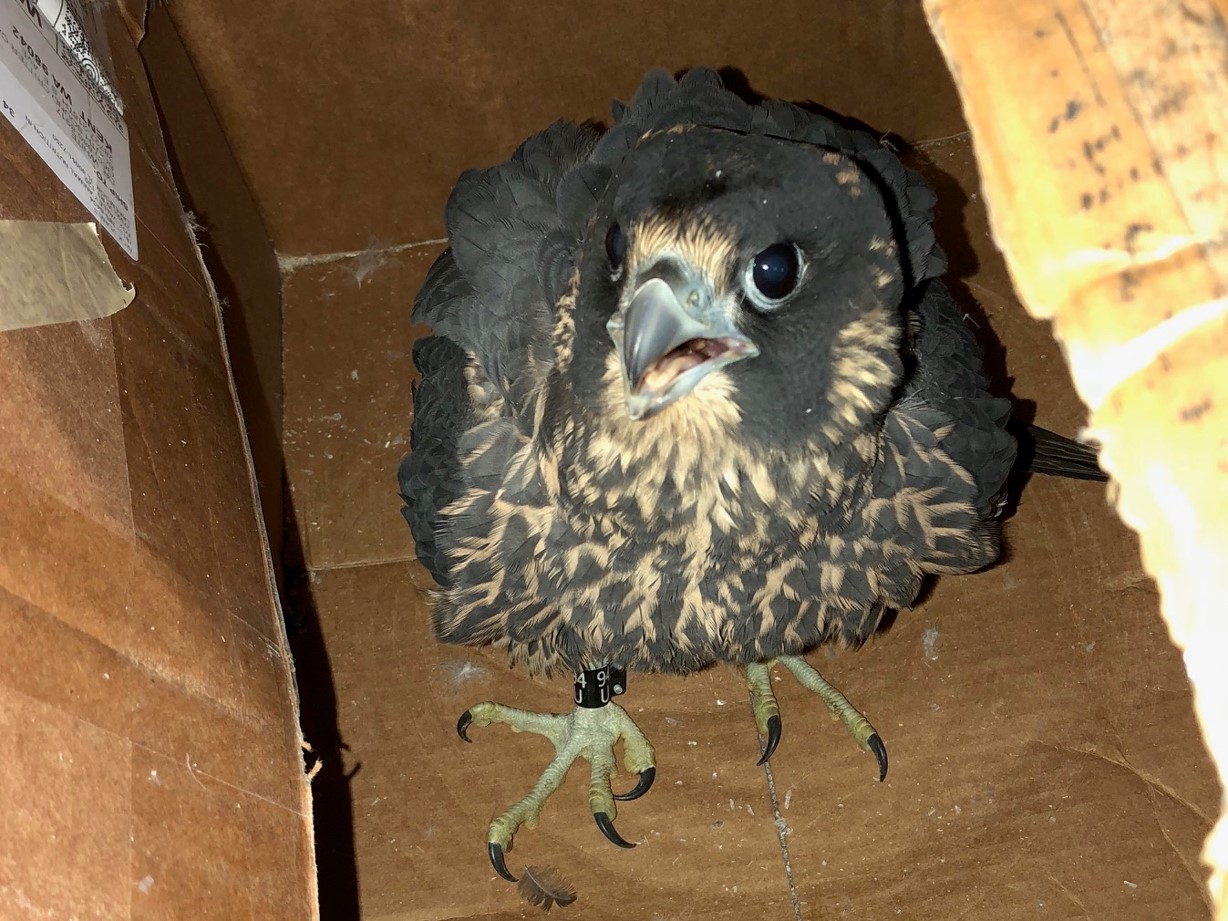
6/13 – Rescued Blue from the middle of the street. Was first spotted on a ledge 2 stories up from the front entrance to my building. After about 2 hours, it tried to fly and ended up landing in the street. I gave chase and eventually got a towel over it. Again, looked ok to me, and was pretty feisty. Placed in rescue box and after about 15 minutes to calm down, released to the roof.

Blue after her big adventure

Blue after rescue

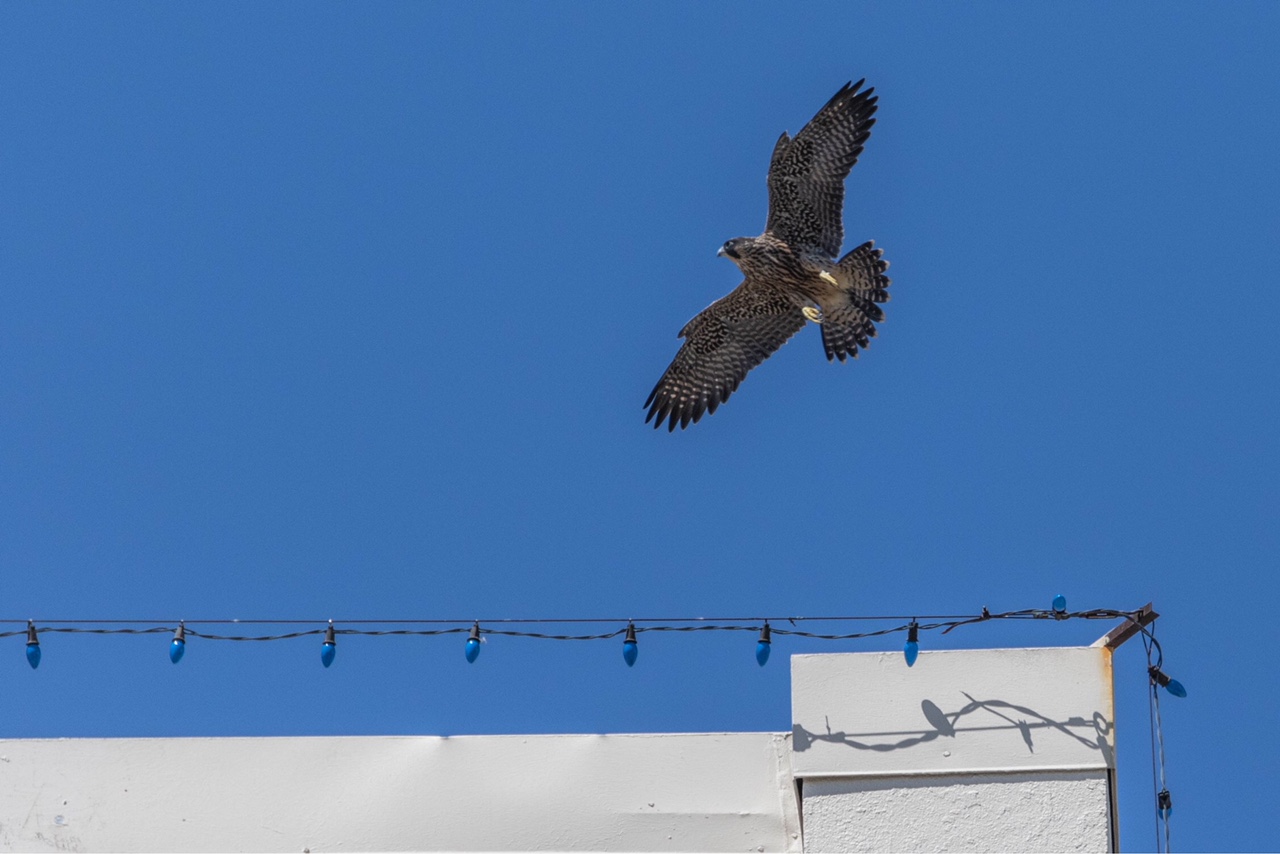
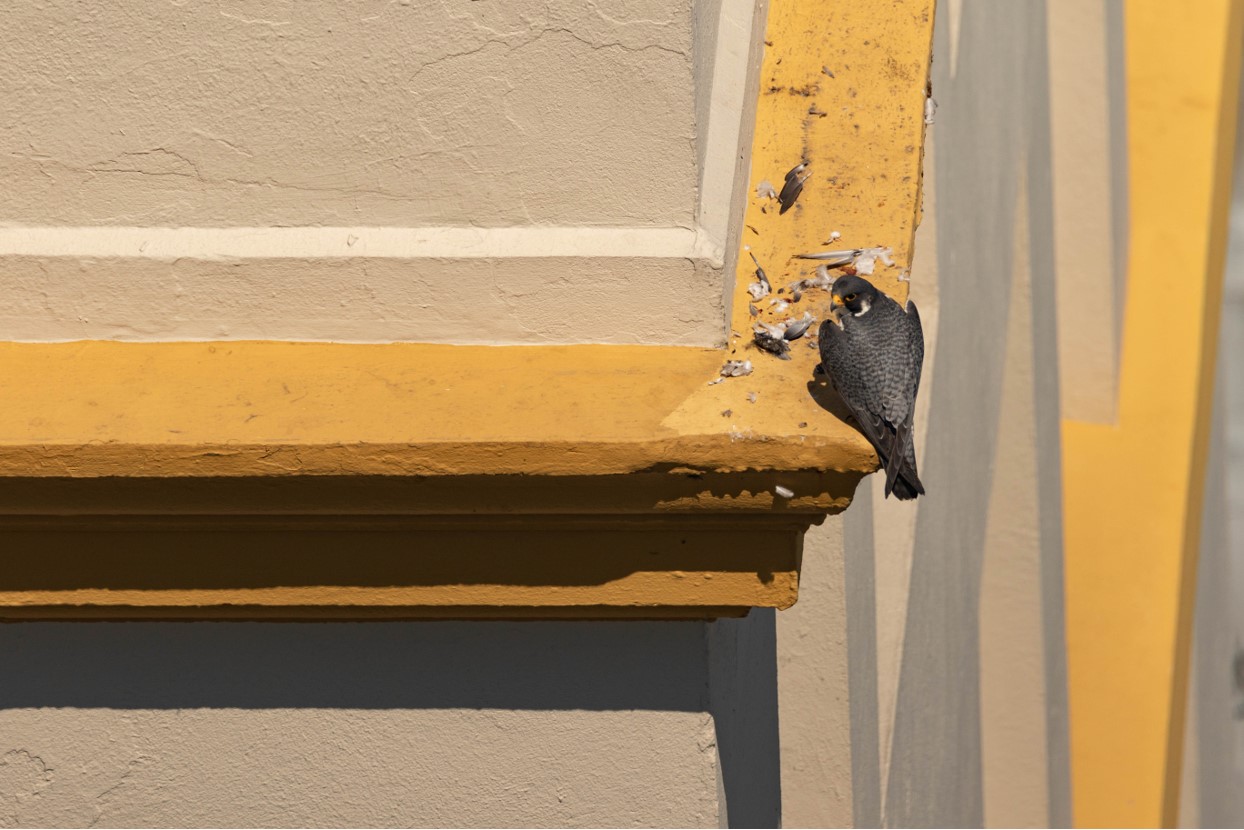
What made me smile after this rescue, when I released to the roof, five minutes later it hopped onto the roof ledge, and flew along the roofline stopping at a few spots before disappearing around the building.

Blue: “I can fly!”

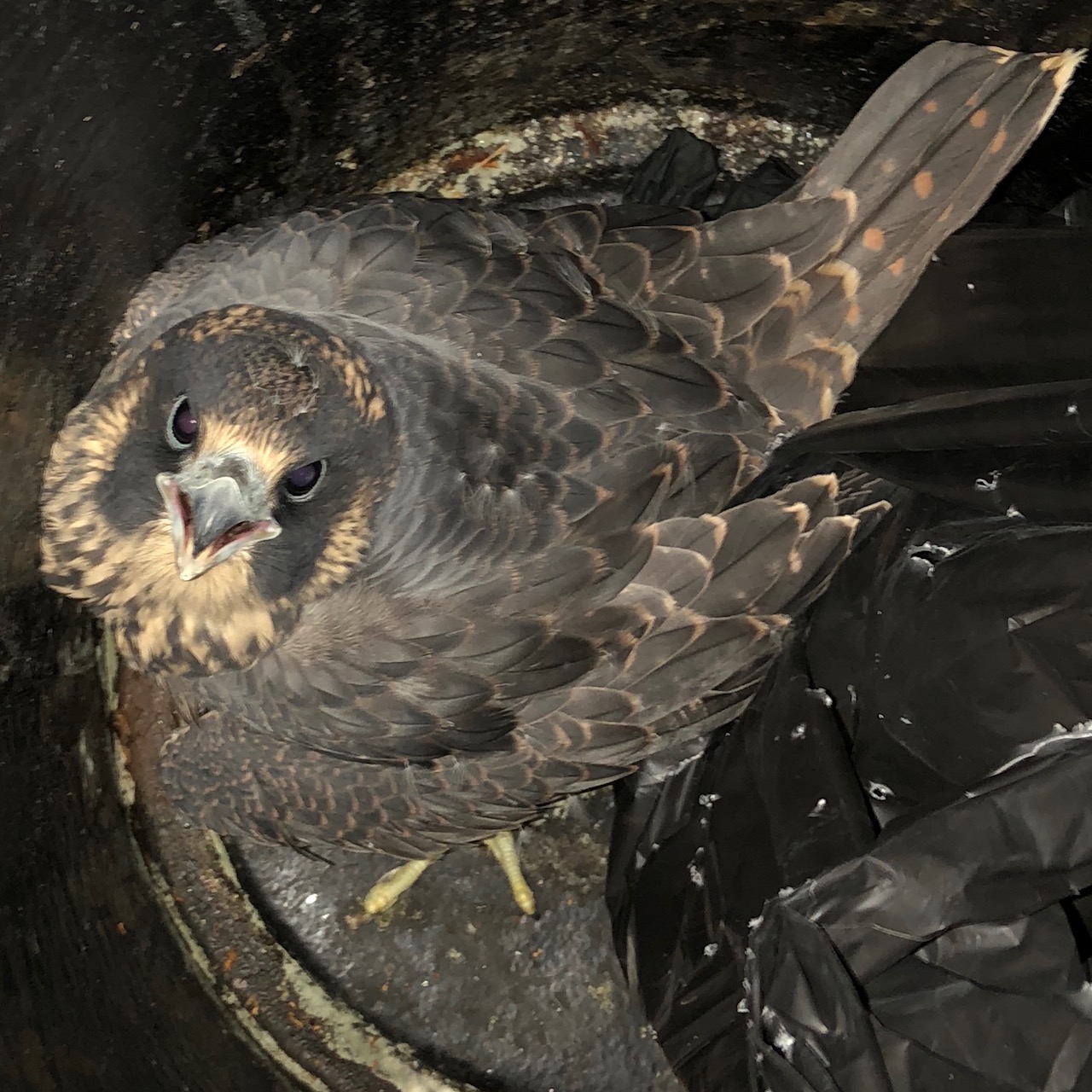
6/13 7:30, I get a call from WF Security. Says a pair of crows were “ca-cawing” and chasing a falcon on the plaza. By the time I got there with my kids (and ice cream in the trunk) it had managed to get itself trapped in a garbage can (that’s a first). I did a quick evaluation and it looked ok. This one ended up being Starbuck. So I removed her and released to the roof.

Starbuck in garbage can

Starbuck after release from garbage can

(The following is from June 15th)

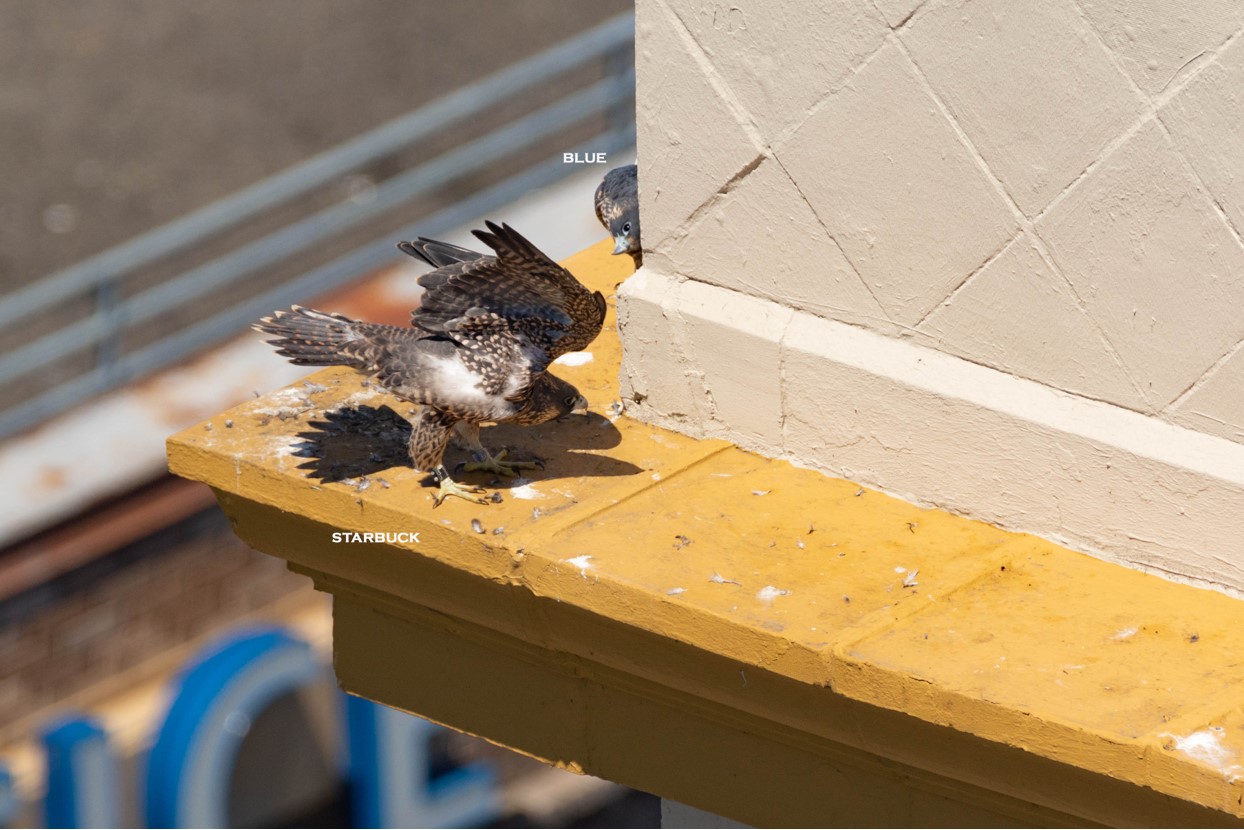
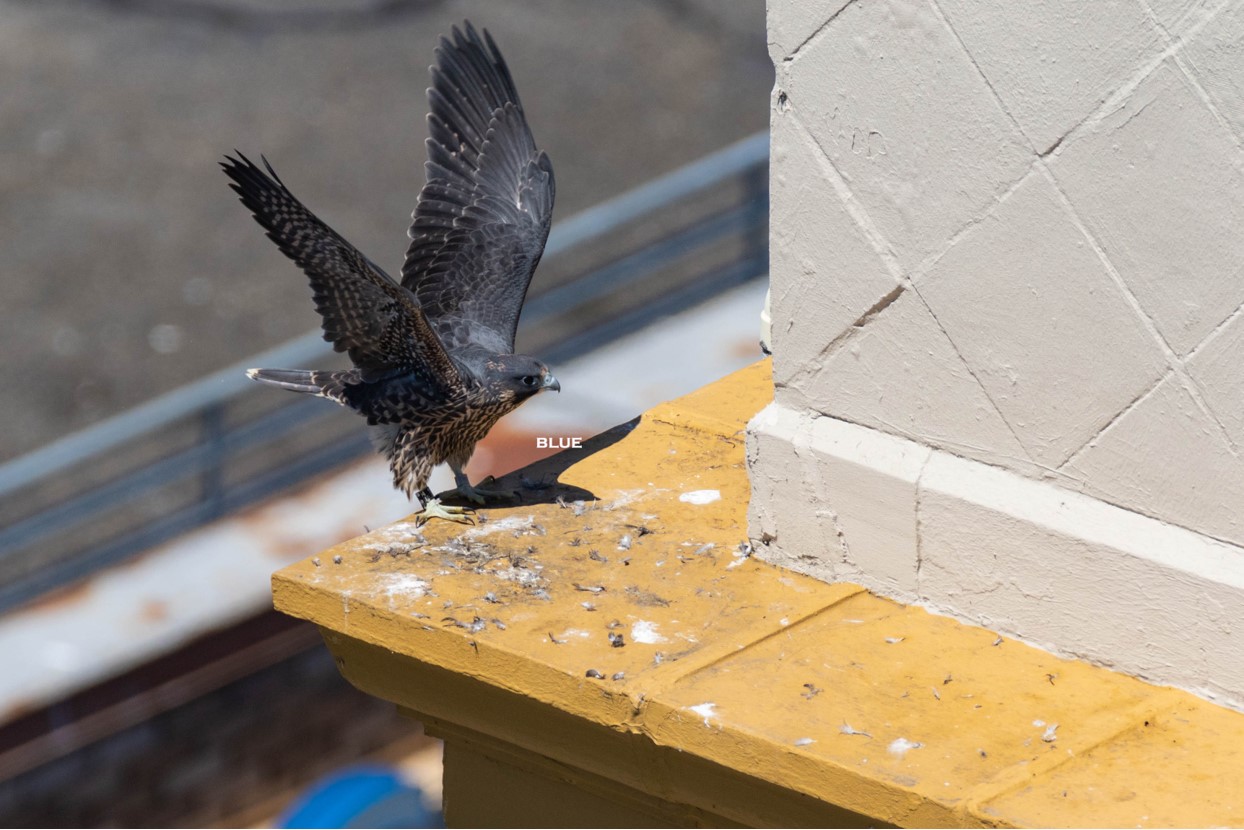
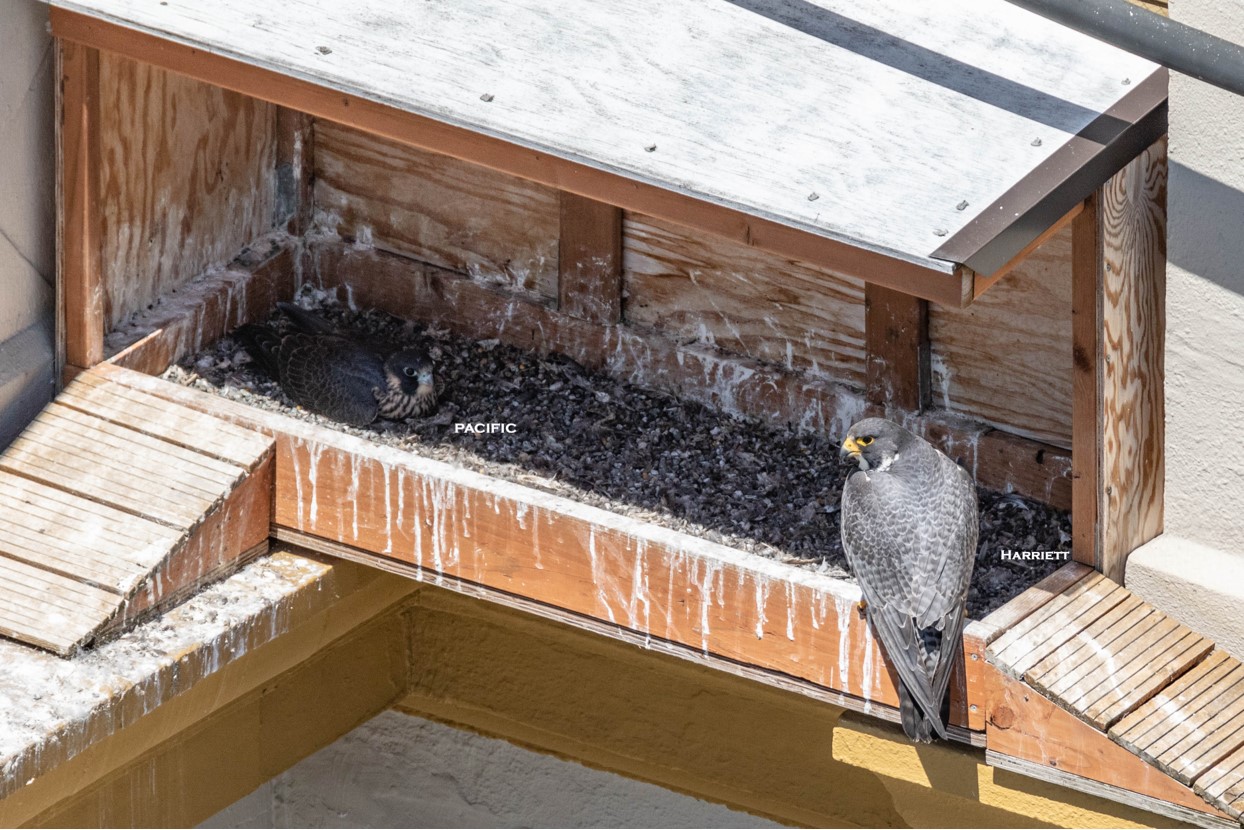
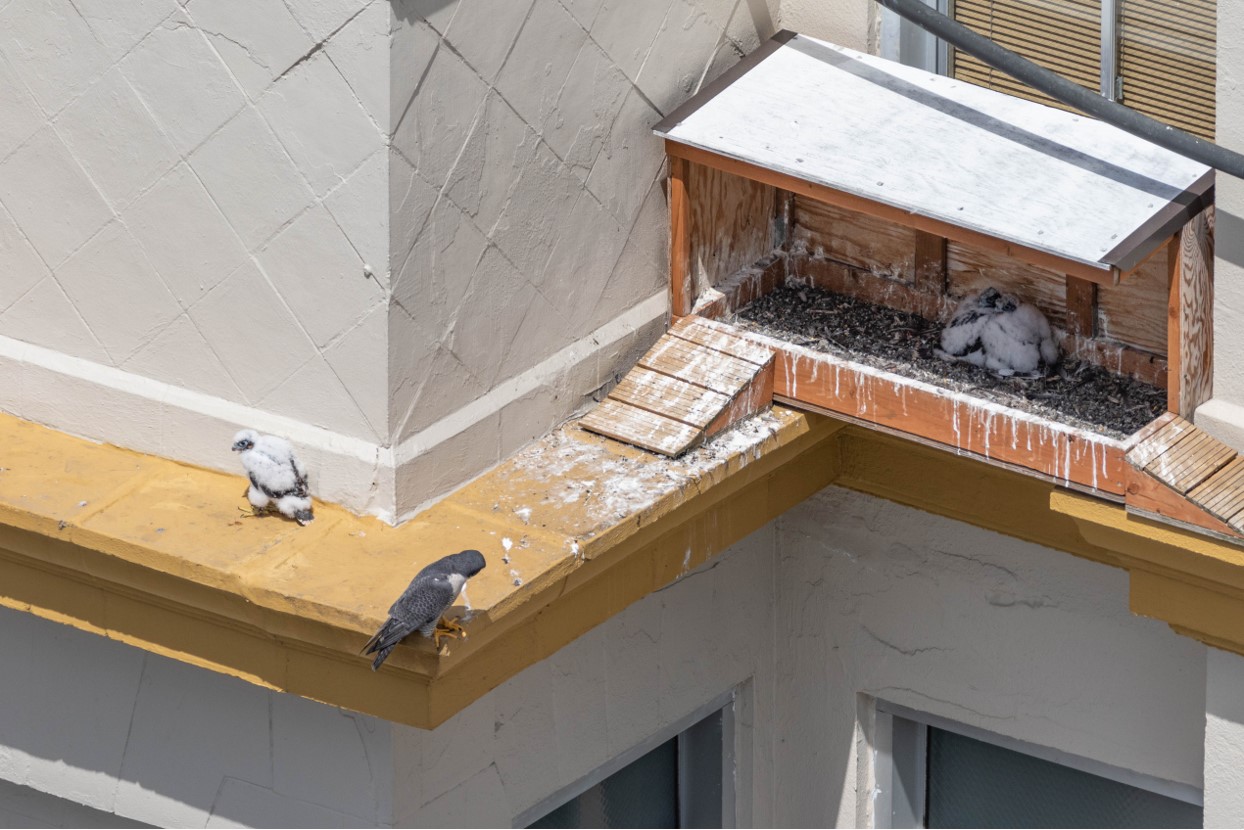
I did some observing at lunchtime, and it was nice seeing all three up on the ledge during that time. After about an hour, I was able to identify each, including a stop-by by Harriett. Pacific seems to be hanging out by himself lately, while his sisters have been together more so than not.

Sisters Starbuck and Blue

Blue stretches her wings

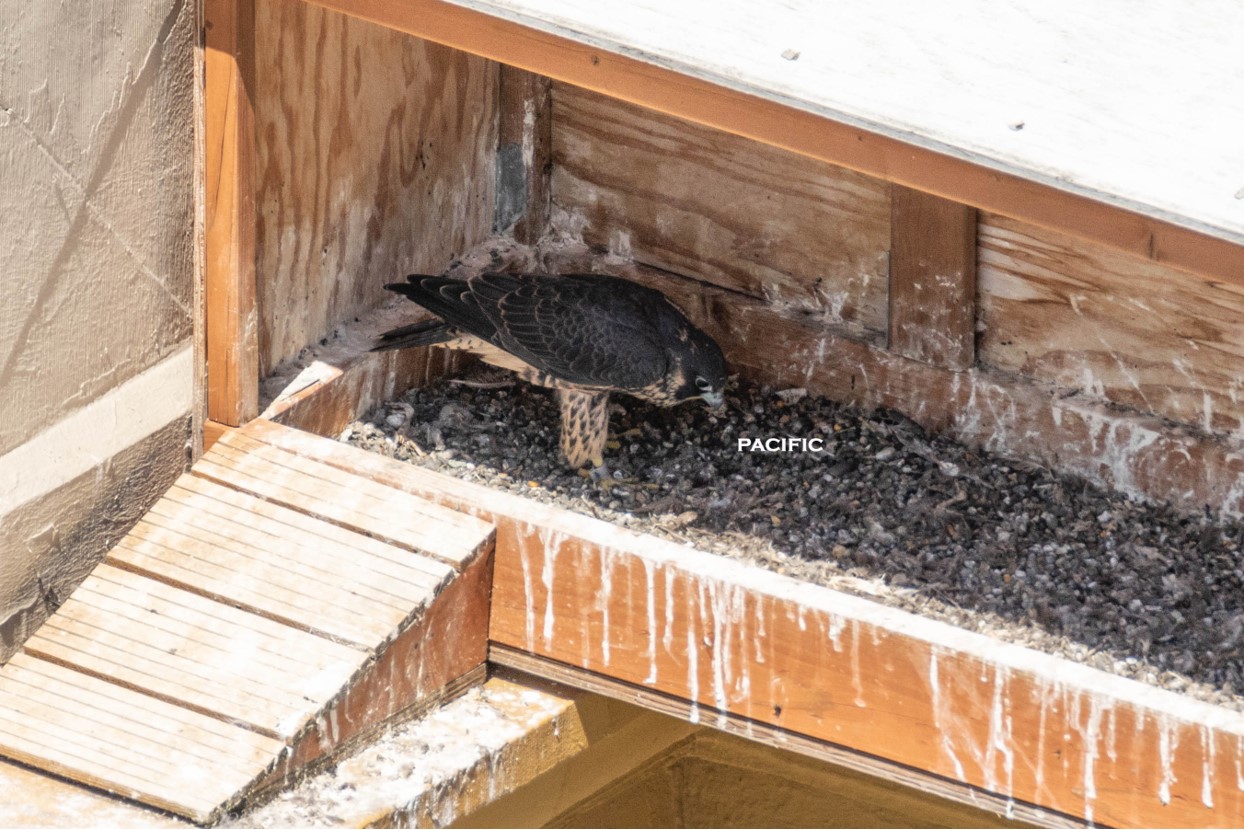
Pacific visits his nest box

Pacific in box with mother Harriett checking on him.

Since the above observations, I have sporadically seen one or two of them around the building, and as of yesterday I have not seen much of them at all. Other than the one week of the three rescues, with no injuries requiring rehabilitation, it so far looks to be a successful 2018 Banding and Fledging.

***********************************

PREVIOUS POST from MAY:

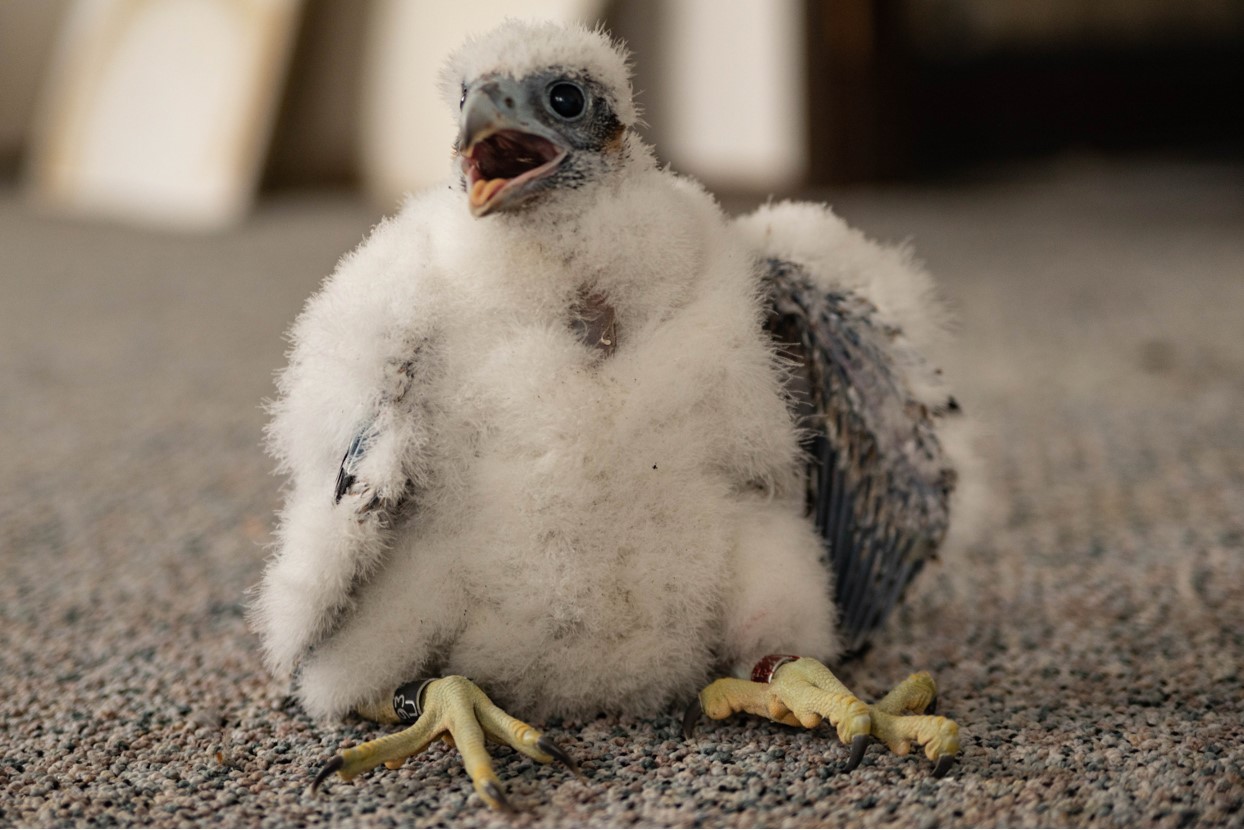
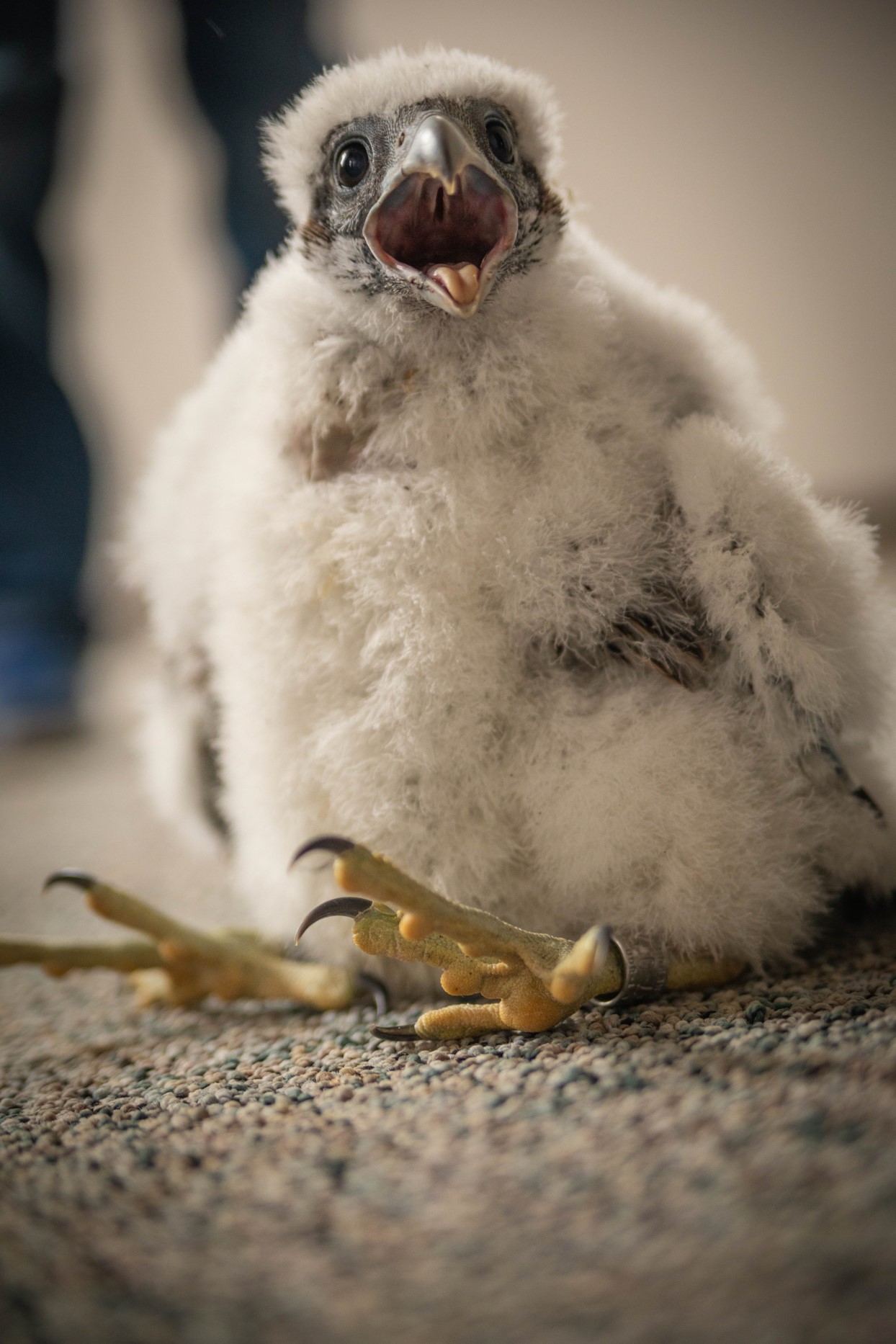
Fergus Hyke again has been following Peregrines nesting on his building in downtown Tacoma, the same site they’ve used for a decade now.  Jerry Broadus reports that the birds are “as noisy as ever and have 3 eyasses.  Ed Deal and Martin Muller banded them already with Clarice helping to hold their little talons. Actually, the couple (Harriet and Murray) have been hunting around downtown for quite a while this spring, and I have taken some students to see them.  Roger Orness has been taking notes on them and at least one other pair.”  There was apparently also a reporter from Grit City Magazine present at the banding.

Here’s Fergus’ illustrated history of the chicks (all photos by Fergus Hyke, click to enlarge):

It has been another busy season for our falcons. Murray and Harriett had four eggs, and three were viable, one was unfertilized. Jerry and Clarice took it to the Slater Museum for research and future educational purposes.

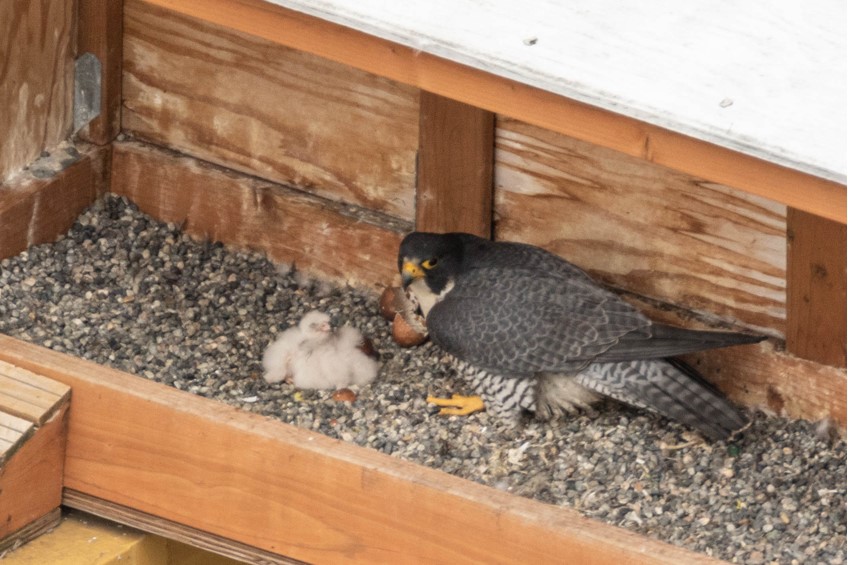
First hatching occurred around May 3rd. First verification of three chicks was May 4th.

Hatching May 3

May 12, 2004     – Approximate hatch date of Murray, the resident Male. 14 years old!

Murray, the reliable father

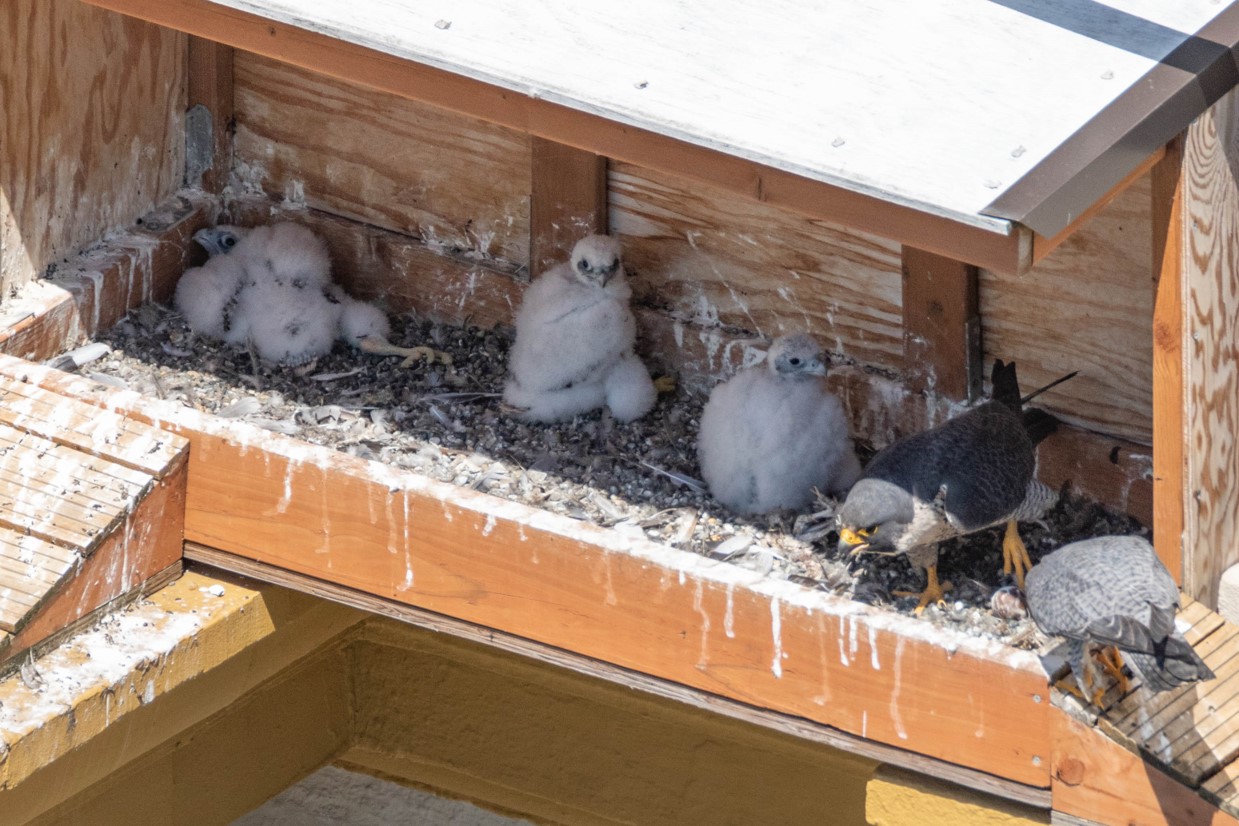
May 23, two days before banding

May 25 – BANDING DAY!

May 25 Banding Day – Male “Pacific”

May 25 Banding Day – Female “Starbuck”

May 25 Banding Day – Female “Blue”

May 30, 2018 – Harriett continues to watch over the three. Murray is also nearby.

May 30 – Harriet watches the kids

For details on the location of the building and last year’s chicks, see: http://abcbirding.com/peregrine-flash-mob-memorial-day-2017/

JULY 2018 – CASSIA CROSSBILL field trip announcement

JULY 7, 8, 9 – CASSIA COUNTY, IDAHO: Scouting for Cassia Crossbills, led by Faye & Diane, limited number. Sign up with Diane at Avosetta@hotmail.com.

This is not the usual field trip where the leaders have been before, but actually a scouting trip for everyone on this Very First Field Trip to search out sites together for this newest species in the U.S.!

We will spend a day traveling to Twin Falls, then a day going south into Cassia County looking for Crossbills, then back to Twin Falls that night, and home the 3rd day. Participants may stay in the hotel in Twin Falls where Faye and Diane will be or camp in one of the many campgrounds that we will be investigating Sunday for crossbills. If you want to camp and find out the details on campground reservations, please share with the group once we have a participant list.

Recommend 4WD or AWD high clearance vehicle, and be ready to help in case any of us has a flat tire. We will be on dirt roads in the mountains. Should be dry by July with campfires prohibited. Bring your FRS radios, as there will be doubtful cell coverage.

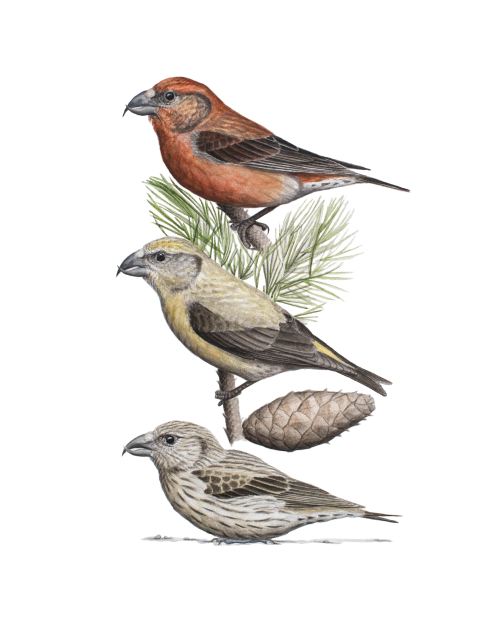
Cassia Crossbill with Lodgepole pine cone (Ornithologi.com)

From Cornell: “Cassia Crossbills are year-round residents in Idaho’s South Hills and Albion Mountains in the county that gives the crossbill its name. They tend to be more numerous in older and more open lodgepole pine forests.”

Dr. Julie Smith told me in an earlier e-mail: “Even if other call types are passing through, the other call types will be rare compared to the Cassia crossbill. The vast majority of birds that you see will be the Cassia crossbills.”

Other study materials:
1. ABC meeting report with Dr. Julie Smith of PLU: http://abcbirding.com/september-2014-meeting-report-crossbills/
2. An eBird report that includes photos and sonograms from last summer: https://ebird.org/view/checklist/S38430005
3. A really great article from High Country News by Nick Neely: https://www.hcn.org/issues/49.13/endangered-species-will-the-wests-newest-species-go-extinct
4. A site guide from BirdWatching magazine to the area we’ll be exploring, with tips for camping: https://www.birdwatchingdaily.com/hotspots/266-porcupine-springs-campground-sawtooth-national-forest-idaho/
5. An excellent blog post, new this spring: https://ornithologi.com/2018/03/05/idahos-endemic-the-cassia-crossbill-loxia-sinesciuris/

Report: DAVE SLAGER ENTERTAINS ABC’ERS April 24, 2018

DAVE SLAGER ENTERTAINS ABC’ERS April 24, 2018

BE SURE TO SEE UPDATE AT BOTTOM!

Dave Slager at ABC

ABC loved Dave Slager. He was a fount of the kind of info that we want to know and ready to talk on anything we wanted. He is a doctorate student at the U. His areas are research science and ornithology, but he says these are colored by the fact that he is a lifelong birder.

Dave and Slater Museum director Peter Wimberger examine crow specimens

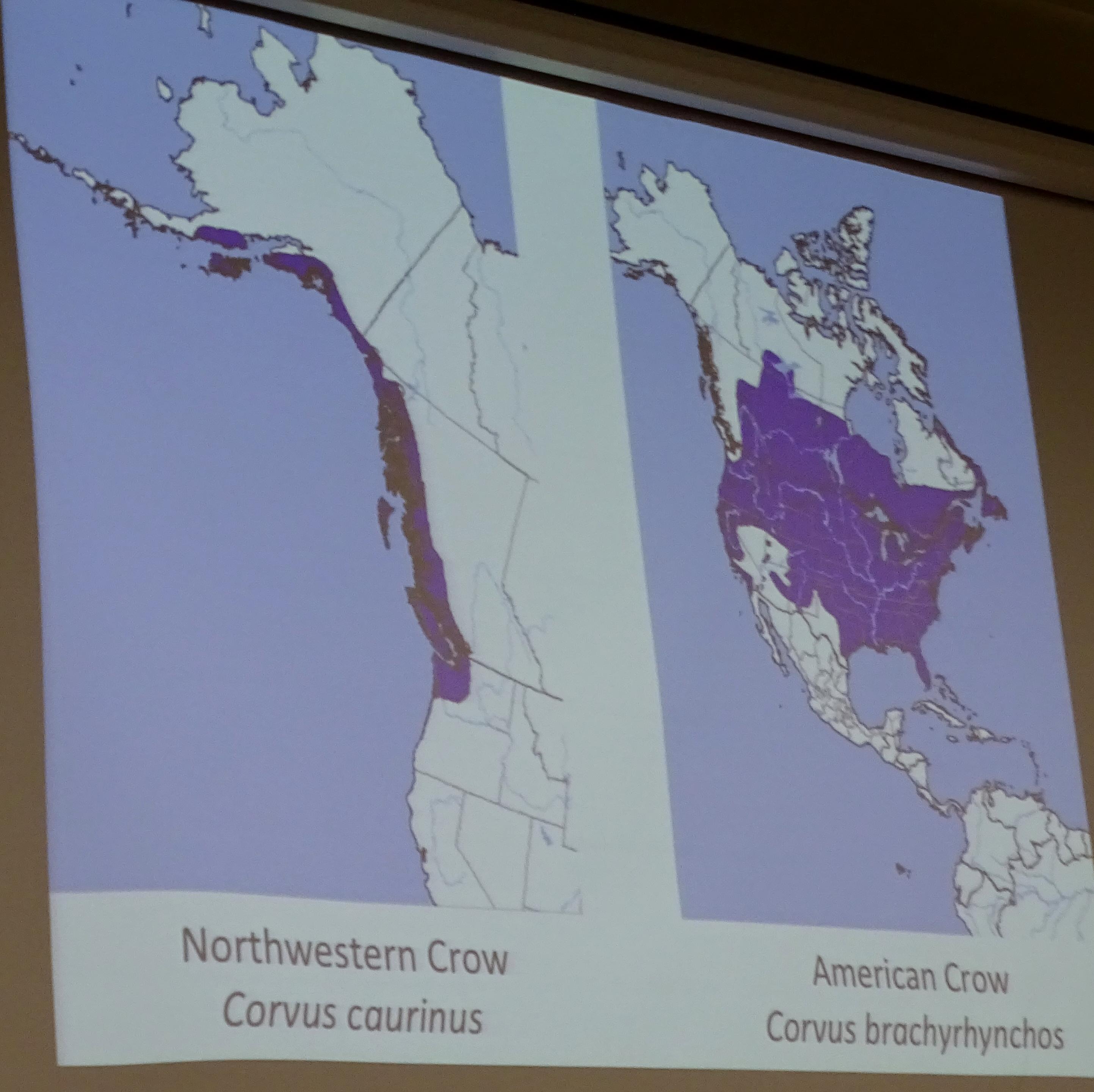
ABC now has the lowdown on the Northwestern Crow vs American Crow question. Picture Dave in a Clean Room wearing a Hazmat suit to make sure nothing sullies his extraction of DNA from antique crow specimens from several museums. Then you’ll know why he was selected to present his paper on the crow question a couple of months ago, results of which should be published soon and will cause a sensation among corvid scholars and birders. We are just the second group after that august gathering to hear his crow results.

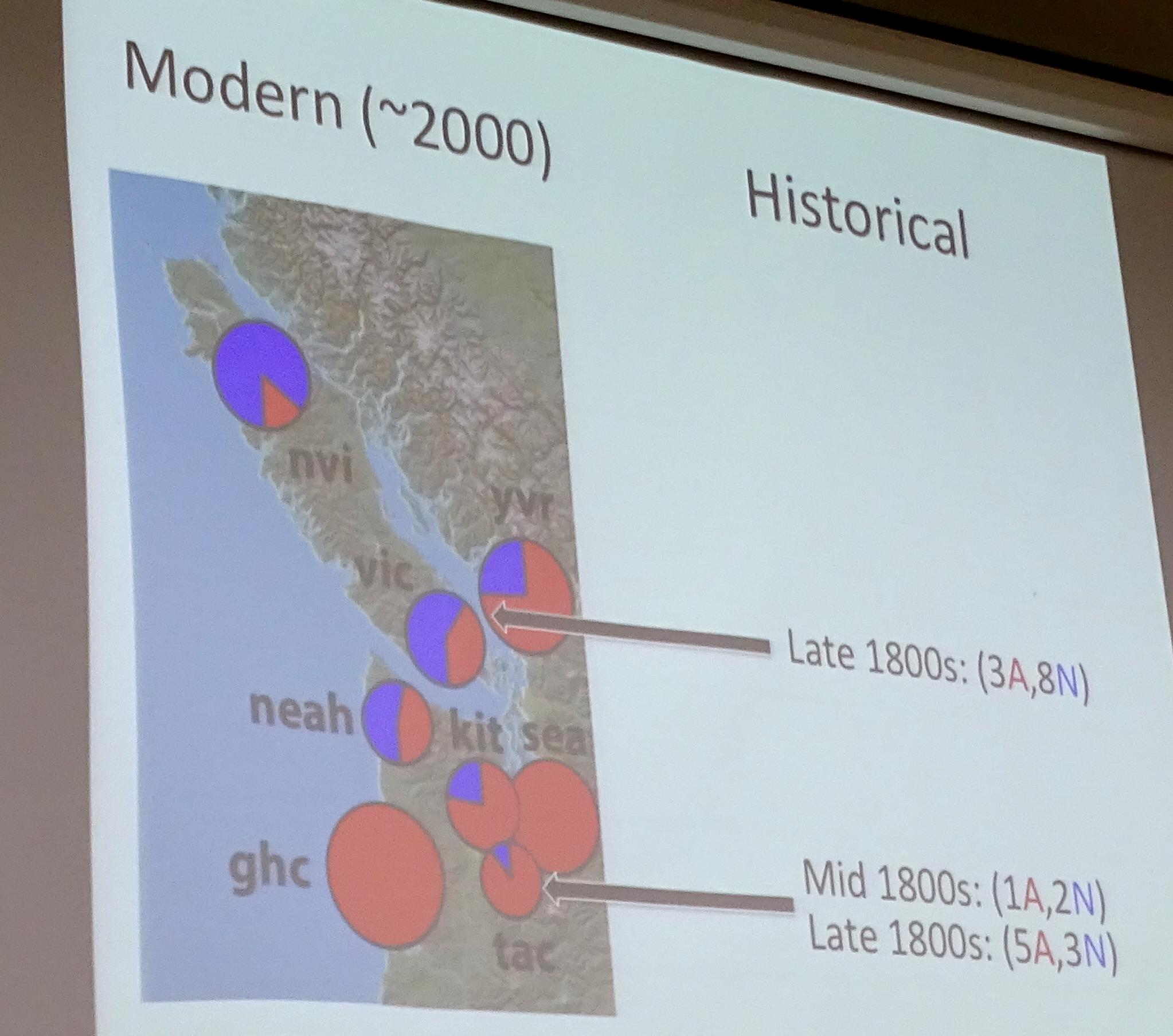
Why we are at the epicenter of the Northwestern Crow controversy

Antique specimen DNA studies do not differ much from modern Haplotypes

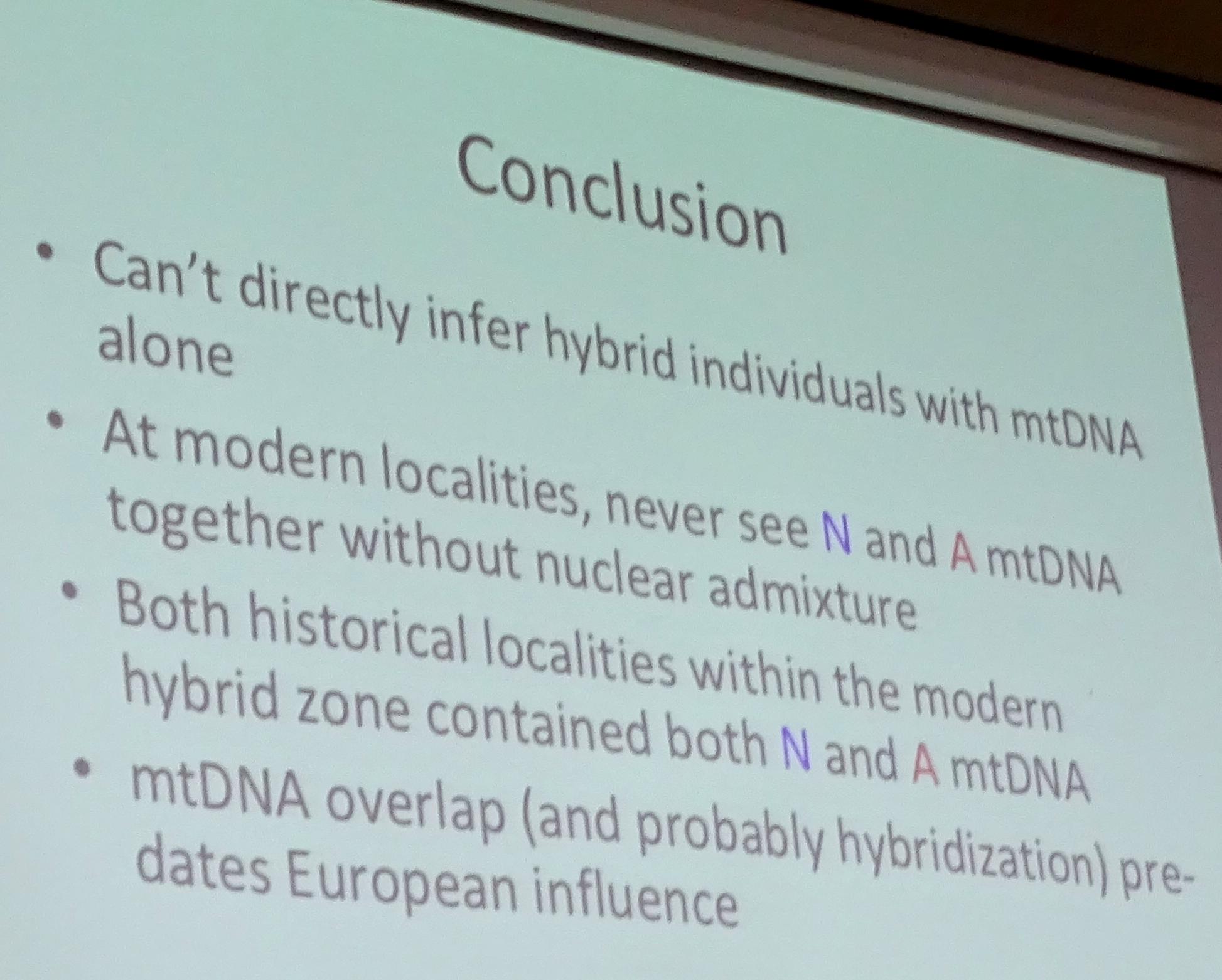
Dave’s conclusions are that there are definitely two haplotypes that our crows fall into, but that interbreeding occurs at all levels and has been occurring since before “civilization” befell our corner of the continent. But the two types tended toward speciation in prehistoric times, which stopped at some point, and has led now to crows in the northwest breeding together and having various amounts of both signatures.

Some of Dave’s conclusions

Because he has shown two historic types, even though they are evolving away as we read this, he says we should enjoy having Northwestern Crows on our lists while we still can, and he will probably add them to his personal list when he birds Alaska this summer.  In the event of a lump by the AOS checklist committee, he says birders will also gain from many upcoming splits, so don’t mourn the loss.

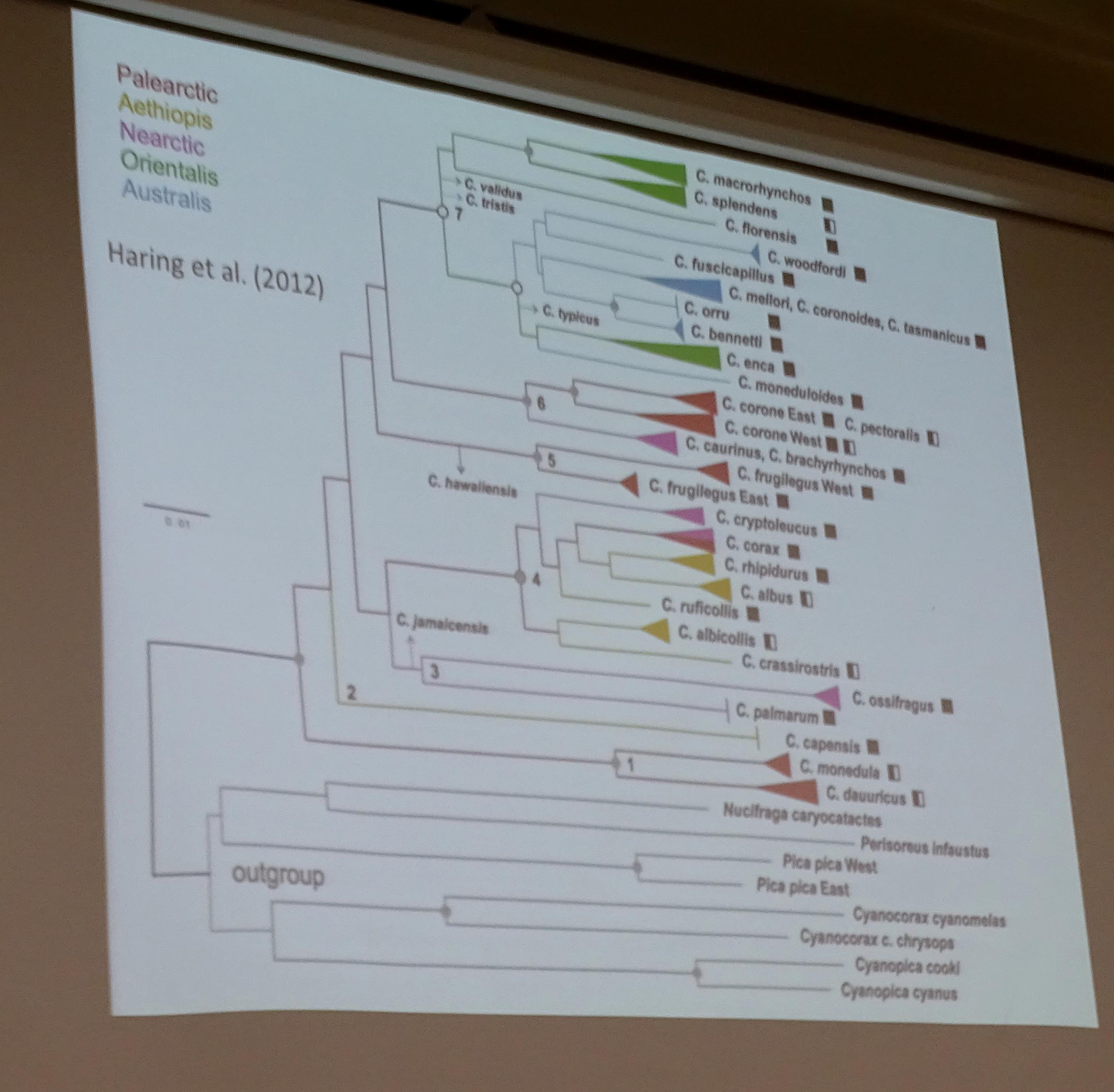
The Corvid Family Tree

He showed a relationship chart of the Corvids, which was pretty interesting on its own, showing that our Ravens are more closely related to Old World Ravens than to our Crows, and the same for New and Old World Crows. He mentions how poor the western hemisphere is in Corvid species compared to the eastern hemisphere, as well. And the Fish Crow appears to be more closely related to ravens than the crows!

Dave talks about more than just crows.

After discussing some eBird complaints, Dave took some time at the end to talk about sound recording and how exciting that is. He said he can take a photo, and it won’t add much to the body of knowledge since there are so many good photos of any given bird, but a song recording might, since there are many fewer recordings. He was able to take a course from Cornell/Macaulay that really inspired him, and of course eBird is encouraging us to post sound recordings these days. Two of his tips were about amplifying your recordings to an acceptable level, as well as using wav vs mp3 to capture more nuances of birdsong. And try to get recordings of crossbills!  We are still learning many things about the occurrence and distribution of the different call types, and what a challenge they are to record as they fly off into the distance!


Dave had to be dragged away from avid ABC’ers due to his willingness to answer any and all questions, including that he agreed Willets are two separate species, and much more. We’ll definitely be wanting him back at some point!

UPDATE FROM DAVE!  DEC 11, 2018:

Some of you might be interested in reading about our recent UW research on the American Crow / Northwestern Crow hybrid zone, which is currently in the peer review process.

Short version:  Our crows are hybrids!

I posted a summary explanation on Twitter here:
https://nam04.safelinks.protection.outlook.com/?url=https%3A%2F%2Ftwitter.com%2Fdlslager%2Fstatus%2F1072353359041085440&data=02%7C01%7C%7Cc0f27135155a475ad62208d65fb9fecb%7C84df9e7fe9f640afb435aaaaaaaaaaaa%7C1%7C0%7C636801649774470123&sdata=inD%2B%2BXfVgVF1ZQu2D3EPg7AFKpVtNgzpqwhhu0brklM%3D&reserved=0

For those interested in the nitty gritty, you can read the full
manuscript for free by going to this link and clicking “Download PDF”
<https://nam04.safelinks.protection.outlook.com/?url=https%3A%2F%2Fwww.biorxiv.org%2Fcontent%2Fearly%2F2018%2F12%2F10%2F491654&amp;data=02%7C01%7C%7Cc0f27135155a475ad62208d65fb9fecb%7C84df9e7fe9f640afb435aaaaaaaaaaaa%7C1%7C0%7C636801649774470123&amp;sdata=9u0Ewhc%2FX%2Fts1yFk0zK725U9TCS68E%2Bqsyd1RkQtb4k%3D&amp;reserved=0>.

Happy crow watching,

Dave Slager
Seattle, WA
______________

Remembering Kay Pullen

KAY PULLEN

We are sad to say good-bye to Kay Pullen, who finally lost her battle to cancer in March. She was a workhorse for the ABC Club, right up to her last week. Although she could never be replaced, we will carry on as she would have liked us to.

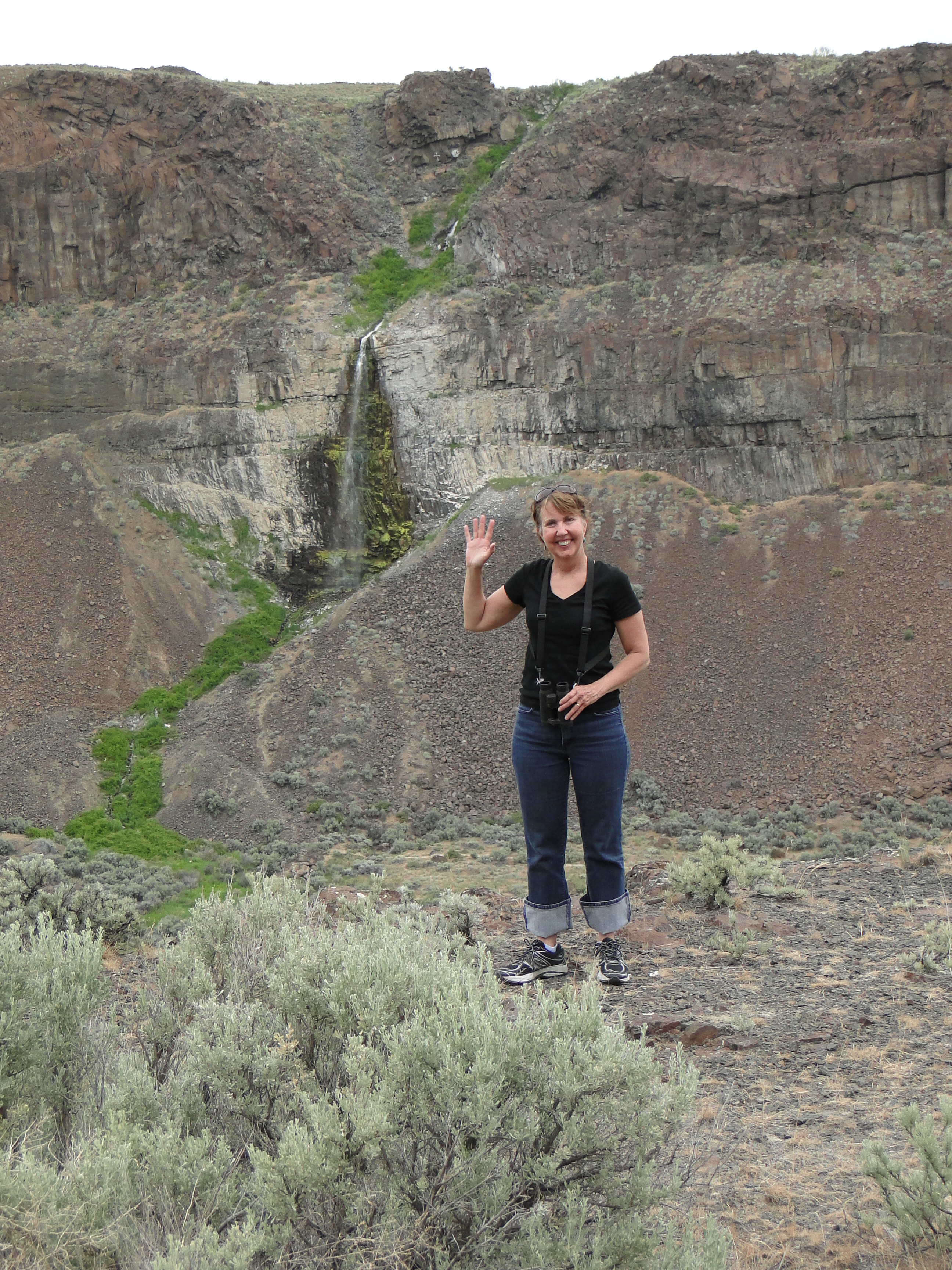
Kay Pullen pauses and smiles in front of a waterfall at Frenchman Coulee on one of the ABC field trips to Eastern WA

SPRING 2018 MOUNTAIN QUAIL OUTINGS, March 31 & April 1

SPRING 2018 MOUNTAIN QUAIL OUTINGS, March 31 & April 1

Looks like we’ll have to keep doing these, as they fail to produce those quail about half the time, and we’re getting a backlog of people who have tried and failed.

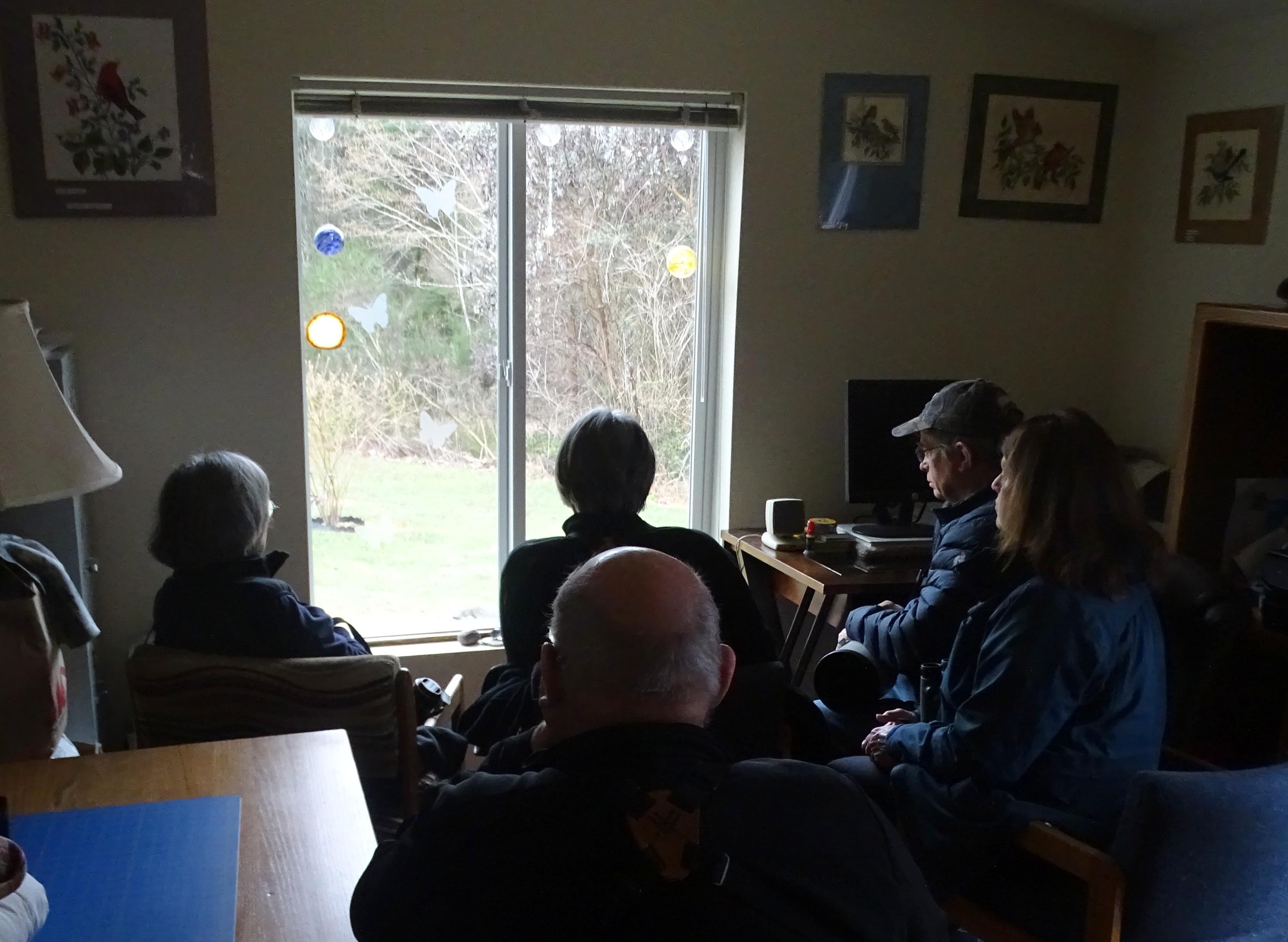
On our first dawn visit to Mary Hrudkaj’s house on the Tahuya peninsula on March 31st, the first of our two cars flushed a couple of quail as we drove up to her house. Car #2 didn’t even get that brief look. We did see lots of other good stuff at Mary’s, but not as much as we’d hoped due to a sweep of the area by a resident Sharp-shinned Hawk, one who had just finished off a quail a couple of days earlier. She had her house set up as a little theater again with chairs facing the picture window out to the feeding area that the Quail frequent.

Teri, Carolyn, Wayne, Margie, and in foreground Mike waiting for quail (not pictured – Art)

When we finally gave up, we traversed several known areas for quail on the way down her mountain, and 3 were seen on the side of the road running into the undergrowth. Again car #2 didn’t even get that poor look.

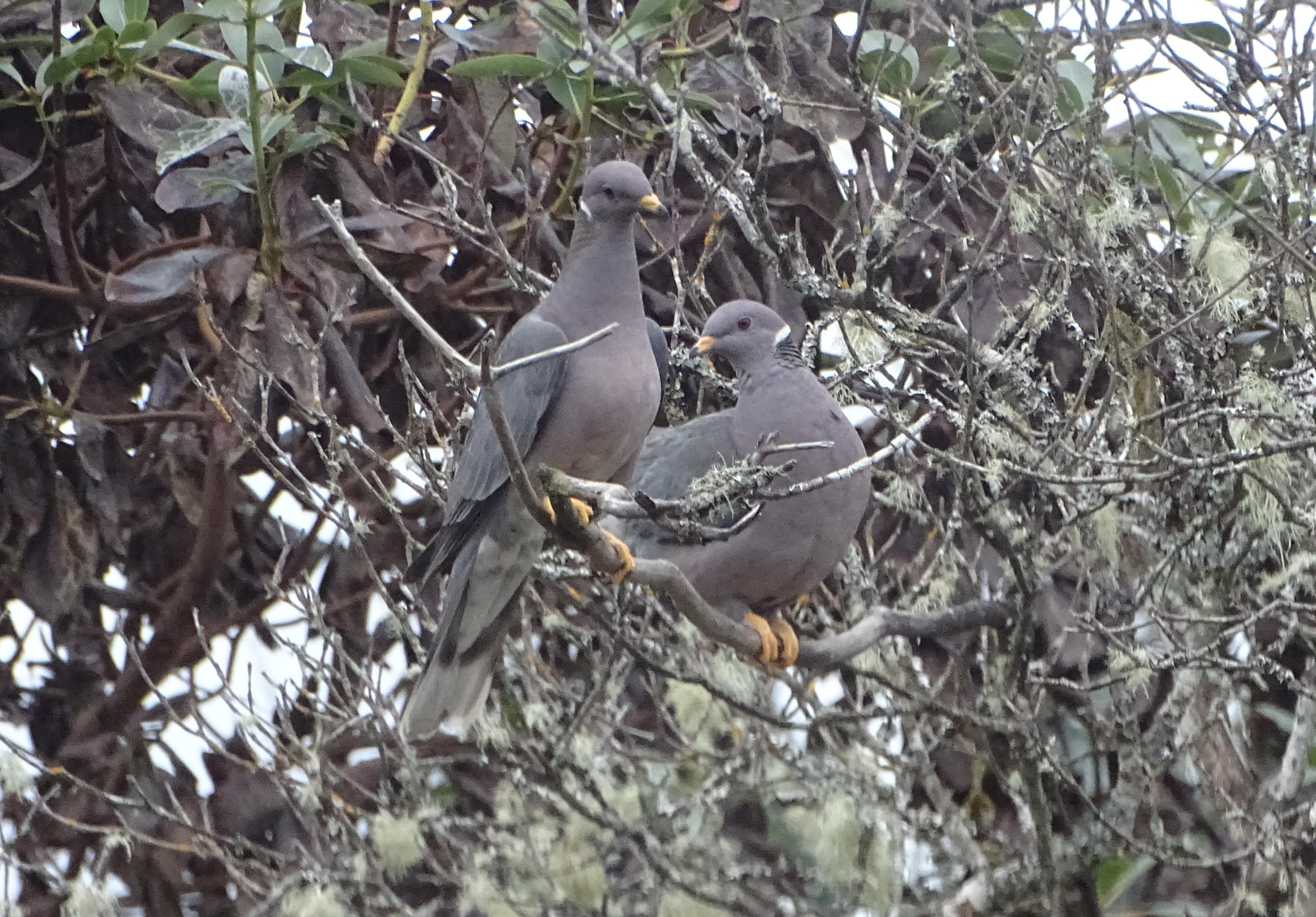
The Band-tails came in on Sunday, bolder than Saturday

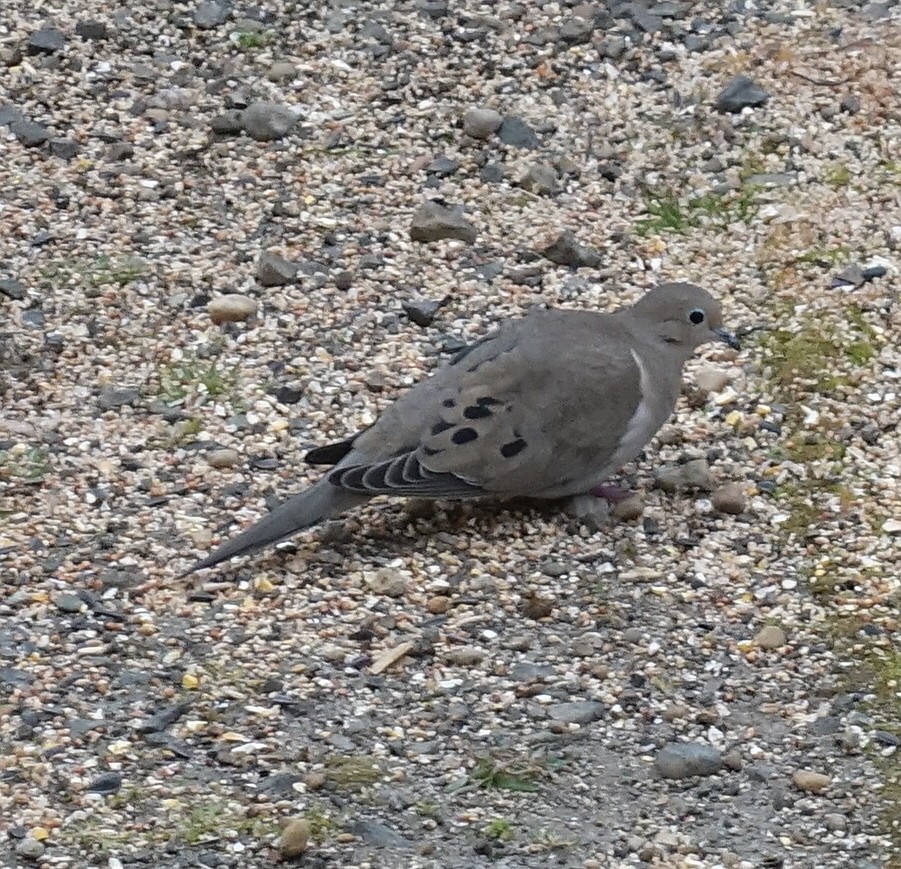
Mourning Dove chowing down at Mary’s (photo/Richard Smethurst)

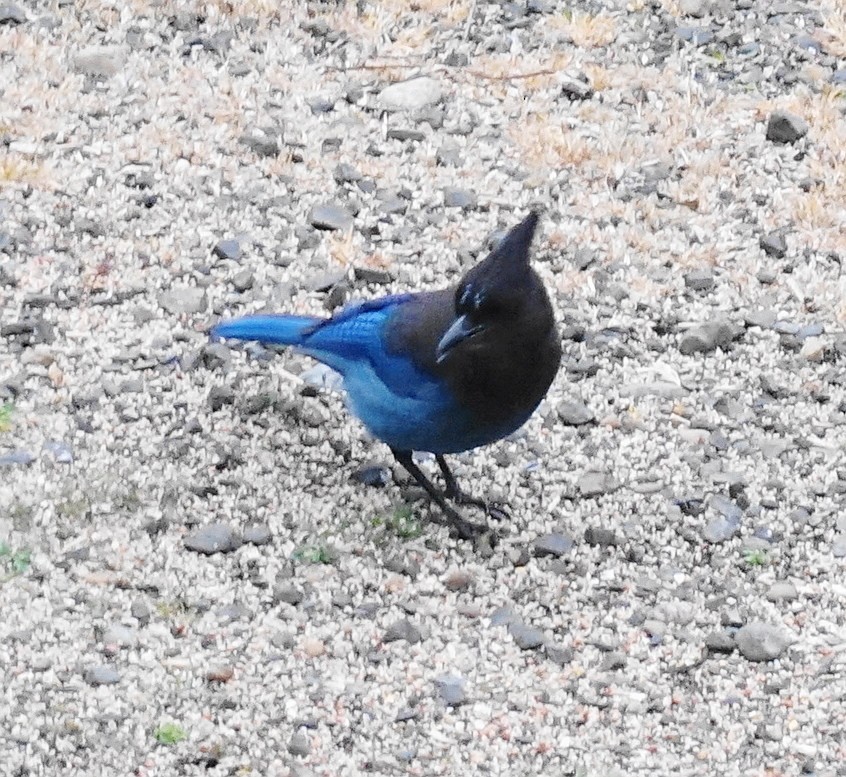
Steller’s Jay cracks a hard nut (photo/Richard Smethurst)

On our second visit to Mary’s the very next day (set up to accommodate a long wait list), we got there a little earlier, but cooler weather and a sharp breeze seemed to keep the quail in their dens. No sightings, either at Mary’s or on the road, but Band-tailed Pigeons, Mourning Doves, Varied Thrush, Golden-crowned Sparrows, Towhees, a Ruby-crowned Kinglet trying to convince us it was a vireo, both hummingbirds, Steller’s Jays, and a FOY (at least for me) Turkey Vulture, kept the time from being tedious.

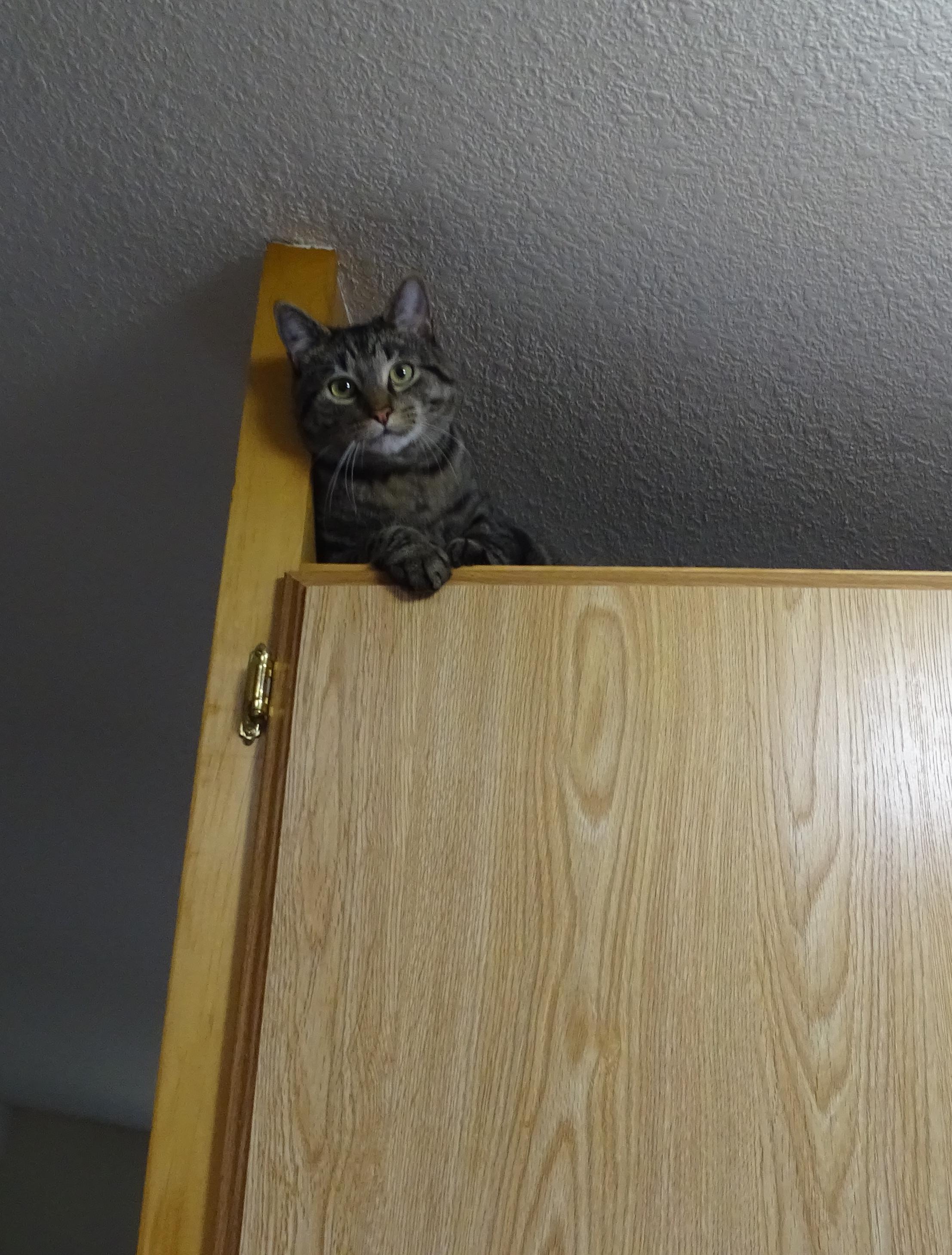
Mary’s indoor cat enjoying the company

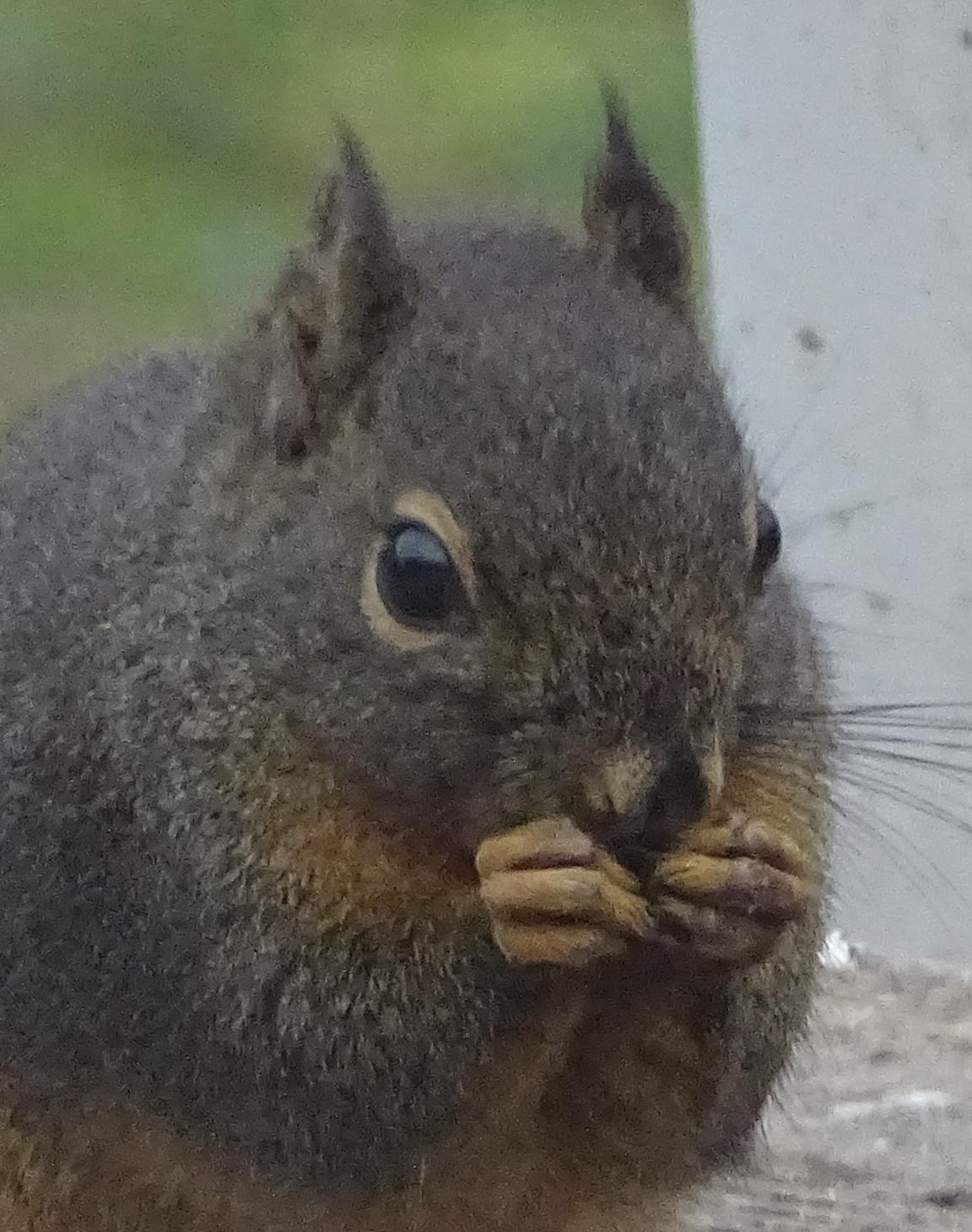
Douglas Squirrel at the bird feeder

One of Mary’s indoor cats and two cheeky Douglas squirrels kept the entertainment level pretty high.

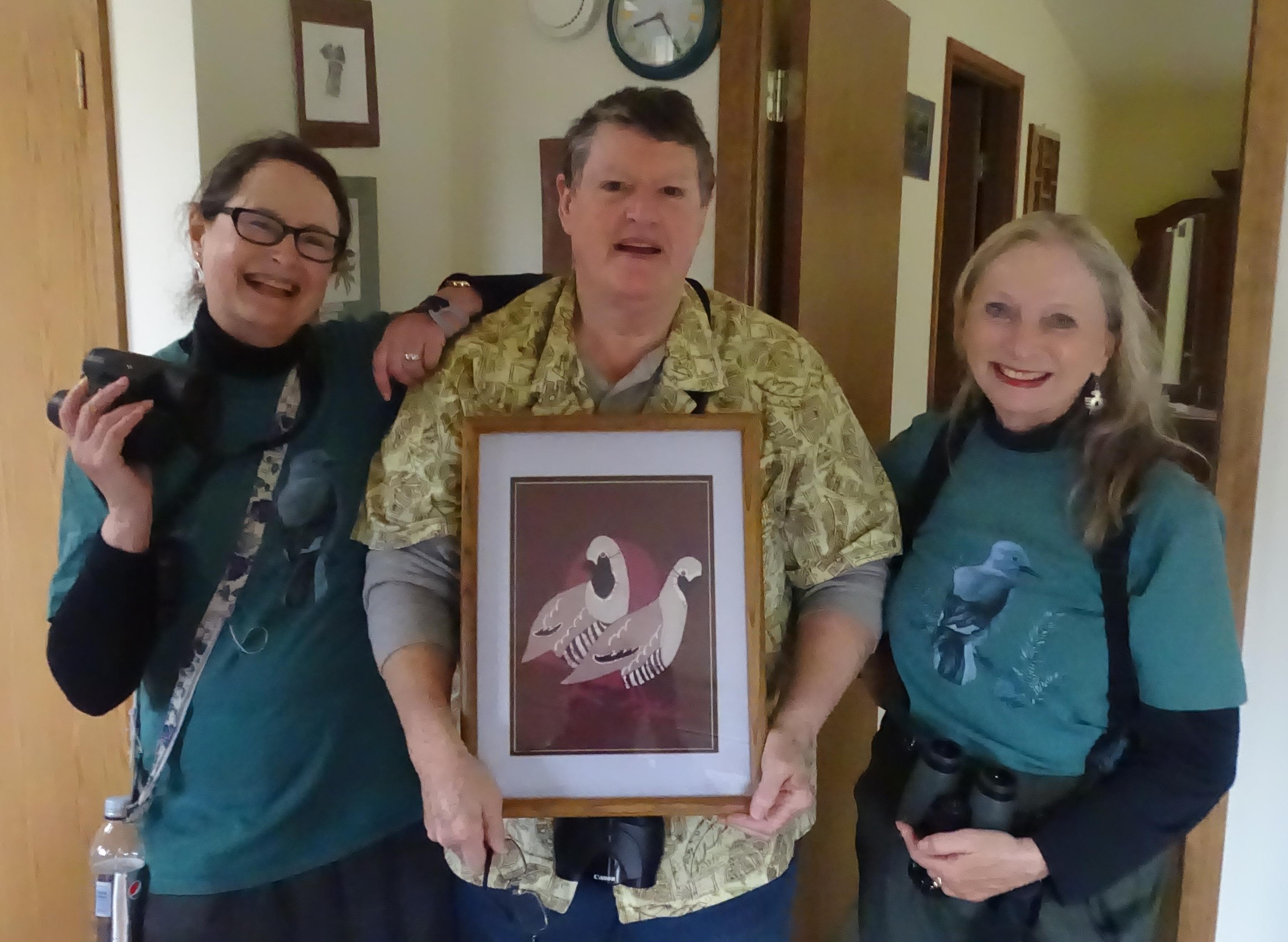
Our hostess Mary with field trip leaders Diane and Faye, showing our little gift (Photo/Art Wang)

Although this is a good time of year to catch these quail due to setting up breeding territories and calling back and forth, we may try again in the last summer when their numbers are swollen by young. Stay tuned to ABC for more info as that approaches.

NEW ZEALAND AND KIWIS WITH MALCOLM WILEY – MARCH 21, 2018

NEW ZEALAND AND KIWIS WITH MALCOLM WILEY – MARCH 21, 2018

About 15 ABCers, plus a spouse and some of Malcolm’s co-workers (including his boss) met on March 21, 2018, 6:45 PM, at the University of Puget Sound – Thompson Hall, to hear about New Zealand, conservation efforts and Kiwis!

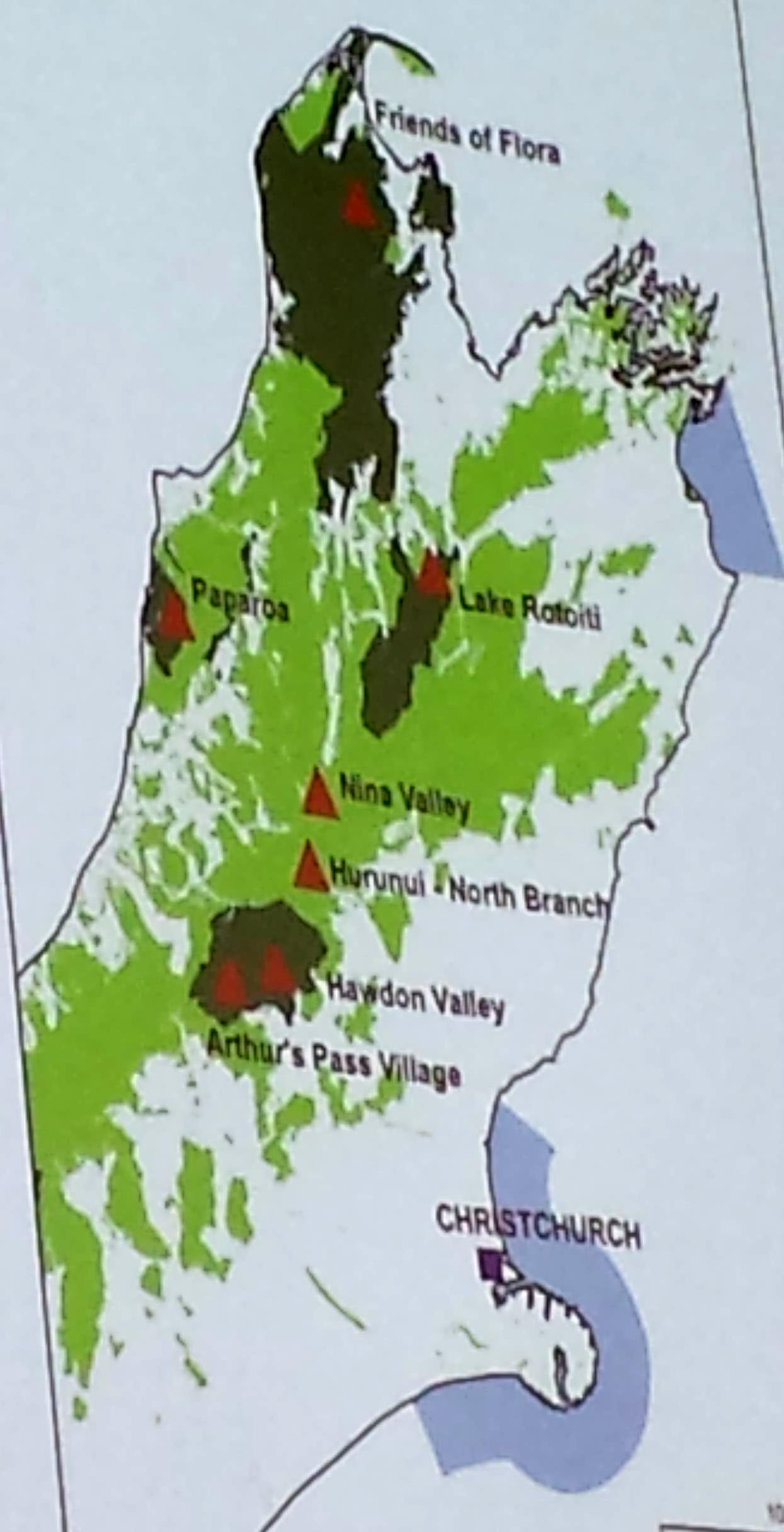
Map of New Zealand showing sites of restoration work

Malcolm gave us a wonderful presentation about his 12 years working as a biodiversity ranger for the New Zealand Department of Conservation. He studied plant ecology at college, but in New Zealand most conservation work is focused on bird species so he started as a volunteer and ended up leading a kiwi monitoring project for Great Spotted Kiwi in a mountain valley in the South Island of New Zealand. By the way, chasing Kiwis is hard! They have to use specially trained dogs to help out on the scrubby steep mountain sides that are the right habitat for Great Spotted Kiwi.

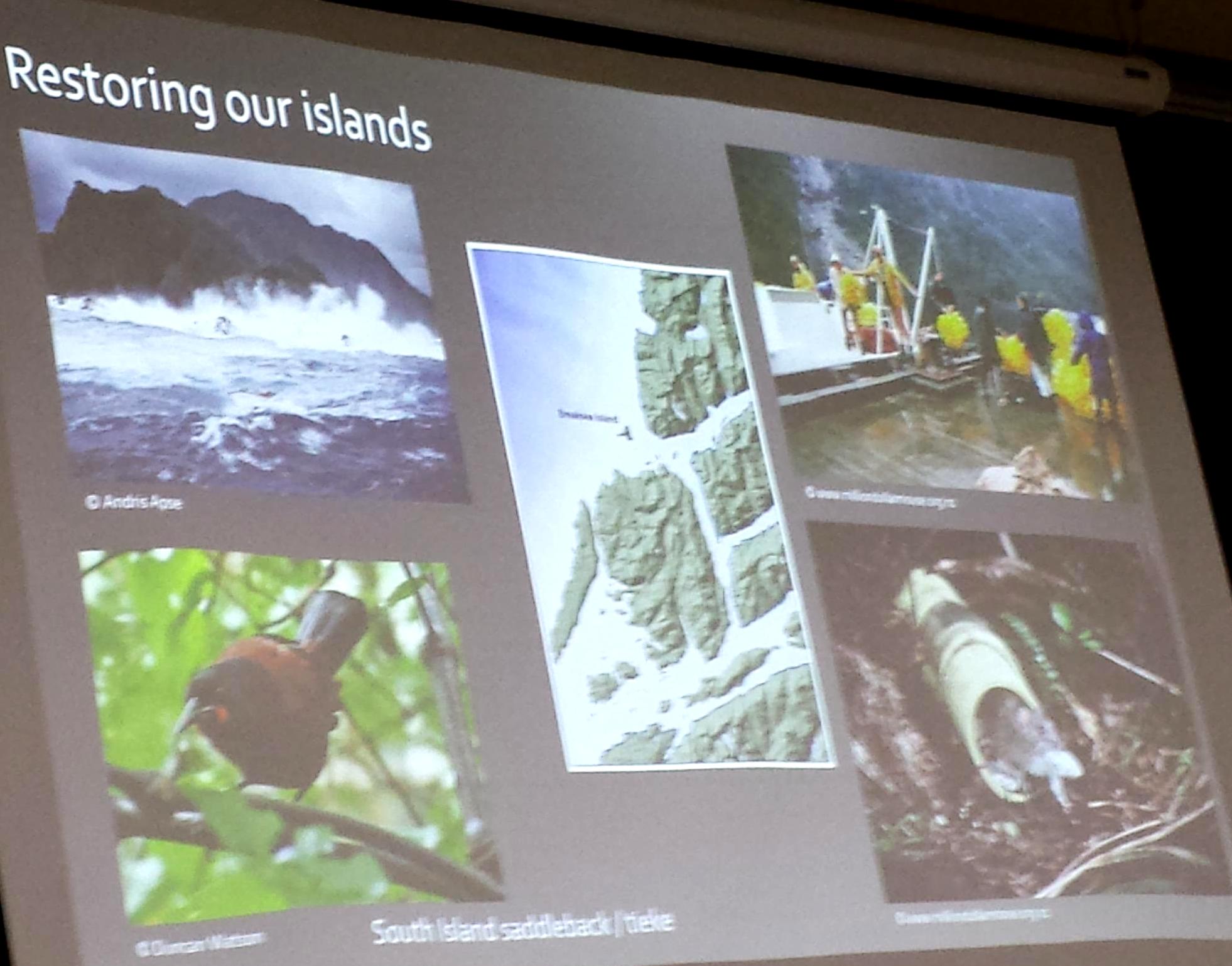
Restoration work on the many islands of New Zealand

He also spent some time letting us know about several other bird species that he did conservation work with. His slides, audio and video clips were great. We even got to see some of the introduced predators caught on video. The head/bill butting that an adult male Kiwi gave to a stoat (weasel family), to defend the Kiwi nest, was worth cheering about.


He gave us the overview and some really good information about New Zealand’s DOC, the responsible agency for conservation efforts in the 600 islands that make up New Zealand, not just the North and South Islands that the world is most familiar with. He was involved in invasive species control projects including a couple of island rat eradication projects trying to create safe havens for bird species, including a park in the North Island that is used as a pre-release/readying for living in the wild zone for Kiwis. This place also brings in the community to observe and feel a part of the efforts to bring back and hold onto the unique avian diversity of New Zealand.

He also gave us the timeline for the extinction and percentages of the avifauna that has been lost due to man’s arrivals in the islands, both the Maori and Europeans. The bright notes are some of the conservation successes and one or two bird species that were thought to be gone, but small populations have recently been refound!

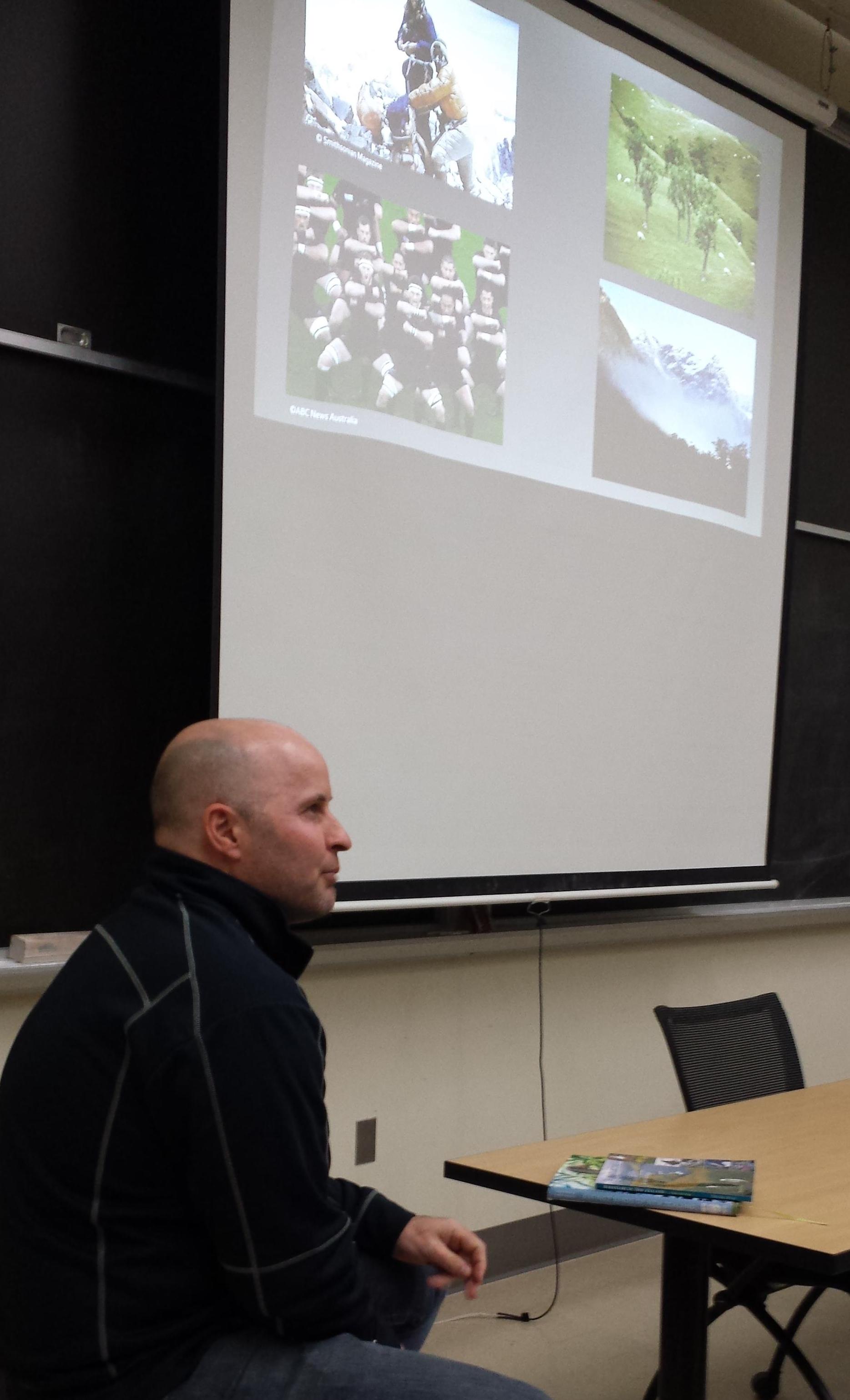
Malcolm Wiley explains his work with Kiwis in New Zealand

He has lent a couple of books to ABCers, one on the Extinct Species of New Zealand and the other about the geology/geography of the archipelago and sub-antartic islands. Shelley Parker has the second book as she and her husband are planning a trip for January 2019. I have the other and have already read through it. Because Malcolm’s mother-in-law works at the health department, as do I, please contact me for a chance to read these books and return them as well. You can use my gmail e-ddress (knasnan@gmail.com) to text for checking out and returning them during my work week in Tacoma as the health department is located on the corner of 37th and Pacific Ave, fairly central for Pierce County.

Reported by Laurel Parshall

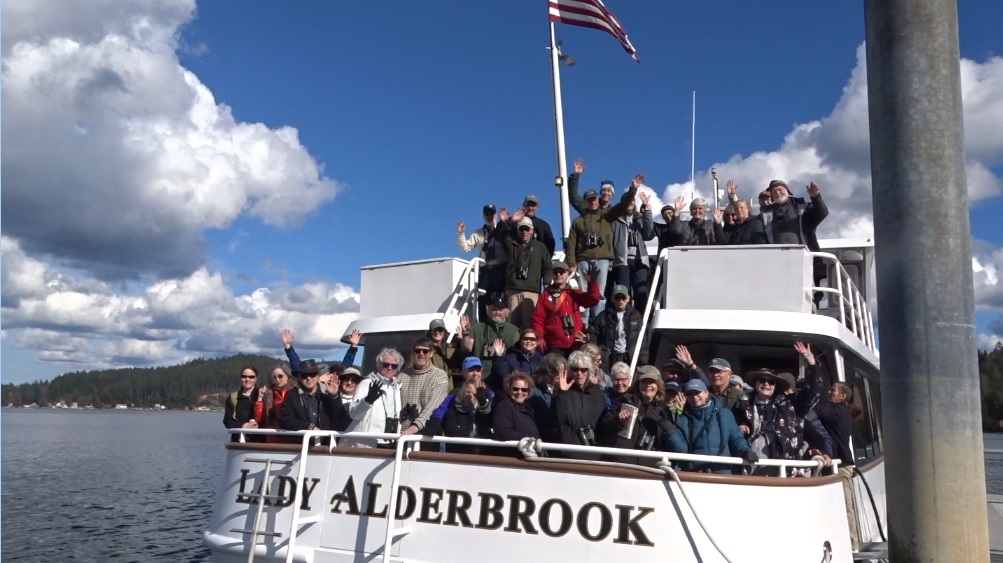
3-3-18 – Lady Alderbrook Cruise a hit!

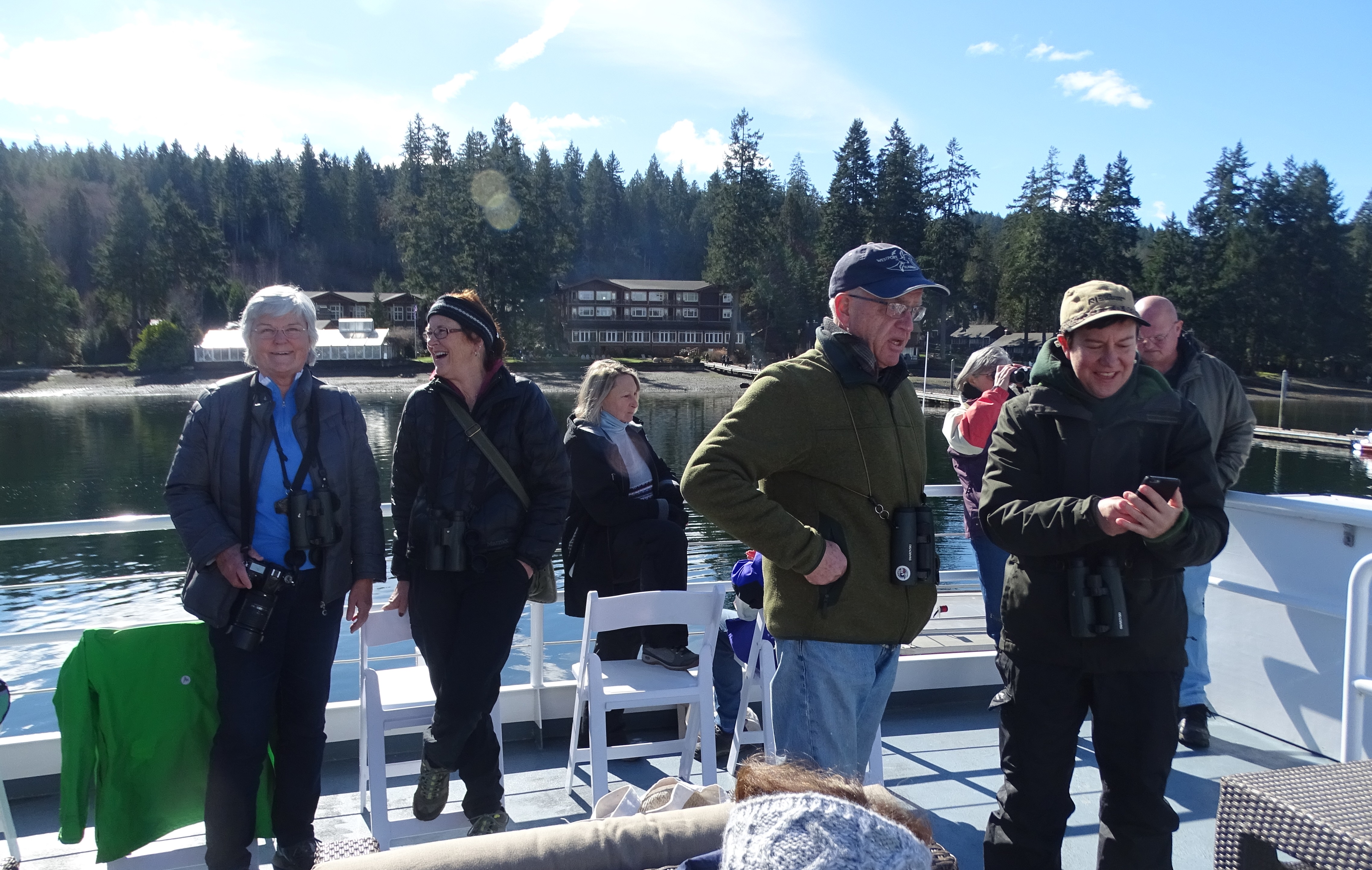
REPORT: Our 2-hour (noon to 2 PM, March 3, 2018) cruise of Hood Canal aboard the Lady Alderbrook was unbelievably great! Partners Tahoma Audubon and Black Hills Audubon helped put together an incredible experience. Faye McAdams Hands coordinated with Bonnie of Black Hills and arranged some beautiful weather. In fact, this may have been the first good weather day we’ve had this year since our January 1 cruise of the Sound.

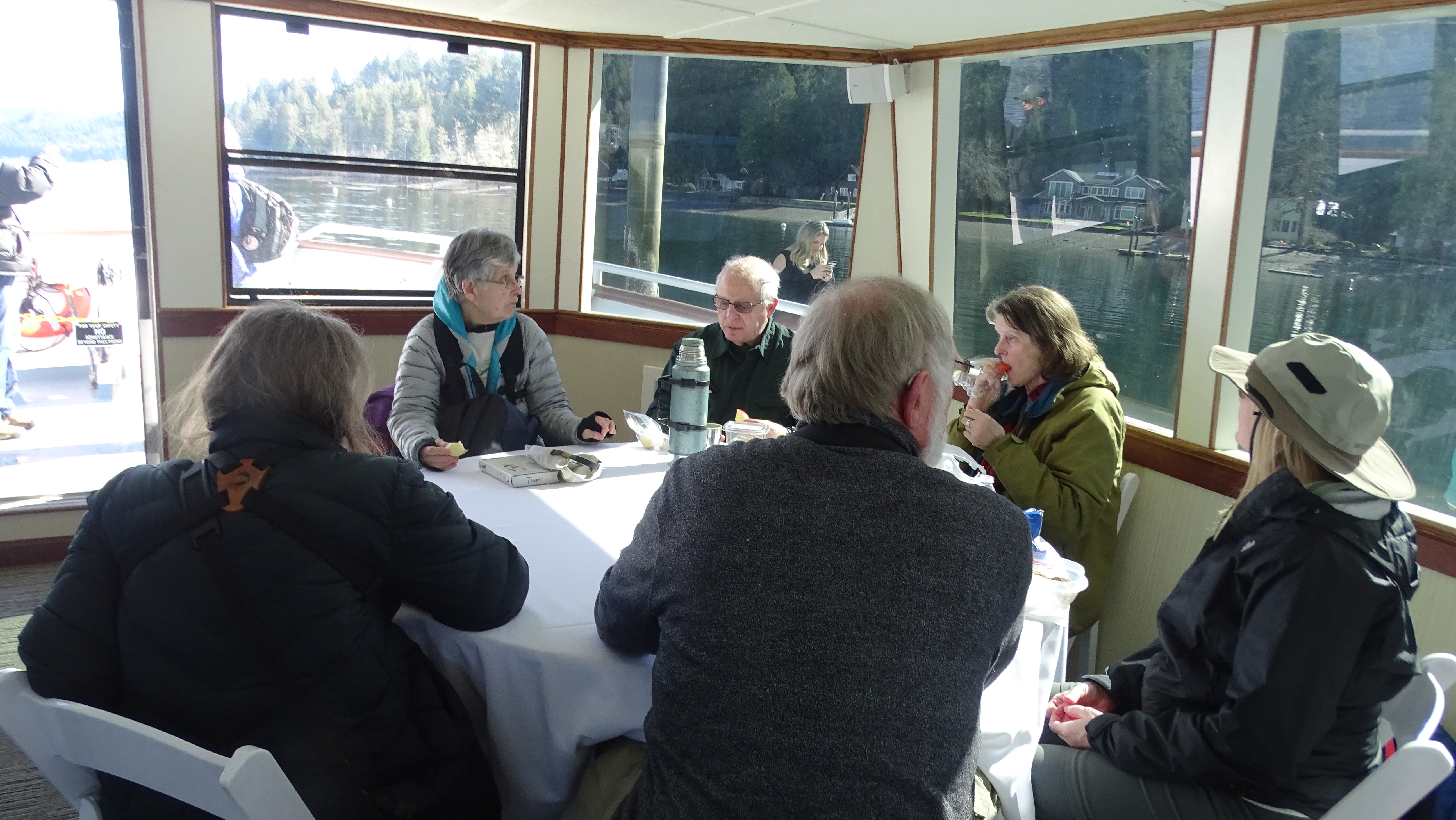
Inside the Lady Alderbrook

On board, we were fortunate to have professional pelagic spotters, Bruce LaBar and Cara Borre, as well as a bunch of other accomplished birders and photographers among this sold-out birders’ event. It was also nice to meet at the beautiful Alderbrook resort and enjoy that ambience.

Pat, Shelley and Petrea hang back as spotters Bruce and Cara talk strategy

We sailed away under the eyes on the tall ship, Pleiades, which was taking pictures of the Lady Alderbrook for advertising purposes, so we’ll probably all be famous soon.

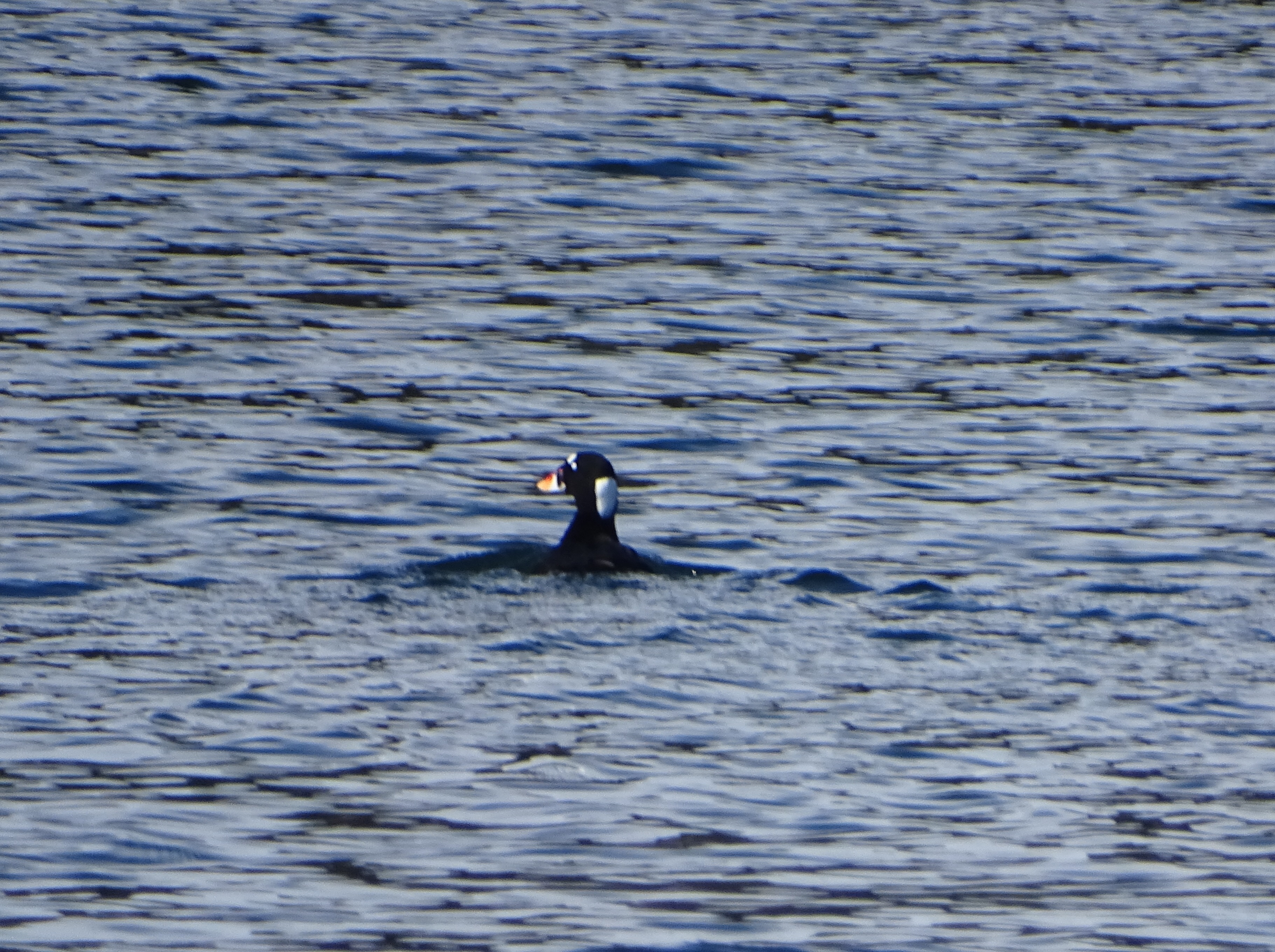
See any Surf Scoters?

First up, we came upon 350+ Western Grebes. For those of us who have been mourning the missing Grebes in Puget Sound, it was such a relief to see them here and again later in the cruise. To make it a sport, Bruce had us all concentrate to find a Clark’s Grebe among them, and we were successful! John Riegsecker was able to get a photograph to prove it. After that we ran into big bunches of Surf Scoters, as well as several sizable flocks of White-winged Scoters, another bird we’ve been missing in the Sound in recent years.

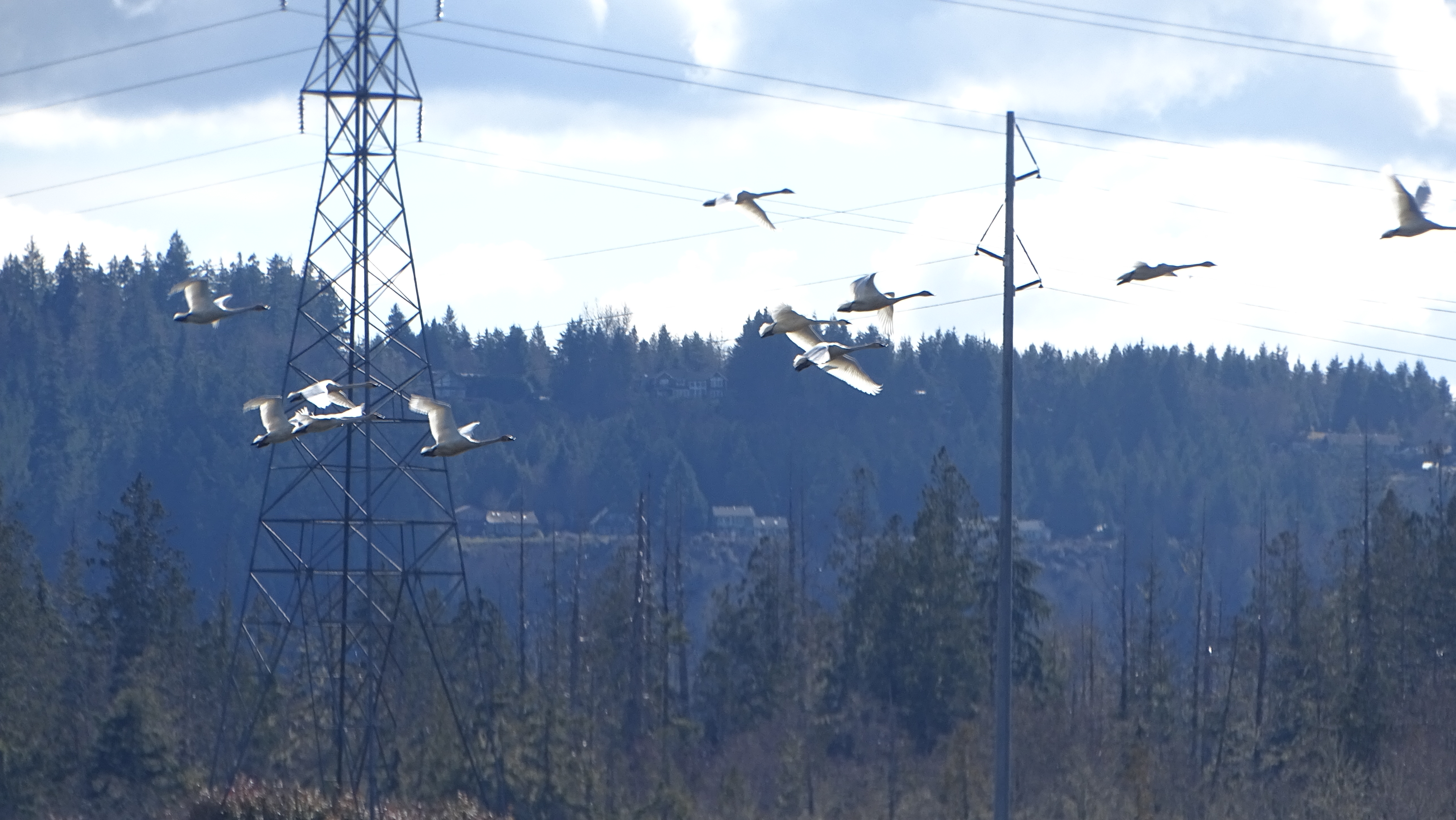
A joy to see was a baker’s dozen of Trumpeter Swans, rather unexpected, but we saw them on the beach, then in the air, then landing in the water, getting every possible angle! Again, John’s photo showed them to be Trumpeters and solved that vexing problem of ID from a distance. Then, as if that were not enough, the spotters spotted a potential Long-tailed Duck. It was too far away for many of us to ID, but again John’s steady arm on that camera proved it! When we were all looking for the Long-tail, at one point Bruce said, “Find the red pole and look underneath that.” Turns out he didn’t mean a Redpoll…

Trumpeters circling us!

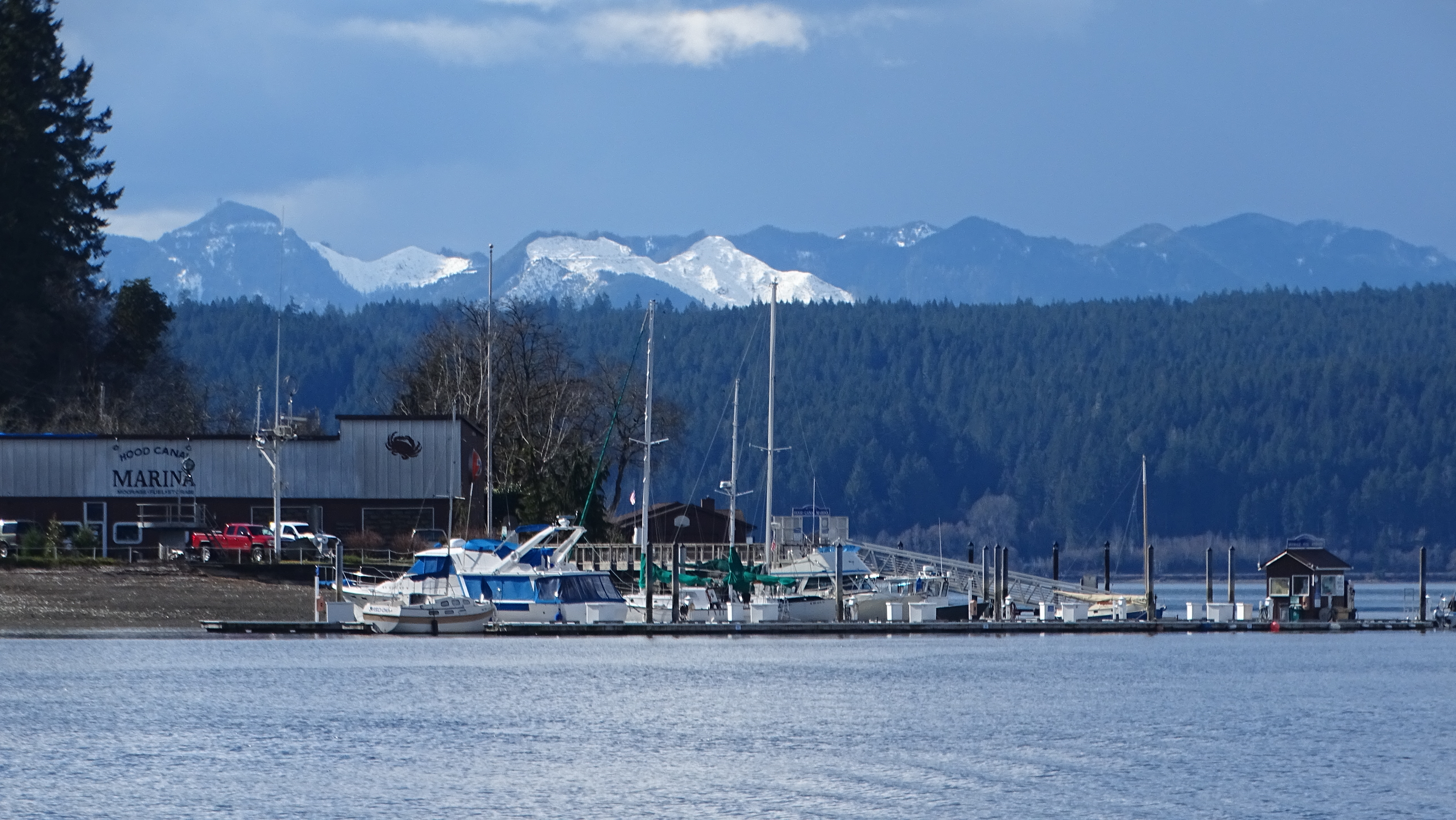
A couple of Harbor Seals filled in our marine mammal requirement, and many Larus gulls were about. Red-necked Grebes, Greater Scaup, both Goldeneyes, and a fair number of Common and Red-throated Loons helped fill the waters on this beautiful sunny day framed by snowy mountains.

Snow over the Hood Canal Marina, almost back to Alderwood

We finished up as a happy group, and Adam took a group picture as we were disembarking, especially to send to Kay Pullen, who helped put this event together, but was unable to attend due to illness.

Here we are, landing

Thanks to Faye, Bonnie, Bruce, Cara, and to Ken for eBirding.


Photographers! Please addend this report with links when you have photos posted! In the meantime, some of John Riegsecker’s photos are included on the eBird page: https://ebird.org/pnw/view/checklist/S43380333. Some of Diane’s & Heather Roskelley’s photos are now on FLICKR at: https://www.flickr.com/photos/76552838@N03/albums/72157693330076794

APRIL 24, 2018 – DAVE SLAGER TO VISIT ABC!

April 24, 2018, 6:45 PM – University of Puget Sound – Thompson Hall room 175, $10. DAVE SLAGER!

Dave Slager

Dave is working on his PhD at the UW where one of his research projects is using genetics to study hybridization between American and Northwestern Crows in the Pacific Northwest! He works with John Klicka, who visited us in September 2016 (Read about that: (http://abcbirding.com/john-klicka-at-abc-92216/).

You might already know Dave through email exchanges about your unusual bird sightings, because he’s an eBird reviewer for Washington and serves on the Washington Bird Records Committee!

Prior to arriving at UW, Dave co-edited the Second Atlas of Breeding Birds in Ohio book, served on the Michigan Bird Records Committee, and used radiotransmitters to study the movements of Northern Waterthrush and Yellow-rumped Warblers at migratory stopover sites in Wisconsin. Outside of the Pacific Northwest and the Midwest, Dave has also studied Cerulean Warbler ecology in Colombia and mimicry in the kiskadee-like flycatchers in Panama.


You can read more about his research at https://slager.github.io/ and view some of his older photos on his Flickr site: https://www.flickr.com/photos/daveslager/5527875231/.

It sounds like we NEED to know Dave!!  We’re very happy he’s agreed to come to ABC on April 24th!