I’m home and have had enough time to put up a trip report on my “Ed’s Birding Notes” folder on the Bird Banter website, and to post some photos to Flickr. Here are links if anyone is interested.
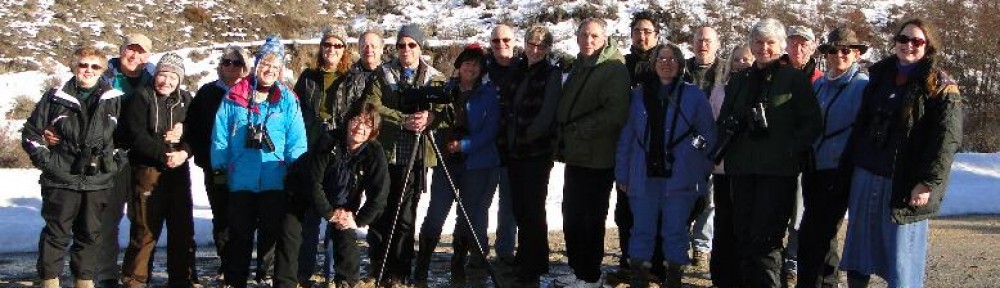
Ken and Ed led a trip to the coast with so many ABCers interested that we started Saturday Oct 8 taking 16 birders in 4 cars to the Westport-Tokeland side of Gray’s Harbor, 7 more birders joined us Sunday for the Ocean Shores side, and the 7 + one holdover repeated the south side of the harbor on Monday. Weather was good, exceting morning fog most days, and birding was surprisingly excellent.
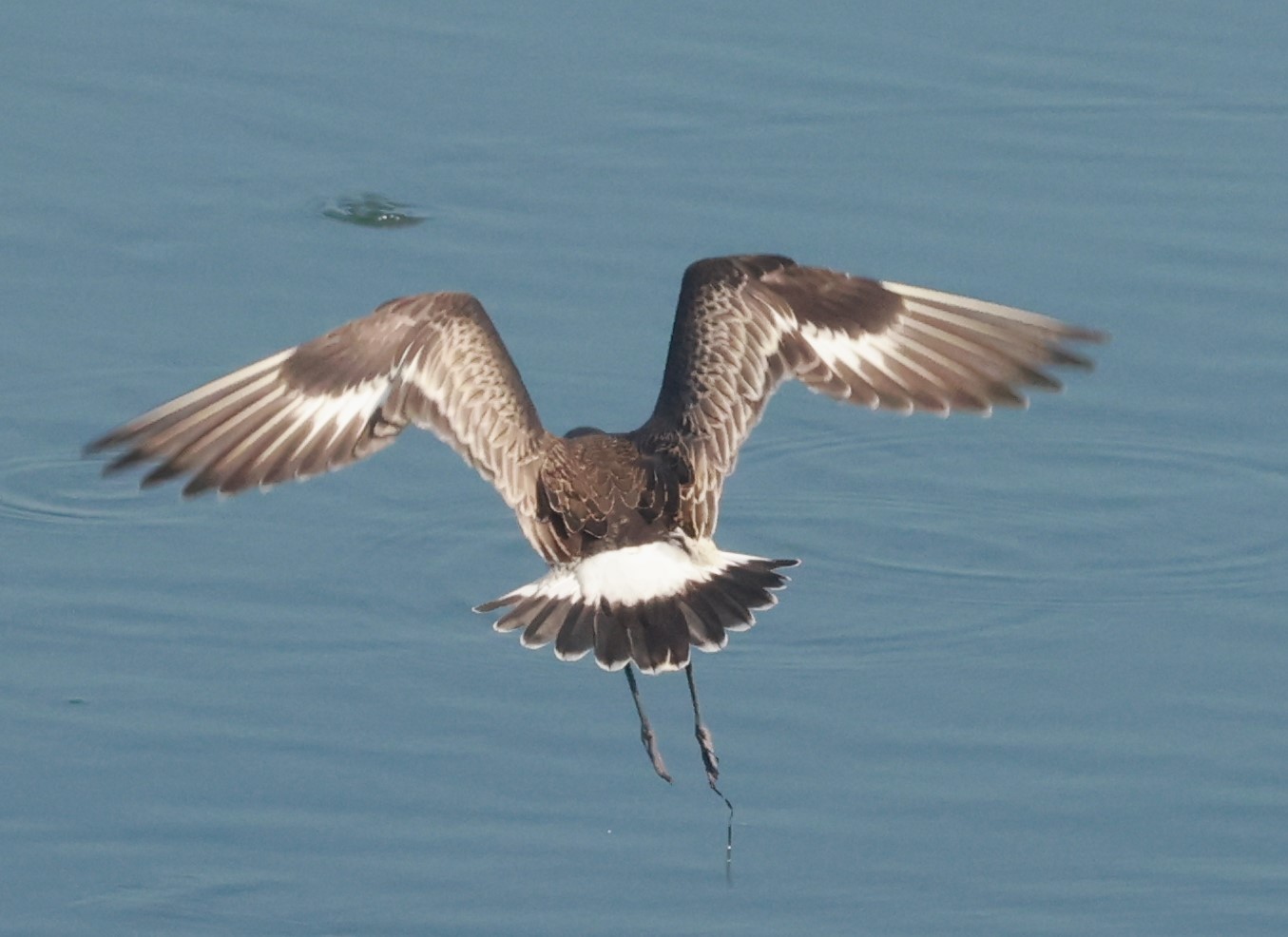
Hudsonian Godwit seen on Day 1 at Tokeland
The route was to the Hoquiam STP first on Saturday, then on to Bottle Beach, Tokeland and Graveyard Spit, North Cove, MIdway Beach and then back to the Hoquiam STP to chase the Sharp-tailed Sandpiper found there by Shep and others after their weathered-out pelagic.
I won’t go into great detail, but here are the highlights:
Day 1:
-At the STP good numbrers of ducks, a few Pectoral Sandpipers seen through the fog.
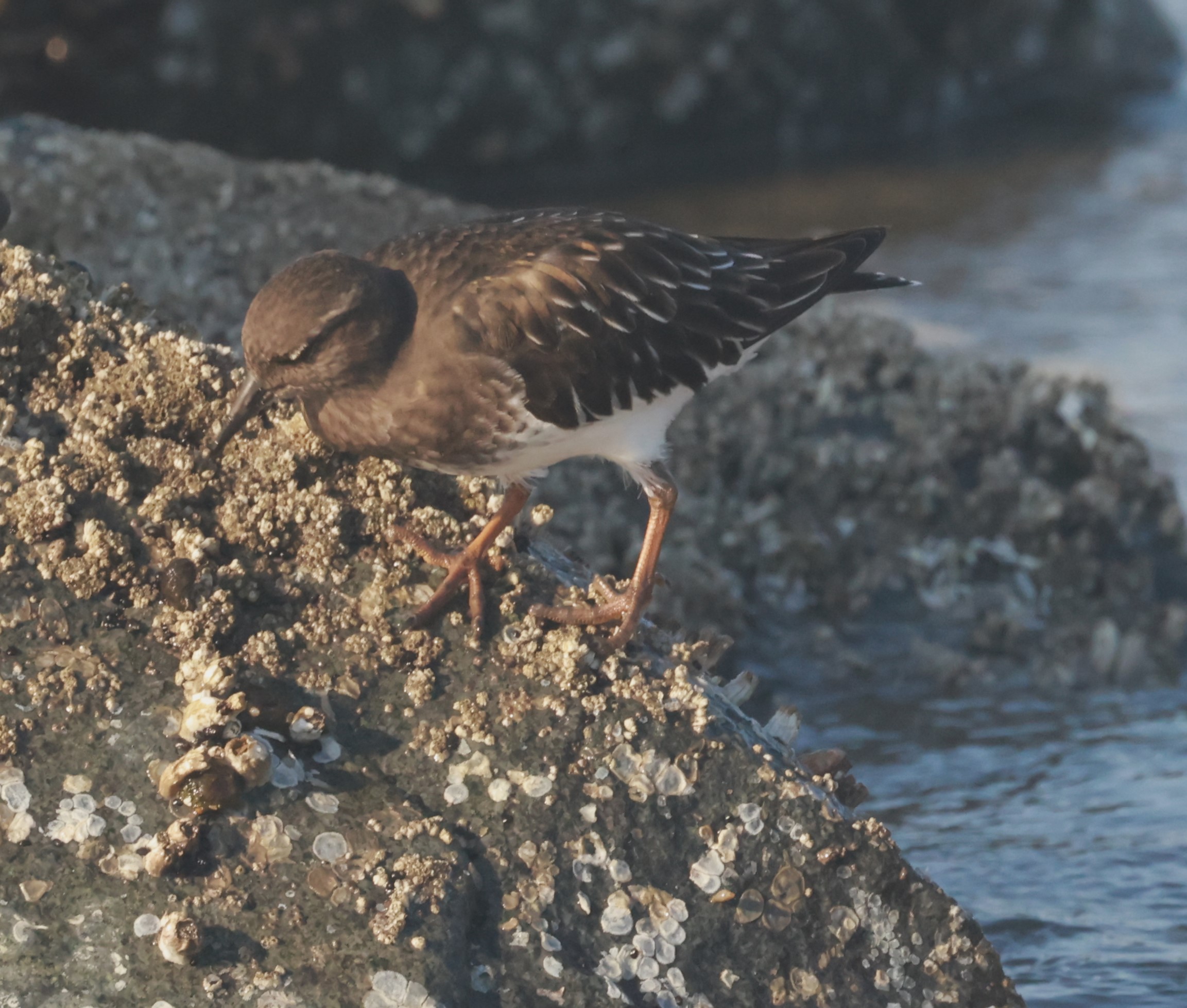
The Hudsonian Godwit with several Marbled Godwits for comparison. Many Black Turnstones with at least 2 Surfbirds at the Ocean Shore JettyA Surfbird at the jetty
-At Bottle Beach we arrived early for the incoming tide, spent an hour or so on the trail adjacent to the beach where a good variety of common birds were seen well, then on the beach we had 10 species of shorebird including 3 Sanderling, 12 Marbled Godwit, 1 Black Turnstone, +/- 400 Black-bellied Plover, 6 Semi-palmated Plover, Dunlin, Western and Least Sandpipers.
-On to Tokeland, where the arguably best bird of the trip, a Hudsonian Godwit had us all fooled for a while until Ken (who else) correctly IDed the bird as a Hudsonian Godwit a bit after we left. This one rarity was mixed nicely with an estimated 350 (probably more) Marbled Godwits, a good number of Willets and one Whimbrel.
A Whimbrel with the MAGO at Tokeland
-We made a short stop at North Cove hoping for Franklin’s Gull which had been reported earlier in the week without luck.
-A nice walk out into the wet fields at the end the road to Midway Beach yielded one Wilson’s Snipe, a nice walk in a wet field, and good numbers of distant ducks and Long-billed Dowichers, and one American Pipit.
As we left there Ken found out about a reported Sharp-tailed Sandpiper at the Hoquiam STP, so instead of birding the Westport marina we went back there, near our hotel, and got excellent looks at this rarity in great light on the east side of the middle pond in the nearest short patch of muddy shore.
Day 2: After Mexican food for dinner at Mazatlan and a night’s sleep at Econolodge we joined the arriving second party group and headed for Ocean Shores, with a short try at the Hoquiam STP for the STSA without luck in foggy conditions.
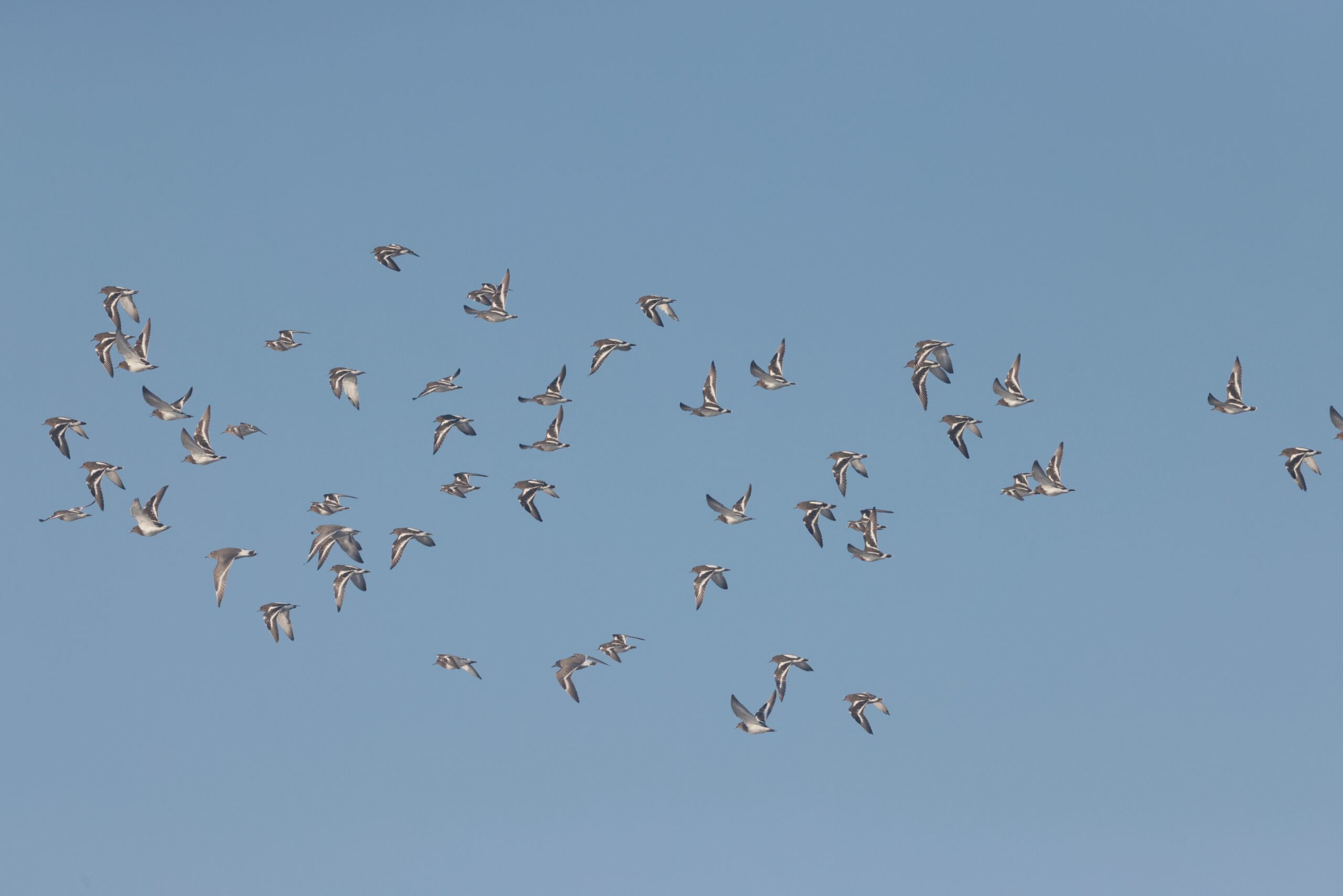
-At the Brown’s Point Jetty we did a seawatch, with waxing and waning fog, but were pleased by a nice flock of rocky shorebirds that flew in and found one Rock Sandpiper and 6 Surfbirds mixed with at least 50 Black Turnstones. A nice variety of seabirds made the watch enjoyable.
A Black Turnstone at the Jetty
-Nothing special at the Ocean Shores STP on a brief stop, and we walked the Oyhut Game Range area from the new path at the Tonquin Ave entrance. It was very slow overall, but a nice highlight was flushing 5 Lapland Longspurs from almost underfoot, calling their nice rattle to be heard by most and a nice look as they flew up and away. Nice numbers of Red-throated and Common Loons were fun to see, and a Peregrine gave great overhead flight looks as it soared high above us as we got to the parking lot at the end of the stop.
A Lapland Longspur flying away at the game range.
-After lunch at the playfield by the airport, we went to the Quinault Casino beach access with high hopes from excellent reports there in recent days, but a dense fog rolled in and we almost saw the water. Zip.
-We killed a little time at the Cabana Pool, waiting for the tide to receed a bit before going to Bill’s Spit hoping for shorebirds. The pool area was pleasant but without many birds. Bill’s Spit had the tide just going out, and as more sand became available the largest group of shorebirds of the trip gave a nice show. Highlights were several Red Knots, good numbers of Dunlin and Western Sandpipers, lots of gulls to sort through, and one shorebird we had to leave unidentified due to distance, but always fun to try.
Shorebirds and gulls to sort through at Bill’s Spit
-We tried in the afternoon with better light to recover the STSA for the new arrival birders, but were not able to confidently ID it among several Pectoral Sandpipers who were more distant than they had been Saturday.
-Monday, after dinner at the 8th Ave Bar and another night at Econolodge we again headed south. The stops were similar to Saturday, but we missed the HUGO at Tokeland, picked up a Pacific Golden Plover at Bottle Beach, and took some time to explore a new area at the mouth of the Cedar River just south of Tokeland to find a few county birds for the county listers in the group.
Bruce LaBar, Will Brooks, Peter Wimberger, Max Merrill and Ed Pullen undertook a later than usual May Pierce County Big Day on May 15th, a rainy day a few days later than our previous big days, on a whole different route that Will and Bruce planned. Ken might have called it a “hot-damn” day of birding, finding 138 species, the highest of any of Bruce’s 21 years of doing this. Read the full report at my birding notes page on the Bird Banter site.
When I travel to an area where I expect to see birds I don’t know and to study them. It has the advantage over just studying a field guide book to the birds of the area of showing you the birds you are really likely to see, in order of likelihood. Check it out.
How to use eBird to study birds likely in an area.
Will Brooks talks about his Washington State big year record along with his good friend Jason Vassallo who completed the 9th highest Lower-48 big year in 2021. Fun stories and a chance to live vicariously through their birding.
Ken really loves taking the club, previously the class, on our annual freezathon to North Central Washington. For the second straight year Covid made us reluctant to get a big group together for the trip, but Ken, Bruce, Jacob Miller and I managed a 4-day trip last over the MLK weekend (Thursday – Sunday actually) and as usual it was great. Read all about it on the Bird Banter site under Ed’s Birding Notes here.
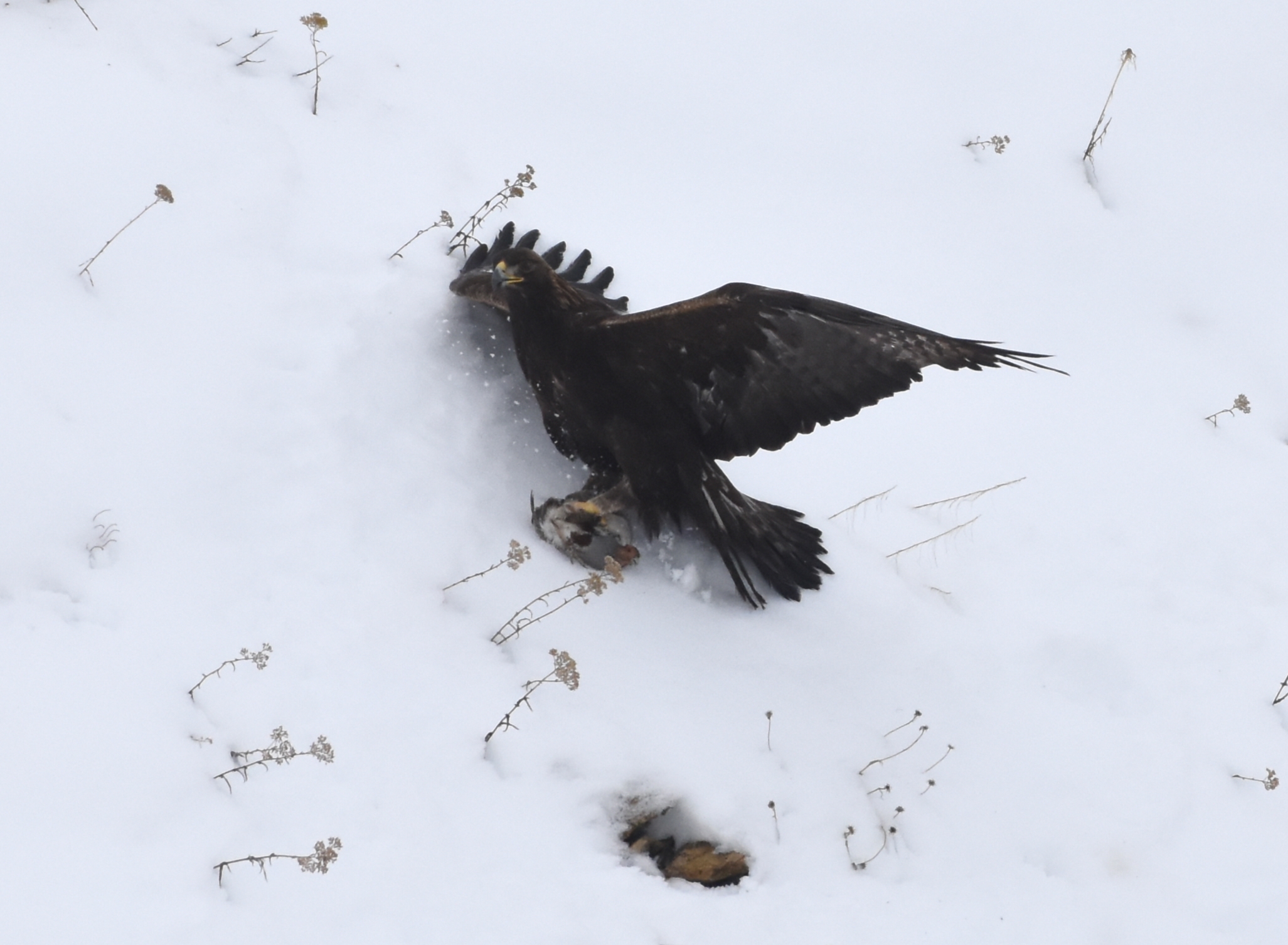
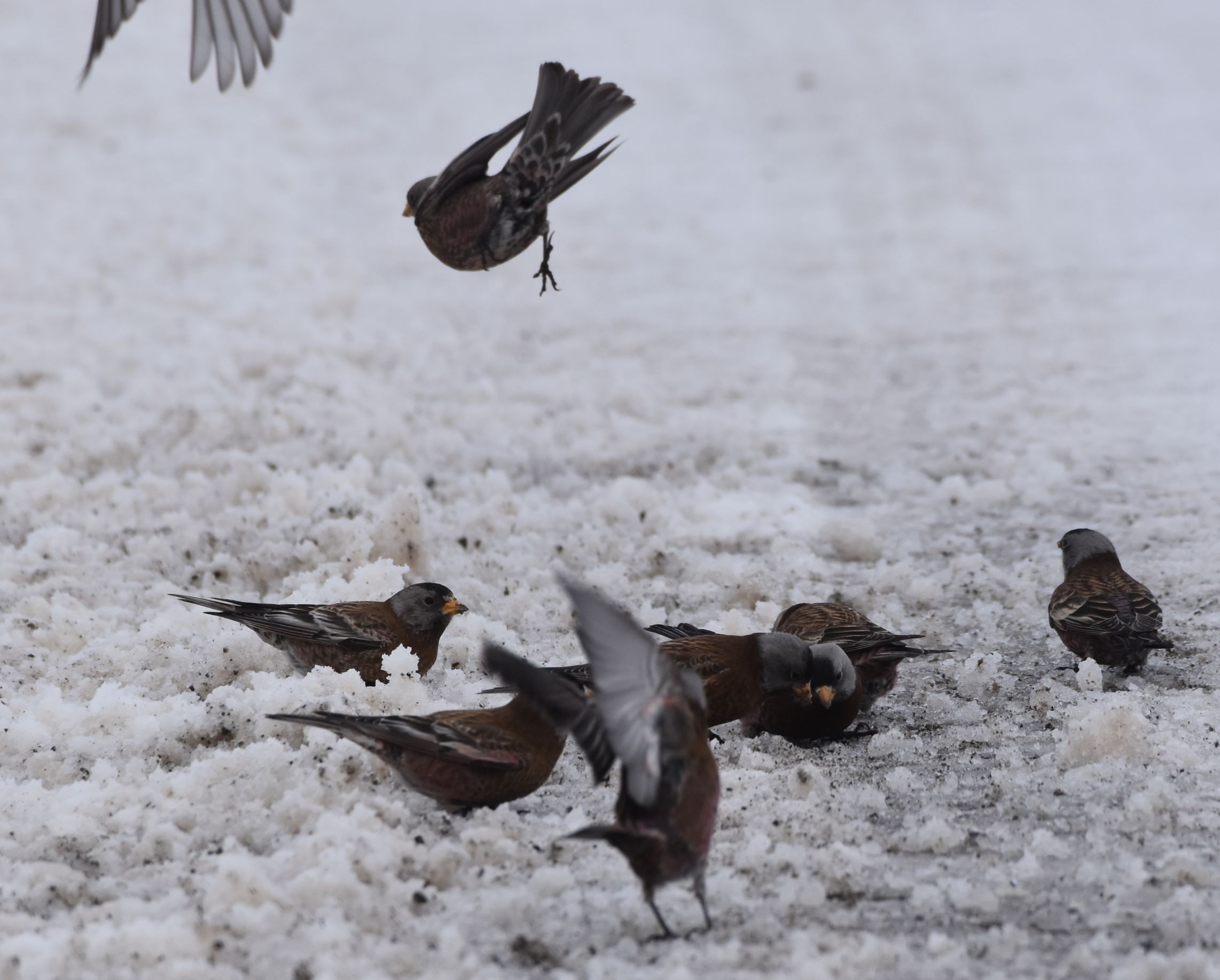
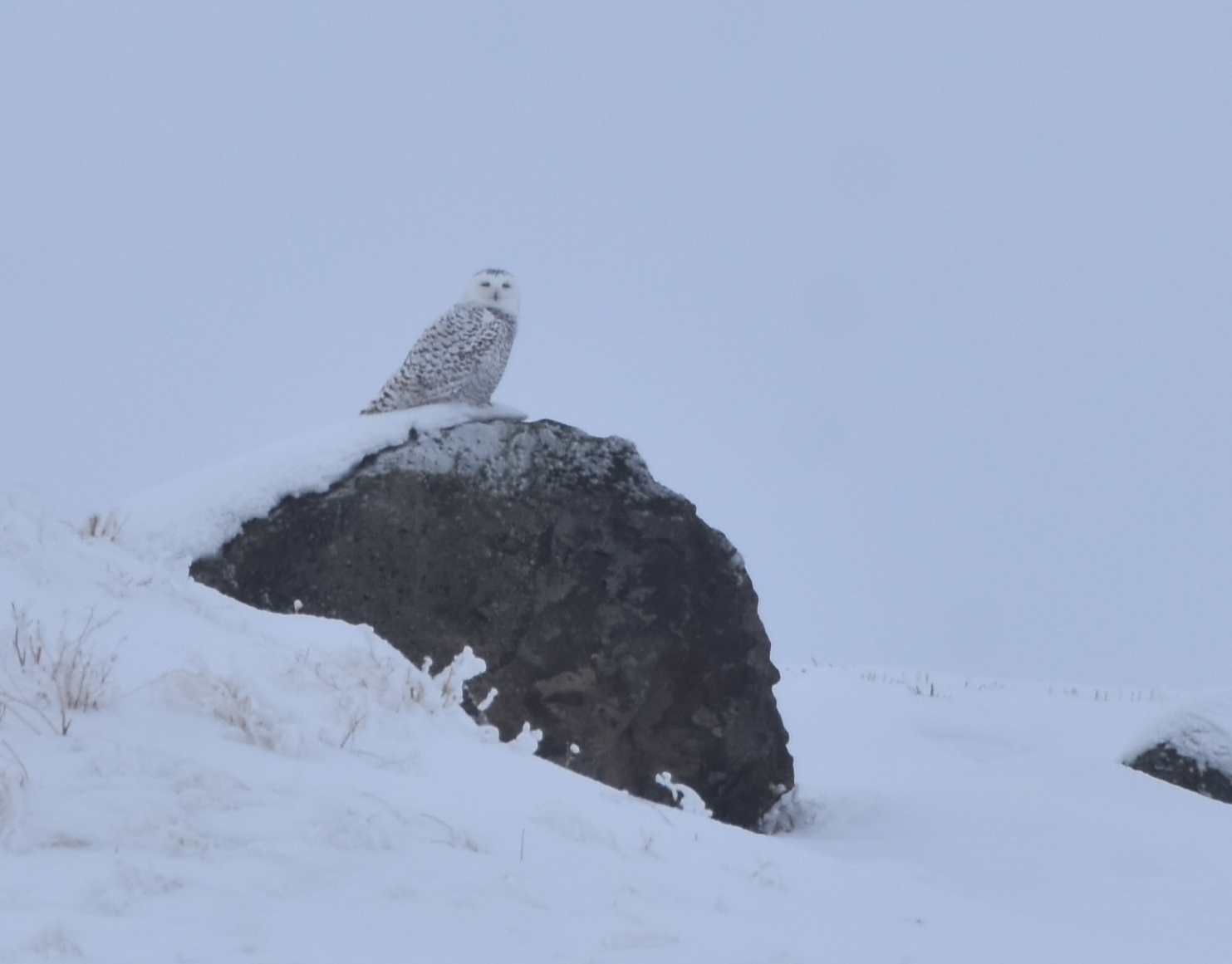
Here are a couple of photos to tempt you. Snow cover was really heavy, and weather great except for some patchy fog at times.
Golden Eagle on Hess Lake Rd with a Gray PartridgeThe old feeder spots seem to have gone, only one was still present and few birds were there. These 120 Gray-crowned Rosy Finches on Mary Ann Creek Rd were even better against snowy fields background and actively flying around. Jacob’s lifer Snowy Owl on H Rd on the Waterville Plateau
Adam and I did our yearly Halloween trek to the famous crow roost at Bothell. From our vantage point atop the North Parking garage, we could look down into the protected wetland where so many birds of all kinds spend the night. Arriving 45 minutes before sunset, we saw only one crow at first and wondered if this phenomenon had moved on. But soon, here they came! Dozens, then hundreds, then thousands! The noise increased and drowned out the I-405 traffic noise!
Bothell crows
A special treat was that the U had left the game lights on the playing field just south of where we stood, and the crows showed up to play! It was amazing how many crows were playing there, but when the lights went off, the crows slowly dissipated into the swamp to the east.
UW-Bothell playing field with mosquito mascotGame on for the Crow team
As was their habit, about 15 to 20 minutes after sunset, the crows suddenly hushed all at once. We could still see a few, but they were no longer moving around, and they certainly did not vocalize. We had tried to count them, but when you’re in the eye of the hurricane, you are not in a position to measure it. Nevertheless, we entered 15,000 into eBird, and eBird didn’t even flinch!
Diane creeps up on crowsAdam surrounded by crows
Show over. We thought. As we turned to the car getting ready to leave, Adam said what’s that? It was quite dark by then, but there was no mistaking a large flock of birds circling the wetland. They were not crows, neither by their voices or their formation. We watched as they were joined by several other large groups, making the entire group probably around 5000. Photos were hardly possible, though I did try! And a little movie to hear their voices. Later we decided they had to have been Cackling Geese! What a great encore to the Crow Show!
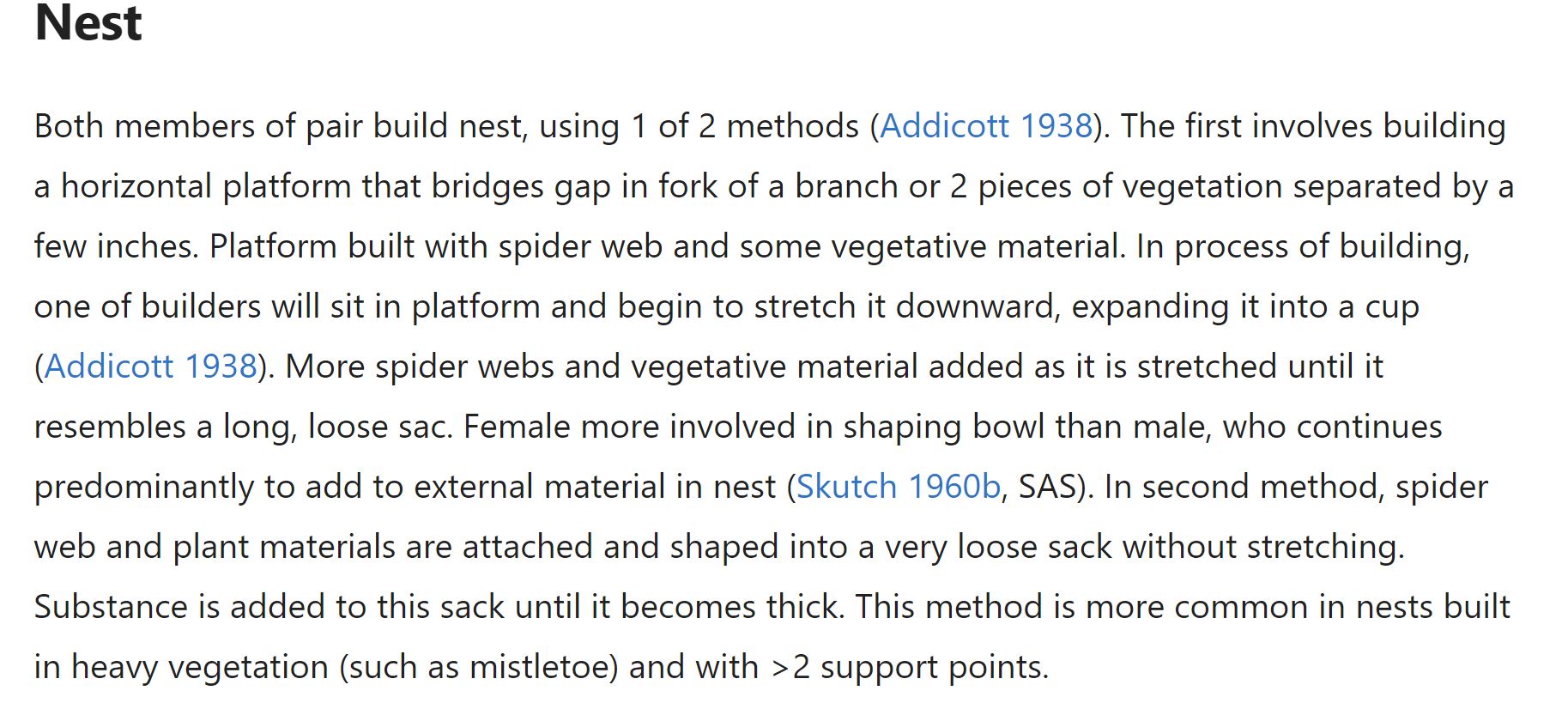
Every wonder how Bushtits make their cute hanging nests? How many eggs to Sprague’s Pipits Lay. (scroll to the bottom of this post for screen shots) Information like this is easy to find in Birds of the World, an online subscription resource from Cornell University Lab of Ornithology. Have a bird question. The answer is likely there. I use it all the time. Now WOS members will have access to this subscription-only resource as a benefit of membership- no added cost!
Washington Ornithological Society has teamed with the Cornell Laboratory of Ornithology to add a terrific new membership benefit. WOS members will be automatically be granted access to the Birds of the World resource. For those of you who are not familiar with this it is a collection of extremely detailed and complete collections of information about every species of bird in the world! It used to be called Birds of North America, but a couple of years ago it expanded to cover the whole world. When I have a question about a bird species it’s my go-to resource. I’ve been a subscriber for years, though at $6/month it has been a bit pricey, I’ve considered it my donation to the cause. Now, for your $25.year WOS membership you get access to BOW included. DO THE MATH! It’s a great value. Maybe BOW is not worth$6./ month to you, but is WOS membership including BOW access worth about $2./ month? A no-brainer. Spread the word. Join WOS and get this fabulous resource as a membership benefit.
This came about as the WOS board deliberated on ways to add value to membership. With the pandemic, less in-person meetings, field trips on hold. This was suggested, the board leadership looked at the cost and it seemed like a great value. WOS has agreed to pay a fee for every WOS member to have this benefit. Every member will have the benefit (unless you intentionally opt out- which simply directs WOS not to share your membership information with the Cornell Lab and means that you will not have this benefit, but does not reduce the cost to WOS) as it is at a price to WOS that must include every member.
The hope of the board it that adding this membership at a bargain price to WOS, will give added value to current members by sharing the definitive ornithologic species monographs to members and thereby increasing our individual and collective birding knowledge, as well as potentially increase membership to others who may want this discounted BOW access.
Members as of Oct 1, 2021 will get access. This will be updated quarterly.
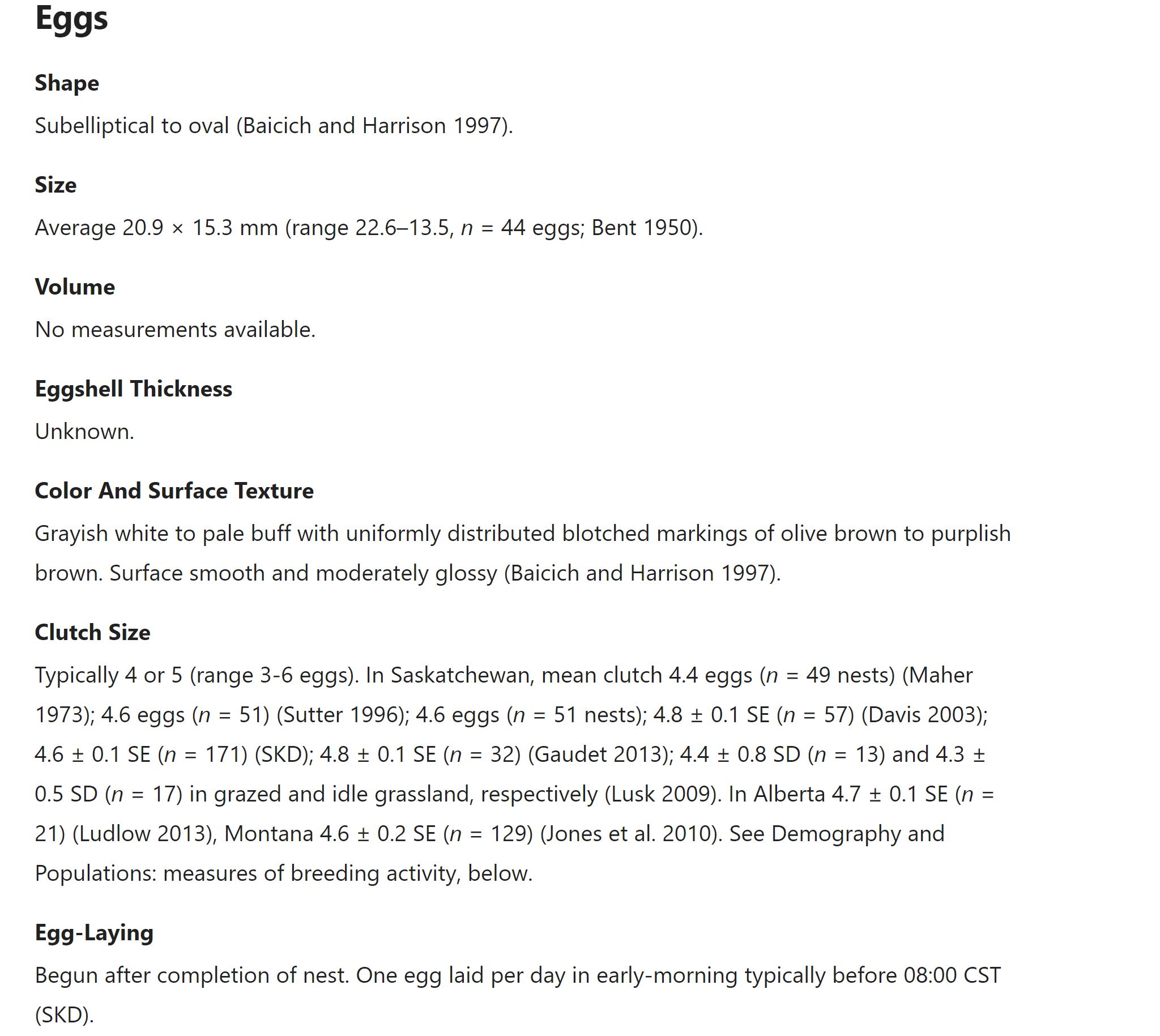
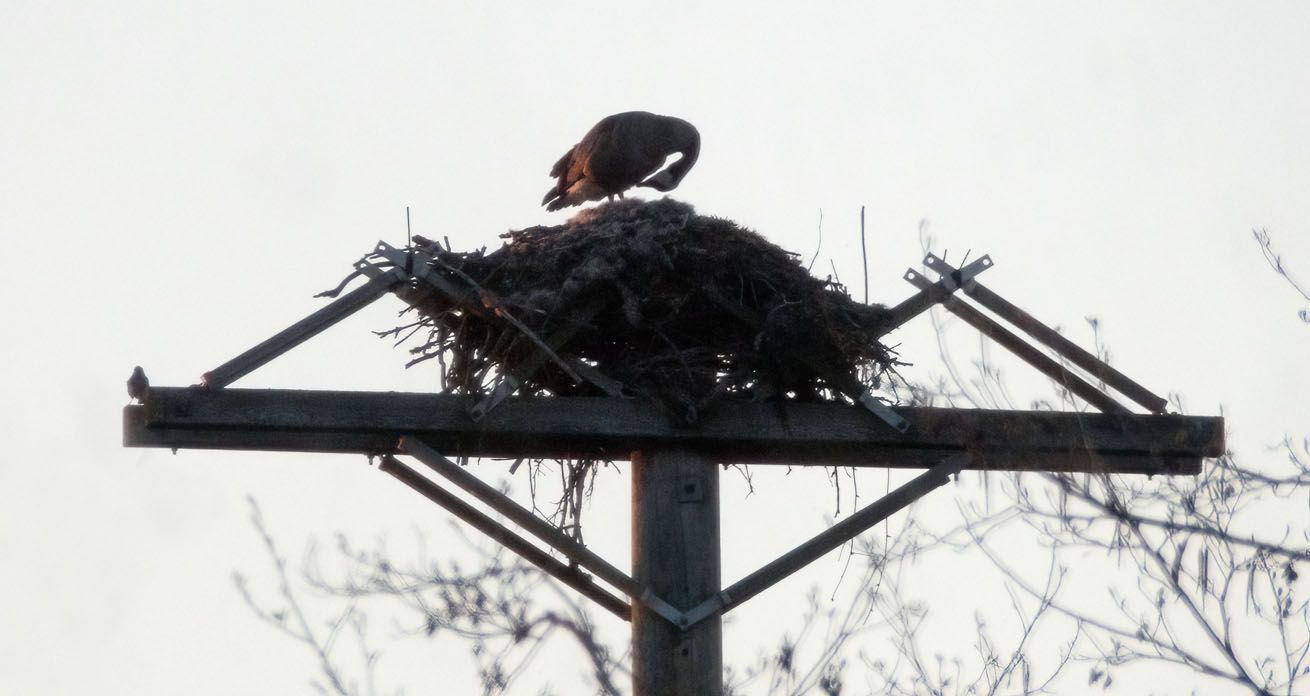
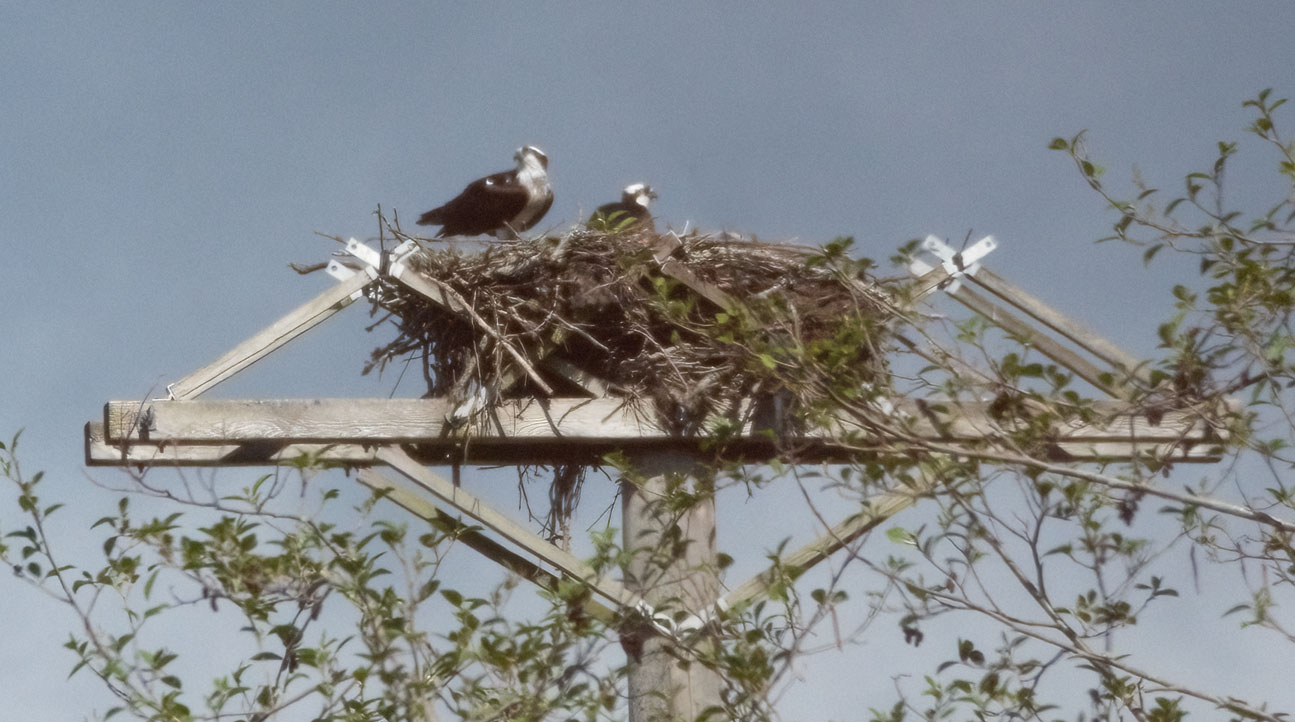
Chambers Bay area Ospreys have arrived from migration on April first every year for quite some time and have usually reclaimed existing territories and nests. But this year, a non-migratory female Canada Goose had earlier taken possession of a well-established pole nest near the Chambers Bay Dam and refused to give it up to a returning Osprey Pair. This behavior by geese had been noted in the area sporadically before.
Goose takes over Osprey nest
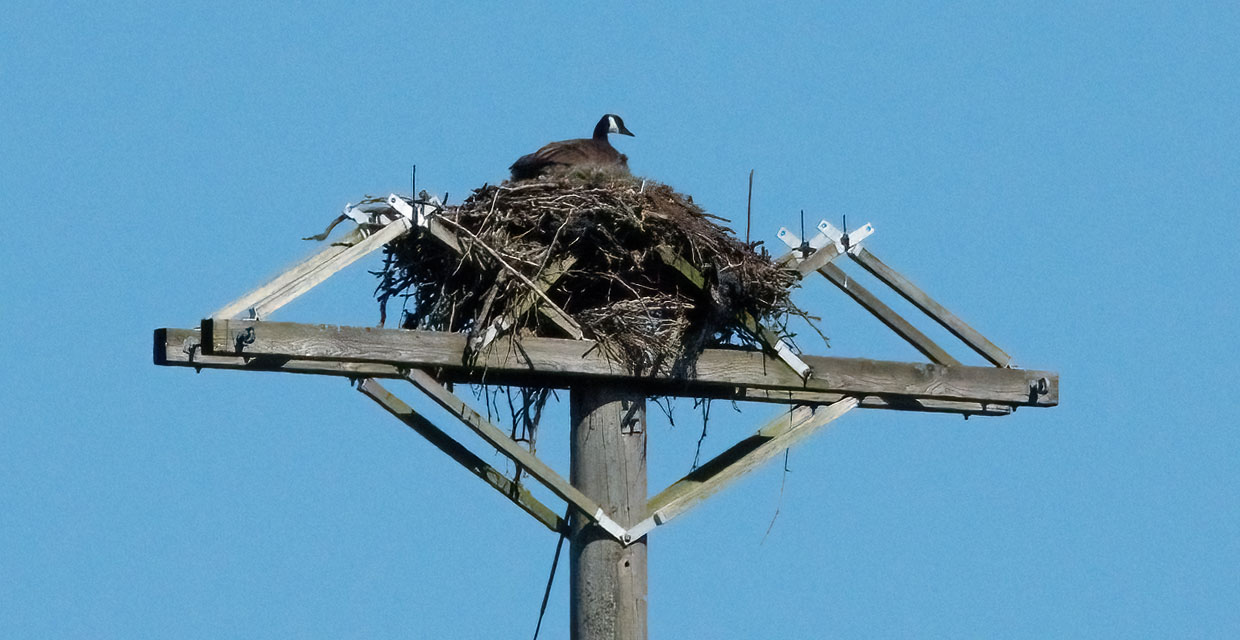
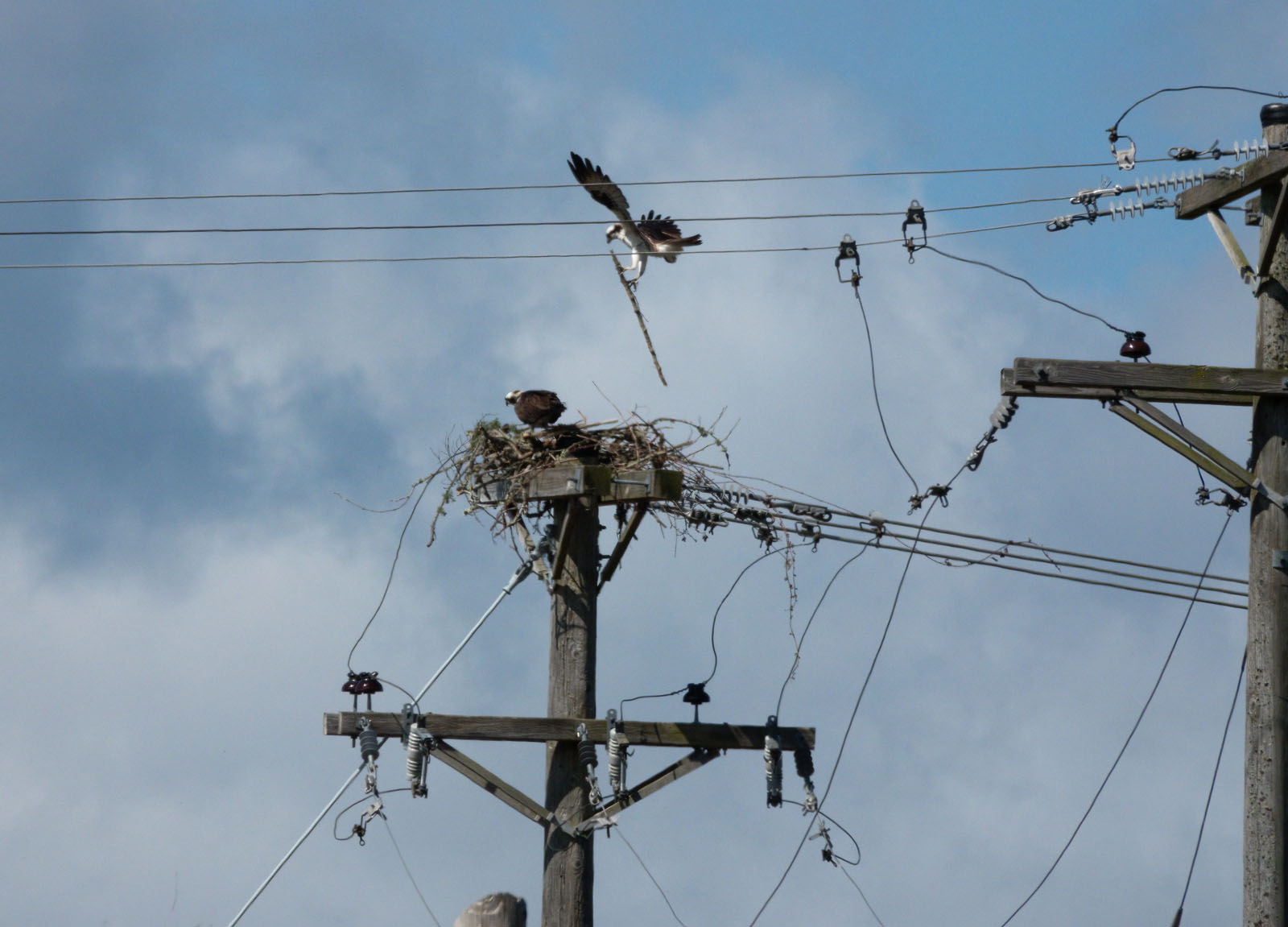
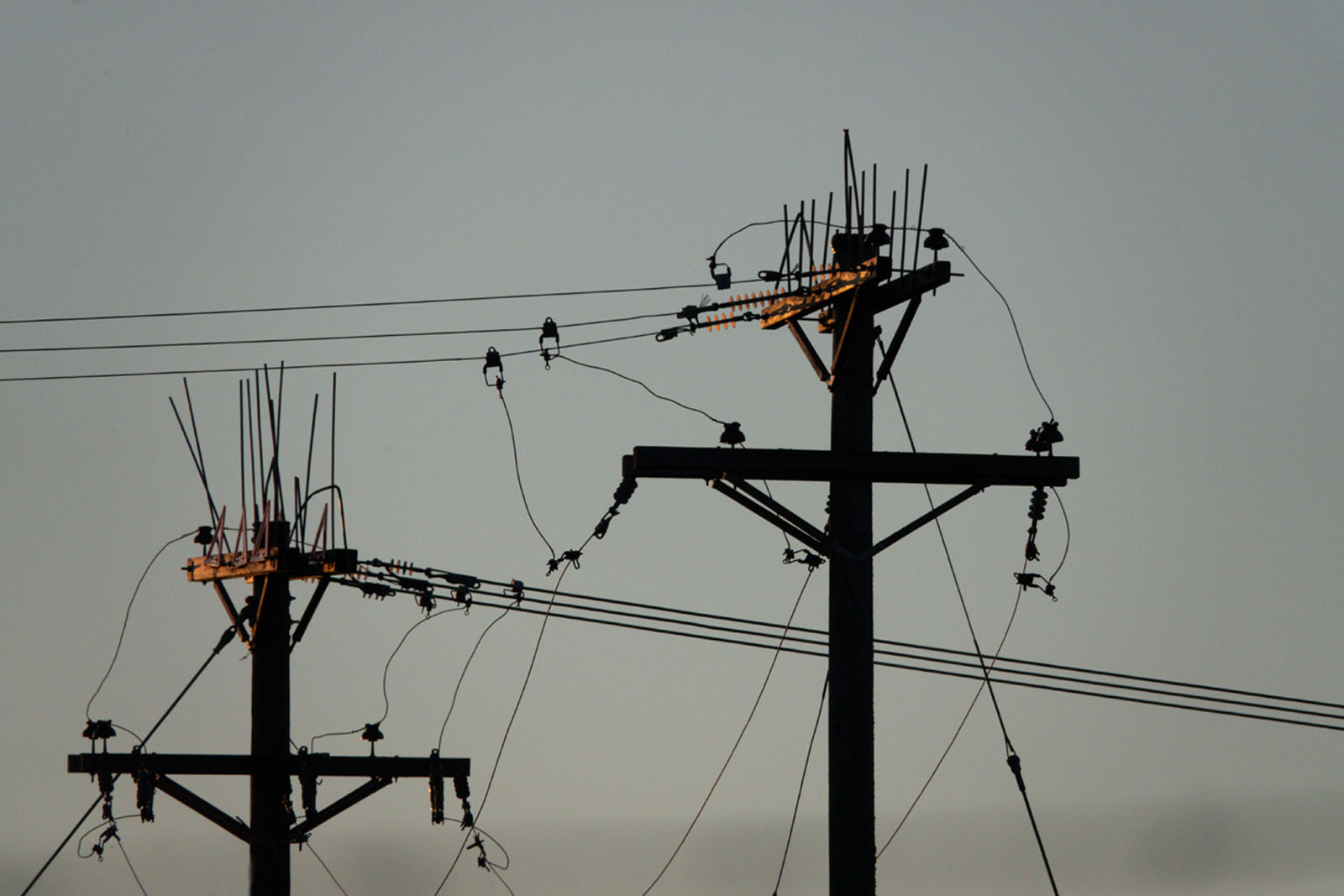
After a day or two, the Ospreys decided to build a new nest nearby, right on top of a utility pole with many energized wires attached, and went at it vigorously. This being a hazard both to birds and potentially to power transmission, Tacoma Power and the Department of Fish and Wildlife were notified. A day or two later the new Osprey nest was removed, apparently with a permit allowing this because of safety concerns. Anti-nesting devices were placed on the pole and a nearby one.
New Osprey Nest The Anti-Osprey Apparatus erected to save Osprey from electrocution
But the Goose remained on the original nest and indeed was plucking breast down and lining the nest with it. However, in the next two or three days she and her pile of down were removed and the Ospreys, who had been hanging around stubbornly, reclaimed their home and have proudly remained on it ever since.