Ken’s ABC Fall Coast Trip Oct 5-6, 2013

2 Golden Plovers at the Game Range
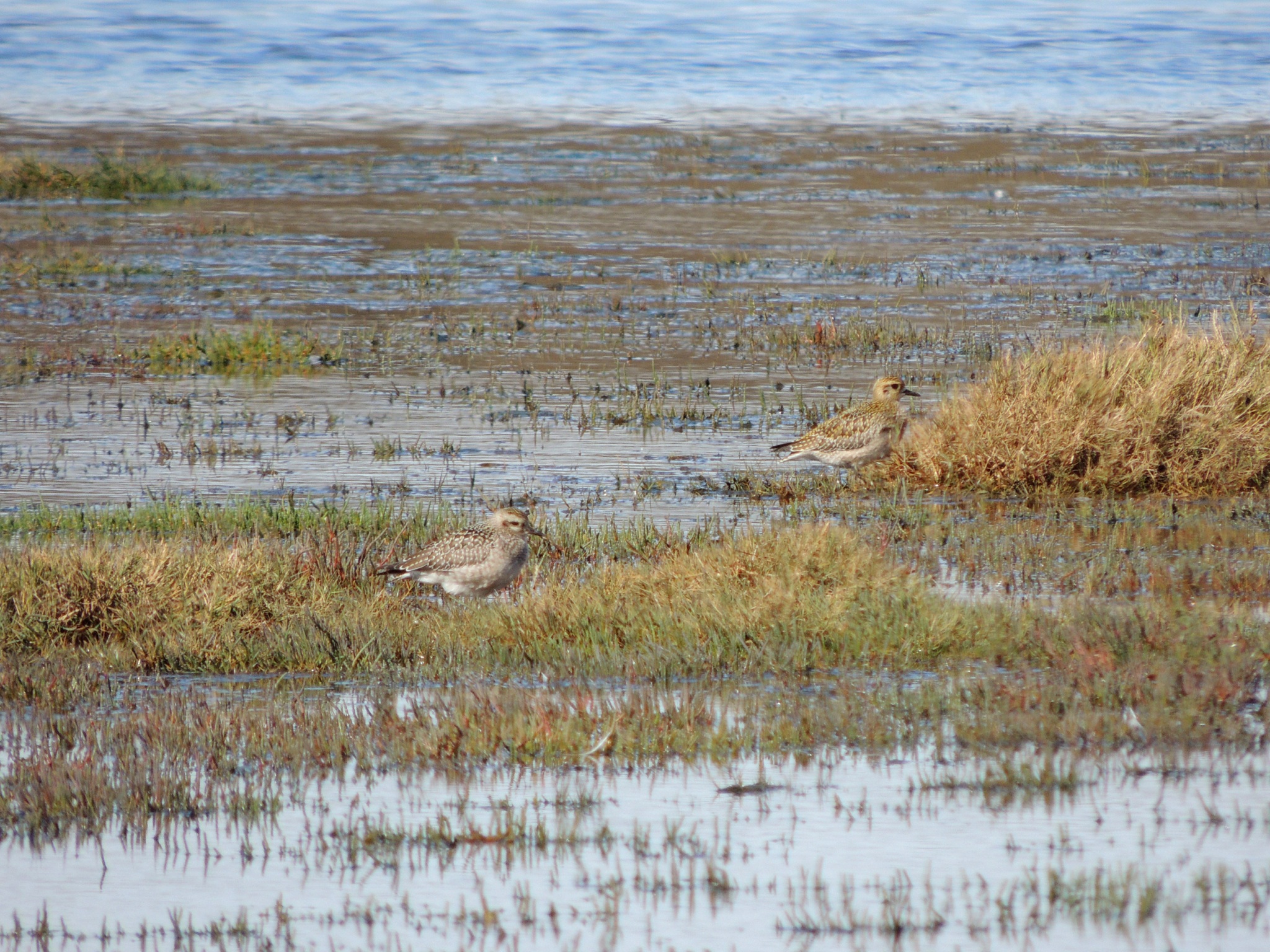
Sunshine and great views of American and Pacific Golden Plovers together (Photo by Kathleen Miller) were the highlights of our trip to the coast last weekend. After meeting at the usual I5-Hwy 512 park and ride we took foggy drives through Wenzel Slough Rd and Brady Loop. The highlight was a large flock of mixed geese, mostly Cackling, with Canada and Greater White-fronted in good numbers, with 7 Sandhill Cranes looking on from the background off Foster Rd.
Be the time we arrived at the Hoquiam STP the fog had mostly cleared, but we missed the previously reported Red-shouldered Hawk. A surprisingly few birds were on the ponds, and we wasted no time pushing on to the coast. We went to the Oyhut game range first and this was the best shorebirding of the weekend. We sorted through good numbers of Greater Yellowlegs to find at least 5 golden plovers. We has spectacular looks at both species, actually counting the 4 primary feathers projecting past the tertials in the American’s and the 3 on the Pacifics, noting that both edges of the tertials had golden spots on the Pacifics, whereas only one edge had the spots on the Americans. It was a great case study. We has good looks at Least, Western sandpipers, and Dunlin there too. Long-billed dowichers gave us good looks too.
At the jetty we found 3 “rock-pipers”, Black turnstone, Surfbird and Wandering tattler. We skipped stops at the open coast to pick up Sanderling, assured that it would show up somewhere for the trip. Not! At the Ocean Shores STP we added a Spotted sandpiper.
A good night’s sleep after the heartbreaking Husky loss to Stanford brought another sunny day Sunday.
WestportSunrise 6159

(Photo by Diane) We started at the Westport Marina, and the hoped for 4th or 5th rockpiper species failed to oblige. Impressive numbers of Brown pelicans were noted. The Marbled godwits and Willets obliged at Tokeland and we saw our first Great Egret far away on the tide flats. Graveyard Spit and Midway Beach added little except a fast-passing Perigrine falcon at Midway. (water too deep to get to the beach) Bottle beach was a dud, with 6 Black-bellied plovers the only shorebirds noted despite perfect timing of the tides. Back at the Coast guard station at Westport we poured through about 1000 Marbled godwits but could not make any into other types. Nice looks at a Herring gull were fun there. We ended the coast birding at the Westhaven State Park area and the jetty there, where we added shorebird species #17 & 18 as a Whimbrel called loudly overhead before landing near the base of the bluff, and 4 Semi-palmated plovers were also heard nicely as they flew in with a flock of Least sandpipers. We dashed away leaving very strong winds and a rapidly approaching rain storm.
We drove through Brady Loop again on the way home, and found yet one more Pacific golden plover at a flooded field pond with 28 Killdeer. A nice way to end the weekend.
Here is the trip list for anyone interested:
Report Details
Date range: Oct 5, 2013 – Oct 11, 2013 Total # of Species: 99
Total # of Checklists: 19
Location(s): 46.9735x-123.8170 – Oct 5, 2013, 6:25 PM; Bottle Beach; Brady Loop; Hoquiam STP; Midway Beach; Ocean Shores — Bill’s Spit; Ocean Shores — Pt. Brown Jetty; Ocean Shores STP; Ocean Shores–Oyhut Wildlife Area; Tokeland; Tokeland — Graveyard Spit/Fisher Ave; US-WA-Ocean Shores- interpretive Center; Wenzel Slough Rd; Westhaven SP; Westport — Coast Guard Station/spit; Westport — Marina

Summary
Oct 5 Oct 6 Oct 7 Oct 8 Oct 9 Oct 10 Oct 11
Number of Species 85 57 — — — — —
Number of Individuals 4,510 7,890 — — — — —
Number of Checklists 11 8 — — — — —

Highest Count for a Species (sample size) Hide Sample Size

Species Name Oct 5 Oct 6 Oct 7 Oct 8 Oct 9 Oct 10 Oct 11
Greater White-fronted Goose 50
(2) — — — — — —
Snow Goose 2
(1) — — — — — —
Brant 9
(1) — — — — — —
Cackling Goose 600
(1) — — — — — —
Canada Goose 500
(5) — — — — — —
Cackling/Canada Goose 80
(1) — — — — — —
Eurasian Wigeon 1
(1) 1
(1) — — — — —
American Wigeon 400
(3) 3,000
(1) — — — — —
Mallard 170
(5) 1
(1) — — — — —
Northern Shoveler 30
(2) — — — — — —
Northern Pintail 20
(3) 800
(2) — — — — —
Green-winged Teal 30
(3) 8
(1) — — — — —
Greater Scaup 4
(1) — — — — — —
Lesser Scaup 8
(1) 2
(1) — — — — —
Surf Scoter 40
(2) 200
(4) — — — — —
White-winged Scoter 4
(1) — — — — — —
scoter sp. 20
(1) — — — — — —
Hooded Merganser 3
(2) — — — — — —
Red-breasted Merganser — 1
(1) — — — — —
Red-throated Loon — 4
(2) — — — — —
Common Loon 10
(2) 25
(4) — — — — —
Pied-billed Grebe 1
(1) — — — — — —
Horned Grebe 1
(1) 1
(2) — — — — —
Western Grebe 9
(1) 9
(2) — — — — —
Brandt’s Cormorant 1
(1) — — — — — —
Double-crested Cormorant 20
(6) 400
(6) — — — — —
Pelagic Cormorant 4
(2) 12
(3) — — — — —
Brown Pelican 20
(1) 450
(5) — — — — —
Great Blue Heron 2
(5) 18
(3) — — — — —
Great Egret — 1
(1) — — — — —
Turkey Vulture — 4
(2) — — — — —
Northern Harrier 1
(2) 1
(1) — — — — —
Red-tailed Hawk 2
(3) — — — — — —
Virginia Rail 1
(1) — — — — — —
Sandhill Crane 9
(1) — — — — — —
Black-bellied Plover 8
(1) 50
(3) — — — — —
American Golden-Plover 2
(1) — — — — — —
Pacific Golden-Plover 3
(1) 1
(1) — — — — —
Semipalmated Plover — 4
(1) — — — — —
Killdeer 10
(5) 28
(1) — — — — —
Spotted Sandpiper 1
(1) — — — — — —
Wandering Tattler 2
(1) — — — — — —
Greater Yellowlegs 25
(1) — — — — — —
Willet — 7
(1) — — — — —
Whimbrel — 1
(1) — — — — —
Marbled Godwit — 1,000
(2) — — — — —
Black Turnstone 25
(1) 4
(1) — — — — —
Surfbird 2
(1) — — — — — —
Dunlin 4
(1) — — — — — —
Least Sandpiper 40
(2) 13
(1) — — — — —
Pectoral Sandpiper 2
(1) — — — — — —
Western Sandpiper 200
(3) — — — — — —
peep sp. — 400
(2) — — — — —
Long-billed Dowitcher 9
(1) — — — — — —
Heermann’s Gull 1
(1) 40
(2) — — — — —
Mew Gull 1
(2) — — — — — —
Ring-billed Gull 20
(3) 30
(4) — — — — —
Western Gull 8
(4) 16
(5) — — — — —
Western/Glaucous-winged Gull 100
(4) — — — — — —
California Gull 24
(4) 6
(3) — — — — —
Herring Gull 4
(1) 1
(1) — — — — —
Thayer’s Gull 1
(1) — — — — — —
Glaucous-winged Gull 6
(2) 2
(2) — — — — —
Western x Glaucous-winged Gull (hybrid) 40
(3) 40
(4) — — — — —
gull sp. — 300
(4) — — — — —
Caspian Tern 6
(2) 1
(1) — — — — —
Rock Pigeon 2
(1) — — — — — —
Band-tailed Pigeon — 10
(1) — — — — —
Eurasian Collared-Dove 4
(1) — — — — — —
Mourning Dove 3
(2) — — — — — —
Belted Kingfisher 1
(1) 1
(1) — — — — —
Northern Flicker 2
(6) 1
(1) — — — — —
American Kestrel — 2
(1) — — — — —
Peregrine Falcon 1
(1) 1
(1) — — — — —
Steller’s Jay 4
(3) 16
(3) — — — — —
Western Scrub-Jay 4
(1) 1
(2) — — — — —
American Crow 12
(5) 10
(5) — — — — —
Common Raven 1
(2) 4
(3) — — — — —
Black-capped Chickadee 16
(2) — — — — — —
Marsh Wren 2
(1) 4
(1) — — — — —
Bewick’s Wren 1
(1) — — — — — —
Ruby-crowned Kinglet — 1
(1) — — — — —
American Robin 55
(5) 4
(1) — — — — —
European Starling 300
(6) 80
(4) — — — — —
Cedar Waxwing — 8
(1) — — — — —
Common Yellowthroat 1
(1) — — — — — —
Yellow-rumped Warbler 6
(2) 2
(2) — — — — —
Spotted Towhee 10
(3) — — — — — —
Savannah Sparrow 8
(4) — — — — — —
Song Sparrow 16
(5) 4
(2) — — — — —
White-crowned Sparrow 4
(1) 1
(1) — — — — —
Golden-crowned Sparrow 20
(2) — — — — — —
Dark-eyed Junco 4
(1) — — — — — —
Red-winged Blackbird 120
(2) — — — — — —
Brewer’s Blackbird 60
(2) 20
(1) — — — — —
Brown-headed Cowbird 2
(1) — — — — — —
House Finch 2
(1) — — — — — —
American Goldfinch 1
(1) — — — — — —
House Sparrow 2
(2) 1
(1) — — — — —
Boreal Owl Search: Sunrise Mt. Rainer 9-26-13

On Thursday Sept 26 Ryan Weise, Ken Brown, Brian Pendleton and I went to Sunrise  Mt. Rainier in search of a Boreal Owl.  We arrived at the Sunrise parking lot at about 7 PM.  It was a perfectly clear night. Stars everywhere were so bright we could see to walk.  We met Jamie Acker and George Gerdts, long-time owl pros in the parking lot and they graciously suggested we join forces. We found nothing in the picnic area. We walked the loop around the campground that leaves and returns to the back side of the parking lot.  We walked counter-clockwise. We chose last night because it ws the only dry day projected this week, and we thought this might be the last week with access.  It snowed 9″ there 2 nights prior, but had mostly melted.   Jamie is the guy who does the weekly owl prowl and banding on Bainbridge island all winter every year and leads periodic SAS field trips. Ken and Ryan went on one of his owling trips a year or two ago.
We walked out the road toward the trail to the campground, and about half way out heard a loud skew call, and I saw an owl fly over the road 3x, but we never decided for sure if it was Boreal or Saw Whet.  Acker thpught it sounded like Saw Whet, but the rest of us felt it sounded just like the owl we later saw and IDed as Boreal. Jamie was probably right, he certainly has superior experience, but we remained uncertain. A bit farther several of the group, not including me, saw a large owl fly overhead and call one hollow note ID’ed as LEOW.  I later heard one more hoot.  About 200 yards from the turn off the road to the left to the campground we all heard a loud skew note.  Acker again felt it was a N.Saw Whet, and I saw it fly into a tree maybe 30 yards off the road in front of us. It apparently slipped in very close, and Acker found it in his night-vision monocular.  He then whispered to those within a yard or two of him that he was going to spotlight it. I was lucky enough to be very close to him so was ready, binos focused etc. He shined the very bright light right on the bird, giving a great look at a Boreal Owl, and for about 2-3 sec. I got a very good look. The view was front on, nothing in the way, then it fluffed its wings and flew off. It was far too big and bulky for a Saw Whet, and I saw the spotted forehead, white facial discs with dark borders.  Later I heard one more owl, or maybe the same one.
The rest of the night nothing at all.
If you see the checklist on e-bird you will note that it has the owls and not much more. Still the Boreal owl was a lifer for me. Ken got a good naked eye look.  Brian and Ryan didn’t see it in the light, but did hear it.
A great trip enjoyed by all and one that is worth taking even if you find nothing.  A after-dark walk in the mountains is enchanting and memorable.
Ed Pullen


Sept 2013 ABC meeting report

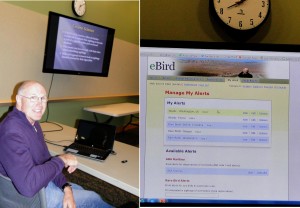
On September 24, 2013, Ed Pullen gave a presentation on enhancing one’s eBird experience. Many people brought their portable devices to try out his recommendations, and several eBird heavy-hitters were there to add to the information. Truly a learning experience! Photos from the recent field trip to E. WA by Pat Damron were enjoyed, plus Jerry Broadus and Clarice Clark’s trip to the southwest to the banding convention where they birded Arizona and Utah, including Condors! We ran out of time for most of Laurel Parshall’s photos, but they can be seen here (as well as many more): http://www.flickr.com/photos/llp_unesolitaire/sets/72157635555125412/ Pictured below: Ed Pullen with eBird (click to enlarge):

Eastern WA Vagrant and Shorebird Trip

The ABC East Side passerine vagrant and Shorebird trip on the weekend of Sept 7-8, 2013 was a great weekend for shorebirds and a bit slow for migrating passerines.  We had 11 participants in 4 cars and so made great time on the road, and the overall weekend gad good weather and lots of time birding without excessive driving.

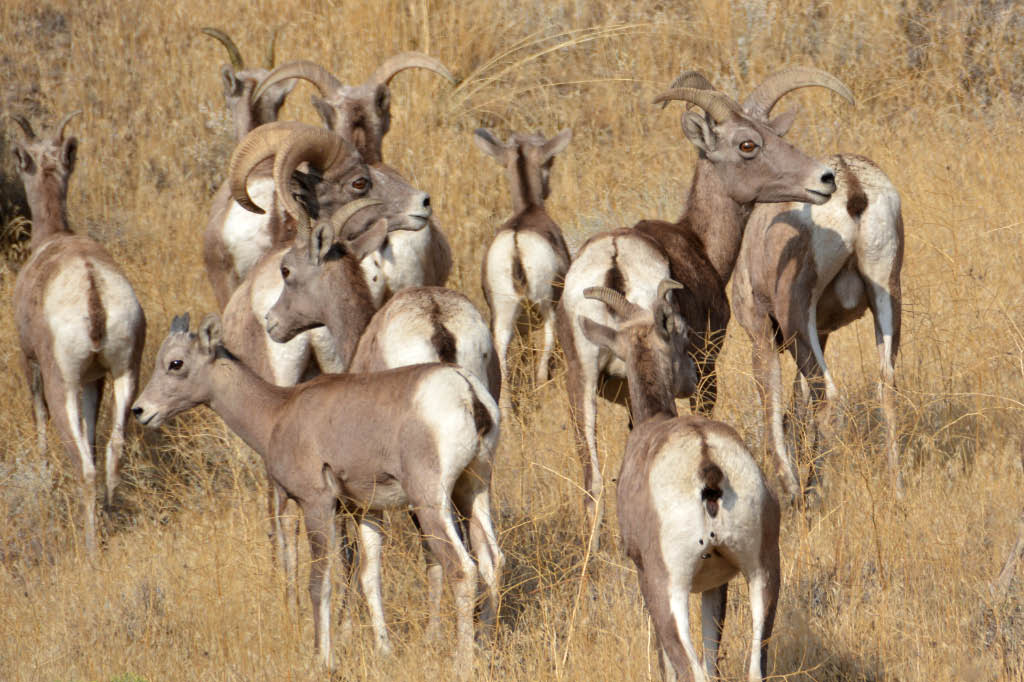
Our first stop was at Gingko State Park at Vantage.  The sprinklers were on and at the top we had few birds.  The highlight of the stop for many was a herd of Rocky Mountain Bighorn Sheep at very close range with nursing babies and about 25 total sheep.  The bird of the stop for me was a pair of canyon wrens calling incessantly and showing off at eye level close views down by the river.  It was the first time for me to hear their call note well, not just their well-known song.  I’ll attach e-bird lists for each stop for anyone interested in more details.  See here

Sheep flock

Next stop was Getty Cove, south of the State Park, where we found modest numbers of the expected warblers (YR, Yellow, Wilson’s) as well as Warbling Vireo.  See list here.  Overall not as birdy as last September, but a nice place to bird in the fall migration.  On the drive back to Wanapum State Park we saw a Red-necked Grebe close in on the river just fading from its red-necked alternate plumage.   At the park after a slow start we finally found a nice flock of mixed migrants, including 3 vireos Warbling, Red-eyed and Cassin’s, as well as a Townsend’s and Orange-crowned warblers among the YR flock.  Also had two Western Tanagers and lots of American Robins.  List here.

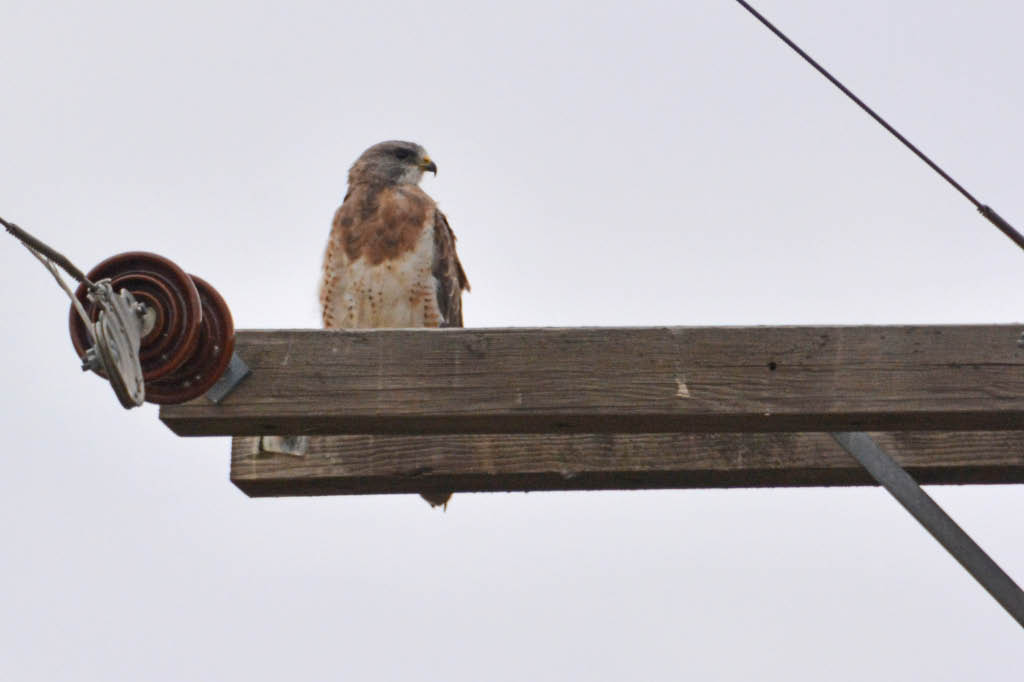
A quick stop on the frontage road toward Moses Lake yielded great close looks at a Swainson’s hawk on a utility pole before we got to the Winchester Rest Stop Sewage Ponds where we had a remarkable 10 species of shorebirds including American avocet, Pectoral sandpiper and Least sandpiper.  See list

Perched Swainson's Hawk

We headed to the Potholes Rookery site where the reported Snowy Egret was not obliging but lots of American white pelicans and had a nice fly-by of an immature Black-crowned night heron.  On the way out we had some flocks of sparrows including Vesper and Lark. List here  and here.

After a night at The Inn at Moses Lake and a dinner on the lake at Michaels (recommended) we spent Sunday early looking for the Eastern wood-pewee at the horse-chestnut orchard above Lind Cooley without success, though some saw a Prairie falcon there.  list From there we went to Perch Point on the Potholes Reservoir.  It was the highlight of the day of shore-birding with large numbers of Pectoral sandpipers, peeps, about 100 Great egrets, several gull species including some Bonaparte’s gulls with some juvenile (not formative which we usually see on first winter birds) aspect remaining.  list

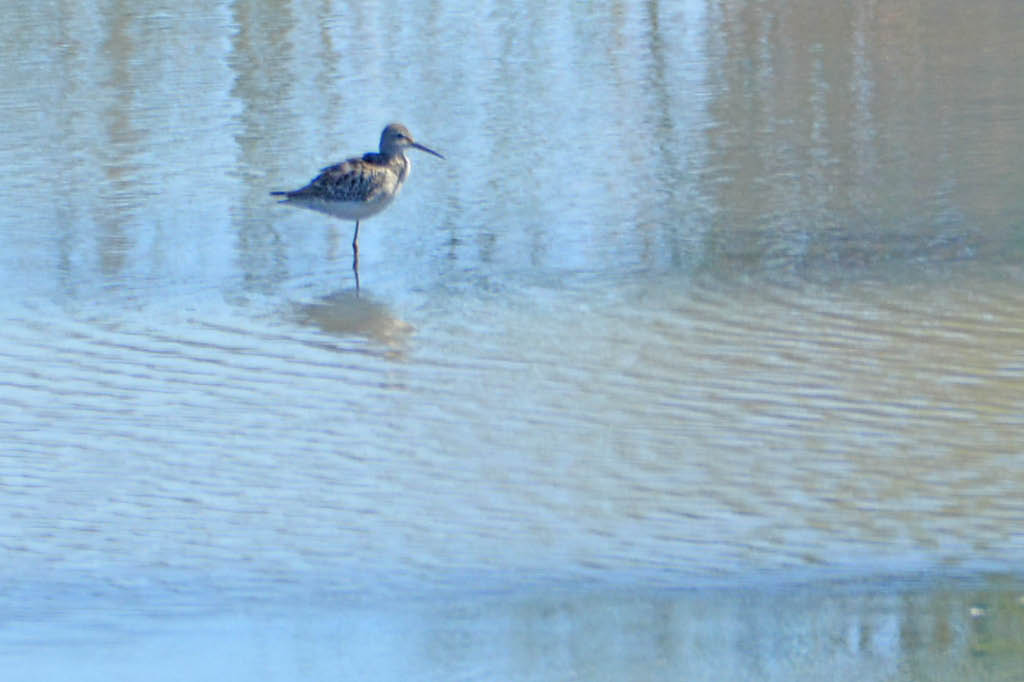
The rest of the day was spent circling the reservoir with several stops.  Lind Cooley was not as productive as last year except at the parking lot on top where we picked up Baird’s sandpiper along with a variety of other shorebirds  list.  On the way back we decided to try again at the Potholes Rookery for the Snowy egret without success, but a small water hold off Dodson Rd we saw a Stilt sandpiper to round out a nice weekend of shorebirding.  list

Stilt Sandpiper

All photos thanks to Pat Damron.

Here is the list for the trip:

Summary
Sep 7 Sep 8 Sep 9 Sep 10 Sep 11 Sep 12 Sep 13
Number of Species 64 60
Number of Individuals 712 2,017
Number of Checklists 8 10
Species Name Sep 7 Sep 8 Sep 9 Sep 10 Sep 11 Sep 12 Sep 13
Canada Goose 45
(2)
80
(3)
Mallard 2
(1)
14
(3)
Blue-winged Teal 6
(2)
Cinnamon Teal 1
(1)
4
(1)
Northern Shoveler 8
(1)
teal sp. 20
(1)
California Quail 2
(1)
Common Loon 1
(1)
Pied-billed Grebe 1
(1)
Red-necked Grebe 1
(1)
Western Grebe 20
(3)
Clark’s Grebe 3
(1)
Western/Clark’s Grebe 50
(1)
Double-crested Cormorant 80
(1)
75
(4)
American White Pelican 150
(1)
42
(3)
Great Blue Heron 4
(4)
Great Egret 45
(1)
98
(3)
Black-crowned Night-Heron 1
(1)
Osprey 2
(2)
1
(3)
Northern Harrier 1
(1)
Cooper’s Hawk 2
(1)
Sharp-shinned/Cooper’s Hawk 1
(1)
Swainson’s Hawk 1
(1)
Red-tailed Hawk 1
(1)
1
(1)
American Coot 1
(1)
American Avocet 1
(1)
Killdeer 2
(3)
11
(4)
Spotted Sandpiper 2
(2)
Greater Yellowlegs 2
(2)
5
(4)
Lesser Yellowlegs 2
(2)
3
(3)
Stilt Sandpiper 1
(1)
Sanderling 2
(1)
Baird’s Sandpiper 5
(1)
Least Sandpiper 3
(1)
30
(3)
Pectoral Sandpiper 2
(2)
7
(3)
Semipalmated Sandpiper 1
(1)
1
(1)
Western Sandpiper 15
(1)
80
(4)
Long-billed Dowitcher 1
(1)
3
(2)
Red-necked Phalarope 1
(1)
2
(1)
Bonaparte’s Gull 11
(1)
Ring-billed Gull 50
(2)
200
(4)
California Gull 2
(2)
8
(3)
gull sp. 300
(2)
Rock Pigeon 3
(1)
6
(1)
Eurasian Collared-Dove 4
(1)
Mourning Dove 4
(3)
6
(3)
Vaux’s Swift 3
(1)
Downy Woodpecker 1
(1)
Northern Flicker 2
(2)
1
(1)
American Kestrel 1
(2)
Peregrine Falcon 1
(1)
Prairie Falcon 1
(1)
Say’s Phoebe 1
(1)
Cassin’s Vireo 1
(1)
Warbling Vireo 3
(3)
1
(2)
Red-eyed Vireo 1
(1)
Black-billed Magpie 2
(1)
2
(2)
American Crow 4
(2)
4
(2)
Common Raven 4
(3)
Tree Swallow 40
(1)
Bank Swallow 4
(1)
Barn Swallow 40
(3)
20
(2)
Rock Wren 3
(1)
Canyon Wren 2
(1)
Marsh Wren 1
(1)
Bewick’s Wren 2
(1)
American Robin 28
(3)
European Starling 6
(1)
Orange-crowned Warbler 1
(1)
1
(1)
Yellow Warbler 4
(1)
1
(1)
Yellow-rumped Warbler 8
(2)
40
(3)
Townsend’s Warbler 1
(1)
1
(1)
Wilson’s Warbler 1
(1)
3
(1)
Vesper Sparrow 3
(1)
Lark Sparrow 2
(1)
Savannah Sparrow 2
(3)
Song Sparrow 1
(1)
1
(1)
White-crowned Sparrow 7
(3)
6
(1)
Dark-eyed Junco 4
(1)
Western Tanager 2
(1)
Red-winged Blackbird 30
(2)
Western Meadowlark 8
(2)
4
(1)
Yellow-headed Blackbird 10
(2)
Brewer’s Blackbird 8
(2)
30
(2)
House Finch 14
(2)
16
(1)
American Goldfinch 12
(2)
6
(3)
House Sparrow 1
(1)

Thanks to Ken Brown for arranging another great trip, to all participants for an excellent time birding together. Thanks to the lightening at the Seahawks game for me finding time to get this report on the ABC site.  Ed Pullen


ABC Field Trip Report Aug 2013 Coast

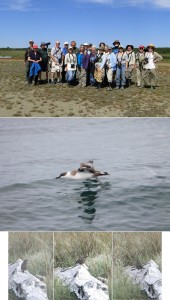
August 24-25 2013 Field Trip to Westport/Ocean Shores Sees Rare State Records Report from Art Wang: Twenty ABC members on the Tahoma Audubon Aug. 24-25 field trip to Grays Harbor enjoyed great looks at rare birds: a second state record Smith’s Longspur and a fourth state record Great Shearwater. Eleven of us were on the pelagic portion of the field trip and enjoyed calm seas and sunny skies aboard the Monte Carlo with Westport Seabirds. It was a great day for big numbers of Pink-footed Shearwaters, Fork-tailed Storm-Petrels, and our prettiest gull, the Sabine’s Gull, with big numbers and good views of each. Black-footed Albatrosses sailed by, displaying their amazing flying talents. We also had excellent views at Tufted Puffins, Arctic Terns (some still in breeding plumage), and Red Phalaropes. Views were more fleeting for Buller’s Shearwater and a slam with all four Northwest members of the Skua-Jaeger family: South Polar Skua, and Pomarine, Parasitic, and Long-tailed Jaegers. But the highlight of the day came as we stopped to investigate the flocks of pelagic birds trailing after shrimp boats on the open seas. One of the shearwaters let us get closer and closer until we realized it was a Great Shearwater, an Atlantic species and only the fourth record for the state. Everyone had sensational views and our boat must have taken several hundred photos of it. This was the first pelagic trip for many of our members, so most got numerous life birds. But birds weren’t all that we saw. We also had the rare treat of seeing dozens of Risso’s Dolphins and Northern Right Whale Dolphins in active feeding right next to the boat. We got back to Westport in the late afternoon and took off to Tokeland and Graveyard Spit to find the Elegant Terns that had been there all week. By the time we arrived in Aberdeen and ate dinner, we were all exhausted, but satisfied after a great first day of birding. The second day may have been even better! Several more birders joined us who had not been on the boat trip and we headed to the Game Range in Ocean Shores, where a Smith’s Longspur, the second state record, had been seen the day before. Sure enough, we found it and had great looks as it perched on a log, gave its rattling flight call, and flashed its white outer tail feathers when it flew. This was a life bird for almost everyone there. After a stop at Bottle Beach, some of the group saw Willets, Great Egrets, and Elegant Terns at Tokeland, while others refound and had great looks at a Buff-breasted Sandpiper at Midway Beach. A very successful field trip! Not only a second state record and a fourth state record, but everyone present had great looks at them! See the next Towhee for more photos. See photos on Facebook! https://www.facebook.com/TahomaAudubon Click on photo(s) below to enlarge: (Top group and bottom Smith’s Longspur by Diane Y-Q; middle Great Shearwater by Art Wang)

Swift Field Trip September 21 to Sedro-Woolley

Swift chimney at the old Northern Hospital in Sedro-Woolley: September 21, 2013: We’ll meet in Tacoma (where, to be decided by those who sign up by September 15th) and travel the 2-1/2 hours to the biggest (physically) Swift chimney in the state or maybe anywhere, leaving around 4:00 or so. We’ll meet the Skagit Audubon field trip group who have made arrangements for our admittance into the closed Job Corps site that now occupies this campus and enjoy the spectacle! Contact Diane Yorgason-Quinn to sign up (avosetta@hotmail.com) or (253) 857-3367. We’ll be home late. For a closer-in chimney, sign up for the Tahoma Audubon field trip to Selleck on September 14th. More details in the Towhee. Also sign up with Diane for this one.

Sept 7-8 East Side Fieldtrip

Ken Brown and Ed Pullen will lead a trip to east side shorebird and migrant spots including Gingko State Park, Getty Cove, Wanapum State Park, Perch Point, Lind Coulee, Moses Lake Rookery, the Para ponds and Potholes State Park.  We will arrange an overnight hotel stay. Plan to bring lunch for both days, water, snacks, and good boots for wet areas.

Meet at the Snoqualmie Pass traveler’s rest stop (usual place) at 7:30 AM on Saturday Sept 7th  Each car will need the yellow access tag for state areas.  Contact Ken or Ed by email to RSVP and to assure we can set up rooms and make dinner reservations.  If you don’t have our email leave a comment with contact info and we’ll get back to you.  (relucant to leave email to avoid spam, most of you have ours)

This trip is being opened to TAS as well as through ABC, so sign up quickly.  We did this trip last year and it was really superb, but was a 3 day trip, this year we only have 2 days, but will visit many of the best spots.

Report on ABC meeting, July 25, 2013

The ABC meeting on July 25, 2013, was fascinating, presented by our own members!

First David Marshall, who winters in Jamaica and has recently been made co-editor of the birding publication there, the Broadsheet, gave us a rundown on Jamaican endemics, Jamaican endemic subspecies, as well as some of his favorite Jamaican birds, and familiarized us with the layout of this beautiful island. For copies of the Broadsheet as well as David’s summary of these birds, ask him or ask me (Avosetta@hotmail.com) to e-mail them to you.

Then the large group who went to Malheur in May gave their report of many amorous Avocets, Willets, and a bunch of other birds, seen against beautiful blue skies. Leaders Shelly Parker and Carolyn Berry reported, along with help from Malheur volunteer Jerry Broadus and photographs from Pat Damron and Laurel Parshall. Pat’s and Laurel’s photographs can be seen online at: Laurel: http://www.flickr.com/photos/llp_unesolitaire/sets/72157633757413804/ Pat: share.shutterfly.com/action/welcome?sid=0AcNHLJq2bNmbCSg

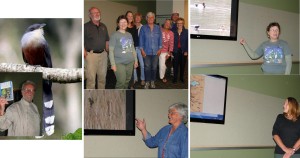
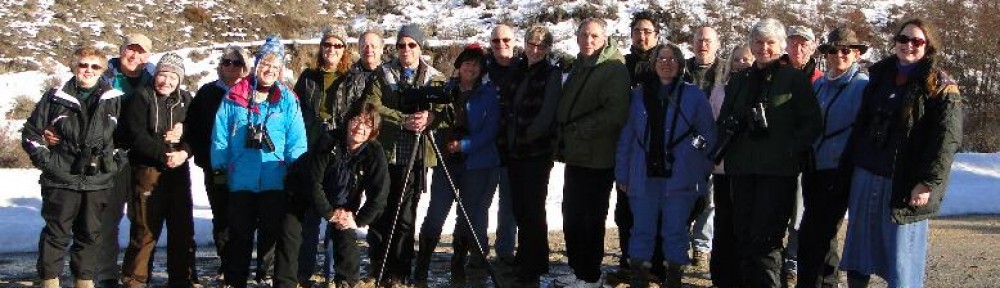
Pictured below are the evening’s talent, including a group photo of half the Malheur participants were attended the meeting, since they didn’t get a group photo during the trip! Click to enlarge.

ABC Woodpecker field trip report June 29, 2013

Woodpecker Trip Report, June 29, 2013:

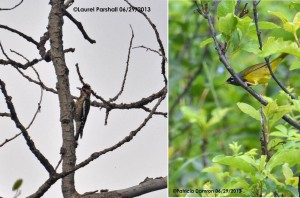
Leader Rolan Nelson says, “The whole idea of leading a trip was a ploy to make sure that I actually got to go on one! There were nine of us, and we were amazed at the number of vocalizing songbirds there were at our stops along Camas Meadows. Almost too many to sort out, but excellent looks at MacGillivray’s Warblers and Lazuli Buntings. Many of our birds were heard but not seen, which was a disappointment. Too many leaves! Five woodpeckers presented themselves; Acorn, Hairy, Pileated, Flicker, and a very cooperative Red-naped Sapsucker. Just about every passerine family had a least one representative. By the end of the day we had tallied 43 species; not many, but a good mix and beautiful weather.

Click below to enlarge photos taken by participants:

Report on ABC June 2013 Night at the Museum

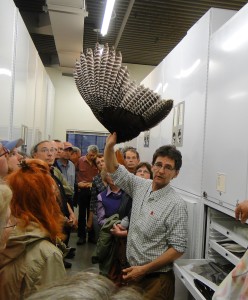
The evening of June 25, 2013, 35 or so ABC’ers pressed into the Slater Museum at the University of Puget Sound and played with the collections of birds and birds’ wings. Director Peter Wimberger, also on the Board of Directors of Tahoma Audubon, gave us a great history starting with specimens 100 years old and going right up to the cutting-edge isotope studies that are happening now. From Passenger Pigeons to Anna’s Hummingbirds, we were educated by way of actual bird specimens. For more info, check out their website that includes info on how to handle dead birds you come across and donate them, as well as has links to photos of the collections including thousands of bird wings: http://www.pugetsound.edu/academics/academic-resources/slater-museum/ Also check out the upcoming August edition of The Towhee.

Below: Director Peter Wimberger of the Slader spreads his wings for ABC (Photo/Diane Y-Q)